1916-2016

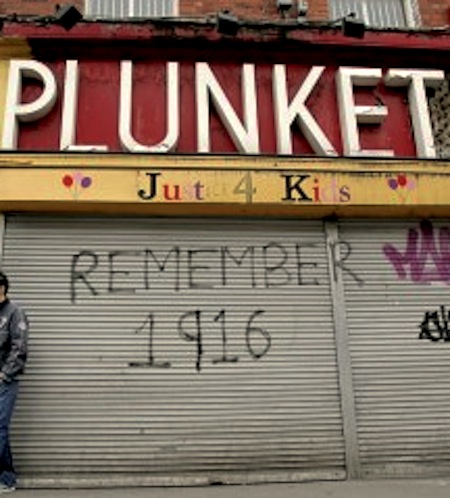
As someone who has been a long term student of Irish history, I have been looking forward to the centennial celebration for years and years. At first, I thought I’d have to watch it from afar – and I still may yet have to do that, but the goal is to spend about a month wandering through the whole of the Emerald Isle before culminating in Dublin for the 100 year commemoration of the Easter Rising. I have been devouring any information I can find on the planned celebrations for years and have found it all woefully lacking. I still can’t even get an answer about whether it is going to be planned for Easter, which is incredibly early in 2016, or if it will wait until April 24th.

I started paying attention to what the people in charge were and were not saying. Modern politicians seem to be more concerned with whether or not the British royalty will show up than they are about planning something awesome for their own people. Given that they owe their positions to the rebellious men and women of 1916 (also before and since) you would think that they’d be getting ready to honor them.
Continue reading

Howth Gunrunning Ladies

100 years ago exactly, a large shipment of arms landed in Ireland. It took the actions of extraordinary women to accomplish the Howth Gun Running scheme of 1914. One, Alice Stopford Green, gave a loan to have the capital for negotiations. Two more, Molly Childers and Mary Spring Rice, raised the rest of the funds to purchase the weapons. They were transported on the Childer’s family yacht – The Asgard – and two of the women sailed proudly with them. This is not to say that they did it alone but without the actions of these women, this large landing of arms destined for the hands of the Irish Volunteers may never have happened. Continue reading

The Death of the Countess

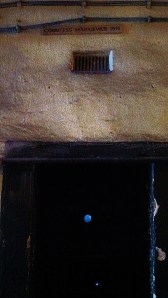
Her cell at Kilmainham, following the Easter Rising. I should mention the tour guide let me go back to take this picture, despite not usually allowing it, because I begged

“I do wish you lot had the decency to shoot me.” -Constance Markievicz, 1916.

Constance Markievicz may have wanted to die like her compatriots for her role in the Easter Rising but the English wouldn’t execute a woman. In the end, they may have wished they had, for the Countess had another 11 years to continue being a thorn in their side. She went straight into an even more political role, creating a world where women were more equal to the men, remaining staunchly Republican and inspiring thousands of people, including myself, throughout the years since. She is one of my favorite heroes.
Continue reading

Roger Casement

On this day in 1916, Roger Casement (once Sir Roger Casement) was convicted by the British crown for high treason. Roger Casement was an anomaly. He was a foreign office diplomat who could never quite get what he was after. He was knighted for his humanitarianism but was trying to broker arms deals. He believed in Irish Republicanism but some of his comrades believed he was too moderate while others believed he was too extreme. He was a rumored sex tourist who traveled to hide and indulge in his homosexuality. And despite having no foreknowledge of the upcoming Easter Rising – being that he was NOT a member of the IRB and they did not fully trust him – he was still convicted of high treason and some of the charges that led to his death were that he helped to plan the rebellion.

It was surprising that he heard of it at all. Casement had been out of the country and then was in the north and kept in the dark by the Republican Brotherhood. He was arrested 3 days before the Rising began – after failing to get Germany to agree to send reinforcements into Ireland to fight the British – and after a whole shipment of German arms heading into Ireland was intercepted. His case was difficult because he was in Germany when such ‘crimes’ happened, but they were relentless in his prosecution.

His supporters at trial were the likes of Sir Arthur Conan Doyle, W.B.Yeats and George Bernard Shaw. Perhaps the revolutionaries weren’t sure about him, but the popular writers of the day sure seemed to be. On June 29th, 1916, he was stripped of knighthood upon his conviction and sentenced to a death by hanging.

His appeals failed. By the time he was hanged, he had converted from Protestant to Catholic and his priest thought he should be considered a saint. He was buried in quicklime at the prison after his death. In 1965, he was repatriated to Ireland and laid to rest with full honors and a state funeral in the Republican Plot at Glasnevin Cemetery. However, Casement’s last wish was to be buried at Murlough Bay on the North Antrim coast and it has yet to be fulfilled. The government released his remains only on condition that they not be brought into Northern Ireland. Oddly enough, the 1965 British Cabinet record of the decision still refers to him as Sir Roger Casement.

Perhaps someday he will get his wish.


Stand up For James Connolly

 I’m sure that they’ll argue that he was Scottish born. I’m sure they’ll denigrate his socialist beliefs. Neither dispute the fact that he stood for Ireland when others didn’t – and included rich, poor, male and female equally in all of his philosophies. Write. Call. Stop this ridiculousness.
At 6pm on Sunday, 18th of May 2014, RTÉ1 Radio’s History Programme is asking the question: “Is James Connolly a false 1916 Icon?” Don’t let them degrade the winner of the Public Poll to choose the Greatest Irishman Ever. We need to flood RTÉ’s Inbox with support for James Connolly. Please take time to E-Mail: history@rte.ie saying that you support James Connolly as a National Irish Icon.
Image

Protect Moore Street!

On the off chance you are in Dublin this weekend, or you have the ear of an Irish politician, you should help protect Moore Street. It is home to one of the only outdoor markets left in Dublin, but aside from that it is also where the rebels of 1916 made their last stand and escape from the GPO before surrendering to stop civilian casualties. Developers want to replace all that history and street vending with another mall, though there are more than a few in the area and more hotels. Stand up and link arms for history, street vendors, farmers and locals. You can find more information via these 2 links

http://www.occuworld.org/news/817530

https://www.facebook.com/events/1537009746526361/Image

Image

Proclamation

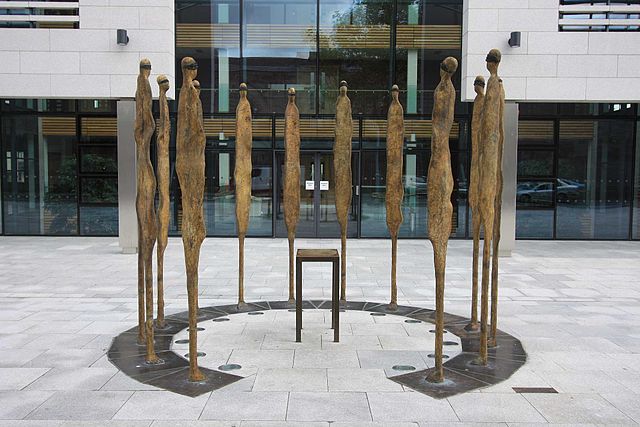
When I visited Kilmainham Gaol in December, it was a bit like a pilgrimage for me. I knew that I would be walking through the notorious place I had been reading about for 20 years and that my Irish history knowledge would only be improved by going…but I didn’t really want to. I knew it’d be hard for me as I am a sensitive girl and I left my traveling companions elsewhere in order to do it alone. I was highly emotional, particularly when I visited “Last Words“, the exhibit on the top floor of the prison.

As I left the gaol, I really needed to collect myself. My makeup was runny from tears I had barely held back in the exhibit and my head was full of things I wanted to remember and write down. Most of all, I wanted a cigarette. I crossed the street to have one and to not fall apart in front of a major tourist attraction and found myself surrounded by humanoid, creepy bronze statues whose chests were full of bullet holes. In the split second it took me to put two and two together, I realized 2 things. These were the creepiest statues I had ever seen and I had come to the wrong place to collect myself, as it made me even more emotional and teary.

I don’t know if I like Rowan Gillespie or not. On one hand I believe he’s a genius. On the other, his work hits me in a visceral way that makes me uncomfortable. This is Proclamation, another place I had to add to the Atlas Obscura. It’s getting quite full of Irish places these days….

http://www.atlasobscura.com/places/the-proclamation-sculpture

Image

May 12th

Today marks the end of the anniversaries of the 1916 Executions. James Connelly was shot May 12th, 1916. He was carried into the prison yard and tied to a chair, due to injuries that would have killed him in a day or 2 anyway. Instead of letting nature take its course, they tied him to a chair and the firing squad shot him.

Last winter, a Sinn Fein guide mentioned rumors that he was already dead when they brought him into the yard, which was the first I had heard of the possibility. It wouldn’t surprise me  – after all, they were only posturing and proving a point by executing him, despite his feebleness and injuries. Either way, the 12th marks the anniversary of his death – and this photo was taken in December at the mass grave site in Arbour Hill. I quite like the leaves in the cracks – and while I sat at the grave, a feral tabby cat jumped right into my lap and started purring like mad, at just the perfect time.

It was a great way to spend  the afternoon.

Rest in Peace Mr. Connolly and all of your cohorts too.

Image

Remembering the Leaders of 1916

Remembering the Leaders of 1916

This plaque rests on the wall above the execution site in Kilmainham Gaol

Before the gallows……

Image

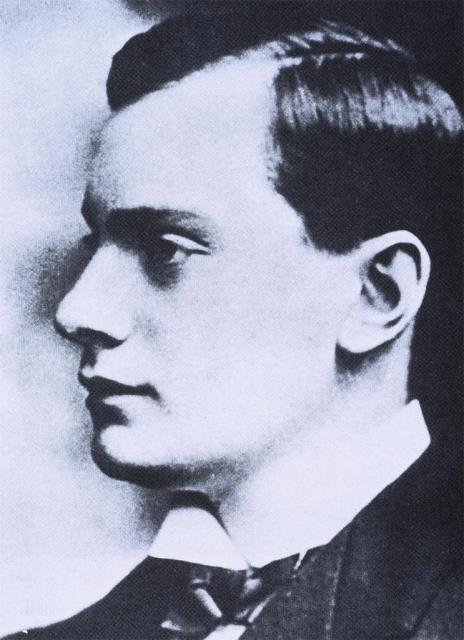
I believe that he knew he was about to be executed. I believe that he thought it was worth it completely. I have seen his letters to his mother in person, once he  was imprisoned and about to die. This schoolmaster, this poet, this philosopher and this hero of Ireland – this reason that I wear an Easter Lily badge – this man, is an idealist – a cheerleader – a man who never lost his faith in humanity and justice. He was amazing. His triumph was through his failure. His life was short but full and meaningful.

Nov. 10th, 1879 – May 3rd, 1916


Padraig Pearse’s Address to Court Martial:

I desire in the first place to repeat what I
have already said in letters to General Sir John
Maxwell and to Brigadier General Lowe. My object in
agreeing to an unconditional surrender was to prevent
the further slaughter of the civil population of
Dublin and to save the lives of our gallant followers
who, having made for six days a stand unparalleled in
military history, were now surrounded and (in the case
of those under the immediate command of Headquarters)
without food. I fully understand now, as then, that my
own life is forfeit to British law, and I shall die
very cheerfully if I think that the British
Government, as it has already shown itself strong,
will now show itself magnanimous enough to accept my
single life to forfeiture and give a general amnesty
to the brave men and boys who have fought at my
bidding.

In the second place I wish it to be understood
that any admissions I make here are to be taken as
involving myself alone. They do not involve and must
not be used against anyone who acted with me, not even
those who may have set their names to documents with
me. (The Court assented to this,)

I admit that I was Commandant General
Commanding in Chief the forces of the Irish Republic
which have been acting against you for the past week,
and that I was President of their Provisional
Government. I stand over all my acts and words done or
spoken in those capacities. When I was a child of ten
I went down on my bare knees by my bedside one night
and promised God that I should devote my life to an
effort to free my country. I have kept that promise.
As a boy and as a man I have worked for Irish freedom,
first among all earthly things, I have helped to
organise, to arm, to train, and to discipline my
fellow-countrymen to the sole end that, when the time
came, they might fight for Irish freedom. The time, as
it seemed to me, did come, and we went into the fight.
I am glad we did. We seem to have lost. We have not
lost, To refuse to fight would have been to lose; to
fight is to win. We have kept faith with the past, and
handed on a tradition to the future.

I repudiate the assertion of the prosecutor
that I sought to aid and abet England’s enemy. Germany
is no more to me than England is. I asked and accepted
German aid in the shape of arms and an expeditionary
force. We neither asked for nor accepted Germany [sic]
gold, nor had any traffic with Germany but what I
state. My aim was to win Irish freedom: we struck the
first blow ourselves but should have been glad of an
ally’s aid.

I assume that I am speaking to Englishmen, who
value their freedom and who profess to be fighting for
the freedom of Belgium and Serbia. Believe that we,
too, love freedom and desire it. To us it is more
desirable than anything in the world. If you strike us
down now, we shall rise again and renew the fight. You
cannot conquer Ireland. You cannot extinguish the
Irish passion for freedom. If our deed has not been
sufficient to win freedom, then our children will win
it by a better deed.