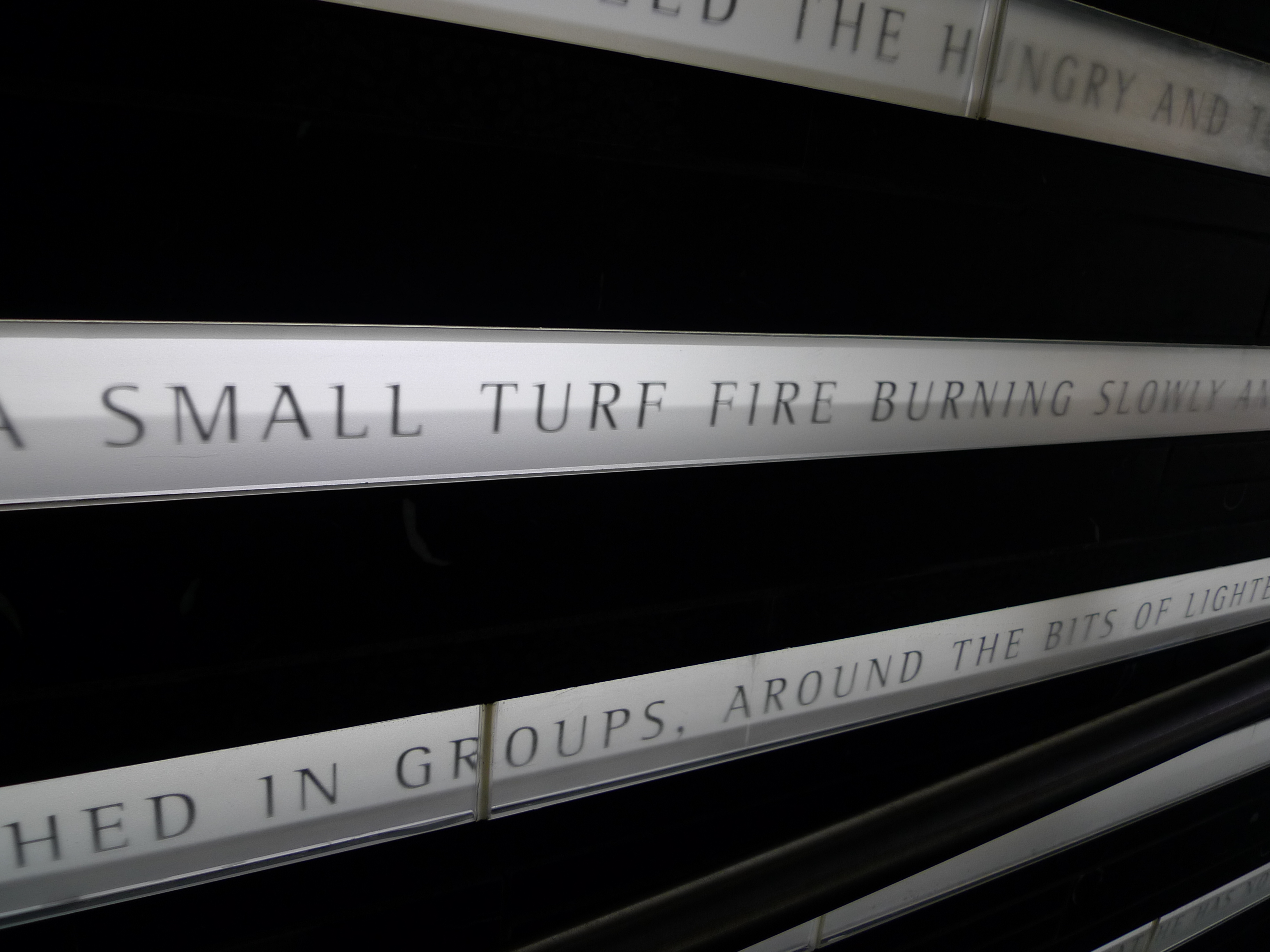
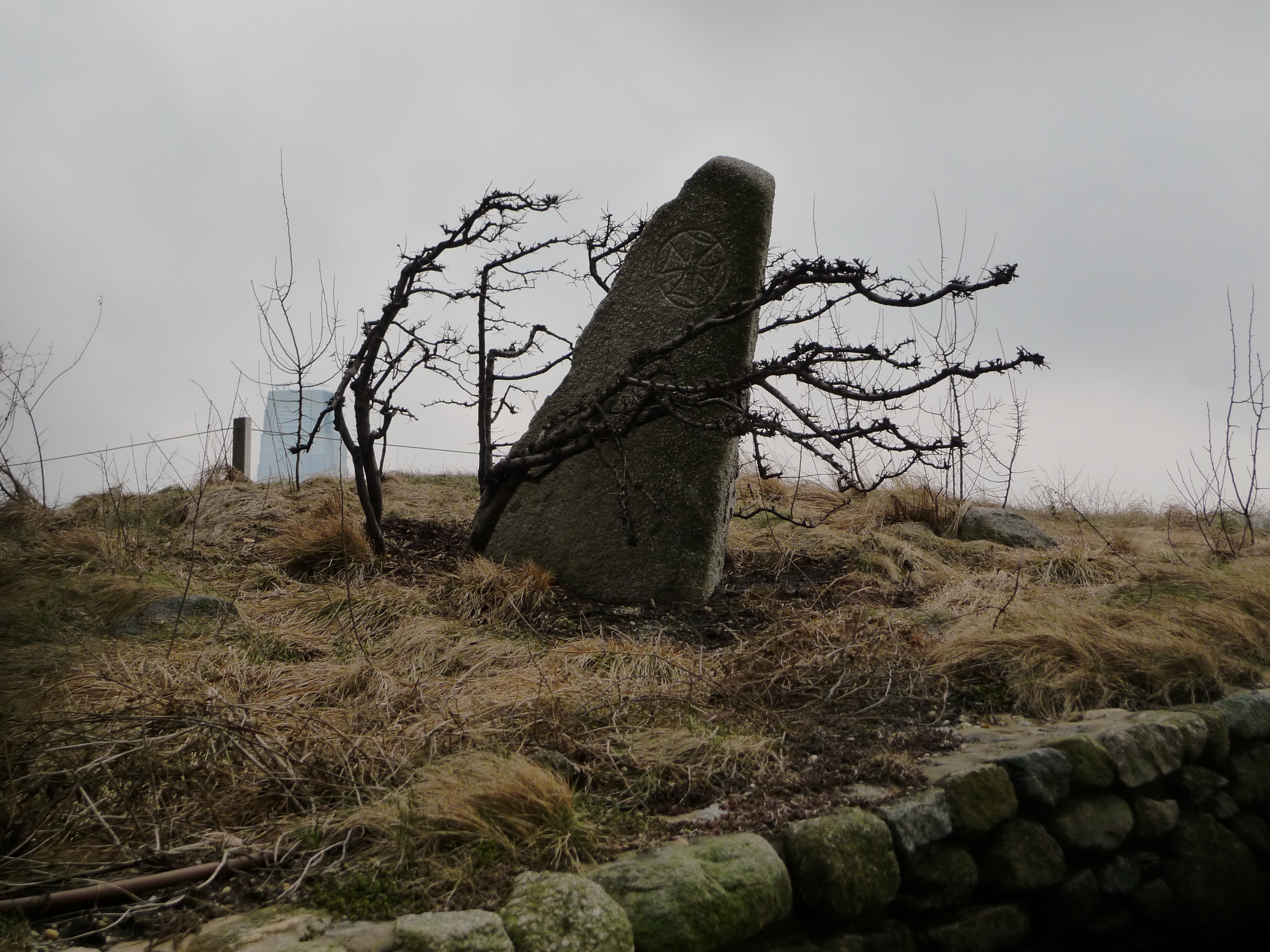
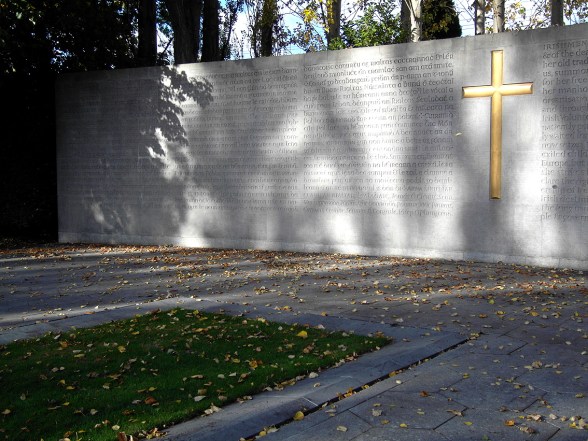
A small Turf Fire Burning…

The jet lag has kicked in and I’m having some exhaustion-related come down from my travels, but before I crash, here are just a few more shots of the amazing and poignant Irish Hunger Memorial in New York City. More photos and tales to come soon as soon as I catch up on my sleep.


P1090077 P1090084 P1090085 P1090090 P1090095 P1090097 P1090100 P1090105 P1090119

It really did feel like Ireland there for a minute…

New York’s little piece of Ireland

In the heart of Southern Manhattan on the bank of the Hudson, a mystical Irish cottage rises out of the ground. It is surrounded by tall buildings and heavy traffic and seems out of place but it is irresistible and it beckons you inside. When you do enter, be prepared – your heart may break due to both the despair and the longing.
Continue reading

Easter Monday

Since it is Easter Monday and National Poetry month here in the US, today belongs to Padraig Pearse and his heartbreaking poem, The Mother.

The Mother 
I do not grudge them: Lord, I do not grudge 
My two strong sons that I have seen go out 
To break their strength and die, they and a few,
In bloody protest for a glorious thing,
They  shall be spoken of among their people,
The generations shall remember them,
And call them blessed;
But I will speak their names to my own heart
In the long nights;
The little names that were familiar once
Round my dead hearth.
Lord, thou art hard on mothers:
We suffer in their coming and their going;
And tho I grudge them not, I weary, weary
Of the long sorrow-And yet I have my joy:
My sons were faithful, and they fought.

image

Mary Macswiney

A rebel is one who opposes lawfully constituted authority and that I have never done.” So said one of the most devoted Republican women in Irish history, Mary MacSwiney. I’m sure she believed in that statement with all of her heart—as she did a free Ireland—but it’s guaranteed the English did not feel the same way. To them, Mary MacSwiney was the one of the worst and biggest female rebels, not only in Cork but in all of Ireland.

Continue reading

Tom Clarke

On this day in 1857 Thomas James Clarke was born to Irish parents at Hurst Castle in Hampshire, England. It’s more than a little ironic that one of the biggest strategists behind Ireland’s future revolution was born on English soil. In fact, his father was in the British Army and the family did not return to Ireland until Tom was seven years old. They settled in Dungannon, a Fenian stronghold that had suffered terribly during An Gorta Mor – Ireland’s Great Famine. The scars of that disaster were still all around him and from his earliest years, Tom hated the English establishment. He was determined to fight against it however he could.

Continue reading

The Gibraltar Killings

If you somehow knew who Adolph Hitler would become and what he would do, would you murder him before he could do his damage? This rhetorical question is asked by personality tests, psychologists, and Philosophy professors all the time to gauge the morality of their subjects.  Many otherwise peaceful people have quickly answered yes. So then the quandary becomes about where the boundary lies and when we become OK with murder or assassination. When you use someone as horrible as Hitler, the odds are guaranteed to have an emotional and reactionary response. When taken out of the hypothetical realm, odds are that most people would say they are against preemptive murder, no matter what the circumstances are. There are laws against that kind of thing in almost every civilized nation – including Britain – but on this day in 1988, British soldiers ignored them.
Continue reading

Margaret Pearse, mother of Ireland

It must be agonizing for a parent to outlive their child. It goes against the natural order of the universe and has to be absolutely devastating. For many, it usually involves anger and hopelessness. Margaret Pearse knew that suffering better than most, for she didn’t lose one son, but two—at once—both executed at the hands of the British for their roles in the Easter Rising of 1916. Despite this, she steadfastly refused to give in to despair and she spent the rest of her life fighting for the free Ireland that her sons had died for.
Continue reading

The Wilde Lady Jane

Jane Francesca Elgee did a lot of things in her life. She rebelled against her Protestant, Unionist family and became a prolific poet and Nationalist writer. She stood up in court, outing herself as the criminal during a Sedition case to protect the people and the paper she worked for. She spoke at least five languages and translated in each. She threw weekly salons and was known as the most gracious host in all of Dublin. She was a devoted Suffragist and fought for equal rights for women. But what she is best known for is not her prose or her politics. She is best known for being the mother of her children—one in particular—whose works far surpassed those of his mother in a very short time. Indeed, Jane Francesca Elgee will forever be known as Lady Jane Wilde, the woman who gave birth to her son, Oscar.

Continue reading

A Son is Born

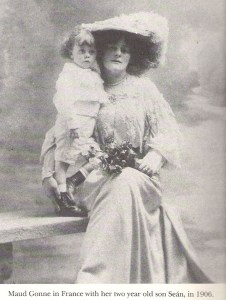
On this day, January 26th, in 1904, Sean MacBride was born to Maud Gonne and John MacBride in France.  He went on to follow in his parents’ Irish Republican footsteps becoming a soldier, politician and the Chief of Staff of the IRA, fulfilling their wishes to have an important and capable son. They agreed on almost nothing else, but they did want their son to believe in and work toward a free Ireland just like they had for most of their lives.

Sean was the apple of his mother’s eye and today would be his 111th birthday, which is hard to imagine when you see this picture, taken when he was 2.

maudegonne2Breithlá Sona

Sláinte, Mr. Guinness

Today we raise a pint of the good old black stuff to the man himself–Arthur Guinness–whose full life came to a close on this day in 1803.

Arthur Guinness is the founder and creator of Guinness brewery, and though he did not create the dark stout that the company is now famous for, he was responsible for signing a 9,000 year lease, guaranteeing that the brewery would always have a place to operate in Dublin. This permanence allowed for funds to be allocated for experimentation and distribution and he made sure to do both. He was already a master brewer and his creations resulted in a decent porter coming to the city and a load of devoted ale drinkers. They called him Uncle Arthur for much of his life. He and his (poor) wife Olivia had 21 children, half of whom lived, but none of his descendants are directly involved in the brewery business at this time.  Still, his signature flourishes can be seen on every can or bottle that the company produces and his legacy is honored in Ireland and around the world to this day.

A recent offering, the 1759, is a 750ml bottle of Guinness Ale–not Stout–that is based on recipes from that time. It is likely the closest we’ll get to Arthur’s own creations in this day and age. The brewery has been transformed into the number one tourist attraction in Dublin, and though visitors don’t get to see the inky stout being made, they do get the history of the brewery, a look at the longest lease ever, and one of the greatest views in Dublin. Today I’d like to personally thank Uncle Arthur for one of my favorite adult beverages on the planet, because even though it will never taste the same outside of Ireland, without him, it may never have reached our far shores at all.

Sláinte

guinness