The woman they couldn’t silence – remembering Veronica Guerin

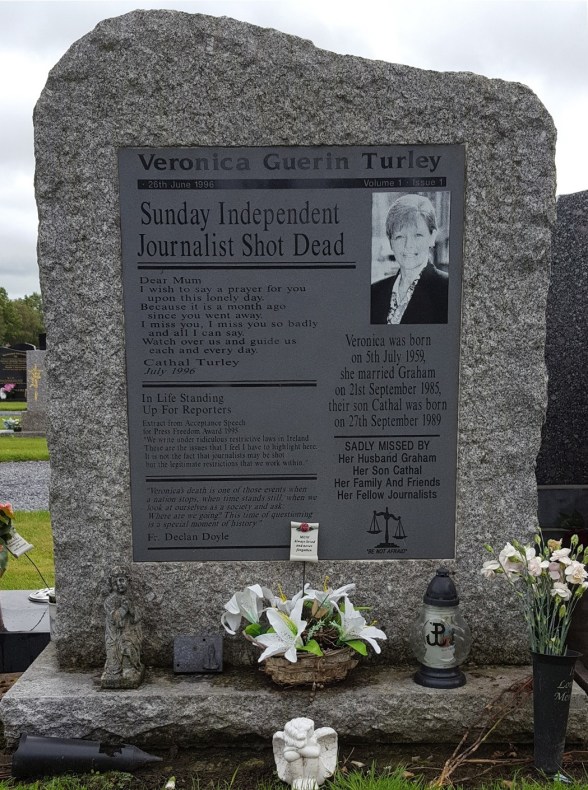
Veronica Guerin was a reporter who refused to stay with a safe, sanitized story. She did not seek out danger but when it was present, she faced it with her notebook in hand. She was brave in the face of brutality and if she was warned to stay away from a story, she dug in even more. But on this day in 1996, that ever present danger caught her. She was 36 years old, a mother, and one of the most captivating investigative journalists in Ireland when a motorcycle pulled up alongside her car while she was stopped at a light. She probably didn’t even take notice of them until they smashed her window and fired several shots directly into her vehicle before they fled the scene. Veronica died before the ambulance arrived. It took less than a minute to kill her body but decades later, her spirit lives on. 

In the early 1990s, Dublin was in the grip of a heroin epidemic that was quietly destroying working-class communities while the powerful looked the other way. Guerin, a reporter for the Sunday Independent, decided that looking away was not an option. She reported on the criminal gangs controlling Ireland’s drug trade at a time when most journalists treated those stories as too dangerous, too murky, or simply too unglamorous to pursue. She knocked on the doors of drug lords. She sat across from men who had ordered destruction and murder and asked them, politely and precisely, to explain themselves. This was not recklessness. It was a considered, principled commitment to the idea that journalism exists to serve the people. She was also, by all accounts, genuinely charming in a way that seemed to disarm people who had every reason to be guarded and hostile toward her and her work. She made this gift work for her most of the time, but ultimately it failed to protect her in the end.

What makes Guerin’s murder even worse is how predictable and preventable it was. She had been warned. She had even been wounded before, when a gunman showed up at her house after she began investigating organized crime and drug dealing in south Dublin. Her home and family were often threatened. She reported all of it and named names to her editors, the Gardaí, her readers, and anyone else who would listen. To their credit, the paper installed a security system and the Gardaí assigned officers to her after she was shot the first time, but she did not agree to these efforts because they hampered her ability to pursue leads and report the stories she was compelled to share. Eventually, the surveillance diminished and everyone began ignoring these threats or even worse, they told her to back off and shut her mouth, repeatedly. This was not something she was willing to do. Veronica was not naive about the risks but she believed her stories were worth it. In interviews just before her death, she acknowledged the threats with a matter-of-factness that reads now as both brave and tragic. She believed the people of Dublin’s devastated communities deserved someone who would speak for them and when no one else would, she raised her own voice.

Veronica Guerin’s assassination sent a shock through Ireland and had lasting consequences that are difficult to overstate. The country had seen plenty of violence but this was different. This was a journalist, a woman, and a mother, who was shot dead in broad daylight on a busy road simply because she had done her job too well. The public response was immediate and furious. Within weeks, the Irish government passed some of the most significant criminal justice legislation in the country’s history, including two acts which gave authorities new powers to seize the assets of criminal organizations. The Criminal Assets Bureau went on to dismantle a lot of the drug empire that ultimately killed Guerin when she refused to stay quiet about it. Ireland did not become a perfect, drug and criminal free country after her death, but it did become a different one, thanks in no small part to Veronica Guerin. 

Guerin’s name is now attached to journalism awards, university programs, and both feature and documentary films. That is right and fitting but legacy has a way of softening the sharp edges of a life, and it would be a disservice to her to let that happen here. The structural conditions that made her vulnerable have not disappeared in the decades since her assassination. Women journalists around the world continue to face targeted harassment, threats, and violence at rates that far exceed their male counterparts, according to UNESCO research published in recent years. Online abuse, coordinated intimidation campaigns, gender-based insults, chauvinistic dismissals, and the slow erosion of institutional support for investigative reporting are on the rise. Journalists face daily threats of harm, similar to the threats that Guerin faced years ago. What she bravely showed us was that we can refuse to accept that the powerful get to define the terms of their own accountability. She reported on people who believed they were untouchable and she made them vulnerable in print with evidence, publicly. That act, repeated by journalists around the world every day, is one of the few genuine checks we have left on the powerful, and those who undertake this mission need to be protected as the rare jewels they are. 

Today marks another anniversary of her death. In Dublin, people who remember her death may pause for a few thoughts or words about her. People who are too young to remember may encounter her name here and there throughout the day and if they are curious, they may find one of her powerful stories or some information about why she’s still relevant and important. She possessed a focus and determination that her colleagues still struggle to describe without a catch in their voices and a tear in their eyes. Veronica Guerin was a hero and a woman who decided that the truth mattered more than her comfort and safety. She paid the highest possible price for that decision but she was not wrong when she made it. The truth is important and independent media and investigative reporting continue to provide it on every continent, every single day. It may get overshadowed by hateful pundits and manufactured outrage but it still exists. Expect more from your news sources and seek out this type of reporting to drown out the noise of partisan headlines. When you support journalists and investigative reporting,  you honor Veronica Guerin and those like her. That’s critically important in this day and age, especially today.
Sheelagh Murnaghan

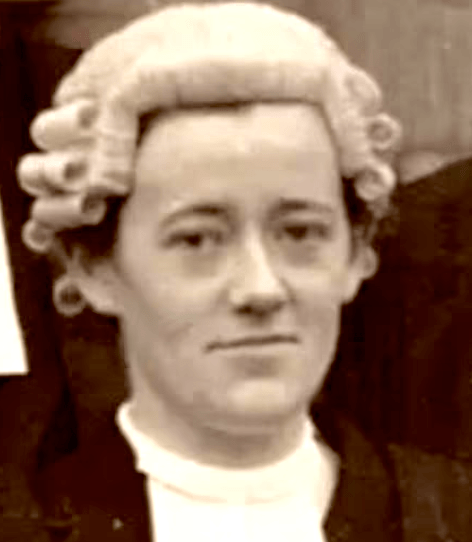
On this day in 1993, the North of Ireland lost a formidable voice. Sheellagh Murnaghan was a tenacious woman who was dedicated to equality in a world that didn’t have much of it. She never let that stop her though and she championed that fight for decades, despite suffering defeats time and time again. Guess it was the hockey player in her that never let her back away from a good fight.

Sheelagh Murnaghan was born in Dublin, but she went to school in Omagh and then studied law at Queen’s University in Belfast. While studying to become a lawyer, she also found the time to join and captain the National Irish Women’s Hockey team. She gave up the sport when she became the region’s first female lawyer and was accepted to the Northern Ireland Bar in 1948. Murnaghan then went into politics. She was one of the first women in Stormont and was the only liberal voice in the chamber at that time. Sheelagh was considered eccentric – she liked cigars and often brought her dog to work. She was a woman, a Catholic, and a liberal in a misogynistic, Sectarian, and conservative climate and she was ferociously dedicated to human rights. Murnaghan introduced legislation to abolish the death penalty and attempted to pass a Northern Bill of Rights at least four times. She also stood for Traveller’s rights, criminalizing discrimination in the workplace, and equal compensation for all, regardless of sex, creed, or political belief. Sheelagh was met with opposition (and probable ridicule) every time she attempted to introduce anything but she did not let that stop her. I’m certain she would have continued her quest if she had been successful in winning another seat once the university’s were abolished in 1969. She stood for election twice more in two different areas, but she lost both times.

Murnaghan was no longer a member of parliament but she still championed equality every day. She sat on several committees, including the Industrial Relations Tribunal, the Belfast Settlement Committee, and the Equal Opportunities Commission. She chaired a tribunal that heard the region’s very first sexual harassment case and her law practice specialized in harassment cases and gender equality from that point on. Murnaghan was not born in the North of Ireland, but it is clear that she devoted her entire career to making it a fairer, more balanced place while others were actively trying to prevent these things. She was absolutely opposed to the violence that erupted in the region and was openly vocal about it, which led to potential peril when her house was bombed by Loyalist paramilitaries in 1970. Luckily, she was not injured or intimidated by this attack and she continued to fight for peace and justice for another twenty-three years.

Sheelagh Murnaghan died on this day in 1993. She did not live to see the North finally adopt many of her ideas, nor did she see the end of the more active conflict in the region, but today, many recognize her as one of the first torchbearers of change and equality in the area. It’s a fitting legacy for a woman who devoted her life to making the world a better place.

Bloody Sunday 50

Derry is a complicated place with a questionable reputation. The city has been called everything in the book from quaint and charming to militant and scary, and the truth is that it is all of these things and more. At once Derry is old, angry, exhausted, resigned, and stagnant but it is also young, vibrant, somewhat progressive, grudgingly forgiving, and ready for change. It’s a place full of whispering ghosts, frustrated wails, clanking flagpoles, and joyful, laughing children. If you’ve ever been there, chances are the city has stayed with you no matter what your impression of it was. It’s easy to be haunted by a city when that city itself is haunted.

Trauma doesn’t only affect those who witness terrible events. It is also the pain and suffering that is passed down from generation to generation, lingering in the shadows even when you think it is finally gone. Sometimes Derry feels like a testament to this kind of generational trauma. You can feel the ache in the very bones of the city, and you can sense the suspicious eyes following you in various parts of town. Dark alleys and dead ends can lead to street violence and rough justice, and there’s an uneasy feeling of lawlessness in the dead of night, thanks to the population’s healthy (and understandable) distrust of authorities. Still, Derry strives to heal and improve. It demands acknowledgment and recourse for the injustices it has faced, but it is also a beacon of cultural change, political compromise, and relative peace. That there could ever be peace where so many tragedies have happened is remarkable in itself and couldn’t be achieved without the city’s unwavering people. ‘Something inside so strong,’ indeed.

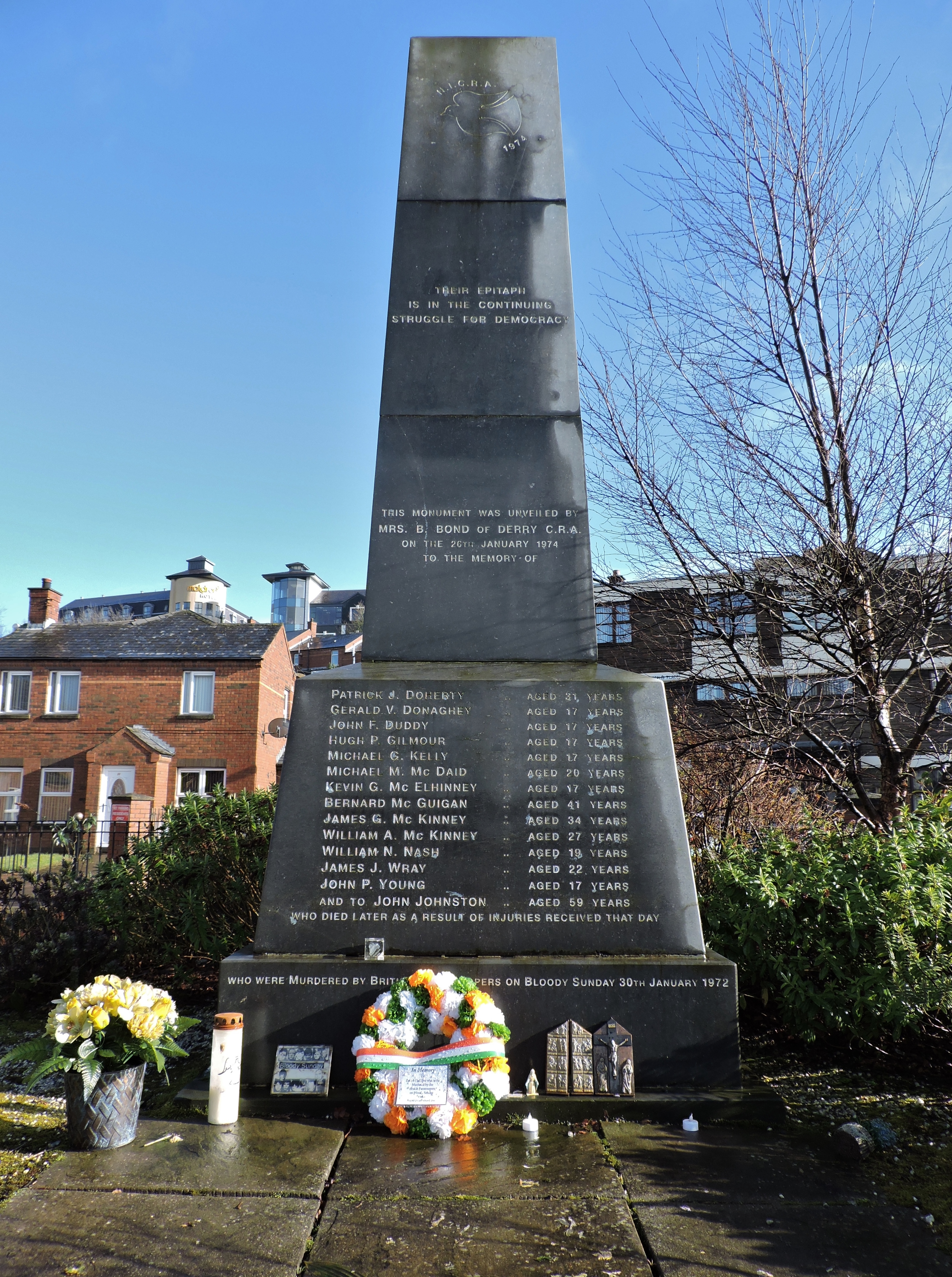
One of Derry’s most well-known tragedies is the Bloody Sunday Massacre which happened an unbelievable fifty years ago. On Jan. 30th, 1972 the British Army opened fire on innocent civilians during an anti-internment march. Thirteen men were instantly killed, another died later from his wounds. At least another fifteen people were shot by the soldiers before someone finally put a muzzle on them and made them stop firing. It seems impossible that so much time has passed since that day and yet the excruciating and never-ending search for justice has trudged on forever. The scars from this state-sanctioned mass murder are still everywhere you look in Derry and most have not healed. How do you cope with the loss of friends and family members when generations have been denied their proper recourse or closure? How can you heal from something so brutal without any justice? The short answer is that you don’t and when you visit the city of Derry, you know it. Its lion’s share of tragedy is impossible to ignore.

Bloody Sunday shocked the world to its core and changed the political landscape of this region forever. The level of aggression was something the people were not used to at that time and even though the British Army had said they would be cracking down on the Irish Republican Army (IRA) in Derry no one expected them to start firing at a march that was mostly peaceful and full of women and children. Ironically, the IRA had recently fractured and was on what arguably could have been its last legs until those shots were fired. Almost before the dust and CS gas settled, money and volunteers from all over the world were pouring into Derry. The nearly empty coffers of every Irish paramilitary organization were suddenly overflowing. With their blatant disregard for life and reckless shooting, the English soldiers guaranteed that they’d receive the same in kind and they did, for decades to come.

The authorities tried to stem the flow of funds and fighters by claiming that all of their innocent victims were bombers, snipers, and other “legitimate” targets. This only infuriated the region and inflamed the world. Thanks to brave photographers and their anonymous helpers, investigative reporters, strong survivors, reliable witnesses, and generations of determined family members, the truth did prevail and the innocent victims were finally recognized as such. However, as their families and descendants know all too well, the truth is not always enough. They still fight for justice, fifty long years later.

Derry’s many terrible tales are often told by those who are most affected by them. When you’re navigating the maze of streets in the Bogside, you’ll probably run into the son of one of the Bloody Sunday victims who takes visitors on a walking tour, reliving and retelling the tale every day. Families of the lost will lead you through a museum that chronicles the tragic deaths of their loved ones so that you better understand the cost of the conflict known as “the Troubles.” Old men and barflies will tell you amazing stories of the people and the area over pints in the pub. These oral histories will break your heart wide open, but they also might fill it again. The city will get under your skin whether you like it or not, but if you’re lucky it’ll also teach you a thing or two about life, love, friendship, struggle, and the incredible solidarity that humans are capable of, even in the face of the worst horrors we could ever inflict on one another.

The legacy of Bloody Sunday is just as complicated as the town itself but that amazing fortitude is a huge and important part of it. That stoic determination is one of the only tools that the families and survivors have to fight back against all the injustices that they continue to face. Please support them if you can. Take their tours, buy their books, learn their stories. Listen to them when they speak. Follow their cases and amplify their voices. Learn about what happened and how to help if you can. You don’t have to be local to Derry either. If you’re trapped in other parts of the world read some history books, or watch some movies and/or documentaries on Bloody Sunday and share that you did (in real life or on social media) leading up to this weekend. There are Sunday masses and remembrance events in the US this weekend in PA, NY, & CA (at least) and there are many more across Europe and the world. Attend one if you can so that the people of Derry know we remember them and that we still honor the survivors and victims of Bloody Sunday, even if fifty years have passed.

One world. One struggle.

*To learn more about current Bloody Sunday commemorations in Derry or to donate to them, please click here.

The Mighty Margaret Skinnider

When you listen to or read accounts (including my own) of Margaret Skinnider’s life it’s immediately clear that she was a fighter and a warrior. She was brave and devoted to Irish freedom. She was gravely wounded in the Easter Rising but somehow survived her injuries to continue fighting for Ireland, for recognition and pensions for women, and for Irish workers for the next five decades or so. Her fierceness has inspired many and we’ve all rushed to applaud Skinnider’s fighting spirit, using it to highlight and recognize the important (and often atypical) roles that Irish women played throughout history.

It’s pretty common knowledge that Margaret Skinnider was a teacher, a revolutionary, a union boss, a devoted suffragist, a deadly sniper, a commanding officer, an explosives expert, a smuggler and so much more. We’re used to seeing her as a dedicated, cross-dressing, sharp shooting freedom fighter so it might be a little jarring to hear one of her best friends say that Skinnider was love and kindness incarnate and that she was gentle. Sure she was a soldier who spent most of her life fighting for one cause or another but she was also full of empathy and love, kindness and compassion – and many of the historical narratives (including my own) overlook those aspects of Skinnider’s life.

This is part of a bigger problem. In our rush to make sure that women are counted among the heroes of history, we often highlight only the fiercest and more traditionally “male” aspects of them. We tell tales of how they outsmarted others and how they aggressively fought for something and proved themselves worthy of remembrance and praise. We often ignore their traditionally “feminine” sides in favor of a glorious and heroic tale. The famous photo of Margaret dressed as a boy with a cigarette dangling out of her mouth is a perfect example of that. We remind people that that she was a female sniper and one of only two women who wore a soldier’s uniform during the Easter Rising, and we set her apart from the hundreds of other women who were there in their Easter skirts and dresses. There were many other brave women on active duty and they each brought their own fighting spirit and individual set of skills…some of them even saved Skinnider’s life after she’d been shot multiple times. These women are just as worthy of remembrance whether we know their names and stories yet or not, even if they had more traditional roles. Margaret’s exciting and unusual tale has become more popular in recent years but in telling it we’ve done her a disservice. We’ve all celebrated her deeds but most of us ignored the other aspects of her life. It’s less common knowledge that Skinnider was as gentle, loyal and loving as she was aggressive. She lived a long life full of love, music and long lasting friendships. Her favorite song about Ireland was a somewhat sappy love song called The Jackets Green. She was a lesbian in a committed and life long relationship in an era when that was not only frowned upon, but illegal. Mary McAuliffe’s newish book about Margaret Skinnider uncovers that love story and much more. It is an overdue biography that focuses on Skinnider’s life as a whole, rather than highlighting one or two of her legendary acts. It gives our inspiring hero her entire life back, long after she passed away.

Which brings us to the point, dear readers. On this day in 1971, the mighty Margaret Skinnider threw off this mortal coil. She is buried in the Republican 1916 plot at Glasnevin Cemetery, where she rests next to many of her dearest friends and comrades. To remember her today, why not listen to this interview with Mary McAuliffe where she talks about some of the lesser known aspects of Skinnider’s life or you can listen to Margaret tell her own story of Easter week right here. If you’re like me and you still haven’t been able to break up with the written word, you can find Skinnider’s own 1917 propaganda masterpiece, Doing My Bit For Ireland in various places on the web and in bookstores throughout Ireland. While you’re at it keep an eye out for Margaret Skinnider by Mary McAuliffe as well.

The Mighty Anne Devlin

There are so many important women in Irish history that I could work the rest of my life (which I probably will) and not get to them all. That said, Anne Devlin is the one who started it all. Without Anne I may never have had the jump start I needed to begin writing again. I may never have started a blog and certainly would not have written a book. But it’s not all about me – without Anne Devlin, numerous rebellions in Ireland could have been compromised. Important uprisings would not have happened. Patriots would most certainly have been jailed or killed. Her fortitude and silence against all odds and various forms of torture probably saved thousands of lives, though it cost her dearly.

On this day in herstory, Anne Devlin Campbell passed away – long after her incarceration in one of the most notorious dungeons and prisons in Ireland. It’s amazing that she lived so long given her brutal treatment there. She was an elderly, broke washerwoman living in relative obscurity when she died, but she was never broken. This is some of her tale that I wrote and continue to repost every year in remembrance of this powerful woman.

Continue reading

Lyra McKee

Sometimes it seems that there’s never anything but tragic news coming out of Derry. I have to remind myself that there are plenty of wonderful things happening in the town I love so well and so many wonderful people who call it home…but yesterday as I sought those out my heart sank yet again. The headlines screamed out the news of a young woman who was killed in the crossfire on the city streets and it broke my heart.

Continue reading

Another heartbreak for Derry

The short time I spent in Derry utterly changed me. The wounded city stole a large part of my heart when I took my first steps into it – and my life, my writing, my opinions, and my studies have changed drastically in the years since that first visit. It is why I regularly set the alarm for an ungodly time here in the states to watch events as they unfold in Derry in real time. This morning was one of those days that I got up before the sun with my digital eyes glued to the news from The Town I Love So Well because after so many years of determination and stubborn hope, it was finally possible that the families of the innocent people who were shot and killed on Bloody Sunday would get the justice and the vindication that they deserved. It was easy to be optimistic when I woke up. After all, if the Prime Minister can call the killings ‘unjustified and unjustifiable’ why wouldn’t there be consequences for those who pulled the trigger? But my heart sank quickly as the news came in. The vast majority of those responsible for murdering innocent people and firing indiscriminately into a crowd of peaceful protestors will not be charged with any crime, despite overwhelming evidence that they should be.

It’s more salt in the wounds for the survivors and the families of those who were murdered. To see their astonishing grace and determination in the face of even more injustice this morning was mind blowing. Words are not sufficient for what they must be feeling and to remain so dignified in the face of this fresh devastation is beyond my comprehension. They will continue their quest for justice, despite this setback and the many other obstacles they’ve faced on this journey.  Please support them in any way you can.

One of their many incredible statements can be found here.

https://www.derrynow.com/news/justice-one-family-justice-us-say-bloody-sunday-families/271169


Their fight continues. Something inside so strong.

Dolores O’Riordan

She could sing like no other. She wrote hushed hymns and wailing battle cries. She hiccuped her way into the hearts of music lovers world-wide and turned a defiant protest song about her homeland into an international hit. Dolores O’Riordan was a force to be reckoned with and one of the most well known voices of Irish music for more than twenty-five years.

Continue reading

Dan Breen

Dan Breen was an integral and powerful man in Ireland’s long fight for independence. He was a husband and father, a gangster, a politician, a speakeasy operator, and an author, but first and foremost he was a self-described soldier who was dedicated to freedom.

Continue reading

Dublin’s Bloody Sunday

When one thinks of Bloody Sunday, what usually comes to mind is the 1972 civil rights march in Derry, where English soldiers opened fire on marchers and brutally murdered fourteen innocent people. This incident shocked the world and spilled over into pop culture leading to multiple songs, movies, documentaries and more – making it one of the most notorious moments in Irish history. It was not the first “Bloody Sunday” in Ireland, but (thankfully) it was the last. There have been four dreadful days known as Bloody Sunday in recent Irish history and the second (and most deadly) one occurred on this date, November 21st, 1920, in Dublin.

Continue reading