May 12th

Today marks the end of the anniversaries of the 1916 Executions. James Connelly was shot May 12th, 1916. He was carried into the prison yard and tied to a chair, due to injuries that would have killed him in a day or 2 anyway. Instead of letting nature take its course, they tied him to a chair and the firing squad shot him.

Last winter, a Sinn Fein guide mentioned rumors that he was already dead when they brought him into the yard, which was the first I had heard of the possibility. It wouldn’t surprise me  – after all, they were only posturing and proving a point by executing him, despite his feebleness and injuries. Either way, the 12th marks the anniversary of his death – and this photo was taken in December at the mass grave site in Arbour Hill. I quite like the leaves in the cracks – and while I sat at the grave, a feral tabby cat jumped right into my lap and started purring like mad, at just the perfect time.

It was a great way to spend  the afternoon.

Rest in Peace Mr. Connolly and all of your cohorts too.

Image

Remembering the Leaders of 1916

Remembering the Leaders of 1916

This plaque rests on the wall above the execution site in Kilmainham Gaol

Before the gallows……

Image

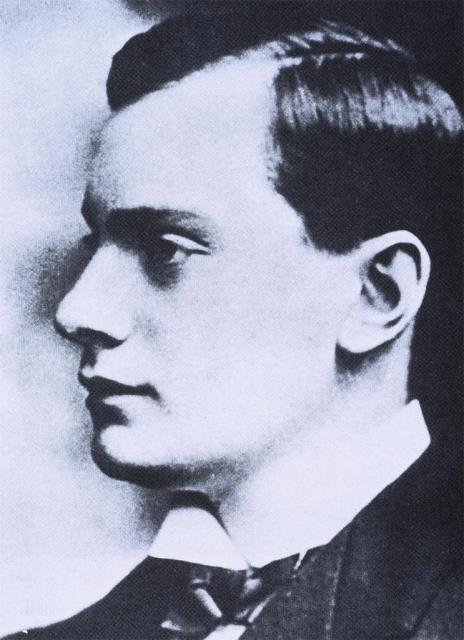
I believe that he knew he was about to be executed. I believe that he thought it was worth it completely. I have seen his letters to his mother in person, once he  was imprisoned and about to die. This schoolmaster, this poet, this philosopher and this hero of Ireland – this reason that I wear an Easter Lily badge – this man, is an idealist – a cheerleader – a man who never lost his faith in humanity and justice. He was amazing. His triumph was through his failure. His life was short but full and meaningful.

Nov. 10th, 1879 – May 3rd, 1916


Padraig Pearse’s Address to Court Martial:

I desire in the first place to repeat what I
have already said in letters to General Sir John
Maxwell and to Brigadier General Lowe. My object in
agreeing to an unconditional surrender was to prevent
the further slaughter of the civil population of
Dublin and to save the lives of our gallant followers
who, having made for six days a stand unparalleled in
military history, were now surrounded and (in the case
of those under the immediate command of Headquarters)
without food. I fully understand now, as then, that my
own life is forfeit to British law, and I shall die
very cheerfully if I think that the British
Government, as it has already shown itself strong,
will now show itself magnanimous enough to accept my
single life to forfeiture and give a general amnesty
to the brave men and boys who have fought at my
bidding.

In the second place I wish it to be understood
that any admissions I make here are to be taken as
involving myself alone. They do not involve and must
not be used against anyone who acted with me, not even
those who may have set their names to documents with
me. (The Court assented to this,)

I admit that I was Commandant General
Commanding in Chief the forces of the Irish Republic
which have been acting against you for the past week,
and that I was President of their Provisional
Government. I stand over all my acts and words done or
spoken in those capacities. When I was a child of ten
I went down on my bare knees by my bedside one night
and promised God that I should devote my life to an
effort to free my country. I have kept that promise.
As a boy and as a man I have worked for Irish freedom,
first among all earthly things, I have helped to
organise, to arm, to train, and to discipline my
fellow-countrymen to the sole end that, when the time
came, they might fight for Irish freedom. The time, as
it seemed to me, did come, and we went into the fight.
I am glad we did. We seem to have lost. We have not
lost, To refuse to fight would have been to lose; to
fight is to win. We have kept faith with the past, and
handed on a tradition to the future.

I repudiate the assertion of the prosecutor
that I sought to aid and abet England’s enemy. Germany
is no more to me than England is. I asked and accepted
German aid in the shape of arms and an expeditionary
force. We neither asked for nor accepted Germany [sic]
gold, nor had any traffic with Germany but what I
state. My aim was to win Irish freedom: we struck the
first blow ourselves but should have been glad of an
ally’s aid.

I assume that I am speaking to Englishmen, who
value their freedom and who profess to be fighting for
the freedom of Belgium and Serbia. Believe that we,
too, love freedom and desire it. To us it is more
desirable than anything in the world. If you strike us
down now, we shall rise again and renew the fight. You
cannot conquer Ireland. You cannot extinguish the
Irish passion for freedom. If our deed has not been
sufficient to win freedom, then our children will win
it by a better deed.

As we come to the end of the anniversaries for the execution dates in 1916, I have to stop and ponder the logic of the British government throughout history. The Rising was not popular and it was rife with miscommunication and leadership wars. If the government had not executed the leaders, making them martyrs, it may have been a footnote in history. They have made this mistake time and time again, almost as if they either WANT to concede their empire or as if they want the struggle to continue.

Whenever the people get sick of the fighting and membership of Republican fighters is down, they do something so wrong and so tyrannical that suddenly, there’s a giant surge in the ranks. This happened in 1916. It happened in Derry when the Army shot 26 peaceful protesters. It happened again when Bobby Sands and the other hunger strikers lost their fight and died in prison. Depending on how the dust settles, it may happen again in the aftermath of Gerry Adam’s arrest just weeks before elections. You would think that SOMEONE over the puddle would be more strategic and learn from their historical mistakes.

One of their biggest mistakes, was letting Grace Gifford and Joseph Plunkett get married the night before they executed him in 1916 at Kilmainham. It is a tragic love story of star crossed lovers – one that tugs on the heartstrings of anyone and everyone, even those who didn’t approve of the Rising. They were married in the prison chapel and were only allowed ten minutes of supervised time as husband and wife before the crown shot Joseph Plunkett the morning after the wedding. They were taunted and watched for the entire 10 minutes and yet, by all accounts, they only had eyes and ears for each other. 10 minutes of bittersweet joy before their love was destroyed – and as Shakespeare can attest to – that makes for an undying, sympathetic story that the whole world can stand behind, rebel or not.

Grace was a strong woman. She was the daughter of a mixed marriage (Catholic and Protestant) and was an unlikely rebel. She tried to make a living as an illustrator and a political cartoonist. She was to be married to Joseph Plunkett on Easter Sunday – plans that were made before she had any knowledge of the Rising. She insisted on the wedding in the prison chapel when she learned that her fiance was to be executed on May 4th, 1916. On May 3rd, she bought her own wedding ring and went to the jail to marry her love, despite her parents’ objections, knowing that she was to be a widow just hours later. She never remarried and remained Grace Gifford Plunkett for the rest of her days – a shining example of a dedicated Republican woman and a walking reminder of her tragic love story. She was known as Ireland’s tragic bride and she returned to Kilmainham Gaol as a prisoner years later.

Plunkett was a poet and a signatory on the Proclamation of Independence. Already a romantic and philosophical man, his wedding to Grace and their story of tragedy and dedication made their love a flash point of the rising that continued to burn after he was executed. Their 98th anniversary was just days ago.

Kilmainham has reopened as a museum and a tourist location. One of the first places you will visit there is the prison chapel where they were married. A projector displays their photos above the altar at the start of the tour and you will also see both of their cells while visiting. Hers still has one of her more famous paintings on the back wall – one of Mary, showing that her adoption of Joseph’s Catholic faith stuck even after her husband was killed.

On the 3rd floor of the Gaol is an unnerving and heartbreaking exhibition of ‘Last Words’ – featuring the letters, mementos, and other possessions of Republican prisoners and rebel leaders. The letters from the prison to Grace are almost as gut-wrenching as the correspondence between her and her future husband in the days leading up to their wedding and his death. It is impossible to stand in the room without feeling the power of their story and the shadow of their love that remains. It was also impossible for me to be there without tears streaming down my face for almost the entire tour.

So happy anniversary to Grace and Joseph. If there’s any justice in the world, they found each other again in their version of the afterlife and maybe someday soon, the free Ireland they both believed in will finally come to fruition.

ImageImageImageImage


The Star-Crossed Lovers of 1916

Hearsay and Folklore

Gerry Adams is getting a lot of flak for saying that his arrest was politically motivated and that the Boston Tapes were biased and not ever going to be used as evidence. Propaganda machines are churning on both sides since his initial arrest, trying to spin current events and the legitimacy of the Boston College Oral history tapes. Interestingly enough, the matter was decided by a judge long before  – and Gerry Adams may have been putting it mildly. The only surprise here is that the judge’s findings are not being reported….oh wait, I guess that’s no surprise at all

http://www.irishcentral.com/Federal-Judge-said-BC-tapes-full-of-hearsay-and-folklore.html#ixzz313Wvn3iC

In the Interest of Peace

Plastic Paddy. Eachtrannach. These are the words that I have been called in the last few days as I am an American who has waded into conversations about the arrest of Gerry Adams. There have been worse thrown in for good measure by certain factions who are cranky about Americans who stick their noses into Irish politics – particularly from the Loyaliist side because apparently Americans often side with the Republican mindset when arguing, myself included. And yes, I am a foreigner who lives in America and was not born in Ireland. I am not there now, when the fragile truce is closer to breaking than any other time since the Peace Accord and I did not have to live through the horrible events of the Troubles.

I have spent over 20 years studying the history, politics, and sociology of the Irish and the only thing that education lacks is the first hand experience. This subject is my greatest passion. I have an entire room full of books dedicated to Irish history and the societal struggles, including the controversial  ‘Voices From the Grave’ – which started this current debacle in the North of Ireland. I was thrilled to hear about the interviews in Boston and excited to read all of the books that I thought would come out but was horrified and angry when Boston College failed to protect its sources for their Oral History project. I was afraid then about what might happen in my heart’s home and I had every right to be, since the predictions I made while following that project and the resulting subpoenas have now unfortunately come true. From too far away, I watch the events unfold in Ireland with trepidation and a cynicism that fills my heart with sadness and fear for what is to come.

I am glued to the internet for news in Ireland, as most of the time, America can’t be bothered with any. Even this week, the headlines boldly printed the fact that Gerry Adams was arrested, but there’s been barely more than a sentence since and for me, that is not enough. I tuned into conversations on social media sites because I have no one to talk to about it here – since most of my friends are sick to death of hearing me talk about it. Their eyes glaze when I start speaking fervently about somewhere they don’t care about or understand – or worse, there’s a little smile and a shake of the head that says ‘there she goes again’ while they humor me. So I watch documentaries, news from other countries and search the internet for a conversation that I can participate in – one that doesn’t just dismiss this Plastic Paddy, who happens to be really educated on the subject and just wants to find others who are as passionate about it as she is.

What I found instead are thread after thread of infighting, arguments, how Irish are you competitions and closing doors. Most of the time it was not directed at me, but as I read through them I knew that there really is no safe place in this conversation for anyone – Irish or not. The many factions within Ireland can’t even talk to each other without cruelty and threat – reiterating what I witnessed first hand on a trip to Belfast a couple months ago – the Troubles are just a whisper away…and the arrest of Gerry Adams may be the final nail in the coffin of the incredibly fragile peace that a lot of Ireland so desperately wanted.

Gerry Adams was arrested in possible connection to the 1972 murder of Jean McConville, a connection that has haunted him since the Belfast interviews at Boston College and before. The PSNI, in collusion with the American government, have used the information obtained in those interviews to arrest many Republicans in the last few months – and their target and crown jewel was always going to be Gerry Adams. But I have to wonder about how little progress has been made with the UDA or the UVF terrorists also listed in those interviews – and why we have not heard of their arrests, as they were just as violent and murderous as the I.R.A. If this is truly a criminal arrest without political motivation, surely there would be big shots on BOTH sides being thrown in jail, right? Wrong. Now I have no doubt in my mind that Gerry Adams was at one point in the I.R.A. and that he might have done some horrible things 40 years ago. My heart broke for the sadness, bitterness and frankly dangerous and lonely lives of Jean McConville’s children, who just want answers. I understand their need. But  justice has to be even – and it is not.  Over the years, many Irish courts have repeatedly decided not to prosecute, not to reopen cases and not to investigate other situations in the interest of peace, much to the dismay of the victims. This one, this HUGE thing that could break the back of power sharing in the north and destabilize politics in all of Ireland, this is the one that they are pursuing. We must wonder why and we must look at a much bigger picture.

Sinn Fein has risen from being the I.R.A.’s political wing to existing as a viable party that was largely responsible for the cease fire and is slated to win many seats in the election just weeks from now.  At least they were, until this move by the British Police. Gerry Adams should arguably have shared John Hume’s Nobel Peace Prize for his work in making the Good Friday Agreement a reality and without him it would not have come to fruition. This begs the question – at what point do we excuse one’s past for his work in the present and on the future?

This is a question I’ve struggled with and pondered for weeks now. It’s hard not to make the comparison to Nelson Mandela – a terrorist and rabble rouser who spent 30 years in jail and came out of it a politician and world hero. I am sure in his wake there were many people who were dissatisfied with this elevation – who always saw him as a criminal or a terrorist and who would have loved to see him rot forever in that jail cell. The same is true of Gerry Adams. He runs the risk of being assassinated everywhere he goes and from all sides, including the one he may or may not have fought for as a younger man. But he put down the gun in favor of compromise,  left the war to forge a kind of peace and has been fighting to make his corner of the world better for years. Was he always this man? Certainly not – in fact, he was likely the exact opposite. He is also a politician – which you cannot be unless you have mastered the arts of deniability and bold-faced lying, and I have no particular fondness for any of them, anywhere in the world.  Still this arrest is a dangerous move and should be quickly resolved or everything he and his Sinn Fein counterparts have worked for may quite literally, explode.

I don’t have an answer to whether or not Gerry Adams was involved in the murder. I wasn’t even alive in 1972. I have a well educated guess or 2 and all I will say is that the only certainty in life is change. He changed quite a lot over the years and went from being on terror lists that banned him from travel and from radio and television, to being one of the most recognized superstar politicians in the world. He helped engineer one of the most important agreements for peace in recent memory and has led his political party to a larger area of success than ever before.  His level headed leadership is desperately needed, as anyone listening to Martin McGuinness’ public fury can attest to. The authorities need to release him before the frustration and violence boils over in  Belfast again, in the interest of peace.  If  Irish courts who should be looking into Bloody Sunday and British Collusion but won’t can use that excuse, then so should the authorities now – instead of holding one of the only men who achieved what years of civil war could not – a power-sharing, mostly peaceful existence.

It won’t answer what happened or who was responsible for Jean McConville. We wouldn’t get that whether they keep him or not. Sometimes, we don’t get answers as heartbreaking as that may be and I am so very sorry for her family. But when an astute reporter asked one of her daughters if it was worth the price of peace and she said yes, this Plastic Paddy in a far away land shook her red head in disagreement, even as my empathy rose and my moral compass flitted back and forth.

Peace is invaluable. On the road to it – in any kind of war – many terrible things happen that we all wish wouldn’t and thousands are affected. Any human should mourn with each and every one and abhor the acts that destroy families and ideals anywhere, hoping that peace will be the result in the end. If we are lucky enough to achieve that goal, it should be protected by any means necessary and if that means leaving some questions unanswered, so be it. In the interest of Peace.

Homesick For A Place That Isn’t Home (Yet)


Well, not in this life anyway. (Yet) 98 years ago, on Easter Monday, a big thing began in Dublin. I cannot  help but feel that I was there in some form or another – in a different life – because how else could I explain the connection I have to Ireland in general and that time in particular? The entire time I was there, I  had a never-ending sense of deja-vu and since I have been back, I have longed every day and dreamed every night of the emerald isle. I’m even learning Irish – and it drives me bonkers every day – but I cannot stop.

So this Easter to celebrate the Rising, I am wearing an Easter Lily for Ireland’s patriot dead and I added the GPO into the Atlas Obscura lexicon. It was all I could do, since I am on the wrong continent today. It is a lonely place in my head and heart – standing alone amongst the people I know in the things and the history that is so vital to who I am and learning a language that I have no one to speak it with. Still…as the fiddles play on the stereo and I watch Gerry Adams give a speech to the commemorative crowd in Dublin, I know in my heart that I found a home – and continue to explore it every day – even from too great a distance. And as he said this morning, “If this were 19 and 16, we would all be in the GPO”. I know I would, I think I was …and I will be again for the 100 year anniversary.

I repeat and expand on the Atlas entry here too…because of a deep love of the Irish Nationalist history and the fact that today is the day to celebrate the one place in all the world that I’d be OK with being labeled a Republican.


The General Post Office in Dublin on O’Connell street is the headquarters of the Irish Postal Service and a bustling hub of activity, but every Easter Monday it becomes a symbol of Irish revolution and a somber place of remembrance.

Dublin was still under British rule in 1916, when seven unlikely revolutionaries hatched a plan for an armed uprising during the Easter holiday. They were a headmaster, a poet, a tobacco enthusiast, a philosopher and more – just ordinary men who had grown weary of the boot on their necks. They were born of desperation and idealism – sure that all they had to do was begin before their whole country stood with them. In secret, they wrote a Proclamation of Independence and chose strategic sites in downtown Dublin for their Rising, including the post office along the main thoroughfare of the city. They felt that once the revolution began the people of Ireland would rise with them and they assumed that the British would not destroy their own property in retaliation.  They were mistaken on all counts.

The Rising had its problems from the beginning. Due to a split in leadership and miscommunications, even the date was confused. When the fighting didn’t begin on Easter as many thought, much needed would-be reinforcements turned around and went home. Despite this, the planned takeovers of government buildings began on Easter Monday, and the destruction of a large portion of Dublin shortly followed.

The general post office, or GPO, was the headquarters of the revolution. The men took over the GPO – not harming anyone who was there but not leaving either. Here the Irish flag was raised and the Proclamation was recited loudly, by Padraig Pearse to the jeers and complaints of the citizenry who just wanted to post their mail. When the British began to shell the area with heavy artillery, the complaints grew louder. The post office was eventually set on fire and mostly destroyed, along with many of the buildings around it. In the end, the British army had no qualms about destroying most of downtown Dublin to defeat the upstarts in the GPO.

The Easter Rising only had to last for 3 days to have a chance, because of an agreement with Germany. The German government had promised that if they could last 3 days, the question of Irish independence would be put on a global platform. Unfortunately, it was Germany…in the middle of World War 1 and well, the Irish rebels chose poorly in their ally in this matter. Still, the Rising lasted for 6 days – with less than 500 volunteer fighters against the might of the British Army. It would likely have been a mere footnote in history, but for the fact that all seven signatories and on the Proclamation and many others were then tried in secret and executed by the Crown, at which point they became martyrs to Irish freedom. Their short-lived fight eventually led to Ireland’s independence and the leaders are revered to this day. Decades later, their proclamation is located in many Irish government buildings including the GPO and on countless memorials.  It is read every year on Easter Monday at the renovated post office by a member of the Irish Defense Forces.

An Easter Lily is worn by Nationalists to symbolize the rising – and it too can be found everywhere in Ireland – in statues, memorials, Northern Irish murals and on countless lapels throughout the country and the world. No one honors their history or their martyrs like the Irish.

All that remains of the original GPO is the beautiful Georgian facade. The facade has its own visible scars of bullet holes, cracks and mortar damage that stand in mute testimony to the history of Irish Nationalism. It is a powerful place for anyone who enjoys history and it brought tears to my eyes. It is still one of the busiest post offices in all of Ireland and it houses a permanent exhibition of its role in the Rising called Letters, Lives and Liberty. Every year on Easter Monday, a wreath is laid outside the General Post Office, parades honor Ireland’s patriot dead the Proclamation is read to commemorate the men and women who fought in 1916.

Getting my Irish history on

Death Culture – American v. Irish

Over the last few weeks I have been thinking a lot about death. On my travels to Ireland, I realized just how differently death is dealt with there, rather than America. Perhaps because it is a much older country and Ireland has always had such a spiritual side – be it pagan or religious – death in that place is vastly different than here. There are graveyards everywhere. Even when the church that used to stand is in ruins and the elaborate grave markers are no longer legible, there are flowers and visitors to the cemetery, or little notes and quiet conversations with the dead. It is not as if the culture is a death worshiping one, because it is not – it is simply that the memories are longer and the respect for both ancestry and friendship runs deep in the veins of those who live.

As we traveled, taking pictures of gorgeous ruins, elaborate graves and old churches, we ran into enough people sitting quietly in the middle of nowhere and speaking in low Gaelic to the friend or relative in the ground that we started getting uncomfortable with our intrusions. This was on us though and the way that our culture views death – I don’t think that we offended anyone by our presence in the medieval graveyards. While I am sure that some of those conversations were about the crazy girls with the cameras and how odd it was to see them in December, we never got a scandalous glance – just a few shakes of the head or confused looks and some who clearly wondered if we too were visiting a long-lost friend or family member.

As we explored the ruin of Lislaughtin, there were many people and many notes to visitors, such as a bar that was carved with the words, “kindly kneel and pray” – a polite suggestion that reminded you of where you were and that the space should be full of reflection, remembrance and respect. It was hard not to listen to the ancient women speaking in soft Gaelic to their loved ones that were interred there, or to try to figure out who they were. Instead, we felt like intruders and snuck out quietly.

I think we were wrong to feel that way. I believe that our culture has a different idea of what death is and that being raised here, we felt uncomfortable in the presence of those who simply see death as a different way to honor a life that touched theirs. It is not as if we were disrespecting the grounds or the people in them with our presence – we were stunned by the history and the beauty of the place – yet we still felt like our presence there was unsanctioned somehow, and I think that is due to the fact that our culture views death as the end of someone. We see their grave as a sad obligatory place to spend their birthday or a holiday. Many in our culture do not view it as a place to tell stories or catch up with a spirit, or a place of enlightenment or beauty.  For us, it is a sad reminder of who WE lost and an uncomfortable moment of where WE will eventually be, which is not something our self-centric society is OK with. We do not see it as a peaceful and holy spot for THEM to rest, or a thing to reflect on except in how their loss pertains to us.

The short attention span of Americans and lack of a long history seeps into our lives in the strangest of ways. I believe this to be one of them. We are so into ourselves and our lives that once one is over, we still make the ghost about those of us that remain. We either hang on to them with a clutched fist, parading our pain for years to come until it integrates with who we fundamentally are or we turn off and become numb to the process of death or grief. We demand information, sympathy and respect for what we have gone through – but often, we do not give the same to those we have lost, unless it is a sad anniversary, important date or birthday. Either we become brittle and judge everyone for not understanding our pain or we cling to the memories of that person so much that we forget we have a responsibility to live ourselves, if only so that we have stories to tell them when and if we meet again or spend a day at a graveyard.

Some of us put our dead on an impossible pedestal, suddenly turning them into the saints we aspire to be until we forget who they really were or what conflicts we may have had with their personalities or traits. We use them as a  marker in our own lives, to judge who we were before and after they were gone, and we wear our badges of how much sadness we feel without them – using this as an excuse to judge or to pull away from others who can’t possibly understand our loss or our feelings. We hang their pictures up on social media as proof of how we still remember, never once thinking of how that may affect other people, when they come across the feed. We vaguebook about feelings, about deaths, and about who, how or where we are in our emotional state and we have no consideration for whether we should do these things and no concept of how it may affect others or our relationships with them. It’s now, now, now – all the time and gods forbid if anyone judges or questions that instant gratification.

The lesson I learned while traveling, is that the person in the ground, ocean, urn, or cannon is someone that we can carry with us every day without the misery, loss or badge of fucked up baggage. That person is still a person, separate from how they affected us – and when you take the ego and the demand out of the equation, you are left with someone you liked, loved or perhaps didn’t even care for – but who touched you somehow, and perhaps it could be better for them to hear it themselves. It may also be better for us to tell them, rather than the “friends” we have on an internet site.

Don’t get me wrong, EVERYONE grieves differently, just as everyone loves and lives differently – and far be it from me to judge anyone on how they do it. I’m just thinking out loud here about the differences that I have seen while traveling through parts of the world that can’t rely on the internet and how I saw them deal with their losses without that tool. There’s a ritual side to actually stepping away from the screens and heading out to a place for the memories and the visits that just isn’t possible to convey on the internet – and I liked being reminded of that and seeing it firsthand.

I guess that is what this post is about, more than anything else. In this day and age, we find out on Facebook when a friend or acquaintance has passed, or when our loved ones are hurting, remembering or grieving. The separation that brings is getting harder and harder to erase as the instant information culture booms and the paranoia and anxiety that brings is palpable. Sending a (hug) is not the same as holding that person in your arms no matter what, and feeling that lack of human connection has been harder since traveling to a place that doesn’t have that constant demand for instant information or gratification. The mirror was hard to look in to, as I have been guilty of all these things too – and what I learned there is that FOR ME, it is not OK.

It is a lesson that I hope stays with me for a long, long time.Image