Mary Anne Mamie Cadden

Mary Anne “Mamie” Cadden is one of the more polarizing figures in Irish history. She shines a light on the brutal realities faced by countless women when reproductive choice is not merely restricted but actively criminalized. Her tale also reveals the deep cost of working in the shadows for a society that outwardly condemns your services while quietly depending on them.


Mamie Cadden was born in America but her Irish parents moved their growing family back to County Mayo and raised them on a farm. Mamie loved the farm but did not want to spend her life there so when she got older she sold her portion of the land to get the schooling she needed to become a licensed midwife in 1926. She excelled in her craft but it was her extra curricular services that would both define her legacy and seal her fate. Mamie worked hard, providing full reproductive healthcare for women who had nowhere else to go. She offered maternity care, arranged adoptions and fostering services, but she also helped women with unwanted pregnancies by providing illegal abortions. Women traveled from across Ireland, seeking care that the official medical system could not and would not provide. Cadden built a thriving word of mouth practice that served multitudes of women and she prospered because of it. She dined at the city’s finest restaurants, went out socializing and dancing, drove a bright red car, and lived as though she had every right to this prosperity, because she believed she did. She rejected the shame and secrecy that Catholic Ireland demanded from someone like her, and this loud flamboyance cost her. She was arrested and jailed multiple times. These stints in jail resulted in Cadden losing her license but each time she was released, she carried on. Irish women from all walks of life continued to find their way to her door until 1956.

Everything changed when one of her patients, Helen O’Reilly, died. Multiple deaths had been connected to Cadden but police could never tie them directly to her until Helen passed. Helen’s death could not be swept under the rug (like the others allegedly were) and suddenly, the crucial care Cadden gave became her downfall.

The police made an example out of her and prosecuted her fully. She was the first and only person in Ireland to face capital punishment for a maternal death resulting from an abortion, despite the fact that such deaths occurred regularly before and after her time. The polite society that secretly needed her then publicly shunned her and the papers sensationalized the “backstreet abortionist” as a murderess. “Nurse Cadden” became shorthand for something sinister but that framing obscures what she actually was: a woman filling a void that church and state had created but refused to address.

Mamie Cadden’s death sentence was later commuted to life in prison but that life ended suddenly just a few short years later. She began serving her time in Mountjoy Prison, but was eventually moved to the Criminal Lunatic Asylum in Dublin where she died of a heart attack on this day in 1959.

Cadden’s story is not a cautionary tale about the dangers of abortion. It is evidence of what happens when legal, accessible reproductive healthcare is withheld from women. When we call her a “backstreet abortionist,” we are borrowing the vocabulary of the people who criminalized this care in the first place and it is used here as a historical reference only. In truth, Mamie was a convenient scapegoat for a system that preferred to punish people (mostly women) rather than examine its own structural failures. Women who were facing unwanted pregnancies or dangerous births had almost no legal options at that time (don’t get me started on the laundries) and the official medical system, constrained by law and Catholic doctrine, could not help them. Mamie Cadden could, and she did. In the end, she was neither a demon or an angel. She was a woman who recognized a need, had the skills to meet it, and operated in the gaps left by official medicine. Her story is not really about her own choices; it is about the systems that forbid choices, thereby forcing women into dangerous situations and then criminalizing the people who try to help them.

Contraception was outlawed in Ireland until 1979. Abortion was illegal until 2018 when voters repealed Ireland’s Eighth Amendment and changed reproductive healthcare on the island even more. The services that once made Cadden a criminal are now legal and accessible. That shift did not happen because Irish society woke up one morning with different values. It happened because Irish women had suffered for long enough and would no longer tolerate the silence, travel, and secrecy around this topic. It happened because enough people finally recognized that criminalizing reproductive healthcare creates more harm than it prevents.

Mamie Cadden understood this when she opened her practice 100 years ago and her story should serve as a vital reminder that nothing will ever eliminate the demand for abortion services. She reminds us that laws against abortion only push these services underground, often with tragic consequences. This is especially important to remember in this day and age when women all around the world are actually losing this crucial option. Women need safe abortion care and Mamie Cadden and Helen O’Reilly both remind us that only tragedy follows when that choice is taken away.

An easy list for everyone

Yes it’s that time of year again. St. Patrick’s Day is upon us and here on the U.S. side of the puddle, it can quickly become a trash fire of epic proportions. This year I’ve decided to improve the easy list I started a few years ago so that we can hand it out to our shamrocked, leprechaun hat wearing, fake Irish-dancing friends in order to keep them (and us) from acting the fool. Here’s five simple DON’Ts and one DO that will make the Wearing of the Green safer and more palatable for everyone, no matter where you live or where you’re from.

1. Don’t pinch people. It’s rather hard to believe in the age of the #MeToo and #TimesUp campaigns that anyone still has to be told that aggressively grabbing, touching, or pinching strangers is wrong. However, just in case you thought that rule didn’t apply on St. Patrick’s Day let me remind you that it is still wrong to pinch (or touch) any part of anyone for any reason without their permission. It will always be wrong to to touch or pinch people in any way without their consent and many people will be too intoxicated to give consent anyway, so keep your little pinchy urges and tiny crab claw fingers to yourself and just say no. Everyone, male or female, with thank you for it.

2.  DO. NOT. ORDER. AN. IRISH. CAR. BOMB. Seriously folks, I don’t know how many times I have to say this to people. Nothing personifies ignorance, caricature, and casual cruelty better than walking into an Irish pub and ordering up an Irish Car Bomb. You wouldn’t walk into a NYC bar and order a 9/11 would you?! Then don’t order a fuc%ing carbomb, for the same reason.

This horrifically named cocktail is American-made and designed to get you very drunk very quickly. It is highly effective but it’s also named after a weapon that has been used to kill and maim literally THOUSANDS of people in the country it’s named after. No one who grew up in Ireland (or knows its history and/or has a deep love for it) can tolerate the obnoxious name for this drink and for many Irish people, it brings up trauma and terrible memories. It is not funny, not appropriate, and not cool for you or your friends to sell or order any drink by that name. It may get you kicked out of your favorite Irish pub and it could (and should) get you kicked in the face.

That being said, Irish Whiskey, Irish Cream, and Guinness are all very tasty treats. You can order and pay for a glass of each, mix the ingredients yourself, and try a delightful, super-intoxicating elixir. If you work at a bar, you could make up a new drink special just by calling it something else (it’s also been referred to as the ‘Holy Trinity’ and ‘the Ulster Flip’) or you can just refuse to serve it at all and many Irish people and Irish history fans would thank you for it.

3. Don’t misspell the name of the day. If you’re hunting for Irish-themed decor or clothing, choosing a hashtag, or you have some other reason to shorten the name of this holiday, please remember that the correct shortened spelling is P-A-D-D-Y. It’s not St. Patty’s. There are no Ts in the Irish spelling of Padraig, nor any Ts in the abbreviated and shortened version of it. Just remember what a very good friend of mine once said, (very loudly and proudly I might add) – “I always remember to stick with the Double Ds”.  We were actually talking about his taste in women at the time, but the same rule applies here just as well. Which brings us to another important thing to consider.

4. Don’t buy into stereotyping or bigotry.  If you want to celebrate St. Paddy’s Day good on you but you don’t have to propagate the stereotypes to do it. Pass on anything that conveys the message that Irish people are drunks, fighters, leprechauns, or idiots. Find something that celebrates Ireland’s rich culture instead of something that mocks it. The Irish have fought against these stereotypes for years and buying a T-Shirt that propagates them may seem harmless but it isn’t. The only way companies will ever offer a wider, more celebratory variety of St. Paddy’s Day swag is if their customers quit buying awful, bigoted costumes. Pass on the ‘Kiss me I’m Irish’ stuff too unless you are actively consenting to anyone doing just that. (See #1)

Don’t insult Ireland’s culture while you claim to be celebrating it.

One more thing along this line – when you’re using your outside voice, please realize that no one says “Top o’ the morning” or “Give me my lucky charms” ever and that fake accents of any kind are obnoxious whether you’re drinking or not. Just keep that lilt in check.

5. Know your history. In IrelandSaint Patrick (Padraig) is celebrated for “driving the snakes out of Ireland” which is a metaphor for bringing Christianity to the island and systematically erasing its pagan roots. Thankfully that is not what most people are celebrating these days and many of the bigger parades and parties are more secular in nature. The Catholic influence is also why the color code of the day is green, which is traditionally associated with that faith in Ireland. You shouldn’t have to wear it on St. Patrick’s Day if you’re not a Catholic but you try to explain that to a million and one drunken Grabby McPinchersons! It’s exhausting and just easier to wear green. (See #1.)

I’m all for transforming the holiday from a religious one to a party and cultural celebration but I’m also a firm believer in the whole live and let live thing. Feel free to preach about the wonders of St. Patrick, go to mass, and have a quiet night in if that’s what you wish – or party until dawn howling at the moon if that’s your thing. However, NEVER insist on telling others (ESPECIALLY if they’re Irish) how to celebrate their own holiday. That makes you the asshole, not them.

And there you have it. Five things you shouldn’t do this year or any other for that matter. As for the one DO – DO WASH YOUR HANDS A LOT AND STAY HOME IF YOU ARE SICK. If you’re  happy and healthy have fun, get wasted, dye your hair green, take the green Mardi Gras beads out of the closet, go to mass, wear a shamrock or a lily, sing some rebel songs or do whatever else you were planning to do – just try not to be a complete asshole when you’re doing it. Be sure to think ahead and plan a way home so you don’t hurt yourself or anyone else. Have a blast and remember one simple thing – treating other people and other cultures better every single day makes the world a better place. Start today.

See you out there in the trenches.

Sláinte.

Read This

I’m just popping on for a minute to link to an amazing article that was written a year ago, but I found only recently.  I’ve been struggling with a post that is similar for a few years, but this one says it more succinctly (and with less of a frustrated and horrified tone) than I have been able to. It’s worth a read no matter what side of the puddle you’re on regardless of when it was written, given that right-wing bigotry is still spreading throughout the world. Well done Ms. Markey.

WHAT THE HELL HAPPENED TO IRISH AMERICA?!?

Greysteel Devil’s Night Massacre

The conflict known as the Troubles was a long war on many fronts. There were some people fighting against those they saw as invaders and oppressors and others fighting to show how loyal they were to the country they felt part of. There was also a propaganda war being fought as various groups tried to reach sympathetic audiences (and large pocketbooks) around the world. The third battleground was the deadliest of all and it was comprised of all the tit-for-tat, mostly Sectarian killings between various paramilitary groups. This last front resulted in the vast majority of civilian deaths throughout the region and it was the hardest to prepare for or justify. It includes the Devil’s Night massacre at the Rising Sun bar in Greysteel, which happened on this day in 1993.

Continue reading

No Stone Unturned

Living in California has its pros and cons. The weather is great but the strong Irish communities here don’t get as much love as they do in New York or Boston. It’s rare that the West Coast gets concerts, political visits, or films out of Ireland but that’s not to say that we don’t seek them out. We do have fairs, film festivals, and other events throughout the year but to see current news and films, we often have to trick the location sensors in our internet browsers so we can scour the internet for hours on end until we find an article, a link, or a video. That determination is how I’ve been lucky enough to see many fine Irish films, despite their lack of distribution in the states. This list now includes “No Stone Unturned,” a riveting and super important documentary by Alex Gibney about the brutal, “unsolved” murders of six people in a Loughinisland, County Down pub during the 1994 World Cup.

Continue reading

Civil Rights

In the civil rights arena, America gets a lot of the press and always has. Many of the worst atrocities and biggest conflicts in the movement happened in the United States, and they continue to happen to this day. Hollywood has made plenty of movies chronicling the American fight for civil rights, including one about the fateful march from Selma in 1965 that raised awareness and inspired equality all over the world, especially in the north of Ireland where another civil rights movement was being born.

Continue reading

The Rising’s Last Child

Ireland’s Easter Rising took place over 100 years ago, so one could be forgiven for assuming that all those who lived through it are now long gone. Interestingly enough that assumption is wrong. Father Joseph Mallin was only two when his father was executed by the English for being one of the leaders of the insurrection. Today he is 104, and as of this writing he is not only still alive, but he is also still fighting to set the records straight about his father.

Continue reading

The Harp Bar Bombing

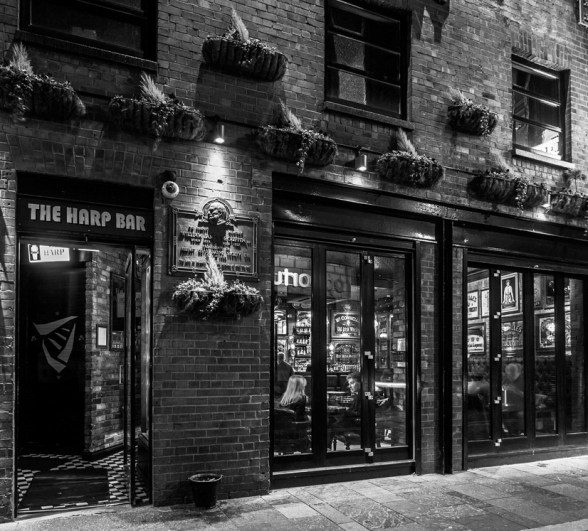
On this day in 1975, John ‘Sean’ Doherty and Denis McAuley were murdered by a bomb that was thrown into the Harp Bar in Belfast. Given the giant explosions of the time period, it was a relatively small attack but it resulted in two deaths and multiple injuries. It was also the second attack on the centrally-located Harp in only ten days.

Continue reading

International Women’s Day

Last year on International Women’s Day I was in Derry, exploring the murals that were off the beaten path. I found many honoring the women of the area – including one that was painted in honor of International Women’s day itself. I find that looking through my pictures of them now is just as inspiring as it was then, and I think sharing my favorites on both sides of the puddle is especially powerful on today of all days.

Continue reading

The rebel chanteuse

Many musicians and bands have sung traditional Irish rebel songs throughout the years and one of the most powerful females to do so was Kathleen McCready Largey. She was an amazing songstress and a strong voice both inside and outside of Ireland. Her voice even graced New York’s mighty Carnegie Hall once or twice and audiences on both sides of the ocean loved her.

Continue reading