I do other things too…(shameless self-promotion)

One of my other passions aside from all things Irish is jewelry making. I usually make larger, more dramatic pieces but this delicate gem is inspired by the Irish wedding I am lucky enough to attend tomorrow. It’s too bad the bride said she didn’t need jewelry. Garnets and sterling silver are always such a lovely combination.

Garnet Celt

Continue reading

Battle of the Bogside Begins, 1969

45 years ago the Nationalist people in the Bogside area of Derry began a legendary fight with the British authorities that is widely regarded as one of the first events of the Troubles in the North of Ireland. The violence, rioting and battle began on August 12th, 1969 and was ignited by an ill-conceived decision to allow the Apprentice Boys to parade near the Nationalist and Catholic areas of Derry.

The authorities saw no reason to stop the oppressive parade that had been happening annually for years. What made this year different than others though was the political climate, which they were not in the habit of paying attention to. The Civil Rights movement was gaining traction all over the North and had led to many skirmishes in Derry already that year. The level of dissatisfaction in the Catholic and Nationalist areas including the Bogside, was already palpable and growing stronger every day. In 1969, Catholics made up more of the population than any others but the Protestant Minority still held all the key positions in government and power so they had no recourse for injustices they faced. Many flooded into the civil rights movement in order to have a voice – and those voices were getting stronger and stronger, despite being ignored by the leadership of the city.

It was under this kind of tension that the parade was not only allowed to happen, but it was going to happen right in their faces. It was the spark that sent the Bogside over the edge. In the days leading up to the parade, many attempts were made within the area to keep residents calm and a request was sent to the Apprentice Boys and the government to either cancel or to reroute the march. The plea was refused and the attempts for calm became plans for defensive maneuvers.
Continue reading

Operation Demetrius

It sounds like a mysterious and enticing thing, Operation Demetrius, so grand…like a top secret cocktail party or a James Bond tryst. It wasn’t – it was just a pretty name for a terrible thing that caused all kinds of problems. It’s better known as Internment and the British introduced it to Northern Ireland on this day in 1971.

The arrests began around 4AM. Witnesses report brutality, abuse, and unnecessary destruction by the police while they searched for their suspects. Other than damage to their homes, the police brought damage to their bodies as well, strapping some to armored vehicles as human shields and wielding batons and other weapons even when they were not resisting. Those arrested were subjected to sleep deprivation, starvation, forced nudity, burns and other forms of torture, all of which were sanctioned by the British government.
Continue reading

1916-2016

As someone who has been a long term student of Irish history, I have been looking forward to the centennial celebration for years and years. At first, I thought I’d have to watch it from afar – and I still may yet have to do that, but the goal is to spend about a month wandering through the whole of the Emerald Isle before culminating in Dublin for the 100 year commemoration of the Easter Rising. I have been devouring any information I can find on the planned celebrations for years and have found it all woefully lacking. I still can’t even get an answer about whether it is going to be planned for Easter, which is incredibly early in 2016, or if it will wait until April 24th.

I started paying attention to what the people in charge were and were not saying. Modern politicians seem to be more concerned with whether or not the British royalty will show up than they are about planning something awesome for their own people. Given that they owe their positions to the rebellious men and women of 1916 (also before and since) you would think that they’d be getting ready to honor them.
Continue reading

August 5th, 1969 the UVF attacks RTÉ

Today marks a dubious anniversary. On August 5th, 1969, The Ulster Volunteer Force (UVF) accomplished its first bombing in the Republic of Ireland. The attack was centered on the RTÉ Television Center in Donnybrook, Dublin. Luckily, no one was injured in the blast and only the facade and a few windows were destroyed. The main transmitting tower was spared in the explosion and security increased immediately to prevent any further attacks on the station.
Continue reading

Hunger by Choice – Hunger Strike Commemoration

The Hunger Strike is an ancient custom that has been used for solving serious personal and social conflicts for centuries. The concept was originally an option for fighting injustice and it remains so to this day. August 3rd, 2014, is the day Hunger Strike Commemorations in Ireland wind up for the year, which is a perfect time to learn about the tradition and some of the people who have carried it on.

The Hunger Strike was codified in the early Brehon Laws of Ireland and known as a Troscad. It was often employed against a chieftain or tribal leader by someone of lower standing and was carried out publicly on the abuser’s doorstep. Advance notice was given before commencing this type of strike and the defendant was supposed to fast along with the person who had the complaint. If the originator of the strike died of starvation their opponent had to pay relatives a fee and would be subjected to societal penalties and supernatural consequences. Few people allowed themselves to be shamed in such a situation for long and most conflicts were resolved quickly and without death. It turns out that forcing the other party to go hungry right along with you made a difference, as did the peering eyes of the public.
Continue reading

The Irish Origin of Rubber Bullets

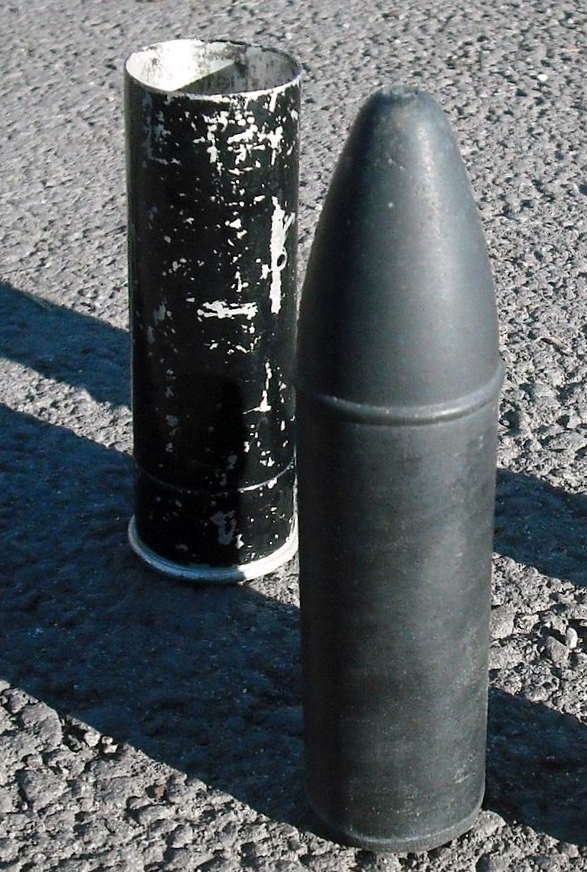
Ireland is famous for many things. Rolling green hills and natural beauty, monolithic tombs, castles, faeries and lore, wool, turf, and whiskey are just the first that come to mind. But it has many more dubious claims to fame as well – and one of those is the notorious rubber bullet.

The rubber bullet

The rubber bullet

This little guy was designed by the British government specifically for use in Northern Ireland as a crowd control tool against rioters. Those pesky people who wanted civil rights were causing problems and just wouldn’t stop. Because the British soldiers had fired on them numerous times and caused a significant number of deaths in the region, the government decided to give them a different option. They unveiled these totally better, non-lethal rounds (eye roll) so that they could hurt people but not kill them. The rounds were created to cause scars and pain, but in theory, they would not cause death. They were used for the first time on August 2nd, 1970.

Continue reading

Miami Showband Massacre

Throughout history there are not many instances that one can absolutely prove that a horrible crime was just a part of a scheme that would have led to something much, much worse. The Miami Showband killings in Ireland is one of those times and it is an appalling lesson of just how brutal and insane the Troubles could get. It  is also a clear cut example of how involved the authorities were in some of the most heinous crimes of the era.

Showbands were quite a popular phenomenon in Ireland. The uniqueness of the showband was documented in the film “The Commitments” which was popular throughout the world. These bands usually had five to ten members and were loved for playing showtunes, pop music, jazz and down home rock n roll greats.  Many played the favorite traditional tunes of the area as well and they were extremely popular from the 50s right up until the mid-seventies. It’s amazing how quickly attendance and participation waned when one was targeted so ruthlessly by the paramilitaries of the UVF. Continue reading

Howth Gunrunning Ladies

100 years ago exactly, a large shipment of arms landed in Ireland. It took the actions of extraordinary women to accomplish the Howth Gun Running scheme of 1914. One, Alice Stopford Green, gave a loan to have the capital for negotiations. Two more, Molly Childers and Mary Spring Rice, raised the rest of the funds to purchase the weapons. They were transported on the Childer’s family yacht – The Asgard – and two of the women sailed proudly with them. This is not to say that they did it alone but without the actions of these women, this large landing of arms destined for the hands of the Irish Volunteers may never have happened. Continue reading