Grace Gifford Plunkett is born

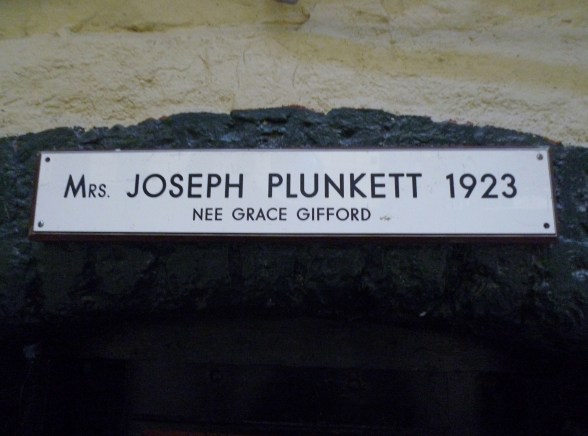
Perhaps the biggest tragedy and the best known story in modern Irish history is that of Joseph Plunkett and Grace Gifford’s doomed love affair and hasty prison wedding. The tragic romance sits right next to Romeo and Juliet in the great sagas of impossible love, and their story may be one of the largest reasons that popular opinion swung in favor of the rebels after the 1916 Easter Rising. The day the British executed Joseph Mary Plunkett, they guaranteed that the story of the rebellion would no longer be remembered without the emotional inclusion of Ireland’s favorite tragic widow – Grace Gifford Plunkett. But before there was a widow, there was a headstrong, artistic woman – one who was born on this day in 1888.
Continue reading

Happy Burn’s Night

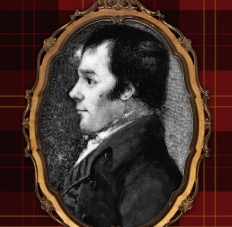
Raise a dram or two of your favorite Scotch and throw some pipes on for a few this evening in honor of Mr. Robert Burns. It’s Burns night – and even if you think you don’t know who he is, I guarantee you’ve drunkenly slurred out his poetry on at least one New Year’s Eve in your life. (Here’s a hint: Among many other things, he also wrote Auld Lang Syne)

On Burns Night, the poetry should flow freely, the pipes should play loudly, and there should be at least one Ode to a Haggis. You can blame the Scotch for that. If you can find a Burns Supper where you are, I recommend going at least once.

In lieu of a Burns Supper, get to know some of his poetry. It is one of Scotland’s greatest exports. Here’s another quick verse of another great poem of his that I love to bits:

“Had we never lov’d sae kindly,
Had we never lov’d sae blindly,
Never met — or never parted —
we had ne’er been broken-hearted”

Happy Burns Night!

 Rabbie

Joseph Mary Plunkett

On this day in Irish history a mighty warrior poet was born. Joseph Mary Plunkett was born in one of the wealthiest parts of Dublin with the proverbial silver spoon in his mouth. He should have had a wonderful childhood, surrounded by wealth and adventure—and in some ways he did—but a terrible case of Tuberculosis threw a wrench into many roads he may have otherwise wandered. The disease was something that affected him for his whole life, leaving him weak and infirm in many ways but it also gave him focus and determination. Joseph became a journalist and a prolific poet. Later in life his study of  languages, the written word, and a love for theater brought him into a close friendship with Thomas MacDonagh, another poet and politically charged man. Thomas was married to a woman named Muriel, who had a charming sister named Grace. She would become the love of Plunkett’s life. Aside from their mutual infatuation with the Gifford girls, the men were also active in the Gaelic League, the Irish Volunteers, and the secretive Irish Republican Brotherhood. In addition, they co-founded the Irish Theatre, bringing their love of drama to the stage.
Continue reading

The Irish Love Story

This love story turned a new page yesterday. They started as random long distance/online pen pals – he’s from Dublin, she’s from the U.S. – and 8 months later, he’s here in the United States and this just happened.

love and marriage

love and marriage

For more on their whirlwind romance and love story click here. And then raise a glass in congratulations and hope. His parents have been married for 54 years next month – hopefully these two have that same kind of luck and fortitude.

Slainte!

Peaceful

Mostly peaceful parades have nothing on these places and moments that I experienced in Ireland. I needed to remember and share a few beautiful places to wash away the ugliness and the anxiety of the peak of the marching season from my brain. All were taken December 2013 by me and none are Photoshopped, amazingly enough. The last one really feels like  July 13th….the calm after the storm.

 the peak of Connor Pass

the peak of Connor Pass, Dingle Peninsula

P1030632

Sunset on the Cliffs of Moher – or the Cliffs of Insanity if you love the Princess Bride

P1030865

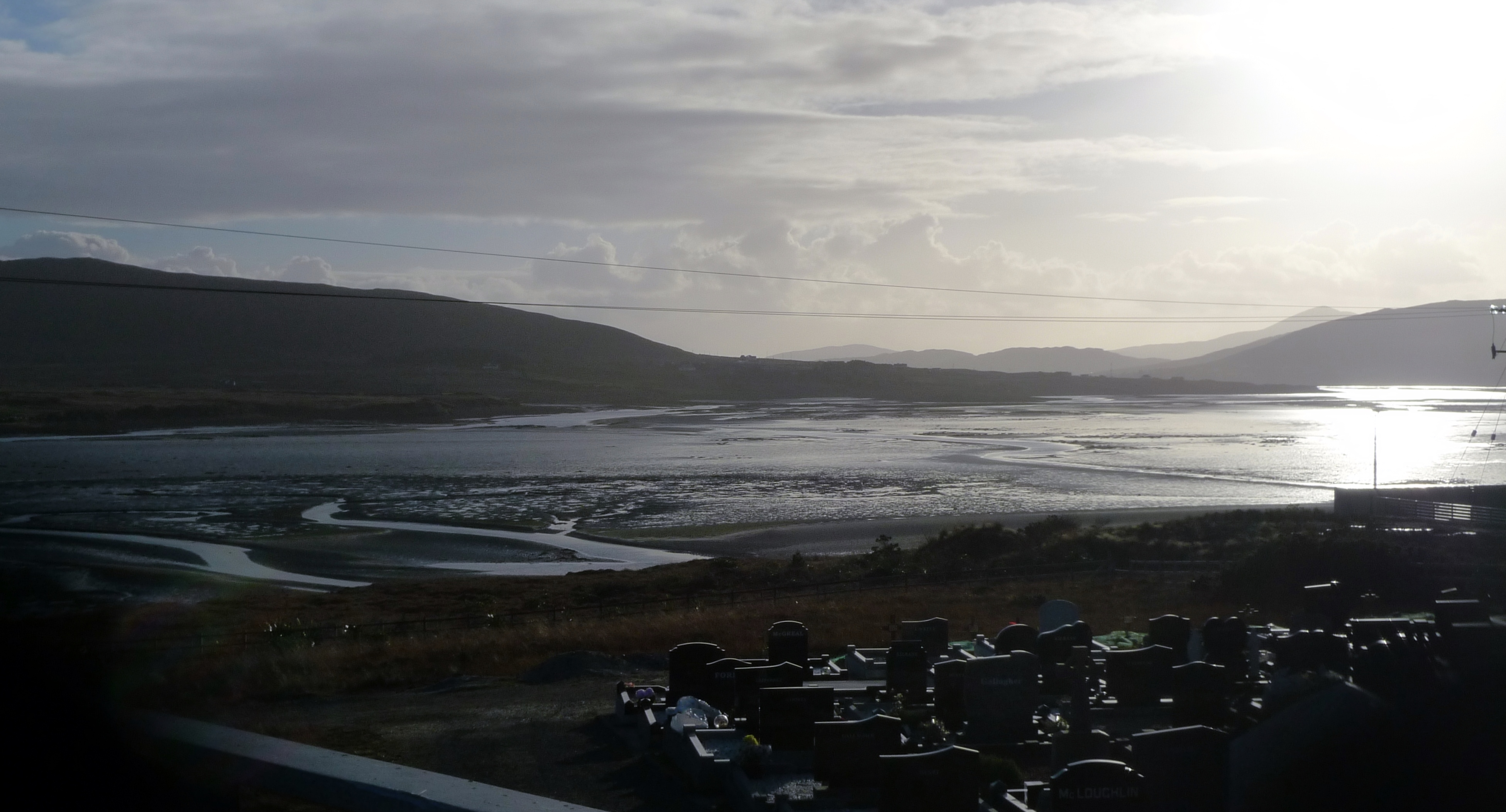
A beautiful resting place on the Island of Achill

P1030854 (2)

County Mayo, on the way to Achill Island.

P1030841

The calm after the storm

A Love story

Today I give you a love story – one that I hope will become a fairy tale ending. When I begrudgingly came home from Ireland at the start of the year, I had a coffee date with a good friend who was enthralled with the stories I was sharing with her. She promptly went home and started researching Ireland on many sites – including a dating one that she had a profile on.

She changed her location search to Ireland and browsed a few profiles there. Within a couple of weeks, she was in constant conversation with a man from Dublin. Each stayed up all night to continue talking despite the time difference and when she flew to Dublin six months later for her first “real” date, I was thrilled for her, particularly when they hit it off even better in person. By the time she left, she had met the parents and friends, and they were planning for him to move here to the U.S.

This is where I think the story goes a little backwards, at least in my head. I want to leave the U.S. and live in Ireland, and eventually, so does she. While I was traveling there, the first question most people asked me once they learned I was an American was “Well, what the hell are you doing here?”. I understand the economy is terrible in Ireland – it is here too – but I was surprised and saddened when the people I spoke to were desperate to get out of Ireland – particularly when all I wanted to do was stay. It is thought that more Irish live outside Ireland than within it, which is a terrible statistic.

But I digress. He was to move here. When he was laid off in Ireland, he joined thousands who had been unable to find a job, and she has one here that could support them both temporarily. So despite her desire to eventually move there, he just landed here in the United States and they are off to a good, if lightning quick, start.

Here is where the tricky business of visas comes into play. He can only stay for a few months unless they get married – which is their plan – to the bewilderment, trepidation, and fascination of everyone that hears their tale. They are a love match but are still getting to know each other outside of the internet. In addition, he has to acquaint himself with a whole new country in a short amount of time, one in which he likely will be unable to work at least for a few months. They have been forced through geography and government to make drastic decisions in an incredibly short amount of time.

They’re choosing each other, consequences be damned. Whether it works out in the end or not, I have to salute their willingness to change everything for each other and try to make it work. It’s rare to find a person who matches you – especially one who will grab the hand and jump – no matter where that leads. Their story gives me a goofy grin and can only hope that it works for them…despite my belief that she’s doing it backwards.

Slainte to you both

Gerry Conlon R.I.P.

Gerry Conlon may be the single most influential person when it comes to who got me into studying Irish politics. The Guildford Four case was riveting for me and it showed just how cruel and scared absolutely everyone was in the heart of the conflict known colloquially as the Troubles. His case was a close second to the Easter Rising of 1916 in my favorite stories of tragic Irish triumph.

On June 21st, 2014 at 4AM California time, I found out that Gerry Conlon had passed away and I actually shed a tear. This marked the first time I  cried over a celebrity passing away since Johnny Cash, and I am pretty sure that it only happened those two times. I was heartbroken and I almost got up then to write about it but I wasn’t awake enough  to articulate the utter sadness of this news.

For those that may not know his story, early in 1975, Gerry Conlon and three other young adults were arrested in connection to the IRA bombing of the Guildford Pub. Despite having nothing to do with the IRA or the bombings, they were convicted and sentenced to life in prison…thankfully, since if they’d been sentenced to death, they all would have been dead before their convictions were quashed. Before they were eventually released, another seven innocent people were convicted of aiding them in this incident – including many of Conlon’s family members and his father, Giuseppe Conlon. Guiseppe never strayed from proclaiming his innocence and he remained hopeful that the miscarriage of justice would be overturned, but Gerry did not. Gerry did not have the fortitude of belief of his father.

Guiseppe Conlon died in prison an innocent man. Years and years later, his son – who found the fighter in himself shortly after the tragic death of his dad, eventually walked out of the courthouse through the front door over fifteen years later when his conviction was quashed, proving to the world that the Guildford Four and the Maguire Seven had been wrongly convicted. The blockbuster movie “In the Name of the Father” was based on these real life events and is an amazing film. If you haven’t seen it, go find it now. Seriously. It took over fifteen years for the police to admit they had made mistakes and purposefully suppressed evidence in order to convict these men and women…none of whom fit any profile or had any paramilitary or political ties.

I was sixteen when they released Gerry and I remember seeing the footage of him leaving the courthouse. It was one of my first forays into Irish politics – and it was a story that led to another, to another, and to another. More than twenty-five years later, I can point to Gerry Conlon as one of the reasons that I fell in love with Irish history. His story had a profound effect on my psyche. Unfortunately his story does not have the Hollywood ending that he so deserved. He struggled with depression, suicide, and addiction since the day he was finally released – and really, who wouldn’t? I cannot find fault in the need to try to erase what has happened to you and your family in whatever way you can. Still, Conlon made it to sixty years of age and was a published author and an activist in other cases that he felt were rigged or unfair. He died on this day in 2014 in Belfast and even now I am still a little teary as I write those words. I wish I had met him – it actually was a thing I had hoped to do someday – just to tell him what a profound impact his story had on shaping who I am and what my interests are. Sixty is too young for many but for Gerry Conlon it was a pretty amazing feat, given that he spent over 15 of them wrongly convicted in the harshest prisons.

His family says it better than anyone else could. In a statement issued through his lawyer Gareth Peirce, they said: “He brought life, love, intelligence, wit and strength to our family through its darkest hours. He helped us to survive what we were not meant to survive. We thank him for his life and we thank all his many friends for their love.”

Rest in Peace Mr. Conlon. Your story and your fight will forever be inspiring and triumphant. I am sorry you lived it and I am thankful for the impact it had on me.  I hope you see your father again.

As we come to the end of the anniversaries for the execution dates in 1916, I have to stop and ponder the logic of the British government throughout history. The Rising was not popular and it was rife with miscommunication and leadership wars. If the government had not executed the leaders, making them martyrs, it may have been a footnote in history. They have made this mistake time and time again, almost as if they either WANT to concede their empire or as if they want the struggle to continue.

Whenever the people get sick of the fighting and membership of Republican fighters is down, they do something so wrong and so tyrannical that suddenly, there’s a giant surge in the ranks. This happened in 1916. It happened in Derry when the Army shot 26 peaceful protesters. It happened again when Bobby Sands and the other hunger strikers lost their fight and died in prison. Depending on how the dust settles, it may happen again in the aftermath of Gerry Adam’s arrest just weeks before elections. You would think that SOMEONE over the puddle would be more strategic and learn from their historical mistakes.

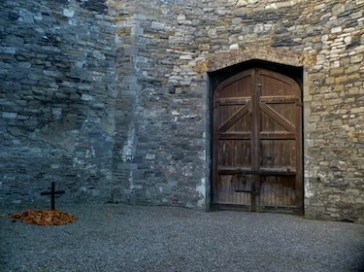
One of their biggest mistakes, was letting Grace Gifford and Joseph Plunkett get married the night before they executed him in 1916 at Kilmainham. It is a tragic love story of star crossed lovers – one that tugs on the heartstrings of anyone and everyone, even those who didn’t approve of the Rising. They were married in the prison chapel and were only allowed ten minutes of supervised time as husband and wife before the crown shot Joseph Plunkett the morning after the wedding. They were taunted and watched for the entire 10 minutes and yet, by all accounts, they only had eyes and ears for each other. 10 minutes of bittersweet joy before their love was destroyed – and as Shakespeare can attest to – that makes for an undying, sympathetic story that the whole world can stand behind, rebel or not.

Grace was a strong woman. She was the daughter of a mixed marriage (Catholic and Protestant) and was an unlikely rebel. She tried to make a living as an illustrator and a political cartoonist. She was to be married to Joseph Plunkett on Easter Sunday – plans that were made before she had any knowledge of the Rising. She insisted on the wedding in the prison chapel when she learned that her fiance was to be executed on May 4th, 1916. On May 3rd, she bought her own wedding ring and went to the jail to marry her love, despite her parents’ objections, knowing that she was to be a widow just hours later. She never remarried and remained Grace Gifford Plunkett for the rest of her days – a shining example of a dedicated Republican woman and a walking reminder of her tragic love story. She was known as Ireland’s tragic bride and she returned to Kilmainham Gaol as a prisoner years later.

Plunkett was a poet and a signatory on the Proclamation of Independence. Already a romantic and philosophical man, his wedding to Grace and their story of tragedy and dedication made their love a flash point of the rising that continued to burn after he was executed. Their 98th anniversary was just days ago.

Kilmainham has reopened as a museum and a tourist location. One of the first places you will visit there is the prison chapel where they were married. A projector displays their photos above the altar at the start of the tour and you will also see both of their cells while visiting. Hers still has one of her more famous paintings on the back wall – one of Mary, showing that her adoption of Joseph’s Catholic faith stuck even after her husband was killed.

On the 3rd floor of the Gaol is an unnerving and heartbreaking exhibition of ‘Last Words’ – featuring the letters, mementos, and other possessions of Republican prisoners and rebel leaders. The letters from the prison to Grace are almost as gut-wrenching as the correspondence between her and her future husband in the days leading up to their wedding and his death. It is impossible to stand in the room without feeling the power of their story and the shadow of their love that remains. It was also impossible for me to be there without tears streaming down my face for almost the entire tour.

So happy anniversary to Grace and Joseph. If there’s any justice in the world, they found each other again in their version of the afterlife and maybe someday soon, the free Ireland they both believed in will finally come to fruition.
ImageImageImageImage


The Star-Crossed Lovers of 1916