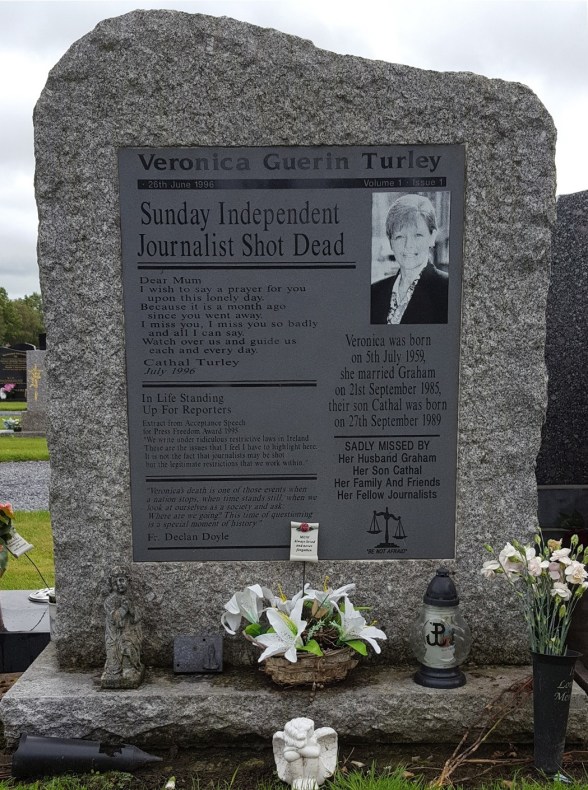
The woman they couldn’t silence – remembering Veronica Guerin

Veronica Guerin was a reporter who refused to stay with a safe, sanitized story. She did not seek out danger but when it was present, she faced it with her notebook in hand. She was brave in the face of brutality and if she was warned to stay away from a story, she dug in even more. But on this day in 1996, that ever present danger caught her. She was 36 years old, a mother, and one of the most captivating investigative journalists in Ireland when a motorcycle pulled up alongside her car while she was stopped at a light. She probably didn’t even take notice of them until they smashed her window and fired several shots directly into her vehicle before they fled the scene. Veronica died before the ambulance arrived. It took less than a minute to kill her body but decades later, her spirit lives on. 

In the early 1990s, Dublin was in the grip of a heroin epidemic that was quietly destroying working-class communities while the powerful looked the other way. Guerin, a reporter for the Sunday Independent, decided that looking away was not an option. She reported on the criminal gangs controlling Ireland’s drug trade at a time when most journalists treated those stories as too dangerous, too murky, or simply too unglamorous to pursue. She knocked on the doors of drug lords. She sat across from men who had ordered destruction and murder and asked them, politely and precisely, to explain themselves. This was not recklessness. It was a considered, principled commitment to the idea that journalism exists to serve the people. She was also, by all accounts, genuinely charming in a way that seemed to disarm people who had every reason to be guarded and hostile toward her and her work. She made this gift work for her most of the time, but ultimately it failed to protect her in the end.

What makes Guerin’s murder even worse is how predictable and preventable it was. She had been warned. She had even been wounded before, when a gunman showed up at her house after she began investigating organized crime and drug dealing in south Dublin. Her home and family were often threatened. She reported all of it and named names to her editors, the Gardaí, her readers, and anyone else who would listen. To their credit, the paper installed a security system and the Gardaí assigned officers to her after she was shot the first time, but she did not agree to these efforts because they hampered her ability to pursue leads and report the stories she was compelled to share. Eventually, the surveillance diminished and everyone began ignoring these threats or even worse, they told her to back off and shut her mouth, repeatedly. This was not something she was willing to do. Veronica was not naive about the risks but she believed her stories were worth it. In interviews just before her death, she acknowledged the threats with a matter-of-factness that reads now as both brave and tragic. She believed the people of Dublin’s devastated communities deserved someone who would speak for them and when no one else would, she raised her own voice.

Veronica Guerin’s assassination sent a shock through Ireland and had lasting consequences that are difficult to overstate. The country had seen plenty of violence but this was different. This was a journalist, a woman, and a mother, who was shot dead in broad daylight on a busy road simply because she had done her job too well. The public response was immediate and furious. Within weeks, the Irish government passed some of the most significant criminal justice legislation in the country’s history, including two acts which gave authorities new powers to seize the assets of criminal organizations. The Criminal Assets Bureau went on to dismantle a lot of the drug empire that ultimately killed Guerin when she refused to stay quiet about it. Ireland did not become a perfect, drug and criminal free country after her death, but it did become a different one, thanks in no small part to Veronica Guerin. 

Guerin’s name is now attached to journalism awards, university programs, and both feature and documentary films. That is right and fitting but legacy has a way of softening the sharp edges of a life, and it would be a disservice to her to let that happen here. The structural conditions that made her vulnerable have not disappeared in the decades since her assassination. Women journalists around the world continue to face targeted harassment, threats, and violence at rates that far exceed their male counterparts, according to UNESCO research published in recent years. Online abuse, coordinated intimidation campaigns, gender-based insults, chauvinistic dismissals, and the slow erosion of institutional support for investigative reporting are on the rise. Journalists face daily threats of harm, similar to the threats that Guerin faced years ago. What she bravely showed us was that we can refuse to accept that the powerful get to define the terms of their own accountability. She reported on people who believed they were untouchable and she made them vulnerable in print with evidence, publicly. That act, repeated by journalists around the world every day, is one of the few genuine checks we have left on the powerful, and those who undertake this mission need to be protected as the rare jewels they are. 

Today marks another anniversary of her death. In Dublin, people who remember her death may pause for a few thoughts or words about her. People who are too young to remember may encounter her name here and there throughout the day and if they are curious, they may find one of her powerful stories or some information about why she’s still relevant and important. She possessed a focus and determination that her colleagues still struggle to describe without a catch in their voices and a tear in their eyes. Veronica Guerin was a hero and a woman who decided that the truth mattered more than her comfort and safety. She paid the highest possible price for that decision but she was not wrong when she made it. The truth is important and independent media and investigative reporting continue to provide it on every continent, every single day. It may get overshadowed by hateful pundits and manufactured outrage but it still exists. Expect more from your news sources and seek out this type of reporting to drown out the noise of partisan headlines. When you support journalists and investigative reporting,  you honor Veronica Guerin and those like her. That’s critically important in this day and age, especially today.

An easy list for everyone

Yes it’s that time of year again. St. Patrick’s Day is upon us and here on the U.S. side of the puddle, it can quickly become a trash fire of epic proportions. This year I’ve decided to improve the easy list I started a few years ago so that we can hand it out to our shamrocked, leprechaun hat wearing, fake Irish-dancing friends in order to keep them (and us) from acting the fool. Here’s five simple DON’Ts and one DO that will make the Wearing of the Green safer and more palatable for everyone, no matter where you live or where you’re from.

1. Don’t pinch people. It’s rather hard to believe in the age of the #MeToo and #TimesUp campaigns that anyone still has to be told that aggressively grabbing, touching, or pinching strangers is wrong. However, just in case you thought that rule didn’t apply on St. Patrick’s Day let me remind you that it is still wrong to pinch (or touch) any part of anyone for any reason without their permission. It will always be wrong to to touch or pinch people in any way without their consent and many people will be too intoxicated to give consent anyway, so keep your little pinchy urges and tiny crab claw fingers to yourself and just say no. Everyone, male or female, with thank you for it.

2.  DO. NOT. ORDER. AN. IRISH. CAR. BOMB. Seriously folks, I don’t know how many times I have to say this to people. Nothing personifies ignorance, caricature, and casual cruelty better than walking into an Irish pub and ordering up an Irish Car Bomb. You wouldn’t walk into a NYC bar and order a 9/11 would you?! Then don’t order a fuc%ing carbomb, for the same reason.

This horrifically named cocktail is American-made and designed to get you very drunk very quickly. It is highly effective but it’s also named after a weapon that has been used to kill and maim literally THOUSANDS of people in the country it’s named after. No one who grew up in Ireland (or knows its history and/or has a deep love for it) can tolerate the obnoxious name for this drink and for many Irish people, it brings up trauma and terrible memories. It is not funny, not appropriate, and not cool for you or your friends to sell or order any drink by that name. It may get you kicked out of your favorite Irish pub and it could (and should) get you kicked in the face.

That being said, Irish Whiskey, Irish Cream, and Guinness are all very tasty treats. You can order and pay for a glass of each, mix the ingredients yourself, and try a delightful, super-intoxicating elixir. If you work at a bar, you could make up a new drink special just by calling it something else (it’s also been referred to as the ‘Holy Trinity’ and ‘the Ulster Flip’) or you can just refuse to serve it at all and many Irish people and Irish history fans would thank you for it.

3. Don’t misspell the name of the day. If you’re hunting for Irish-themed decor or clothing, choosing a hashtag, or you have some other reason to shorten the name of this holiday, please remember that the correct shortened spelling is P-A-D-D-Y. It’s not St. Patty’s. There are no Ts in the Irish spelling of Padraig, nor any Ts in the abbreviated and shortened version of it. Just remember what a very good friend of mine once said, (very loudly and proudly I might add) – “I always remember to stick with the Double Ds”.  We were actually talking about his taste in women at the time, but the same rule applies here just as well. Which brings us to another important thing to consider.

4. Don’t buy into stereotyping or bigotry.  If you want to celebrate St. Paddy’s Day good on you but you don’t have to propagate the stereotypes to do it. Pass on anything that conveys the message that Irish people are drunks, fighters, leprechauns, or idiots. Find something that celebrates Ireland’s rich culture instead of something that mocks it. The Irish have fought against these stereotypes for years and buying a T-Shirt that propagates them may seem harmless but it isn’t. The only way companies will ever offer a wider, more celebratory variety of St. Paddy’s Day swag is if their customers quit buying awful, bigoted costumes. Pass on the ‘Kiss me I’m Irish’ stuff too unless you are actively consenting to anyone doing just that. (See #1)

Don’t insult Ireland’s culture while you claim to be celebrating it.

One more thing along this line – when you’re using your outside voice, please realize that no one says “Top o’ the morning” or “Give me my lucky charms” ever and that fake accents of any kind are obnoxious whether you’re drinking or not. Just keep that lilt in check.

5. Know your history. In IrelandSaint Patrick (Padraig) is celebrated for “driving the snakes out of Ireland” which is a metaphor for bringing Christianity to the island and systematically erasing its pagan roots. Thankfully that is not what most people are celebrating these days and many of the bigger parades and parties are more secular in nature. The Catholic influence is also why the color code of the day is green, which is traditionally associated with that faith in Ireland. You shouldn’t have to wear it on St. Patrick’s Day if you’re not a Catholic but you try to explain that to a million and one drunken Grabby McPinchersons! It’s exhausting and just easier to wear green. (See #1.)

I’m all for transforming the holiday from a religious one to a party and cultural celebration but I’m also a firm believer in the whole live and let live thing. Feel free to preach about the wonders of St. Patrick, go to mass, and have a quiet night in if that’s what you wish – or party until dawn howling at the moon if that’s your thing. However, NEVER insist on telling others (ESPECIALLY if they’re Irish) how to celebrate their own holiday. That makes you the asshole, not them.

And there you have it. Five things you shouldn’t do this year or any other for that matter. As for the one DO – DO WASH YOUR HANDS A LOT AND STAY HOME IF YOU ARE SICK. If you’re  happy and healthy have fun, get wasted, dye your hair green, take the green Mardi Gras beads out of the closet, go to mass, wear a shamrock or a lily, sing some rebel songs or do whatever else you were planning to do – just try not to be a complete asshole when you’re doing it. Be sure to think ahead and plan a way home so you don’t hurt yourself or anyone else. Have a blast and remember one simple thing – treating other people and other cultures better every single day makes the world a better place. Start today.

See you out there in the trenches.

Sláinte.

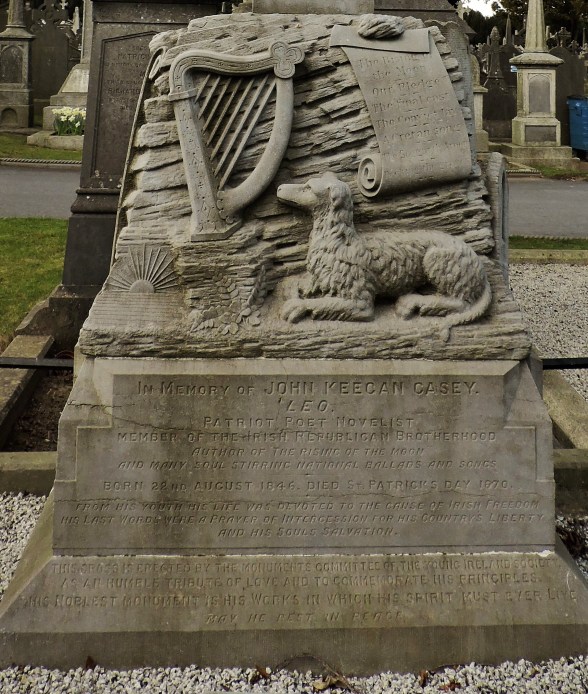
The Poet of the Fenians

The remarkably short life of John Keegan Casey was full of lyrical rebellion and inspiring, seditious poetry. His pen was at least as dangerous as the sword, if not more so and it made him a warrior and a target at a remarkably young age. His best known work is “The Rising of the Moon“, which he reportedly penned at the tender age of just fifteen and it is still in heavy rotation to this day.

Continue reading

Lyra McKee

Sometimes it seems that there’s never anything but tragic news coming out of Derry. I have to remind myself that there are plenty of wonderful things happening in the town I love so well and so many wonderful people who call it home…but yesterday as I sought those out my heart sank yet again. The headlines screamed out the news of a young woman who was killed in the crossfire on the city streets and it broke my heart.

Continue reading

Top 5 ways to not be a jerk on St. Paddy’s Day

Yes it’s that time of year again. St. Patrick’s Day is upon us and here on the U.S. side of the puddle, it can quickly become a trash fire of epic proportions. This year I’ve decided to improve the easy list I started a few years ago so that we can hand it out to our beer hat-wearing, cheap leprechaun-looking, fake Irish-dancing friends in order to keep them (and us) from acting the fool. Here’s five simple DON’Ts that will make the Wearing of the Green safer and more palatable for everyone, no matter where you live or where you’re from. So in case you missed it the first time around – here we go!

1. Don’t pinch people. It’s rather hard to believe in the age of the #MeToo and #TimesUp campaigns that anyone still has to be told that aggressively grabbing, touching, or pinching strangers is wrong. However, just in case you thought that rule didn’t apply on St. Patrick’s Day let me remind you that it is still wrong to pinch any part of anyone for any reason without their permission. It will always be wrong to to touch or pinch people in any way without their consent, so keep your little pinchy urges and tiny crab claw fingers to yourself and just say no. Everyone, male or female, with thank you for it.

2.  DO. NOT. ORDER. AN. IRISH. CAR. BOMB. Seriously folks, I don’t know how many times I have to say this to people. Nothing personifies ignorance, caricature, and casual cruelty better than walking into an Irish pub and ordering up an Irish Car Bomb. This horrifically named cocktail is American-made and designed to get you very drunk very quickly. It is highly effective but it’s also named after a weapon that has been used to kill and maim literally THOUSANDS of people in the country it’s named after. No one who grew up in Ireland (or knows its history and/or has a deep love for it) can tolerate the obnoxious name for this drink and for many Irish people, it brings up trauma and terrible memories. It is not funny, not appropriate, and not cool for you or your friends to sell or order any drink by that name, and it could get you kicked out of your favorite Irish pub or it could just get you kicked in the face.

That being said, Irish Whiskey, Irish Cream, and Guinness are all very tasty treats. You can order and pay for a glass of each, mix the ingredients yourself, and try a delightful, super-intoxicating elixir. You could make up a new drink special just by calling it something else (it’s also been referred to as the ‘Holy Trinity’ and ‘the Ulster Flip’) or you can just refuse to serve or drink it at all and many Irish people and Irish history fans would thank you for it. You have to be on quite a mission already to give it a whirl but that doesn’t mean you have to be an ignorant douche when you order it at the bar.

3. Don’t misspell the name of the day. If you’re hunting for Irish-themed decor or clothing, choosing a hashtag, or you have some other reason to shorten the name of this holiday, please remember that the correct spelling is P-A-D-D-Y. It’s not St. Patty’s. There are no Ts in the Irish spelling of Padraig, nor any Ts in the abbreviated and shortened version of it. A good friend of mine once said “I always remember to stick with the Double Ds.” We were talking about his taste in women at that time, but the rule applies here just as well. Which brings us to another important rule.

4. Don’t buy into stereotyping or bigotry. If you want to celebrate St. Paddy’s Day good on you but you don’t have to propagate the stereotypes to do it. Pass on anything that conveys the message that Irish people are drunks, fighters, leprechauns, or idiots. Find something that celebrates Ireland’s rich culture instead of something that mocks it. The Irish have fought against these stereotypes for years and buying a T-Shirt that propagates them may seem harmless but it isn’t. The only way companies will ever offer a wider, more celebratory variety of St. Paddy’s Day swag is if their customers quit buying awful, bigoted costumes. Pass on the ‘Kiss me I’m Irish’ stuff too unless you are actively consenting to anyone doing just that. (See #1)

Don’t insult Ireland’s culture while you claim to be celebrating it.

One more thing along this line – when you’re using your outside voice, please realize that no one says “Top o’ the morning” or “Give me my lucky charms” ever and that fake accents of any kind are obnoxious, whether you’re drinking or not. Just keep that lilt in check.

5. Know your history. In IrelandSaint Patrick (Padraig) is celebrated for “driving the snakes out of Ireland” which is a metaphor for bringing Christianity to the island and systematically erasing its pagan roots. This is a Catholic holiday and how we celebrate it is decidedly NOT. Incidentally, this is also why the color code of the day is green, which is traditionally associated with the Catholic faith in Ireland. You shouldn’t have to wear it on St. Patrick’s Day if you’re not a Catholic but trying to explain that to a million and one drunken Grabby McPinchersons in the room, can be exhausting. (See #1.)

Now I am all for transforming the holiday from a religious one to a party and cultural celebration. I’ve no love for the Catholic religion. I personally support the ‘Bring the Snakes Back’ movement but stepping all over anyone’s culture is always messed up and should be avoided whenever possible. It’s easy to ignore the religious origin of St. Patrick’s Day when terrible T-shirts, sparkly shamrocks, green beer, and offensively named drinks are the norm but it is still a quiet, religious day for many. After all, St. Patrick’s Day is smack dab in the middle of Lent, which is a period of time when many Catholics give up things like alcohol and parties. There are plenty of traditional and religious folk in Ireland who rail against the parades and parties that have become decidedly more “Americanized” and secular in various parts of the country. Keep that tidbit particularly in mind if you ever decide to spend the holiday in rural Ireland. In the meantime, it’s always good to know where any holiday begins before celebrating (or reclaiming) it.

And there you have it. Five things you shouldn’t do this year or any other for that matter. Have fun, get wasted, dye your hair green, take the green Mardi-Gras beads out of the closet, go to mass, party all day and all night, sing some rebel songs or do whatever else you were planning to do – just try not to be a complete asshole when you’re doing it. Be sure to think ahead and plan a way home so you don’t hurt yourself or anyone else. Have a blast and remember one simple thing – treating other people and other cultures better every single day makes the world a better place.

Now then. Where’d I put my glittery green lipstick?

Sláinte.

Read This

I’m just popping on for a minute to link to an amazing article that was written a year ago, but I found only recently.  I’ve been struggling with a post that is similar for a few years, but this one says it more succinctly (and with less of a frustrated and horrified tone) than I have been able to. It’s worth a read no matter what side of the puddle you’re on regardless of when it was written, given that right-wing bigotry is still spreading throughout the world. Well done Ms. Markey.

WHAT THE HELL HAPPENED TO IRISH AMERICA?!?

Anne Devlin

There are many, many women in Irish history who never get the recognition they deserve for their contributions to it. Anne Devlin may be the most egregious example of that. Her strength and dedication to the Irish cause was truly like no other.

Continue reading

Civil Rights

In the civil rights arena, America gets a lot of the press and always has. Many of the worst atrocities and biggest conflicts in the movement happened in the United States, and they continue to happen to this day. Hollywood has made plenty of movies chronicling the American fight for civil rights, including one about the fateful march from Selma in 1965 that raised awareness and inspired equality all over the world, especially in the north of Ireland where another civil rights movement was being born.

Continue reading

The twelfth

Well, I almost made it. I almost made it through the season without posting another one of the pieces I write every single year about the sectarianism and the hatred that fuels the flames of bonfires throughout the north of Ireland annually. I guess I was hoping that it was all going to be fine this year, despite knowing it wouldn’t be. I suppose I thought if I didn’t talk about it, then it wouldn’t make me so angry. It doesn’t work like that though. In fact it might be more infuriating to watch it go all down without commenting  – especially when it looks like this marching season buildup has been increasingly worse than those in recent memory.

Continue reading

Fantasy Island

Everyone has that place in their head. One place that they’ve fallen in love with whether or not they’ve ever been there. One place that serves as a goal or a dream and becomes a fantasy location where everything would suddenly be perfect. Many never reach that imagined place or if they do, they quickly find that the perceived nirvana in their head doesn’t match the reality in any way. We often romanticize or fantasize about other places because after all, the grass is always greener on the other side.

Continue reading