If ever there was a man who stuck to his principles from birth to death, no matter what the cost, it was Ruairí Ó Brádaigh. He was born and raised as a hard-line Republican and he died a hard-line Republican as well, a little over eighty years later.
Tag Archives: IRA
The Perfect Heist – Gough Barracks 1954
A little over 60 years ago, the Irish Republican Army (IRA) managed one of the cleanest military heists in history. It took about six months to plan, along with an IRA volunteer who actually enlisted in the British Army, and a whole lot of luck, but the raid was incredibly successful and they pulled it off without firing a shot or spilling a single drop of blood. Continue reading
A Son is Born
On this day, January 26th, in 1904, Sean MacBride was born to Maud Gonne and John MacBride in France. He went on to follow in his parents’ Irish Republican footsteps becoming a soldier, politician and the Chief of Staff of the IRA, fulfilling their wishes to have an important and capable son. They agreed on almost nothing else, but they did want their son to believe in and work toward a free Ireland just like they had for most of their lives.
Sean was the apple of his mother’s eye and today would be his 111th birthday, which is hard to imagine when you see this picture, taken when he was 2.
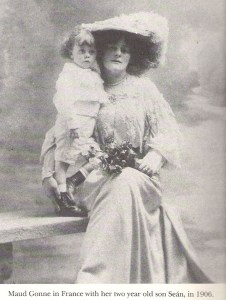 Breithlá Sona
Who Was Mr. Leonard?
41 years ago on Halloween a mysterious American man named “Mr. Leonard” pulled off a serious trick. He hired a helicopter for an ‘Aerial Photo shoot’ in Ireland. It was thought to be a scouting mission for a movie or a book of photography – at least that is what Mr. Leonard told Captain Thompson Boyes, the pilot. Captain Boyes was instructed to fly to a field in Stradbelly in order to grab the photography equipment but when he landed, he was met with armed gunmen instead. “Mr. Leonard” vanished from the scene while Captain Boyes got to know his new masked passengers, much to his own distress. He was informed that he would not be hurt as long as he followed instructions and he wasn’t but he wasn’t given a choice about being involved in a daring prison break either. If he wanted to live, he was going to aid in the escape of Irish Republican prisoners Seamus Twomey, JB O’Hagan, and Kevin Mallon from Mountjoy Prison.
Guildford
On October 5th in 1974, two bombs rocked Guildford, an area south of London. The Provisional Irish Republican Army’s bombing campaign had begun in England and it was brutal and effective. The Guildford pubs were targeted because they were popular with the British Army and the explosions injured about 75 people and killed a handful more. This highly publicized incident aided in the passage of the far-reaching Prevention of Terrorism Act in the United Kingdom shortly thereafter.
Some of the most widely abused provisions under this act were that anyone could be stopped and searched and those arrested could be detained for up to 7 days, rather than the original limit of 48 hours. During that detention, many rights were misplaced and extensive and brutal methods of interrogation were used in an attempt to get confessions from prisoners. As the bombing campaign continued, it led to suspicion, violence and racism within the communities, whether the authorities were involved or not. It was not a good or safe time to be Irish in Britain.
Operation Banner launched, 1969
Operation Banner is the official name for the nearly forty years that the British Army was officially deployed in the North of Ireland. It was launched on this day in 1969, in part because of the Battle of the Bogside and the riots and protests that it set off in the rest of the north.
It was clear that the Royal Ulster Constabulary could not handle (and did not tolerate) the rising voices of the Civil Rights movement, nor could it control the protests and riots that unfolded during that time. The civil unrest was made worse by the obvious bias that the RUC had against Catholics, Nationalists, and Republicans. Originally those communities welcomed the Army, thinking the soldiers would be more impartial and supportive. It soon became apparent that was not the case and as the British Army paired up with the RUC, a gradual souring took place within the community. This led to an uptick in those willing to fight against them and the enrollment in the Irish Republican Army and other paramilitary groups boomed.
Operation Demetrius
It sounds like a mysterious and enticing thing, Operation Demetrius, so grand…like a top secret cocktail party or a James Bond tryst. It wasn’t – it was just a pretty name for a terrible thing that caused all kinds of problems. It’s better known as Internment and the British introduced it to Northern Ireland on this day in 1971.
The arrests began around 4AM. Witnesses report brutality, abuse, and unnecessary destruction by the police while they searched for their suspects. Other than damage to their homes, the police brought damage to their bodies as well, strapping some to armored vehicles as human shields and wielding batons and other weapons even when they were not resisting. Those arrested were subjected to sleep deprivation, starvation, forced nudity, burns and other forms of torture, all of which were sanctioned by the British government.
Continue reading
Gerry Conlon R.I.P.
Gerry Conlon may be the single most influential person when it comes to who got me into studying Irish politics. The Guildford Four case was riveting for me and it showed just how cruel and scared absolutely everyone was in the heart of the conflict known colloquially as the Troubles. His case was a close second to the Easter Rising of 1916 in my favorite stories of tragic Irish triumph.
On June 21st, 2014 at 4AM California time, I found out that Gerry Conlon had passed away and I actually shed a tear. This marked the first time I cried over a celebrity passing away since Johnny Cash, and I am pretty sure that it only happened those two times. I was heartbroken and I almost got up then to write about it but I wasn’t awake enough to articulate the utter sadness of this news.
For those that may not know his story, early in 1975, Gerry Conlon and three other young adults were arrested in connection to the IRA bombing of the Guildford Pub. Despite having nothing to do with the IRA or the bombings, they were convicted and sentenced to life in prison…thankfully, since if they’d been sentenced to death, they all would have been dead before their convictions were quashed. Before they were eventually released, another seven innocent people were convicted of aiding them in this incident – including many of Conlon’s family members and his father, Giuseppe Conlon. Guiseppe never strayed from proclaiming his innocence and he remained hopeful that the miscarriage of justice would be overturned, but Gerry did not. Gerry did not have the fortitude of belief of his father.
Guiseppe Conlon died in prison an innocent man. Years and years later, his son – who found the fighter in himself shortly after the tragic death of his dad, eventually walked out of the courthouse through the front door over fifteen years later when his conviction was quashed, proving to the world that the Guildford Four and the Maguire Seven had been wrongly convicted. The blockbuster movie “In the Name of the Father” was based on these real life events and is an amazing film. If you haven’t seen it, go find it now. Seriously. It took over fifteen years for the police to admit they had made mistakes and purposefully suppressed evidence in order to convict these men and women…none of whom fit any profile or had any paramilitary or political ties.
I was sixteen when they released Gerry and I remember seeing the footage of him leaving the courthouse. It was one of my first forays into Irish politics – and it was a story that led to another, to another, and to another. More than twenty-five years later, I can point to Gerry Conlon as one of the reasons that I fell in love with Irish history. His story had a profound effect on my psyche. Unfortunately his story does not have the Hollywood ending that he so deserved. He struggled with depression, suicide, and addiction since the day he was finally released – and really, who wouldn’t? I cannot find fault in the need to try to erase what has happened to you and your family in whatever way you can. Still, Conlon made it to sixty years of age and was a published author and an activist in other cases that he felt were rigged or unfair. He died on this day in 2014 in Belfast and even now I am still a little teary as I write those words. I wish I had met him – it actually was a thing I had hoped to do someday – just to tell him what a profound impact his story had on shaping who I am and what my interests are. Sixty is too young for many but for Gerry Conlon it was a pretty amazing feat, given that he spent over 15 of them wrongly convicted in the harshest prisons.
His family says it better than anyone else could. In a statement issued through his lawyer Gareth Peirce, they said: “He brought life, love, intelligence, wit and strength to our family through its darkest hours. He helped us to survive what we were not meant to survive. We thank him for his life and we thank all his many friends for their love.”
Rest in Peace Mr. Conlon. Your story and your fight will forever be inspiring and triumphant. I am sorry you lived it and I am thankful for the impact it had on me. I hope you see your father again.
Before the gallows……
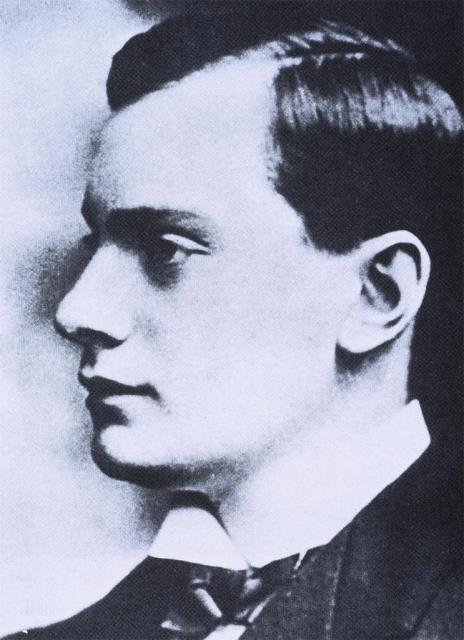
I believe that he knew he was about to be executed. I believe that he thought it was worth it completely. I have seen his letters to his mother in person, once he was imprisoned and about to die. This schoolmaster, this poet, this philosopher and this hero of Ireland – this reason that I wear an Easter Lily badge – this man, is an idealist – a cheerleader – a man who never lost his faith in humanity and justice. He was amazing. His triumph was through his failure. His life was short but full and meaningful.
Nov. 10th, 1879 – May 3rd, 1916
Padraig Pearse’s Address to Court Martial:
I desire in the first place to repeat what I
have already said in letters to General Sir John
Maxwell and to Brigadier General Lowe. My object in
agreeing to an unconditional surrender was to prevent
the further slaughter of the civil population of
Dublin and to save the lives of our gallant followers
who, having made for six days a stand unparalleled in
military history, were now surrounded and (in the case
of those under the immediate command of Headquarters)
without food. I fully understand now, as then, that my
own life is forfeit to British law, and I shall die
very cheerfully if I think that the British
Government, as it has already shown itself strong,
will now show itself magnanimous enough to accept my
single life to forfeiture and give a general amnesty
to the brave men and boys who have fought at my
bidding.
In the second place I wish it to be understood
that any admissions I make here are to be taken as
involving myself alone. They do not involve and must
not be used against anyone who acted with me, not even
those who may have set their names to documents with
me. (The Court assented to this,)
I admit that I was Commandant General
Commanding in Chief the forces of the Irish Republic
which have been acting against you for the past week,
and that I was President of their Provisional
Government. I stand over all my acts and words done or
spoken in those capacities. When I was a child of ten
I went down on my bare knees by my bedside one night
and promised God that I should devote my life to an
effort to free my country. I have kept that promise.
As a boy and as a man I have worked for Irish freedom,
first among all earthly things, I have helped to
organise, to arm, to train, and to discipline my
fellow-countrymen to the sole end that, when the time
came, they might fight for Irish freedom. The time, as
it seemed to me, did come, and we went into the fight.
I am glad we did. We seem to have lost. We have not
lost, To refuse to fight would have been to lose; to
fight is to win. We have kept faith with the past, and
handed on a tradition to the future.
I repudiate the assertion of the prosecutor
that I sought to aid and abet England’s enemy. Germany
is no more to me than England is. I asked and accepted
German aid in the shape of arms and an expeditionary
force. We neither asked for nor accepted Germany [sic]
gold, nor had any traffic with Germany but what I
state. My aim was to win Irish freedom: we struck the
first blow ourselves but should have been glad of an
ally’s aid.
I assume that I am speaking to Englishmen, who
value their freedom and who profess to be fighting for
the freedom of Belgium and Serbia. Believe that we,
too, love freedom and desire it. To us it is more
desirable than anything in the world. If you strike us
down now, we shall rise again and renew the fight. You
cannot conquer Ireland. You cannot extinguish the
Irish passion for freedom. If our deed has not been
sufficient to win freedom, then our children will win
it by a better deed.
As we come to the end of the anniversaries for the execution dates in 1916, I have to stop and ponder the logic of the British government throughout history. The Rising was not popular and it was rife with miscommunication and leadership wars. If the government had not executed the leaders, making them martyrs, it may have been a footnote in history. They have made this mistake time and time again, almost as if they either WANT to concede their empire or as if they want the struggle to continue.
Whenever the people get sick of the fighting and membership of Republican fighters is down, they do something so wrong and so tyrannical that suddenly, there’s a giant surge in the ranks. This happened in 1916. It happened in Derry when the Army shot 26 peaceful protesters. It happened again when Bobby Sands and the other hunger strikers lost their fight and died in prison. Depending on how the dust settles, it may happen again in the aftermath of Gerry Adam’s arrest just weeks before elections. You would think that SOMEONE over the puddle would be more strategic and learn from their historical mistakes.
One of their biggest mistakes, was letting Grace Gifford and Joseph Plunkett get married the night before they executed him in 1916 at Kilmainham. It is a tragic love story of star crossed lovers – one that tugs on the heartstrings of anyone and everyone, even those who didn’t approve of the Rising. They were married in the prison chapel and were only allowed ten minutes of supervised time as husband and wife before the crown shot Joseph Plunkett the morning after the wedding. They were taunted and watched for the entire 10 minutes and yet, by all accounts, they only had eyes and ears for each other. 10 minutes of bittersweet joy before their love was destroyed – and as Shakespeare can attest to – that makes for an undying, sympathetic story that the whole world can stand behind, rebel or not.
Grace was a strong woman. She was the daughter of a mixed marriage (Catholic and Protestant) and was an unlikely rebel. She tried to make a living as an illustrator and a political cartoonist. She was to be married to Joseph Plunkett on Easter Sunday – plans that were made before she had any knowledge of the Rising. She insisted on the wedding in the prison chapel when she learned that her fiance was to be executed on May 4th, 1916. On May 3rd, she bought her own wedding ring and went to the jail to marry her love, despite her parents’ objections, knowing that she was to be a widow just hours later. She never remarried and remained Grace Gifford Plunkett for the rest of her days – a shining example of a dedicated Republican woman and a walking reminder of her tragic love story. She was known as Ireland’s tragic bride and she returned to Kilmainham Gaol as a prisoner years later.
Plunkett was a poet and a signatory on the Proclamation of Independence. Already a romantic and philosophical man, his wedding to Grace and their story of tragedy and dedication made their love a flash point of the rising that continued to burn after he was executed. Their 98th anniversary was just days ago.
Kilmainham has reopened as a museum and a tourist location. One of the first places you will visit there is the prison chapel where they were married. A projector displays their photos above the altar at the start of the tour and you will also see both of their cells while visiting. Hers still has one of her more famous paintings on the back wall – one of Mary, showing that her adoption of Joseph’s Catholic faith stuck even after her husband was killed.
On the 3rd floor of the Gaol is an unnerving and heartbreaking exhibition of ‘Last Words’ – featuring the letters, mementos, and other possessions of Republican prisoners and rebel leaders. The letters from the prison to Grace are almost as gut-wrenching as the correspondence between her and her future husband in the days leading up to their wedding and his death. It is impossible to stand in the room without feeling the power of their story and the shadow of their love that remains. It was also impossible for me to be there without tears streaming down my face for almost the entire tour.
So happy anniversary to Grace and Joseph. If there’s any justice in the world, they found each other again in their version of the afterlife and maybe someday soon, the free Ireland they both believed in will finally come to fruition.


 Choosing the Green
You must be logged in to post a comment.