In honor of Margaret Pearse who died 84 years ago today I thought I’d share the bit I wrote about her in my book, Petticoats, Patriots, and Partition. Many women suffered incredible loss during Ireland’s revolutionary period, but Margaret had a special kind of pain, losing both of her only sons. We are days away from their commemoration times and remembrances, so I thought Margaret should have hers too.
Tag Archives: Irish Republicans
No, Nay, Never; Cumann na mBan rejects treaty
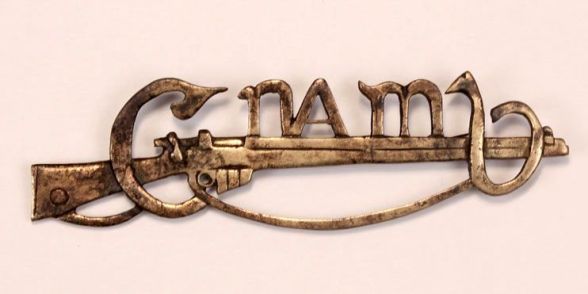
The ladies of Cumann na mBan have always had very strong opinions about the state of Ireland and its politics. Since its inception, the majority of CnamB members have fought for a united Ireland. During the lead up to the Easter Rising of 1916, these women supported the Republican cause in many different ways. They raised funds for the uprising, trained in first aid in order to help wounded Volunteers, smuggled various weapons and explosives throughout Ireland, spread important news, and many learned to shoot and fight themselves. They became a force to be reckoned with.
In the aftermath of the Rising, CnamB was flooded with new members and big ideas. They were prominent in the Dáil Éireann, the Republican legislature set up to counter England’s rule. Many of the widows of the leaders of the Rising were some of the loudest voices and strongest supporters of a free Ireland, and almost all were members of the female Republican organization. Eamon De Valera called them the “most unmanageable revolutionaries.” Many others accused the organization of making decisions based on vengeance and emotion without thought or consequence, especially when they voted against the Anglo-Irish Treaty ninety-four years ago today.
The Countess; Petticoats, Patriots, and Partition

I write a lot about Constance Markievicz, just like anyone else who writes Irish history should. However, she was not the only woman involved in the planning or the execution of the Easter Rising in 1916…and many others never get the credit they are due. That’s not to say that she doesn’t deserve a bit of her own though. After all, one of her more famous quotes is highlighted proudly on my business cards, and she does have her own few pages in my book. Today in honor of her birthday, I give you some of her story from Petticoats, Patriots, and Partition – the book that has stolen most of my time for the last six months or so. Happy birthday Countess.
Catalina Bulfin MacBride

The Bulfin family has a very respectable presence in the historic fight for Irish freedom. Many generations of the family fought for Nationalist and Republican causes, both inside and outside of Ireland. One branch ended up in Argentina, which is where Catalina Bulfin and her brother Eamon were born.
Continue reading
The Hunger

Last week I wrote a little about Brendan Hughes, and coincidentally, today is the commemoration of the start of his hunger strike. Their troscad – which is the Celtic name for a fast that was employed to draw attention to insult or to fight injustice – began 35 years ago today.
The Dark One
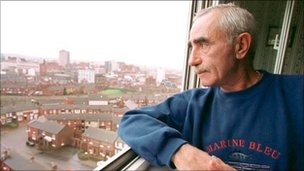
On this day in 1948, Brendan “The Dark” Hughes was born. He came from a long line of Republican fighters, and as he grew up, he knew that his own entry into the IRA was inevitable. He was right and he was an effective soldier. Later in life he often talked about peace, reconciliation, tearing down the peace walls, and improving relations in the North of Ireland – but he knew he was being idealistic. That peaceful existence may have been what he ultimately wanted, but his life was filled with violence, prison, hunger, and retribution.
Gerry Adams

He’s been called a murderer, a terrorist, and an evil ringleader. He’s been banned from travel and speech, and he’s been flown around the world to give speeches. He’s been reviled and celebrated, and has been protected by many even as he is threatened by his own people, in addition to the threats from his enemies. He’s divisive and unifying, a liar and a speaker of truth, a politician and a probable paramilitary leader, although he denies that second part. He’s been labeled as Machiavellian and diabolical, or a man of peace and kindness, depending on who you ask. He’s been a prisoner and now rules as a politician – one who some have compared to Nelson Mandela. Many thought he should have shared the glory of Hume’s Nobel Peace Prize, even as others accuse him (then and now) of atrocities and war crimes. Gerry Adams has been many things to many people and it’s hard to know whose impressions are right, but one thing is apparent to everyone. He is not going away.
The Mighty Kathleen Lynn
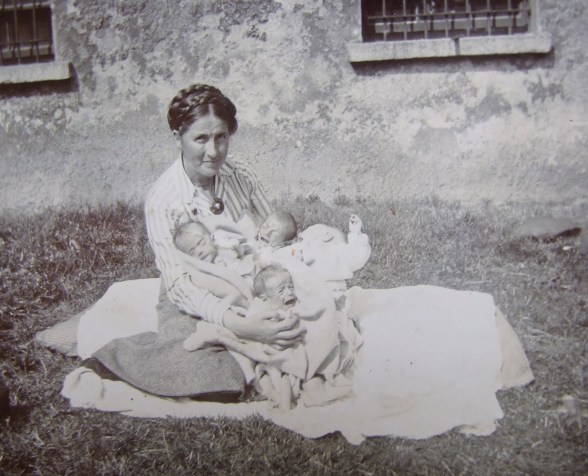
Kathleen Lynn was an anomaly among women at the turn of the century in Ireland. She was extremely well educated, which was very rare for females at the time, and she was a doctor – not a nurse – which was an incredibly unusual profession for a woman of that era. She faced discrimination and difficulty in the field for many years due to her gender and it made her a strong suffragist and a very tough woman.
The Idealism of Roger Casement

Congo Casement. Comma Casement. Sir Casement. These names and more applied to Roger Casement, over the course of his life. He was born on this day in 1864, and by the time he was executed, he had gone from being a world-renowned humanitarian, a British Consul, and a favored knight to a social pariah, an arms dealer, and a dastardly rebel. If the road to hell is paved with good intentions, there are many – and Roger Casement traveled more than a few.
Roger Casement was born outside of Dublin and had a strict, Protestant father. When he was three, his mother secretly had him baptized as a Catholic and by the age of thirteen, both of his parents were dead. He and his brother were sent to relatives in the North, County Antrim, and he considered that his home, even though he spent much of his life away from it.
Casement left Ireland at sixteen to find work. He took a job at a shipping company, and spent a great deal of time in Africa. He learned more than one language there and he began trying to improve the treatment and the communication between the native population and the foreign traders. He then went to work for the English Government, first by clerking in the Foreign Office and then as an appointed British consul. He was tasked with reporting about any human rights violations that he was witnessing first hand. He traveled all over Africa talking to residents and viewing destroyed villages before writing a blistering account of imperialism and its impact on the native population. It was controversial and rejected outright by the traders, his former boss included, but it provided other humanitarian groups with enough information to mount an international campaign against King Leopold of Belgium, the man who claimed to rule the area. The campaign was effective and eventually led to the king relinquishing his hold on the area. It was one instance where his idealism worked out.
When he returned to England, he continued his humanitarian efforts by founding the Anti-Slavery Society.After that, he was sent back to Africa to make sure that improvements had been made, and he was disheartened to discover that the horrific abuse continued. He continued to chronicle the plight of the natives and was eventually knighted for his work and his activism on their behalf.
During a break from Africa, he visited Ireland and joined the Gaelic League. He idealistically tried to learn Irish, but despite a gift for languages, he never got a grasp on it. He met with leaders to petition them for their support in Africa, but Ireland had its own problems and the meetings weren’t fruitful. However, in the process he developed an infatuation with Sinn Fein and their commitment to a Free Ireland. As his fascination with the idea grew, he retired from his position in the English government and devoted himself full time to the cause of Irish Freedom. He co-founded the Irish Volunteers and used his formidable writing skills to help pen their manifesto. He then traveled to America to raise funds among the exiled Irish. He was naive and he imagined himself a sort of ambassador for Irish Nationalism. He did not realize that the Irish Republican Brotherhood had already quietly taken over the Volunteers and were excluding him from their plans. He was also too wrapped up in his travels to notice that his activities were no longer as covert as he thought. The IRB were watching him to make sure he stayed out of the way, and the English government was keeping tabs on his travels and his contacts as well.
Despite the prying eyes, he donned a disguise and traveled to Germany in order to secure funds and arms for Irish freedom fighters. He spun it as a mutually beneficial agreement between countries, trying to convince the Germans that if they supplied arms to Ireland, the Irish would divert England’s attention away from them and their war. The request was not as well-received as he hoped, but he secured a promise from German authorities that said, “The Imperial Government formally declares that under no circumstances would Germany invade Ireland with a view to its conquest or the overthrow of any native institutions in that country. Should the fortune of this Great War, that was not of Germany’s seeking, ever bring in its course German troops to the shores of Ireland, they would land there not as an army of invaders to pillage and destroy but as the forces of a Government that is inspired by goodwill towards a country and people for whom Germany desires only national prosperity and national freedom“.
He spent the rest of his time there trying to raise an Irish Brigade out of the prisoners of war that Germany held. He had been sure that many Irish soldiers would jump at the chance to fight for Ireland, but he was sadly mistaken. After months of pitching the idea, he finally admitted defeat and accepted the much smaller arms deal that the Germans offered. It didn’t include any support beyond the weapons and was nowhere close to the agreement he had been hoping for. Meanwhile, he learned of the planned uprising and he hoped to get them to cancel it, because of the inadequate aid from Germany. Because he had been kept in the dark the entire time, he had no way of knowing that it would go ahead with or without the weapons…and with or without him.
Casement made it to Ireland in a submarine, but the arms that came by boat did not. They were intercepted by the English, who immediately arrested Roger for treason, sabotage, and espionage. He missed the Rising altogether and heard of it while languishing in the Tower of London. If he thought that his life of service would keep him from prison, he was wrong. He was stripped of his knighthood and left to his own devices – neither the English or the Irish would help him and no rescue attempts were made. His important friends were vocal but only until the English shared his “Black diaries” publicly. They allegedly chronicled his homosexual adventures throughout the world. They made him look more like a predatory sex tourist than an idealistic humanitarian and they destroyed any hopes for support or leniency. Homosexuality was nearly enough to get someone killed already in that day and age, and when they added a charge of treason to it, well – it was only a matter of time before death came calling. He was hanged on August 3rd, 1916 – making him the only man connected to the Rising who was executed in that fashion, and the only one who was killed on foreign soil. His remains were repatriated to Ireland fifty years after he was killed, but they were not allowed to be brought North, so he lies in Glasnevin Cemetery in Dublin….not too far from where his life began.
There are a lot of what ifs to his tale. What if the arms had landed? What if he had been involved in the planning of the Rising? What if he had been able to bring reinforcements that were culled from the P.O.W.s in Germany? What if the diaries were fiction? There are many who still believe that they were fabricated, or at least exaggerated by the English in order to allow his execution. What if homosexuality had not been such a grave charge at that time? If his powerful friends and activists had been supportive throughout the trial and imprisonment, maybe he would have lived.
Roger Casement would have been one of the most important men in Irish history, regardless of his sexual orientation, if any one of his idealistic plans had come to fruition. He still has a large place in it, despite the fact that they didn’t. His goals were always intertwined with helping people achieve a better life and teaching them to fight the over-reaching powers that be. He was an idealist and was always rooting for the underdog – even when he was one. His short life was full of naivete and the best intentions – and if anyone had truly trusted and followed him, Irish history may be very different today. Even with the stain of the diaries hanging over him, his story has persevered and as we all move toward a more open society, maybe some day he will be remembered on equal footing with the rest of the leaders of that time.
Speaking of Derry…
“We too are concerned that there are currently members of the British army on our streets years after we were told that they no longer have an active role in the north.” ~Danny Morrison, IRSP, Derry Journal.
That quote is not a throwback to the Troubles. It is not left over from Operation Banner – the longest deployment of the Army in British history. Operation Banner lasted for over 38 years. Their presence and poor decision making skills fueled the flames of the Troubles for thirty years, and the mission “failed to defeat the Irish Republican Army on a strategic level or have any long term plan,” according to a Ministry of Defence report. The British Army formally ended their engagement (Operation Banner) in the North of Ireland in July 2007.
 Choosing the Green
You must be logged in to post a comment.