Looks like some need this timely reminder from Imelda May today. For the rest of you, please continue to stand up for your neighbors. Donate to those who had to flee in the night. Stand up against bigotry and hate in Ireland, north AND south. Stay safe out there.
Category Archives: Equality
The Peace Flame
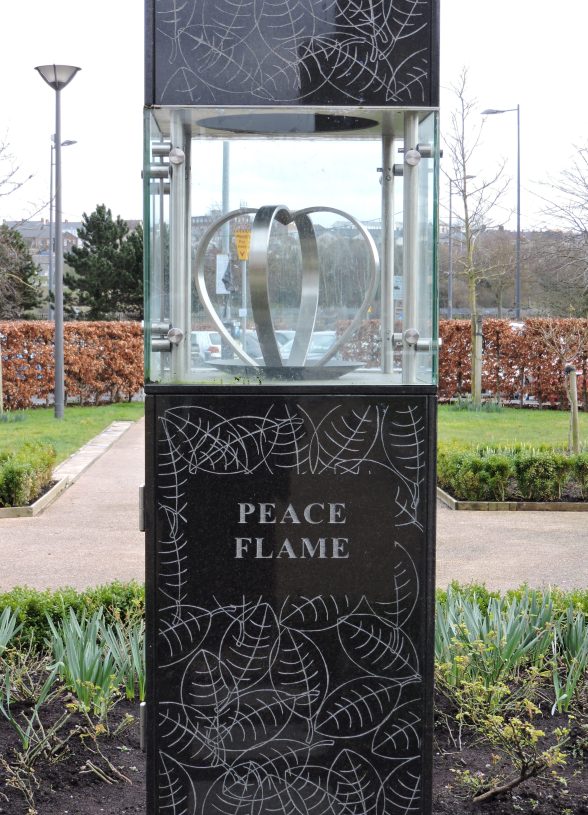
Derry is a city that knows what it means to burn.
In August 1969, the Battle of the Bogside transformed the city’s streets into a war zone. Petrol bombs flew through the air. CS gas filled the alleyways. Those three days of violence marked the beginning of a conflict that would claim over 3,500 lives across the North of Ireland. Over the next few years, civil rights activists began a long campaign against the gerrymandering in the region and the discrimination against Catholics. Organizers looked across the ocean for inspiration. They saw the marches in Selma in the United States. They heard Martin Luther King Jr. speak of justice and nonviolent resistance. The movement in Derry borrowed that language deliberately, because it fit. Derry’s Catholics faced discrimination in housing, employment, and voting rights, similar to what African Americans were facing in the US. The parallels were not metaphorical. They were structural and intentional.
On Jan. 30th, 1972 a large civil rights march made its way through Derry. English soldiers opened fire on the unarmed protestors, killing 14 innocent people and injuring many more. The Crown defended the killings adding to the injustice and radicalization of the city. Calls for both violence and peace rose, each shouting louder than the one before. Derry was an open wound, full of trauma, anger, and fear for decades to come.
That history is embedded in the city to this day. It lives in the murals of the Bogside, in the names on memorials and walls, on the gravestones of the city cemetery, and in the hearts of all who call it home. This is why a symbol of peace in the town carries such weight. The Peace Flame is in the center of a purpose-made tiny garden next to the Guildhall. It is housed in a glass enclosure, sheltered from the wind but visible to anyone who passes. A pillar bears the words plainly: Peace Flame. No ambiguity or abstraction, just the thing itself, named loudly and ever present.
It was unveiled on this day in 2013 as part of a five day peace conference. The keynote speaker was Martin Luther King III, the son of the man whose own civil rights movement had inspired Derry activists for nearly fifty years. His presence was not just ceremonial, it was also a full circle moment. The thread that ran from the U.S. civil rights movement to the Bogside in Derry was being acknowledged openly, by someone who carried that legacy in his blood.
The ceremonial lighting featured children from both sides of the divided town. That choice was poignant. While the adults in the crowd carried the memories and the scars, the children could carry the hope for a peaceful future. They will decide the future of the north of Ireland so it was fitting that they were involved in the town’s efforts to promote both the city and the flame as a beacon of peace.
This was the first peace flame in Ireland. It has had to deal with technical issues and multiple vandalism incidents that affect the flame but whether it happens to be lit or not when you walk through the garden, it’s hard to ignore the symbol. Seeing it in the heart of Derry is both heavy and optimistic, much like the town itself.
It also seems like a light that is holding steady even when the future is uncertain and the past refuses to stay quiet. Installing the peace flame did not fix or erase what happened here; instead it shone a light on all the tragedies and pierced through the darkness of the past, lighting the way to a better and shared future in the region. May it shine bright in the hearts of all who pass it by.
Mary Anne Mamie Cadden
Mary Anne “Mamie” Cadden is one of the more polarizing figures in Irish history. She shines a light on the brutal realities faced by countless women when reproductive choice is not merely restricted but actively criminalized. Her tale also reveals the deep cost of working in the shadows for a society that outwardly condemns your services while quietly depending on them.
Mamie Cadden was born in America but her Irish parents moved their growing family back to County Mayo and raised them on a farm. Mamie loved the farm but did not want to spend her life there so when she got older she sold her portion of the land to get the schooling she needed to become a licensed midwife in 1926. She excelled in her craft but it was her extra curricular services that would both define her legacy and seal her fate. Mamie worked hard, providing full reproductive healthcare for women who had nowhere else to go. She offered maternity care, arranged adoptions and fostering services, but she also helped women with unwanted pregnancies by providing illegal abortions. Women traveled from across Ireland, seeking care that the official medical system could not and would not provide. Cadden built a thriving word of mouth practice that served multitudes of women and she prospered because of it. She dined at the city’s finest restaurants, went out socializing and dancing, drove a bright red car, and lived as though she had every right to this prosperity, because she believed she did. She rejected the shame and secrecy that Catholic Ireland demanded from someone like her, and this loud flamboyance cost her. She was arrested and jailed multiple times. These stints in jail resulted in Cadden losing her license but each time she was released, she carried on. Irish women from all walks of life continued to find their way to her door until 1956.
Everything changed when one of her patients, Helen O’Reilly, died. Multiple deaths had been connected to Cadden but police could never tie them directly to her until Helen passed. Helen’s death could not be swept under the rug (like the others allegedly were) and suddenly, the crucial care Cadden gave became her downfall.
The police made an example out of her and prosecuted her fully. She was the first and only person in Ireland to face capital punishment for a maternal death resulting from an abortion, despite the fact that such deaths occurred regularly before and after her time. The polite society that secretly needed her then publicly shunned her and the papers sensationalized the “backstreet abortionist” as a murderess. “Nurse Cadden” became shorthand for something sinister but that framing obscures what she actually was: a woman filling a void that church and state had created but refused to address.
Mamie Cadden’s death sentence was later commuted to life in prison but that life ended suddenly just a few short years later. She began serving her time in Mountjoy Prison, but was eventually moved to the Criminal Lunatic Asylum in Dublin where she died of a heart attack on this day in 1959.
Cadden’s story is not a cautionary tale about the dangers of abortion. It is evidence of what happens when legal, accessible reproductive healthcare is withheld from women. When we call her a “backstreet abortionist,” we are borrowing the vocabulary of the people who criminalized this care in the first place and it is used here as a historical reference only. In truth, Mamie was a convenient scapegoat for a system that preferred to punish people (mostly women) rather than examine its own structural failures. Women who were facing unwanted pregnancies or dangerous births had almost no legal options at that time (don’t get me started on the laundries) and the official medical system, constrained by law and Catholic doctrine, could not help them. Mamie Cadden could, and she did. In the end, she was neither a demon or an angel. She was a woman who recognized a need, had the skills to meet it, and operated in the gaps left by official medicine. Her story is not really about her own choices; it is about the systems that forbid choices, thereby forcing women into dangerous situations and then criminalizing the people who try to help them.
Contraception was outlawed in Ireland until 1979. Abortion was illegal until 2018 when voters repealed Ireland’s Eighth Amendment and changed reproductive healthcare on the island even more. The services that once made Cadden a criminal are now legal and accessible. That shift did not happen because Irish society woke up one morning with different values. It happened because Irish women had suffered for long enough and would no longer tolerate the silence, travel, and secrecy around this topic. It happened because enough people finally recognized that criminalizing reproductive healthcare creates more harm than it prevents.
Mamie Cadden understood this when she opened her practice 100 years ago and her story should serve as a vital reminder that nothing will ever eliminate the demand for abortion services. She reminds us that laws against abortion only push these services underground, often with tragic consequences. This is especially important to remember in this day and age when women all around the world are actually losing this crucial option. Women need safe abortion care and Mamie Cadden and Helen O’Reilly both remind us that only tragedy follows when that choice is taken away.
Sheelagh Murnaghan
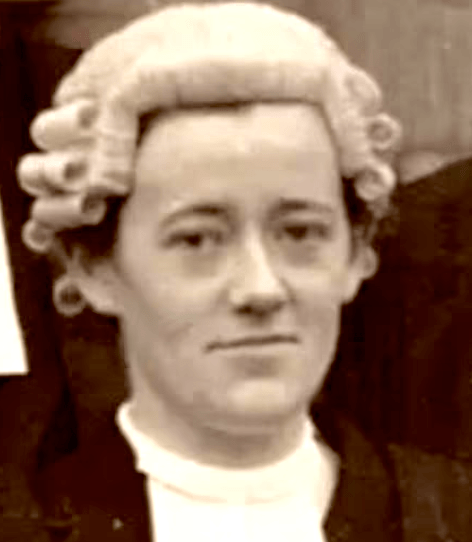
On this day in 1993, the North of Ireland lost a formidable voice. Sheellagh Murnaghan was a tenacious woman who was dedicated to equality in a world that didn’t have much of it. She never let that stop her though and she championed that fight for decades, despite suffering defeats time and time again. Guess it was the hockey player in her that never let her back away from a good fight.
Sheelagh Murnaghan was born in Dublin, but she went to school in Omagh and then studied law at Queen’s University in Belfast. While studying to become a lawyer, she also found the time to join and captain the National Irish Women’s Hockey team. She gave up the sport when she became the region’s first female lawyer and was accepted to the Northern Ireland Bar in 1948. Murnaghan then went into politics. She was one of the first women in Stormont and was the only liberal voice in the chamber at that time. Sheelagh was considered eccentric – she liked cigars and often brought her dog to work. She was a woman, a Catholic, and a liberal in a misogynistic, Sectarian, and conservative climate and she was ferociously dedicated to human rights. Murnaghan introduced legislation to abolish the death penalty and attempted to pass a Northern Bill of Rights at least four times. She also stood for Traveller’s rights, criminalizing discrimination in the workplace, and equal compensation for all, regardless of sex, creed, or political belief. Sheelagh was met with opposition (and probable ridicule) every time she attempted to introduce anything but she did not let that stop her. I’m certain she would have continued her quest if she had been successful in winning another seat once the university’s were abolished in 1969. She stood for election twice more in two different areas, but she lost both times.
Murnaghan was no longer a member of parliament but she still championed equality every day. She sat on several committees, including the Industrial Relations Tribunal, the Belfast Settlement Committee, and the Equal Opportunities Commission. She chaired a tribunal that heard the region’s very first sexual harassment case and her law practice specialized in harassment cases and gender equality from that point on. Murnaghan was not born in the North of Ireland, but it is clear that she devoted her entire career to making it a fairer, more balanced place while others were actively trying to prevent these things. She was absolutely opposed to the violence that erupted in the region and was openly vocal about it, which led to potential peril when her house was bombed by Loyalist paramilitaries in 1970. Luckily, she was not injured or intimidated by this attack and she continued to fight for peace and justice for another twenty-three years.
Sheelagh Murnaghan died on this day in 1993. She did not live to see the North finally adopt many of her ideas, nor did she see the end of the more active conflict in the region, but today, many recognize her as one of the first torchbearers of change and equality in the area. It’s a fitting legacy for a woman who devoted her life to making the world a better place.
Easter Commemorations
It’s pretty shameful how long it has taken to write another post in this blog. I look back and think, how did I have time to write so much just a few years ago? I haven’t lost my passion for Irish history and I continue to visit every chance I get. I still devour every bit of history and culture that I can and I research and learn things all the time but I don’t seem to write about it as much. The idealism and romanticizing of Ireland that I was certainly guilty of at times has evolved into a more realistic, more moderate, and steadfast love of the country and its history. I don’t write about it much anymore and that’s what makes this morning unusual. I got up to go to the Easter Rising Commemoration here in the San Francisco Bay Area as I’ve done in the past, but instead of heading to the grave of a Fenian who was also a corrupt cop and a horrible racist, I am sitting here in the mood to burn bridges and actually writing again. I guess that’s because I find it hard to believe that in one of the most liberal areas in the entire United States, the annual Easter Rising commemoration honoring Ireland’s Patriot Dead is still at the gravesite of a revolutionary but terrible human, who had nothing in common with the leaders of the Rising except for their love of Ireland.
I’ve written about Thomas Desmond before, after the first time I went to the Bay Area commemoration. Back then I cared about fitting into the San Francisco Irish community somehow and my piece on the city’s awfully corrupt and horrendously racist sheriff was timid. It did speak some truth about the man, but I wrote it without calling out their choice of a hero. The Irish Proclamation espouses equality, socialism, and freedom – ideals that Thomas Desmond certainly did not practice in his every day life so many years and commemorations later I feel like it’s time to find a better option. San Francisco has a long history of Irish Republicanism and surely we can find another, less conservative and less controversial person to visit annually, while remembering the Rising. I know that many Fenian heroes and Republican soldiers are often complicated and not always great examples of the idealism that the Proclamation calls for, but in an area that is known for historically supporting the cause and for giving refuge to many immigrants, including the exiled Irish, there has to be a better option than an anti-immigrant, corrupt cop. In my humble opinion, it’s time to look for one.
Until that time, I’ll wear my Easter lily with pride here in the Bay Area and will continue to commemorate the men and women who fought for Irish freedom by learning and occasionally writing about them. For me, how we honor them and where we honor them matters, so Thomas Desmond’s grave is no longer an option for me. Instead, I’ll enjoy some Irish music at my local, tell everyone there who asks why I’m wearing a lily, and I’ll raise a glass or two to the Boys and Girls of the Old Brigade, who fought for a united and free Ireland so bravely during Easter week in 1916 and beyond.

Anne Devlin

There are many, many women in Irish history who never get the recognition they deserve for their contributions to it. Anne Devlin may be the most egregious example of that. Her strength and dedication to the Irish cause was truly like no other.
Civil Rights

In the civil rights arena, America gets a lot of the press and always has. Many of the worst atrocities and biggest conflicts in the movement happened in the United States, and they continue to happen to this day. Hollywood has made plenty of movies chronicling the American fight for civil rights, including one about the fateful march from Selma in 1965 that raised awareness and inspired equality all over the world, especially in the north of Ireland where another civil rights movement was being born.
Fantasy Island
Everyone has that place in their head. One place that they’ve fallen in love with whether or not they’ve ever been there. One place that serves as a goal or a dream and becomes a fantasy location where everything would suddenly be perfect. Many never reach that imagined place or if they do, they quickly find that the perceived nirvana in their head doesn’t match the reality in any way. We often romanticize or fantasize about other places because after all, the grass is always greener on the other side.
The Choice

On May 25th, 2018, Ireland will have the chance to repeal the Eighth Amendment of its constitution in a referendum. This amendment was adopted in 1983 and it asserted that a fetus had the same rights as the woman who carried it. It’s no surprise that this law came into existance, since Ireland was still pretty synonymous with the Catholic faith when the Amendment was passed and while it allowed for pregnancy termination if the life of the mother was shown to be at risk, it made proving that exception more difficult. It also didn’t allow for the mental health of the mother – only the physical. The Eighth strengthened penalties for seeking an abortion both in Ireland and abroad and it ensured that community groups and organizations could not legally help women who wished to explore those options. It took decades of hard work to rectify the latter circumstances but abortion in Ireland was and is still illegal.
This is not to say that women (and girls) don’t get abortions. Recent statistics estimate that more than 150,000 Irish women have had abortions since the eighties. About a dozen have them every day – either by traveling to the U.K. where abortion is legal, by using the outlawed Plan B pill, or getting an illegal (and sometimes unsafe) abortion in Ireland itself. These women risk a prison sentence of up to fourteen years if they are caught having an abortion on the island, but they do it anyway and that is really the only point that should matter in the upcoming referendum on whether the Eighth should be repealed or not.
International Women’s Day 2018
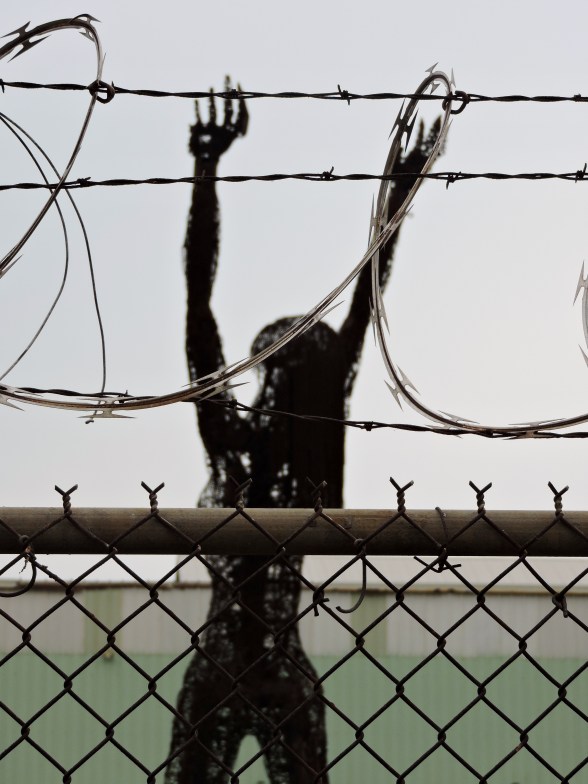
As a realistic and somewhat pessimistic woman I tend to stay away from international days of anything. One day of focus is not enough to change anything or even learn much of any given subject. That said, as a woman in the male-dominated world of history and a citizen in a country that is regressing horribly I feel like not mentioning International Women’s Day would be a terrible mistake.


You must be logged in to post a comment.