It must be agonizing for a parent to outlive their child. It goes against the natural order of the universe and has to be absolutely devastating. For many, it usually involves anger and hopelessness. Margaret Pearse knew that suffering better than most, for she didn’t lose one son, but two—at once—both executed at the hands of the British for their roles in the Easter Rising of 1916. Despite this, she steadfastly refused to give in to despair and she spent the rest of her life fighting for the free Ireland that her sons had died for.
Continue reading
Tag Archives: Patriot Dead
The Ghosts of Kilmainham


It has been said that tourists – and mostly American tourists – are the only reason that Kilmainham Gaol is still open because most Irish couldn’t be bothered with it these days. My new friend who is now happily married here in the U.S. agrees with the travel books that say things like that because he and his generation seem to be sick to death of the glorious dead mentality and couldn’t care less about the history and the Troubles that have haunted the country since even before the Rising of 1916. In fact, he was shocked that we were still asked questions about our religion and last names on our travels to Ireland at the end of last year, both in the Republic and the North because he thought those kinds of things were finished.
However, when I did tour Kilmainham Gaol, I was in a group mostly made up of Irish people and all seemed just as profoundly affected by it as I was. Perhaps it was because of the off season which meant my group was thankfully smaller when we went through the infamous prison, or perhaps it was an anomaly altogether but I was glad for it. It made for a decidedly more intimate and more personal experience.
Memorial Day
Here in the U.S. Memorial Day means a three day weekend to most people. Many either forget, are opposed or are simply untouched by the idea of war and those who fight them. As a woman who is obsessed with the politics of another land and disagrees almost entirely with her own country’s foreign policy, Memorial Day is a strange one. Still, while I am opposed to war and I despise the greed from which almost all of them spring, I do not oppose those who fight them. I absolutely hate the fact that they are necessary – but I do not hate them. And I can hardly honor the patriot dead of one country without honoring my own, so here it is.
Those who are sent on a mission and who do not return should be honored, not just on Memorial Day but every day. Those lucky enough to come back should be cherished and cared for – and those who thrust them into the world should be forced to join them, in order to better understand what they’ve done.
Cheers to you…. and thank you for your service. May you never be forgotten.
Stand up For James Connolly
I’m sure that they’ll argue that he was Scottish born. I’m sure they’ll denigrate his socialist beliefs. Neither dispute the fact that he stood for Ireland when others didn’t – and included rich, poor, male and female equally in all of his philosophies. Write. Call. Stop this ridiculousness.
At 6pm on Sunday, 18th of May 2014, RTÉ1 Radio’s History Programme is asking the question: “Is James Connolly a false 1916 Icon?” Don’t let them degrade the winner of the Public Poll to choose the Greatest Irishman Ever. We need to flood RTÉ’s Inbox with support for James Connolly. Please take time to E-Mail: history@rte.ie saying that you support James Connolly as a National Irish Icon.

Before the gallows……
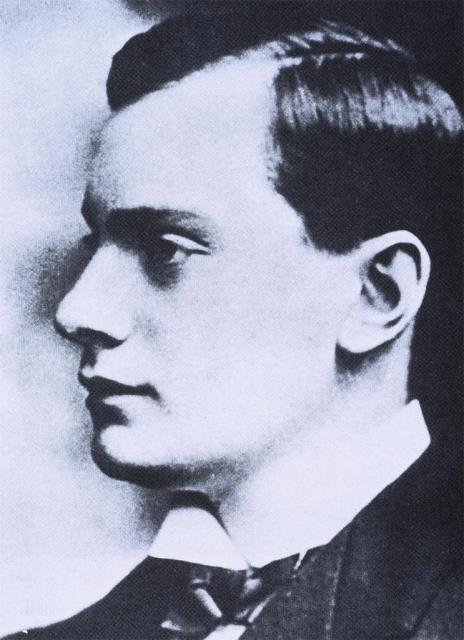
I believe that he knew he was about to be executed. I believe that he thought it was worth it completely. I have seen his letters to his mother in person, once he was imprisoned and about to die. This schoolmaster, this poet, this philosopher and this hero of Ireland – this reason that I wear an Easter Lily badge – this man, is an idealist – a cheerleader – a man who never lost his faith in humanity and justice. He was amazing. His triumph was through his failure. His life was short but full and meaningful.
Nov. 10th, 1879 – May 3rd, 1916
Padraig Pearse’s Address to Court Martial:
I desire in the first place to repeat what I
have already said in letters to General Sir John
Maxwell and to Brigadier General Lowe. My object in
agreeing to an unconditional surrender was to prevent
the further slaughter of the civil population of
Dublin and to save the lives of our gallant followers
who, having made for six days a stand unparalleled in
military history, were now surrounded and (in the case
of those under the immediate command of Headquarters)
without food. I fully understand now, as then, that my
own life is forfeit to British law, and I shall die
very cheerfully if I think that the British
Government, as it has already shown itself strong,
will now show itself magnanimous enough to accept my
single life to forfeiture and give a general amnesty
to the brave men and boys who have fought at my
bidding.
In the second place I wish it to be understood
that any admissions I make here are to be taken as
involving myself alone. They do not involve and must
not be used against anyone who acted with me, not even
those who may have set their names to documents with
me. (The Court assented to this,)
I admit that I was Commandant General
Commanding in Chief the forces of the Irish Republic
which have been acting against you for the past week,
and that I was President of their Provisional
Government. I stand over all my acts and words done or
spoken in those capacities. When I was a child of ten
I went down on my bare knees by my bedside one night
and promised God that I should devote my life to an
effort to free my country. I have kept that promise.
As a boy and as a man I have worked for Irish freedom,
first among all earthly things, I have helped to
organise, to arm, to train, and to discipline my
fellow-countrymen to the sole end that, when the time
came, they might fight for Irish freedom. The time, as
it seemed to me, did come, and we went into the fight.
I am glad we did. We seem to have lost. We have not
lost, To refuse to fight would have been to lose; to
fight is to win. We have kept faith with the past, and
handed on a tradition to the future.
I repudiate the assertion of the prosecutor
that I sought to aid and abet England’s enemy. Germany
is no more to me than England is. I asked and accepted
German aid in the shape of arms and an expeditionary
force. We neither asked for nor accepted Germany [sic]
gold, nor had any traffic with Germany but what I
state. My aim was to win Irish freedom: we struck the
first blow ourselves but should have been glad of an
ally’s aid.
I assume that I am speaking to Englishmen, who
value their freedom and who profess to be fighting for
the freedom of Belgium and Serbia. Believe that we,
too, love freedom and desire it. To us it is more
desirable than anything in the world. If you strike us
down now, we shall rise again and renew the fight. You
cannot conquer Ireland. You cannot extinguish the
Irish passion for freedom. If our deed has not been
sufficient to win freedom, then our children will win
it by a better deed.
Homesick For A Place That Isn’t Home (Yet)
Well, not in this life anyway. (Yet) 98 years ago, on Easter Monday, a big thing began in Dublin. I cannot help but feel that I was there in some form or another – in a different life – because how else could I explain the connection I have to Ireland in general and that time in particular? The entire time I was there, I had a never-ending sense of deja-vu and since I have been back, I have longed every day and dreamed every night of the emerald isle. I’m even learning Irish – and it drives me bonkers every day – but I cannot stop.
So this Easter to celebrate the Rising, I am wearing an Easter Lily for Ireland’s patriot dead and I added the GPO into the Atlas Obscura lexicon. It was all I could do, since I am on the wrong continent today. It is a lonely place in my head and heart – standing alone amongst the people I know in the things and the history that is so vital to who I am and learning a language that I have no one to speak it with. Still…as the fiddles play on the stereo and I watch Gerry Adams give a speech to the commemorative crowd in Dublin, I know in my heart that I found a home – and continue to explore it every day – even from too great a distance. And as he said this morning, “If this were 19 and 16, we would all be in the GPO”. I know I would, I think I was …and I will be again for the 100 year anniversary.
I repeat and expand on the Atlas entry here too…because of a deep love of the Irish Nationalist history and the fact that today is the day to celebrate the one place in all the world that I’d be OK with being labeled a Republican.
The General Post Office in Dublin on O’Connell street is the headquarters of the Irish Postal Service and a bustling hub of activity, but every Easter Monday it becomes a symbol of Irish revolution and a somber place of remembrance.
Dublin was still under British rule in 1916, when seven unlikely revolutionaries hatched a plan for an armed uprising during the Easter holiday. They were a headmaster, a poet, a tobacco enthusiast, a philosopher and more – just ordinary men who had grown weary of the boot on their necks. They were born of desperation and idealism – sure that all they had to do was begin before their whole country stood with them. In secret, they wrote a Proclamation of Independence and chose strategic sites in downtown Dublin for their Rising, including the post office along the main thoroughfare of the city. They felt that once the revolution began the people of Ireland would rise with them and they assumed that the British would not destroy their own property in retaliation. They were mistaken on all counts.
The Rising had its problems from the beginning. Due to a split in leadership and miscommunications, even the date was confused. When the fighting didn’t begin on Easter as many thought, much needed would-be reinforcements turned around and went home. Despite this, the planned takeovers of government buildings began on Easter Monday, and the destruction of a large portion of Dublin shortly followed.
The general post office, or GPO, was the headquarters of the revolution. The men took over the GPO – not harming anyone who was there but not leaving either. Here the Irish flag was raised and the Proclamation was recited loudly, by Padraig Pearse to the jeers and complaints of the citizenry who just wanted to post their mail. When the British began to shell the area with heavy artillery, the complaints grew louder. The post office was eventually set on fire and mostly destroyed, along with many of the buildings around it. In the end, the British army had no qualms about destroying most of downtown Dublin to defeat the upstarts in the GPO.
The Easter Rising only had to last for 3 days to have a chance, because of an agreement with Germany. The German government had promised that if they could last 3 days, the question of Irish independence would be put on a global platform. Unfortunately, it was Germany…in the middle of World War 1 and well, the Irish rebels chose poorly in their ally in this matter. Still, the Rising lasted for 6 days – with less than 500 volunteer fighters against the might of the British Army. It would likely have been a mere footnote in history, but for the fact that all seven signatories and on the Proclamation and many others were then tried in secret and executed by the Crown, at which point they became martyrs to Irish freedom. Their short-lived fight eventually led to Ireland’s independence and the leaders are revered to this day. Decades later, their proclamation is located in many Irish government buildings including the GPO and on countless memorials. It is read every year on Easter Monday at the renovated post office by a member of the Irish Defense Forces.
An Easter Lily is worn by Nationalists to symbolize the rising – and it too can be found everywhere in Ireland – in statues, memorials, Northern Irish murals and on countless lapels throughout the country and the world. No one honors their history or their martyrs like the Irish.
All that remains of the original GPO is the beautiful Georgian facade. The facade has its own visible scars of bullet holes, cracks and mortar damage that stand in mute testimony to the history of Irish Nationalism. It is a powerful place for anyone who enjoys history and it brought tears to my eyes. It is still one of the busiest post offices in all of Ireland and it houses a permanent exhibition of its role in the Rising called Letters, Lives and Liberty. Every year on Easter Monday, a wreath is laid outside the General Post Office, parades honor Ireland’s patriot dead the Proclamation is read to commemorate the men and women who fought in 1916.

 Choosing the Green
You must be logged in to post a comment.