Derry is a city that knows what it means to burn.
In August 1969, the Battle of the Bogside transformed the city’s streets into a war zone. Petrol bombs flew through the air. CS gas filled the alleyways. Those three days of violence marked the beginning of a conflict that would claim over 3,500 lives across the North of Ireland. Over the next few years, civil rights activists began a long campaign against the gerrymandering in the region and the discrimination against Catholics. Organizers looked across the ocean for inspiration. They saw the marches in Selma in the United States. They heard Martin Luther King Jr. speak of justice and nonviolent resistance. The movement in Derry borrowed that language deliberately, because it fit. Derry’s Catholics faced discrimination in housing, employment, and voting rights, similar to what African Americans were facing in the US. The parallels were not metaphorical. They were structural and intentional.
On Jan. 30th, 1972 a large civil rights march made its way through Derry. English soldiers opened fire on the unarmed protestors, killing 14 innocent people and injuring many more. The Crown defended the killings adding to the injustice and radicalization of the city. Calls for both violence and peace rose, each shouting louder than the one before. Derry was an open wound, full of trauma, anger, and fear for decades to come.
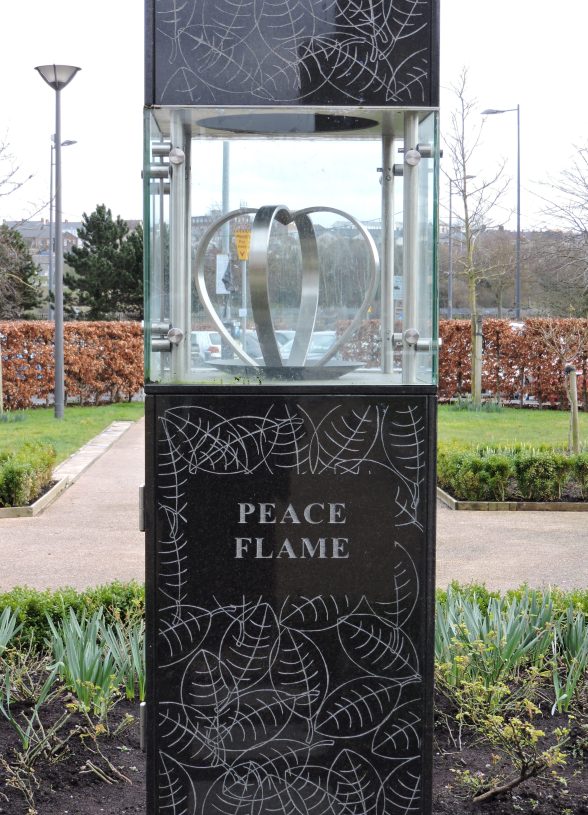
That history is embedded in the city to this day. It lives in the murals of the Bogside, in the names on memorials and walls, on the gravestones of the city cemetery, and in the hearts of all who call it home. This is why a symbol of peace in the town carries such weight. The Peace Flame is in the center of a purpose-made tiny garden next to the Guildhall. It is housed in a glass enclosure, sheltered from the wind but visible to anyone who passes. A pillar bears the words plainly: Peace Flame. No ambiguity or abstraction, just the thing itself, named loudly and ever present.
It was unveiled on this day in 2013 as part of a five day peace conference. The keynote speaker was Martin Luther King III, the son of the man whose own civil rights movement had inspired Derry activists for nearly fifty years. His presence was not just ceremonial, it was also a full circle moment. The thread that ran from the U.S. civil rights movement to the Bogside in Derry was being acknowledged openly, by someone who carried that legacy in his blood.
The ceremonial lighting featured children from both sides of the divided town. That choice was poignant. While the adults in the crowd carried the memories and the scars, the children could carry the hope for a peaceful future. They will decide the future of the north of Ireland so it was fitting that they were involved in the town’s efforts to promote both the city and the flame as a beacon of peace.
This was the first peace flame in Ireland. It has had to deal with technical issues and multiple vandalism incidents that affect the flame but whether it happens to be lit or not when you walk through the garden, it’s hard to ignore the symbol. Seeing it in the heart of Derry is both heavy and optimistic, much like the town itself.
It also seems like a light that is holding steady even when the future is uncertain and the past refuses to stay quiet. Installing the peace flame did not fix or erase what happened here; instead it shone a light on all the tragedies and pierced through the darkness of the past, lighting the way to a better and shared future in the region. May it shine bright in the hearts of all who pass it by.

