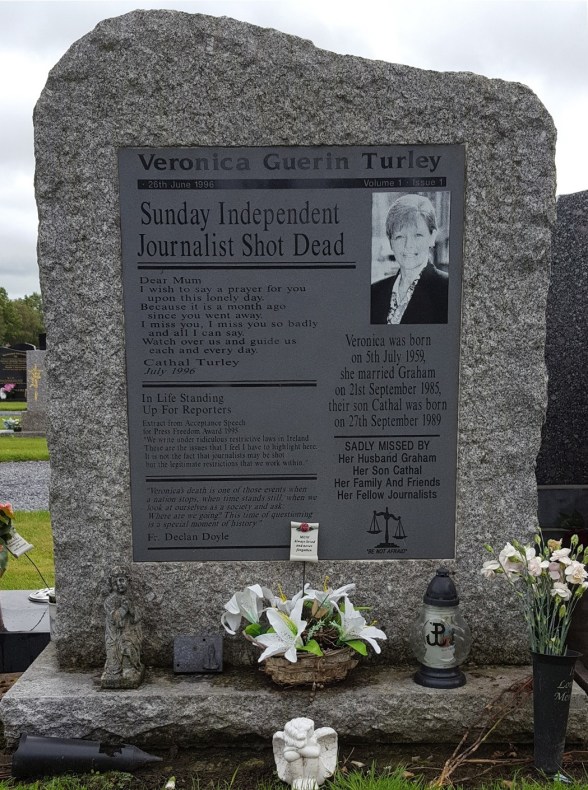
Veronica Guerin was a reporter who refused to stay with a safe, sanitized story. She did not seek out danger but when it was present, she faced it with her notebook in hand. She was brave in the face of brutality and if she was warned to stay away from a story, she dug in even more. But on this day in 1996, that ever present danger caught her. She was 36 years old, a mother, and one of the most captivating investigative journalists in Ireland when a motorcycle pulled up alongside her car while she was stopped at a light. She probably didn’t even take notice of them until they smashed her window and fired several shots directly into her vehicle before they fled the scene. Veronica died before the ambulance arrived. It took less than a minute to kill her body but decades later, her spirit lives on.
In the early 1990s, Dublin was in the grip of a heroin epidemic that was quietly destroying working-class communities while the powerful looked the other way. Guerin, a reporter for the Sunday Independent, decided that looking away was not an option. She reported on the criminal gangs controlling Ireland’s drug trade at a time when most journalists treated those stories as too dangerous, too murky, or simply too unglamorous to pursue. She knocked on the doors of drug lords. She sat across from men who had ordered destruction and murder and asked them, politely and precisely, to explain themselves. This was not recklessness. It was a considered, principled commitment to the idea that journalism exists to serve the people. She was also, by all accounts, genuinely charming in a way that seemed to disarm people who had every reason to be guarded and hostile toward her and her work. She made this gift work for her most of the time, but ultimately it failed to protect her in the end.
What makes Guerin’s murder even worse is how predictable and preventable it was. She had been warned. She had even been wounded before, when a gunman showed up at her house after she began investigating organized crime and drug dealing in south Dublin. Her home and family were often threatened. She reported all of it and named names to her editors, the Gardaí, her readers, and anyone else who would listen. To their credit, the paper installed a security system and the Gardaí assigned officers to her after she was shot the first time, but she did not agree to these efforts because they hampered her ability to pursue leads and report the stories she was compelled to share. Eventually, the surveillance diminished and everyone began ignoring these threats or even worse, they told her to back off and shut her mouth, repeatedly. This was not something she was willing to do. Veronica was not naive about the risks but she believed her stories were worth it. In interviews just before her death, she acknowledged the threats with a matter-of-factness that reads now as both brave and tragic. She believed the people of Dublin’s devastated communities deserved someone who would speak for them and when no one else would, she raised her own voice.
Veronica Guerin’s assassination sent a shock through Ireland and had lasting consequences that are difficult to overstate. The country had seen plenty of violence but this was different. This was a journalist, a woman, and a mother, who was shot dead in broad daylight on a busy road simply because she had done her job too well. The public response was immediate and furious. Within weeks, the Irish government passed some of the most significant criminal justice legislation in the country’s history, including two acts which gave authorities new powers to seize the assets of criminal organizations. The Criminal Assets Bureau went on to dismantle a lot of the drug empire that ultimately killed Guerin when she refused to stay quiet about it. Ireland did not become a perfect, drug and criminal free country after her death, but it did become a different one, thanks in no small part to Veronica Guerin.
Guerin’s name is now attached to journalism awards, university programs, and both feature and documentary films. That is right and fitting but legacy has a way of softening the sharp edges of a life, and it would be a disservice to her to let that happen here. The structural conditions that made her vulnerable have not disappeared in the decades since her assassination. Women journalists around the world continue to face targeted harassment, threats, and violence at rates that far exceed their male counterparts, according to UNESCO research published in recent years. Online abuse, coordinated intimidation campaigns, gender-based insults, chauvinistic dismissals, and the slow erosion of institutional support for investigative reporting are on the rise. Journalists face daily threats of harm, similar to the threats that Guerin faced years ago. What she bravely showed us was that we can refuse to accept that the powerful get to define the terms of their own accountability. She reported on people who believed they were untouchable and she made them vulnerable in print with evidence, publicly. That act, repeated by journalists around the world every day, is one of the few genuine checks we have left on the powerful, and those who undertake this mission need to be protected as the rare jewels they are.
Today marks another anniversary of her death. In Dublin, people who remember her death may pause for a few thoughts or words about her. People who are too young to remember may encounter her name here and there throughout the day and if they are curious, they may find one of her powerful stories or some information about why she’s still relevant and important. She possessed a focus and determination that her colleagues still struggle to describe without a catch in their voices and a tear in their eyes. Veronica Guerin was a hero and a woman who decided that the truth mattered more than her comfort and safety. She paid the highest possible price for that decision but she was not wrong when she made it. The truth is important and independent media and investigative reporting continue to provide it on every continent, every single day. It may get overshadowed by hateful pundits and manufactured outrage but it still exists. Expect more from your news sources and seek out this type of reporting to drown out the noise of partisan headlines. When you support journalists and investigative reporting, you honor Veronica Guerin and those like her. That’s critically important in this day and age, especially today.




You must be logged in to post a comment.