No, Nay, Never; Cumann na mBan rejects treaty

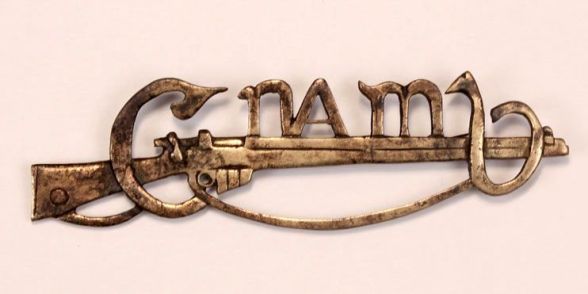
The ladies of Cumann na mBan have always had very strong opinions about the state of Ireland and its politics. Since its inception, the majority of CnamB members have fought for a united Ireland. During the lead up to the Easter Rising of 1916, these women supported the Republican cause in many different ways. They raised funds for the uprising, trained in first aid in order to help wounded Volunteers, smuggled various weapons and explosives throughout Ireland, spread important news, and many learned to shoot and fight themselves. They became a force to be reckoned with.

In the aftermath of the Rising, CnamB was flooded with new members and big ideas. They were prominent in the Dáil Éireann, the Republican legislature set up to counter England’s rule. Many of the widows of the leaders of the Rising were some of the loudest voices and strongest supporters of a free Ireland, and almost all were members of the female Republican organization. Eamon De Valera called them the “most unmanageable revolutionaries.” Many others accused the organization of making decisions based on vengeance and emotion without thought or consequence, especially when they voted against the Anglo-Irish Treaty ninety-four years ago today.

Continue reading

The Countess; Petticoats, Patriots, and Partition

I write a lot about Constance Markievicz, just like anyone else who writes Irish history should. However, she was not the only woman involved in the planning or the execution of the Easter Rising in 1916…and many others never get the credit they are due. That’s not to say that she doesn’t deserve a bit of her own though. After all, one of her more famous quotes is highlighted proudly on my business cards, and she does have her own few pages in my book. Today in honor of her birthday, I give you some of her story from Petticoats, Patriots, and Partition – the book that has stolen most of my time for the last six months or so. Happy birthday Countess.

Continue reading

Moore Street Wars

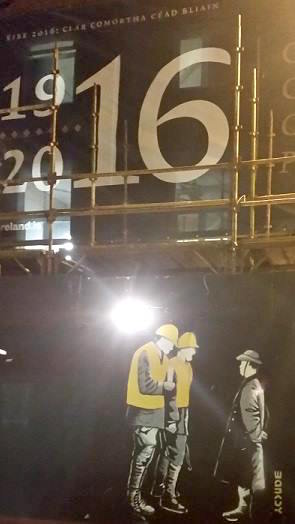
I’m returning to my favorite cause lately again for one more time (this week). Last night the “Banksy” mural appeared – and while it is obviously not Banksy, it is pretty great.

banksy

Well, it’s pretty great except for one thing. As one astute observer on Facebook said, “Just another time Elizabeth O’Farrell was edited out of the picture.” This artist didn’t even add her shoes. Still, the flash of color and the twist on the old surrender picture is still an awesome one.

Continue reading

Changed Utterly, the death of W.B.Yeats

licensed for reuse through Creative Commons

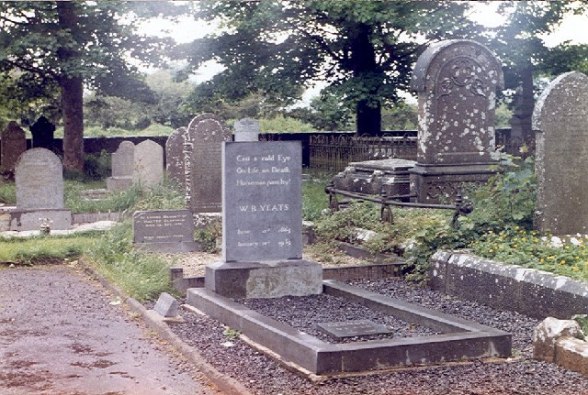
On this day in 1939, poet and patriot William Butler Yeats said farewell to the world from the south of France. Yeats spent many of his winters in France and in Italy due to life-long health issues but he always left his heart in Ireland, even after death. He told his wife George to bury him quietly in the hills above Monaco but “to dig me up and plant me in Sligo” a year later when he thought everyone would have forgotten about him. That idea is laughable given that he is still revered and remembered today.

Continue reading

Dr. Ada English

Dr. Ada English was a strong woman, a fervent Nationalist, a prominent member of Cumann na mBan, and one of the first female psychiatrists in Ireland. Like her peer Dr. Kathleen Lynn, Dr. English devoted her spare time to politics and to healing and aiding the Irish Volunteers who were fighting for a free Ireland. Her story is not as well known as Dr Lynn’s however, since Ada was not in Dublin during the Easter Rising. Many political women of Ireland’s revolutionary periods have slowly vanished throughout the years, and Dr. Ada English has not been an exception to that unfortunate trend, though she should be.

Continue reading

Helena Molony

Today in honor of Ms. Helena Molony’s birthday, I give you the bit I wrote about her in my new book; Petticoats, Patriots, and Partition.  She was a pretty awesome lady, and one of many that I celebrate in the first section of the book. I hope it tempts your curiosity about the rest of them too. If it does, the book is available worldwide through Amazon and nationally through Barnes and Noble, other bookstores, Amazon, and Blurb. Enjoy!!

Continue reading

Save Moore Street (again)

I seem to have written a piece about Moore Street in Dublin every four to six months or so, since my last visit there. As the (de)construction looms ever closer, it has happened a bit more frequently. The protection of Moore Street is one of my favorite Irish causes, and I spend a good deal of time reading through mind-numbing transcripts and watching videos and news from afar as the government tries to weasel a new mall or hotel into what should be a sacred and protected space.

Continue reading

Battlefield Bonds

There’s a fight raging in Dublin over the few historic, urban battleground sites that still remain. These locations have dwindled drastically over the last hundred years as big industry takes hold in Ireland. There are plaques all over the city, noting the historical significance of what used to exist on that spot – but many of the buildings and businesses are gone and they’ve been replaced by something new, or worse – they’ve been removed altogether.

Continue reading

Catalina Bulfin MacBride

The Bulfin family has a very respectable presence in the historic fight for Irish freedom. Many generations of the family fought for Nationalist and Republican causes, both inside and outside of Ireland. One branch ended up in Argentina, which is where Catalina Bulfin and her brother Eamon were born.
Continue reading

Elizabeth O’Farrell

On this day in 1885, a very brave and unusual woman was born in Ireland. Elizabeth O’Farrell grew up to be a revolutionary in many ways. She had a long term relationship with another woman when that was unheard of, dangerous, and severely frowned upon. She was a great suffragist who championed equality and respect for women during an era when many women couldn’t even get an education at all. She saved many lives but put her own at risk over and over again during the Easter Rising of 1916 – and she rarely gets the credit she deserves for all of her courageous acts. Even now her shoes get more attention than the woman who wore them.
Continue reading