Learn Something!!

Irish Lives in War and Revolution: Exploring Ireland’s History 1912-1923‘ was the name of the online class that I just completed thanks to the partnership between Trinity College and Futurelearn. It certainly lived up to its title, but not in the way I expected. Gone were the heroic tales of Patrick Pearse, Constance Markievicz, or Michael Collins. In their places were the voices, letters, and stories of the average person, struggling to get through his or her life in Ireland during periods of protracted conflict. It featured soldiers and volunteers pretty equally and it was really well constructed. I had a fascinating six weeks and I can’t even begin to tell you how much inspiration it gave me or how many historical events have a new twist (or ten) to think about after taking the course. Thousands of people worldwide took this class online, so I guess the first thing that must be said is way to go Ireland – people like you! And the next is a huge thank you to the teachers, mentors and researchers because this class was really enjoyable and educational.

Continue reading

James Connolly’s execution

On this day, 99 years ago, James Connolly was executed by the English for his role in the Easter Rising of 1916 and his death caused anger to explode all over Ireland. This is not to say that the death of Sean MacDiarmada who was executed on this day as well for the same reasons, was any lesser of a sore point to be mad or upset about, or that any executions before them were either.  In fact, the decision to kill the leaders after secret trials still haunts the British to this day. It is only the fact that James Connolly was driven to his death in Kalmainham Gaol by ambulance and shot after being tied to a chair that makes his execution any different from the other leaders.

Continue reading

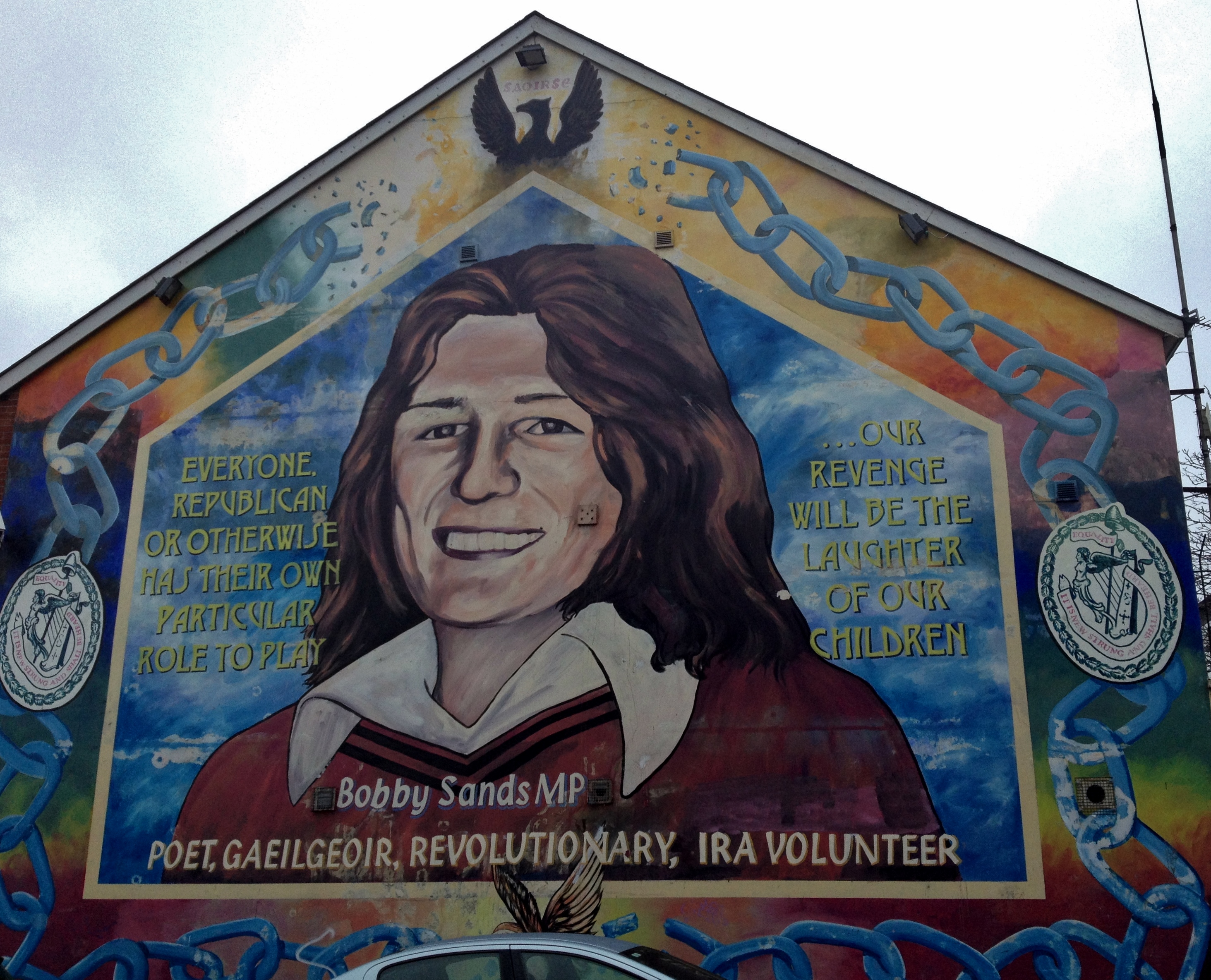
Bobby Sands, MP

They have nothing in the whole imperial arsenal that can break the spirit of one Irishman who doesn’t want to be broken”

– Bobby Sands.

Bobby's smile. Belfast, 12/12/13

Bobby’s smile. Belfast, 12/12/13

Bobby Sands was elected MP while languishing in prison on hunger strike. His newly elected position did not save him from death. He died 34 years ago today on the H blocks in the Maze. His funeral was attended by over 100,000 people and was seen worldwide, sparking international protests against the British government in other countries as well as Ireland. Countless stories, movies, and songs have been inspired by his life, and he remains an icon of Ireland to this day. Here’s a wonderful example of the music inspired by him from the great Black 47. Rest in peace, Bobby.

The Foreign Fighters of 1916

Now that some of the Women of 1916 have been highlighted, it’s time to move on to another group that has been largely  left out of the history books when it comes to The Easter Rising. Many brave rebels are celebrated throughout the world every year at this time…but what is ignored by most is that the fighters were not exclusively Irish. There were more than a hundred foreign soldiers who assisted in the Rising and while some were 2nd or 3rd generation Irish there were others who had no Irish blood whatsoever. They came from all over Europe and the rest of the world to join forces against the English and were some of the fiercest warriors in the conflict.

Continue reading

The Women of 1916

It is estimated that at least 200 women were involved in the Easter Rising of 1916, many more than previously thought. Their roles varied as widely as the women themselves – and ranged from the traditional fundraisers, cooks, and nurses, to the more unexpected roles of sharpshooters, spies, smugglers, and experts on explosives.  A decent effort has been made over the last few years to give them credit for the part they played in the fight for Irish freedom, but sadly, they are still largely absent from many of the narratives.

Worse still is when a historian refers to the women as “great supporters” or “brilliant fundraisers” or “backbones”. These statements are true, but they still have an air of dismissal even amidst the recognition. They still show women in supportive or secondary roles and ignore the fact that many of them saw themselves as rebels, fighters, and soldiers in their own right – regardless of whether or not there were any men around. Until more historians can acknowledge that, many of the women who continuously risked their lives during Easter Week and in the years that followed, will not get the respect and honor that they are due.

Continue reading

On this day in 1916…

99 years ago today Patrick Pearse stood on the steps of the General Post Office in Dublin to recite the following Proclamation. It was a masterpiece and the only declaration of  its time to include women equally. By then he probably had it memorized but as he read it, there were about 1,000 copies being passed out to the passersby and the curious. It was the first notion many had about the chaotic uprising that was about to take over Dublin for the next few days. It read:

Poblacht Na H Eireann

The Provisional Government

of the

Irish Republic

To the People of Ireland

Irishmen and Irishwomen, In the name of God and of the dead generations from which she receives her old tradition of nationhood, Ireland, through us, summons her children to her flag, and strikes for her freedom.

Having organised and trained her manhood, through her secret revolutionary organisation, the Irish Republican Brotherhood, and through her open military organisations, the Irish Volunteers and  the Irish Citizen Army, having patiently perfected her discipline, having resolutely waited for the right moment to reveal itself, she now seizes that moment, and, supported by her exiled children in America and by gallant allies in Europe, but relying in the first on her own strength, she strikes in full confidence of victory.

We declare the right of the people of Ireland to the ownership of Ireland, and to the unfettered control of Irish destinies, to be sovereign and indefeasible. The long usurpation of that right by a foreign people and government has not extinguished the right, nor can it ever  be extinguished, except by the destruction of the Irish people. In every generation the Irish people have asserted their right to national freedom and sovereignty; six times during the last three hundred years they have asserted it to arms.Standing on that fundamental right and again asserting it in arms in the face of the world, we hereby proclaim the Irish Republic as a Sovereign Independent State, and we pledge our lives and the lives of our comrades-in-arms to the cause of its freedom, of its welfare, and of its exaltation among the nations.

The Irish Republic is entitled to, and hereby claims, the allegiance of every Irishman and Irishwoman. The Republic guarantees religious and civil liberty, equal rights and equal opportunities to all its citizens, and declares its resolve to pursue the happiness and prosperity of a whole nation and all of its parts, cherishing all of the children of the nation equally and oblivious of the differences carefully fostered by an alien government, which have divided a minority from the majority in the past.

Until our arms have brought the opportune moment for the establishment of a permanent National, representative of the whole people of Ireland, and elected by the suffrages of all her men and women, the Provisional government, hereby constituted, will administer the civil and military affairs of the Republic in trust for the people.

We place the cause of the Irish Republic under the protection of the Most High God. Whose blessing we invoke upon our arms, and we pray that no one who serves that cause will dishonour it by cowardice, in humanity or rapine. In this supreme hour, the Irish nation must, by its valour and discipline and by the readiness of its children to sacrifice themselves for the common good, prove itself worthy of the august destiny to which it is called.

Signed on behalf of the Provisional Government,

Thomas J. Clarke,

Sean Mac Diarmada, Thomas Mac Donagh,

P.H. Pearse, Eamonn Ceannt,

James Connolly, Joseph Plunkett

Within a week, the rising was over and all the signatories were awaiting their executions. Nine more men would join them in their deaths and countless men and women languished in prisons all over the region. But on this day in 1916, the reading of the Proclamation signaled a beginning – an idealistic and hopeful moment – before reality and half of Dublin rained down upon them in the days to come.

(Interesting little aside: Patrick Pearse was not the first to read the Proclamation aloud on the streets. It is said that Constance Markievicz beat him to the punch when she started excitedly reading it to her friends and waving it around a few minutes after it had finished printing.)

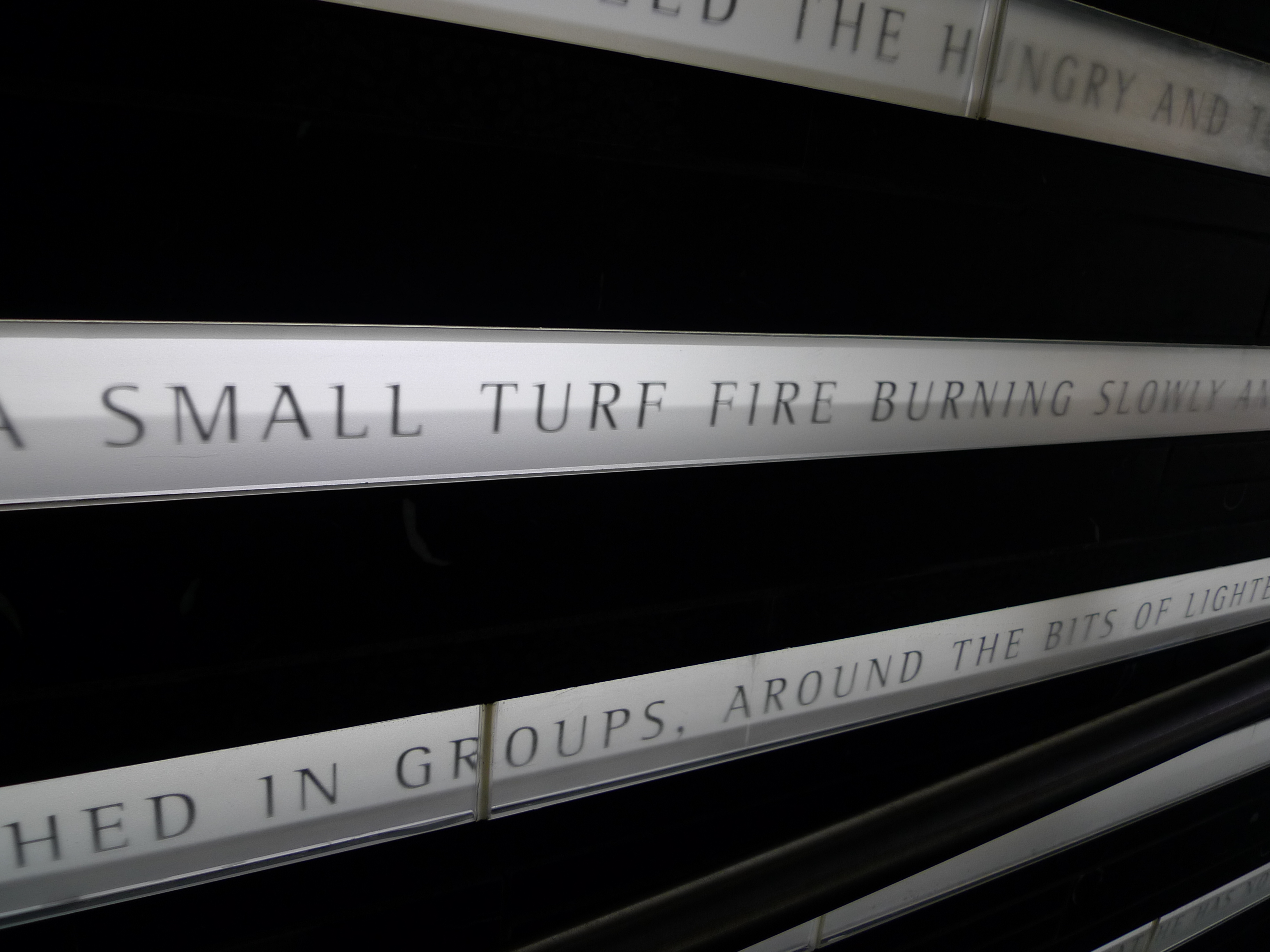
A small Turf Fire Burning…

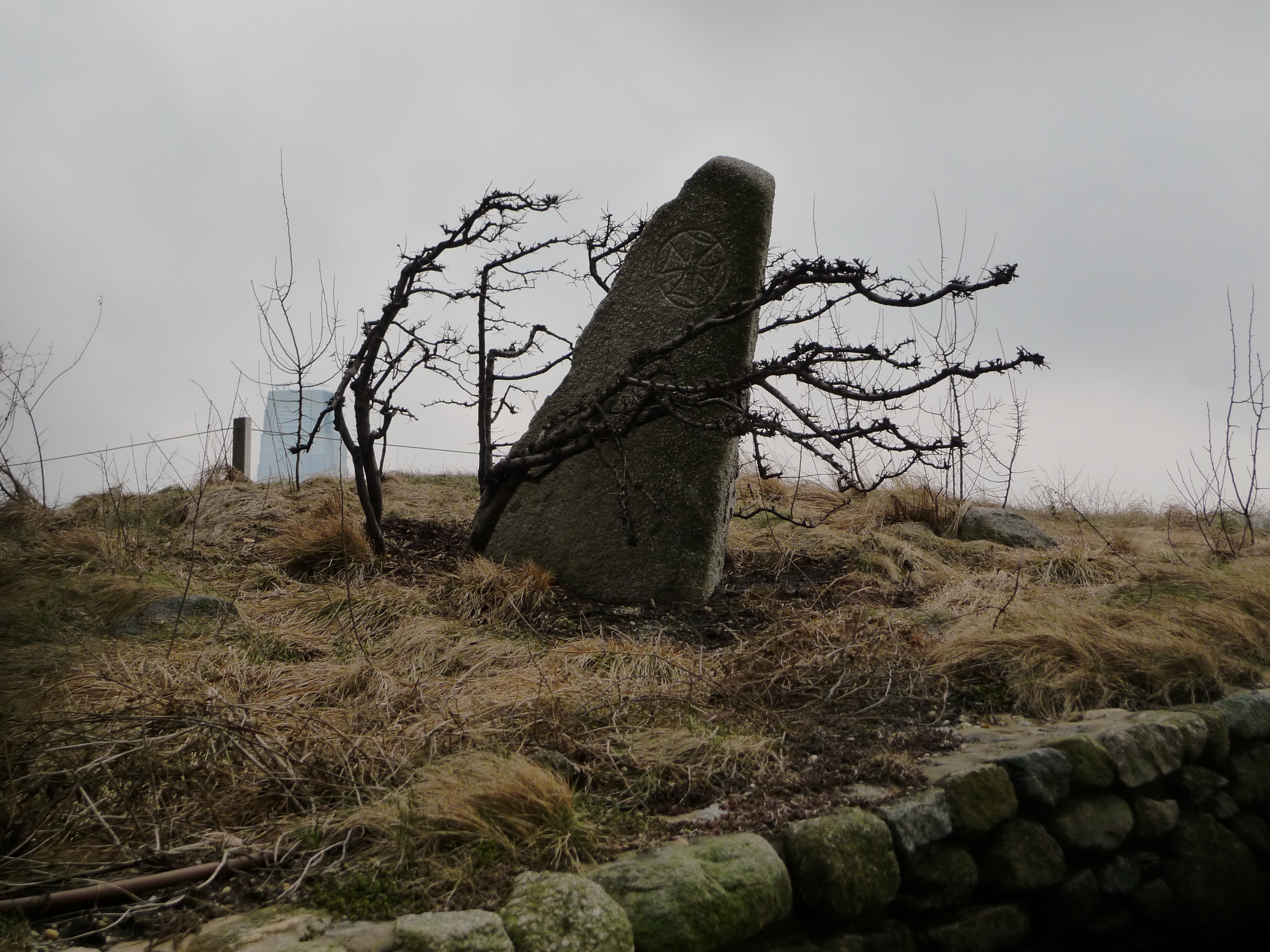
The jet lag has kicked in and I’m having some exhaustion-related come down from my travels, but before I crash, here are just a few more shots of the amazing and poignant Irish Hunger Memorial in New York City. More photos and tales to come soon as soon as I catch up on my sleep.


P1090077 P1090084 P1090085 P1090090 P1090095 P1090097 P1090100 P1090105 P1090119

It really did feel like Ireland there for a minute…

Easter Monday

Since it is Easter Monday and National Poetry month here in the US, today belongs to Padraig Pearse and his heartbreaking poem, The Mother.

The Mother 
I do not grudge them: Lord, I do not grudge 
My two strong sons that I have seen go out 
To break their strength and die, they and a few,
In bloody protest for a glorious thing,
They  shall be spoken of among their people,
The generations shall remember them,
And call them blessed;
But I will speak their names to my own heart
In the long nights;
The little names that were familiar once
Round my dead hearth.
Lord, thou art hard on mothers:
We suffer in their coming and their going;
And tho I grudge them not, I weary, weary
Of the long sorrow-And yet I have my joy:
My sons were faithful, and they fought.

image

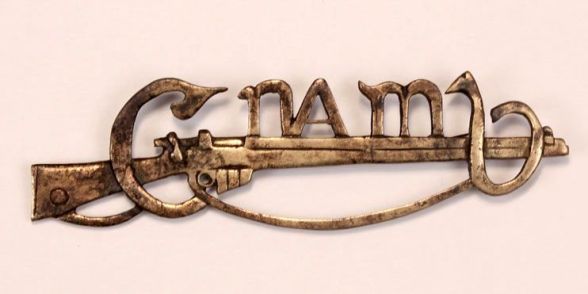
Cumann na mBan is born

On Thursday, April 2nd, 1914, about one hundred women strolled into Wynn’s hotel in Dublin at four o’clock in the afternoon for the first of Cumann na mBan’s many meetings. The Irish Women’s Council had a lot to discuss but the one thing almost all the ladies present had in common was a devotion to Ireland and a desire to serve it.

Continue reading

Arthur Griffith’s Birthday

Today in 1872, Arthur Griffith was born in Dublin. He was passionate about Irish history, which drove him to become a member of the Gaelic League where he rubbed shoulders with other Irish activists and cultural leaders. He was a bit of an anomaly. His devotion to the Gaelic League led to Griffith joining the Irish Republican Brotherhood where he was surrounded by many ideological opposites. He was inspired by Charles Parnell and wrote for many radical papers while he was growing up, but he was also ultra-conservative and widely reported to be an anti-Semite. While his IRB friends were planning a complete revolution, he was more in favor of a dual monarchy system, a sort of co-partnership with England. He was against any form of communism or socialism and was largely anti-union, but was in a room talking policies with James Connolly—the driving force behind Irish socialism at the time—on many occasions.
Continue reading