Lawyers, Guns, and Collusion

Lawyers are a group of people in an occupation that everyone loves to hate. Endless jokes use them as the punchline, there’s an eternal stream of songs and stories about how evil they are, and it seems that no matter which area of law they practice, they’re always hated by someone. It takes a thick skin, an obsessive attention to detail, endless patience, and a lot of manipulation to succeed in the field. In the North of Ireland, the law not only takes over their lives, but sometimes it ends them. It is not a job for the weak.

Rosemary Nelson lived her life trying to make the world a better place for everyone. She lived in a hotbed of Sectarianism during the Troubles but she represented people on both sides of the religious divide in small matters for years and went to bat for those that other people would ignore. She fought on behalf of the Garvaghy Road residents during the long Drumcree conflict in nearby Portadown, which thrust her firmly into politics and ruined any rapport she had with the Royal Ulster Constabulary (the RUC). That relationship only got worse when she decided to represent Colin Duffy, a man accused of killing their officers. That case would change her life and it ultimately took it as well. In the North, there have been many cases where certain factions of the population are unable to separate the lawyer from the criminal, and the assumption is that they’re one and the same. Even before she got Duffy released on a successful appeal, she was getting death threats from officers and Loyalist paramilitaries alike, just for representing him. There were twenty serious and documented death threats over a two year period, and two of them allegedly came directly from police officers. She dutifully reported each one, but was consistently refused protection by the police and the government, even after the United Nations’ Special Rapporteur stated on television that he felt her life was in danger. He recommended that the British government take action. They chose not to. She eventually testified about the threats before a committee of the United States Congress that was investigating human rights in the North of Ireland. It seems everyone was concerned about Nelson, except the very people whose job it was to take care of her.

The British government, MI5, and the RUC did not investigate any of these threats, nor did they ever give her protection. In case you feel like they didn’t do anything, rest assured that they did – they put Rosemary herself under surveillance for criminal activity. Between 1994-1998 security reports about her life increased until her home was bugged. She was seen as a criminal, rather than an attorney; and a threat, rather than a victim.

Rosemary Nelson was killed when a bomb planted under her car exploded on March 15th, 1999. The Red Hand Defenders, a Loyalist paramilitary group that was mostly made up of members of the LVF and the UDA, took credit for her assassination. Many of the members of the Red Hand Defenders were also RUC officers and British Army soldiers – people who belonged to the same organizations that had ignored her complaints for years, even while they were watching her every move. Strangely though, they didn’t have much in their records to investigate when it came to her death, despite all the surveillance – at least nothing they were willing to share with anyone else. There were a few inquiries into her murder and the final reports stated that all three agencies (the Government, MI5, and the RUC) had failed to protect her and had helped “legitimize” her as a target in the eyes of Loyalist paramilitaries. It also stated that these agencies and their employees had publicly threatened her and that their intelligence information had been “leaked”, making it easier for the murderers to get to her. It noted that numerous requests and warrants for surveillance footage or reports had been ignored completely. The inquiry couldn’t prove definitively that anyone in these departments had directly been involved in her death, but it certainly couldn’t prove otherwise either and their report clearly stated that investigators could not rule out the possibility that officers or soldiers might have aided the murderers.

Nelson was awarded the Train Foundation’s Civil Courage Prize after her death – an award that honors “extraordinary heroes of conscience.” Her humanitarian status was celebrated and mourned world-wide in the aftermath of her murder – and while some Loyalists still see her as a symbol of hate, those who she spent her life trying to help remember her as an incredible and determined woman, who wanted justice for everyone whether they were young, old, Catholic, or Protestant. Today would be her birthday and I humbly suggest doing something wonderful in her honor. Help someone in whatever way you can, large or small, friend or stranger. I’m sure she’d want to be remembered in that way, rather than for the horrific way she was targeted, abandoned, and killed.

Apologies and news

I apologize dear readers, it has been some time since I’ve posted here. It is not for lack of will – I get an immense amount of joy from this blog, but life has gotten in the way for a minute. Or rather, death has.

I’ve been hit with a double dose of tragedy over the last couple of weeks and it has taken a toll on my brain and my free time. I promise to return to my regularly scheduled program as soon as I’m able to stop and think for a minute. There’s a post or five brewing in my head I promise – and I look forward to getting them out soon.

In the meantime, I will tease you with a little news – there’s a book coming. It’s a silly little thing that I’m self-publishing but it brings me a lot of joy. It’s a trade paperback with about 150 pages and is full of some expanded and favorite posts, quirky facts, Irish travel gems, and more. It features a lot of women and some of the lesser known players in Irish History and has a wonderful title too – but it’s going to be about a month before I can get it finished and released. I just wanted you to know that I haven’t been completely idle in these trying times.

More history posts and current tidbits soon I promise.

Squeeze your loved ones a lot and keep them close.

Speaking of Derry…

“We too are concerned that there are currently members of the British army on our streets years after we were told that they no longer have an active role in the north.” ~Danny Morrison, IRSP, Derry Journal.

That quote is not a throwback to the Troubles. It is not left over from Operation Banner – the longest deployment of the Army in British history. Operation Banner lasted for over 38 years. Their presence and poor decision making skills fueled the flames of the Troubles for thirty years, and the mission “failed to defeat the Irish Republican Army on a strategic level or have any long term plan,” according to a Ministry of Defence report. The British Army formally ended their engagement (Operation Banner) in the North of Ireland in July 2007.

Continue reading →

The ___________ 12th

It’s a fill in the blank title, predominantly because almost any adjective in the world could be used to describe the 12th of July in Ireland, depending on where you come from. That said, my own fill in the blank words would include Ridiculous, Divisive, Uncontrolled, and Tragic, just to start with. There are plenty more but I think those are my choices to sum up a whole lot of inflamed feelings, a huge cultural problem, and the profound lack of leadership witnessed all over the North of Ireland and beyond for the last few days.

Continue reading →

Heritage of Hate

It’s rare that American news coincides so neatly with news in Ireland. It’s a real treat to write about it when it does unless it is a story full of bigotry and grandstanding which unfortunately, is true today. Often times whenever a group is called out for their bullying traditions or symbols of hatred, their response is always the same. They claim that the behavior isn’t racist or sectarian, that instead it is tradition and heritage – as if the concepts are mutually exclusive. Guess what? It IS tradition and heritage and it IS racist, sectarian and vile. The time has come to accept that and leave horrible traditions behind.
Continue reading →

Love Will Tear Us Apart

Charles Parnell was the ultimate star of Irish politics in his day. His meteoric rise might have been enough to give Ireland the Home Rule it had longed for. He might have been the man to change the course of Irish history long before the armed militias and secret societies of later years ever had a chance to grow or rise up. He might have done all this and more—or not—but we will never know because his passion for Ireland came second to one other – and that one other was a married woman named Katharine O’Shea.

The two met originally because Katharine’s husband Willie had decided to enter the political arena. Like any smart and supportive wife, Katharine thought to further advance her husband’s career by befriending the most powerful politician at the time and that was Charles Parnell. This plan immediately backfired when the attraction between the two of them grew after their first encounter. Within a matter of months the two were carrying on a passionate and overwhelming affair, to the peril of all else.

It is highly improbable that Willie O’Shea did not know of the affair, given that Katharine had three children with Parnell. He turned a blind eye to his wandering wife for the sake of his political career and all of the Parnell children were given the last name of O’Shea, despite their bloodlines. He used Parnell for his own career advancement and lived comfortably on his wife’s money, staying silent about the affair for years. He held his tongue until it would utterly destroy everything Parnell had been working for. Then and only then did Willie open his mouth, publicly and scandalously.

It was Christmas Eve in 1889 that Willie filed for divorce, and it was motivated by greed since Katharine had just received a large inheritance. She tried to silence him with a large settlement but he would not be satisfied and he continued to petition for divorce. He dubiously claimed that he had known nothing of the near decade-long affair and he named Parnell as a co-respondent in the proceedings, knowing that it would destroy both his wife and the politician. Support for the Home Rule that was Parnell’s dream fell along with him and burned out in scandal. He was accused of bribing Willie in order to sleep with his wife. The Irish Parliamentary Party split down the middle and the only thing they agreed upon was that it was all Katharine’s fault. She was accused of being a manipulative Englishwoman who had designed the affair to take down Parnell. She was called a whore and was told that she was responsible for the defeat of Home Rule. The Irish press took to calling her Kitty – a slang term for a stupid, young, or childish woman and a more subtle, occasional title for prostitutes, or certain parts of the female body. It was an open insult to her and one that stung the lovers deeply.

Parnell fought back, and tried to keep his career from totally imploding. He defended them both and sought to calm the scandal by proving once and for all that their love was real. They were married on this day in 1891 but in spite of his hopes for understanding and respectability, the wedding only made things worse. The press categorically refused to call Katharine by her married name of Mrs. Parnell and they continued to hurl abuse at her, selling paper after paper denouncing the couple. Parnell’s attempts to save them both only put another nail in the coffin and although he tried to resume his work after the wedding, he quickly discovered that the Ireland he had fought for had irrevocably turned against him and the love of his life.

Katharine, or Katie, (but never Kitty,) as she was known to friends and family, was the perfect scapegoat and her notoriety as the woman who harpooned the best chance of Home Rule for Ireland still permeates today, even though many historians feel like Parnell would never have achieved it anyway. She was a woman of scandal, even though her true love had made an honest woman out of her, so to speak. Their marriage only lasted four months before Charles Parnell passed away – and it was fraught with stress and insults all the way through. At least they had the years of joy beforehand, otherwise Katharine Parnell may have lost her mind completely. As it was, she had the first of many breakdowns soon after her husband died but she went on to publish a few books and she lived for another thirty years. Just not in Ireland.

Berkeley

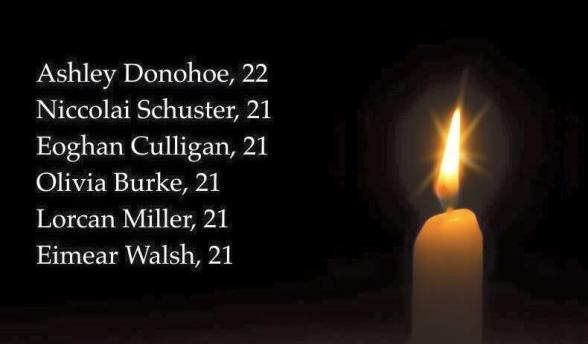
It’s rare that I get to post anything that is located close to me in this blog. Being so far away from what I usually write about means that while I’ve visited most of the places I feature, they are quite far away by the time I get to write about them. This one is close to home in many ways, and I am saddened to write about it at all. You see, I live very close to Berkeley, California, and I worked there for years so the recent tragedy there is very close to my heart.

Continue reading →

The Perfect Heist – Gough Barracks 1954

A little over 60 years ago, the Irish Republican Army (IRA) managed one of the cleanest military heists in history. It took about six months to plan, along with an IRA volunteer who actually enlisted in the British Army, and a whole lot of luck, but the raid was incredibly successful and they pulled it off without firing a shot or spilling a single drop of blood. Continue reading →

No, Nay, Never – A Coronation Tale

On this day in 1953, theatre owners and cinema houses all across Dublin unanimously decided against showing the Queen of England’s coronation film. It was not illegal to show it – in fact, there were at least a few places other than the theatres that quietly held secret viewing parties, but the mainstream movie houses were more concerned with staying in business and staying upright than they were with viewing or celebrating Queen Elizabeth’s pomp.

Continue reading →

Some little treats about James Connolly

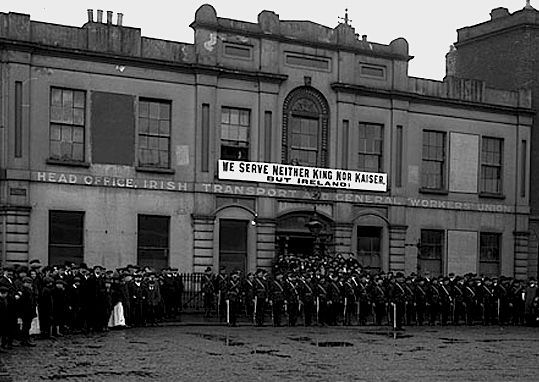
On June 5th, 147 years ago, James Connolly was born. Although he later became an Irish symbol of Republicanism, he was not born in Ireland – and in many ways, he did not fit in the Republican movement. He was born in Scotland and was a devout socialist who was profoundly engaged in the causes of Labor and Equality first and foremost. He was certainly an enemy of the state and an energetic agitator, but many of the tenets he adhered to and espoused, were not quite in line with his partners in the Irish Republican Brotherhood.

Since today is his birthday, here are some little things that you may or may not know about Mr. James Connolly.

Continue reading →