Love Will Tear Us Apart

Charles Parnell was the ultimate star of Irish politics in his day. His meteoric rise might have been enough to give Ireland the Home Rule it had longed for. He might have been the man to change the course of Irish history long before the armed militias and secret societies of later years ever had a chance to grow or rise up. He might have done all this and more—or not—but we will never know because his passion for Ireland came second to one other – and that one other was a married woman named Katharine O’Shea.

The two met originally because Katharine’s husband Willie had decided to enter the political arena. Like any smart and supportive wife, Katharine thought to further advance her husband’s career by befriending the most powerful politician at the time and that was Charles Parnell. This plan immediately backfired when the attraction between the two of them grew after their first encounter. Within a matter of months the two were carrying on a passionate and overwhelming affair, to the peril of all else.

It is highly improbable that Willie O’Shea did not know of the affair, given that Katharine had three children with Parnell. He turned a blind eye to his wandering wife for the sake of his political career and all of the Parnell children were given the last name of O’Shea, despite their bloodlines. He used Parnell for his own career advancement and lived comfortably on his wife’s money, staying silent about the affair for years. He held his tongue until it would utterly destroy everything Parnell had been working for. Then and only then did Willie open his mouth, publicly and scandalously.

It was Christmas Eve in 1889 that Willie filed for divorce, and it was motivated by greed since Katharine had just received a large inheritance. She tried to silence him with a large settlement but he would not be satisfied and he continued to petition for divorce. He dubiously claimed that he had known nothing of the near decade-long affair and he named Parnell as a co-respondent in the proceedings, knowing that it would destroy both his wife and the politician. Support for the Home Rule that was Parnell’s dream fell along with him and burned out in scandal. He was accused of bribing Willie in order to sleep with his wife. The Irish Parliamentary Party split down the middle and the only thing they agreed upon was that it was all Katharine’s fault. She was accused of being a manipulative Englishwoman who had designed the affair to take down Parnell. She was called a whore and was told that she was responsible for the defeat of Home Rule. The Irish press took to calling her Kitty – a slang term for a stupid, young, or childish woman and a more subtle, occasional title for prostitutes, or certain parts of the female body. It was an open insult to her and one that stung the lovers deeply.

Parnell fought back, and tried to keep his career from totally imploding. He defended them both and sought to calm the scandal by proving once and for all that their love was real. They were married on this day in 1891 but in spite of his hopes for understanding and respectability, the wedding only made things worse. The press categorically refused to call Katharine by her married name of Mrs. Parnell and they continued to hurl abuse at her, selling paper after paper denouncing the couple. Parnell’s attempts to save them both only put another nail in the coffin and although he tried to resume his work after the wedding, he quickly discovered that the Ireland he had fought for had irrevocably turned against him and the love of his life.

Katharine, or Katie, (but never Kitty,) as she was known to friends and family, was the perfect scapegoat and her notoriety as the woman who harpooned the best chance of Home Rule for Ireland still permeates today, even though many historians feel like Parnell would never have achieved it anyway. She was a woman of scandal, even though her true love had made an honest woman out of her, so to speak. Their marriage only lasted four months before Charles Parnell passed away – and it was fraught with stress and insults all the way through. At least they had the years of joy beforehand, otherwise Katharine Parnell may have lost her mind completely. As it was, she had the first of many breakdowns soon after her husband died but she went on to publish a few books and she lived for another thirty years. Just not in Ireland.
The Perfect Heist – Gough Barracks 1954

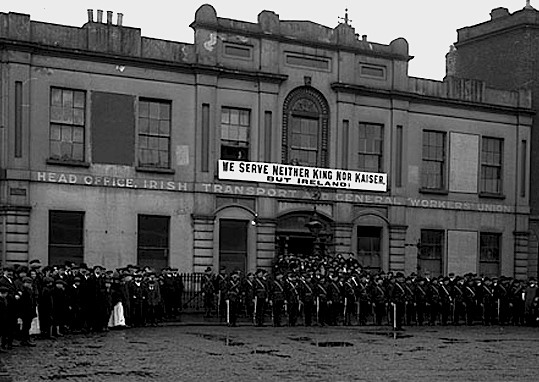
A little over 60 years ago, the Irish Republican Army (IRA) managed one of the cleanest military heists in history. It took about six months to plan, along with an IRA volunteer who actually enlisted in the British Army, and a whole lot of luck, but the raid was incredibly successful and they pulled it off without firing a shot or spilling a single drop of blood. Continue reading

No, Nay, Never – A Coronation Tale

On this day in 1953, theatre owners and cinema houses all across Dublin unanimously decided against showing the Queen of England’s coronation film. It was not illegal to show it – in fact, there were at least a few places other than the theatres that quietly held secret viewing parties, but the mainstream movie houses were more concerned with staying in business and staying upright than they were with viewing or celebrating Queen Elizabeth’s pomp.

Continue reading

Some little treats about James Connolly

On June 5th, 147 years ago, James Connolly was born. Although he later became an Irish symbol of Republicanism, he was not born in Ireland – and in many ways, he did not fit in the Republican movement. He was born in Scotland and was a devout socialist who was profoundly engaged in the causes of Labor and Equality first and foremost. He was certainly an enemy of the state and an energetic agitator, but many of the tenets he adhered to and espoused, were not quite in line with his partners in the Irish Republican Brotherhood.

Since today is his birthday, here are some little things that you may or may not know about Mr. James Connolly.

Continue reading

Margaret Skinnider

Margaret Skinnider was a woman like no other, and I take every opportunity that I can to write about her. She is one of my biggest heroes – not just because she was a warrior and an intellectual but also because she was humble and quick. Without her contributions, many aspects of the Easter Rising may never have come to fruition but because she was not born in Ireland and she was a woman, it has been very hard to find anyone who gives her the full recognition she deserves in the history of the Rising.

Continue reading

64 Women

womenmay22

The number of women arrested and questioned in 1916 for their roles in the Easter Rising up until today, 99 years ago, was 64. The paper published their names a week later on the 29th of May, and many believed this number to be the total number of women involved. They could not have been more wrong.

In all, over 200 women are known to have been involved in the Dublin Uprising. More than half are not included on this list – and many more have been lost in time – leaving some to believe that even the higher estimates are lower than they should be. Since many of the documented women are often ignored anyway, we may never have an accurate number altogether but at least there are a few pieces of hard evidence of their involvement, including this tiny clipped article.

In the years leading up to the Centenary celebration, many books and documentaries have made a decent effort to include and acknowledge the female fighters of 1916. I hope they will continue to highlight the women’s fight both for Ireland and for the recognition they deserve in the aftermath. Cheers ladies.

Learn Something!!

Irish Lives in War and Revolution: Exploring Ireland’s History 1912-1923‘ was the name of the online class that I just completed thanks to the partnership between Trinity College and Futurelearn. It certainly lived up to its title, but not in the way I expected. Gone were the heroic tales of Patrick Pearse, Constance Markievicz, or Michael Collins. In their places were the voices, letters, and stories of the average person, struggling to get through his or her life in Ireland during periods of protracted conflict. It featured soldiers and volunteers pretty equally and it was really well constructed. I had a fascinating six weeks and I can’t even begin to tell you how much inspiration it gave me or how many historical events have a new twist (or ten) to think about after taking the course. Thousands of people worldwide took this class online, so I guess the first thing that must be said is way to go Ireland – people like you! And the next is a huge thank you to the teachers, mentors and researchers because this class was really enjoyable and educational.

Continue reading

James Connolly’s execution

On this day, 99 years ago, James Connolly was executed by the English for his role in the Easter Rising of 1916 and his death caused anger to explode all over Ireland. This is not to say that the death of Sean MacDiarmada who was executed on this day as well for the same reasons, was any lesser of a sore point to be mad or upset about, or that any executions before them were either.  In fact, the decision to kill the leaders after secret trials still haunts the British to this day. It is only the fact that James Connolly was driven to his death in Kalmainham Gaol by ambulance and shot after being tied to a chair that makes his execution any different from the other leaders.

Continue reading

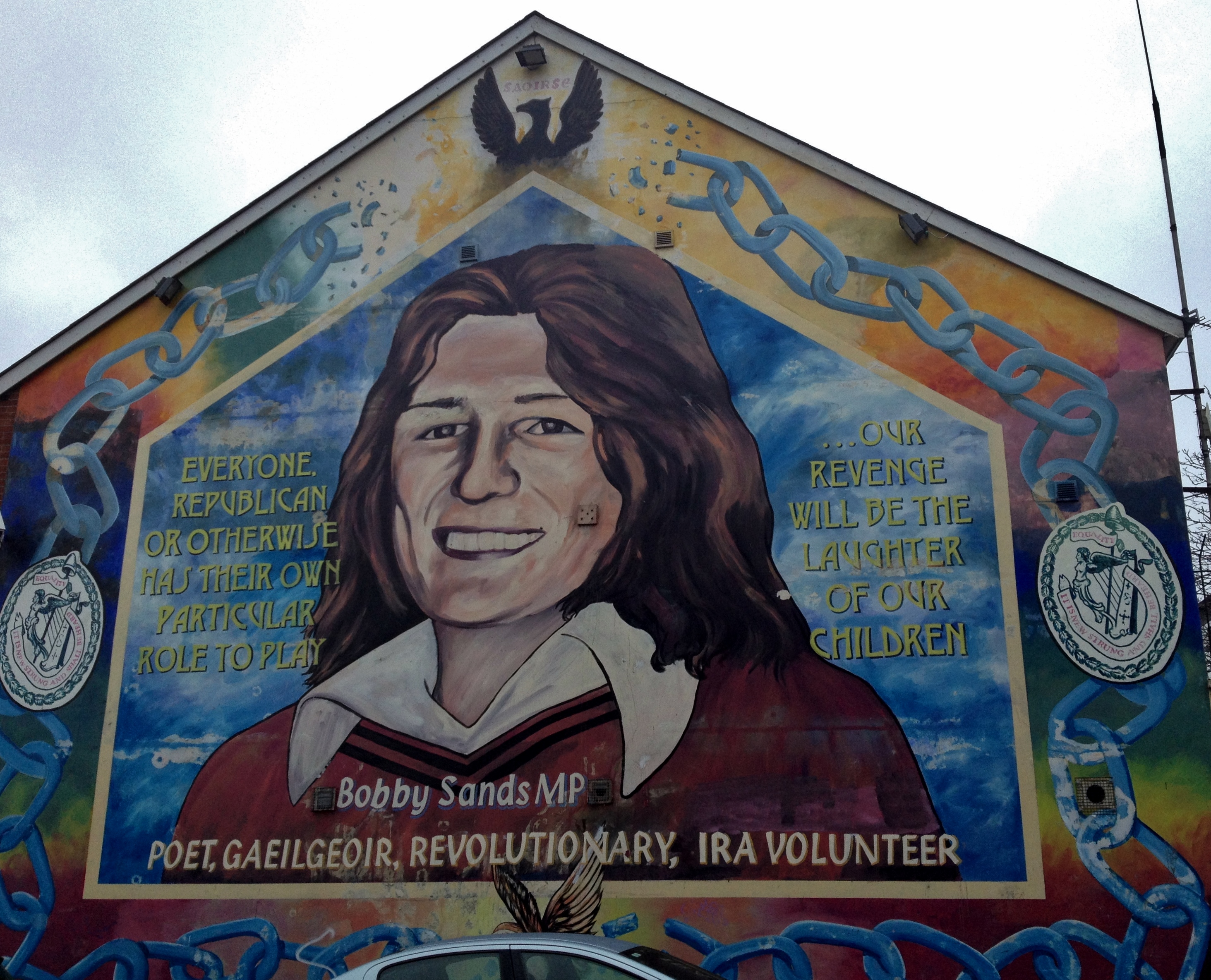
Bobby Sands, MP

They have nothing in the whole imperial arsenal that can break the spirit of one Irishman who doesn’t want to be broken”

– Bobby Sands.

Bobby's smile. Belfast, 12/12/13

Bobby’s smile. Belfast, 12/12/13

Bobby Sands was elected MP while languishing in prison on hunger strike. His newly elected position did not save him from death. He died 34 years ago today on the H blocks in the Maze. His funeral was attended by over 100,000 people and was seen worldwide, sparking international protests against the British government in other countries as well as Ireland. Countless stories, movies, and songs have been inspired by his life, and he remains an icon of Ireland to this day. Here’s a wonderful example of the music inspired by him from the great Black 47. Rest in peace, Bobby.

The executions begin

On this day, 99 years ago, the fateful decision to execute the leaders of the 1916 Easter Rising in Ireland came to fruition. The men were taken from their cells and killed for their role in the uprising during Easter week. The signatories of the new Irish Proclamation had anticipated their deaths since before the Rising began – and while it’s probably not accurate to say they longed for them, they did know that their executions would galvanize many people in Ireland.

The executions began on May 3rd and the last was three months later. By August 3rd when Roger Casement was hanged outside of Ireland’s borders, 16 men had been executed for their roles in the uprising.

he signatories were shot in the yard at Kilmainham Gaol in Dublin. Today a cross marks the spot where they were killed and ironically, the Gaol now houses a museum dedicated to many Irish Nationalists and Republicans who were once killed or jailed there. It is a booming tourist destination.

Kilmainhamexecution3