Humphreys Strikes Again – Call to action

It’s appalling that Heather Humphreys continues to be in charge of Ireland’s arts, language and heritage. Her failure to protect any of these things has been going on for far too long. She’s a disgrace to the position and her ongoing quest to redevelop and erase the historical importance of Moore Street proves this time and time again.

Humphreys always favors new business over history and obviously believes that Ireland’s heritage is less important than modern development. She has refused to protect Ireland’s history on numerous occasions, letting go of historical properties and landmark sites repeatedly but this new blunder may take the cake. She is refusing to purchase Patrick Pearse’s last surrender letter. This handwritten message was sent to the volunteers in the Four Courts garrison and it indicated they should stand down. It signaled the end of the Easter Rising and came from the man who was the figurehead of it but apparently this is not important enough for Heather Humphreys. Nevermind that this letter is vitally important to Ireland’s history. Nevermind that someone else in some other country may lose or destroy it after purchase. Nevermind that it should be preserved and placed with the other two in the National Museum immediately. She cares not about those things. She thinks the cost is too high for a single letter, while any historian or lover of Ireland would argue that it’s priceless. The thought of her not fighting for this letter mere months after the centenary celebration of the Rising makes me sick to my stomach.

Continue reading

Sheena Fagan Campbell

Sheena Campbell was an enthusiastic and dedicated woman, who was born on this day in 1962. She was a young Irish Republican whose groundbreaking ideas energized and won an important election for Sinn Fein in 1990. Those same ideas, called the torrent strategy, have shaped the foundations of every Sinn Fein campaign since. Ms. Campbell would probably be very proud of this achievement had she not been killed in 1992, just two years after reorganizing the way Sinn Fein prepared for elections.

Continue reading

Irish Women’s Franchise League

Ireland has always had more than its fair share of feisty women. By 1908 there were already numerous Suffragist groups in Ireland, full of women who wanted equality, the ability to vote, and more freedoms. Many of these groups focused on petitions, publicity, and spreading their message through polite channels and discourse, and they attracted many prominent socialites who used their influence to further the cause. This was not good enough for Hanna Sheehy Skeffington, her husband Francis, and their radical friends. 108 years ago today, they founded the Irish Women’s Franchise League, a group dedicated to equal rights that used agitation and action to spread their message.

Continue reading

The struggle for equality

Women have been fighting for equality and recognition for centuries. In Irish history, women have always been seen as supporting cast members, fundraisers, nurses, etc. and safely put in the appropriate roles for their gender, whether they could do more or not. This has been the case for years and years and only now is that idea starting to be debunked by historians…but the historians devoting themselves to elevating the roles of women are mostly female. Myself included. Continue reading

Josie McGowan

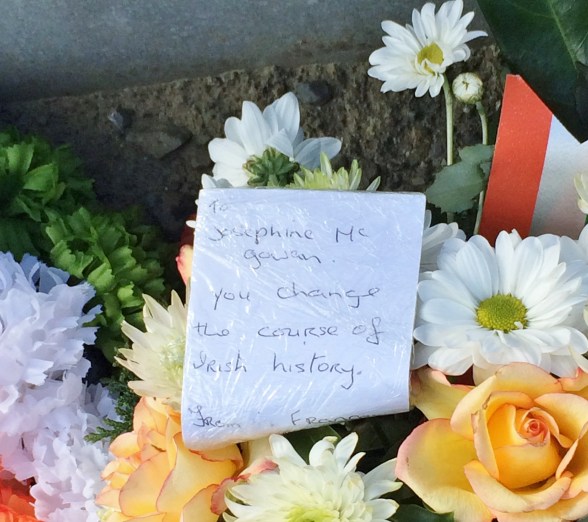
Josephine McGowan was one of the many women who participated in Ireland’s struggle for freedom. She was a member of the Inghinidhe na hEireann branch of Cumann na mBan and was stationed at the Marrowbone Lane garrison during the 1916 Easter Rising. She was one of twenty-five women who reported for duty and according to one witness statement, Marrowbone seemed to have more women than men at the beginning of the fight. Some of the women vanished throughout the week but Josephine stayed until the very end.

Continue reading

Sidney Czira

There was more than one amazing Gifford girl. Grace has been immortalized in the annals of Irish History and song, but her sisters were just as political, in fact more so, than the tragic bride of 1916. Sidney was one of the first Gifford sisters to get involved in politics, even though she did it quietly and under the assumed name of John Brennan. In a world where women weren’t listened to, Sidney made her voice and her opinions heard.

Continue reading

The Death of Innocence

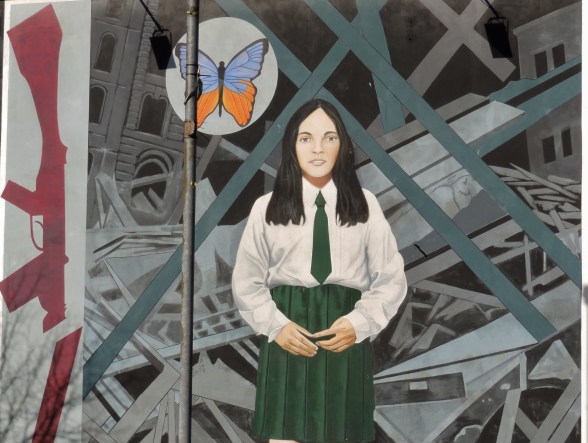
Annette McGavigan was only eleven years old when the Troubles erupted in the North of Ireland. Her home was in Derry, one of the major flashpoints of the Troubles and a stronghold of the Provisional Irish Republican Army. She and the other children of the area witnessed more conflict than any child should within those first few years. She would have seen the British Army rolling into her city, bringing CS gas, rubber bullets, violence and protest with them. Riot after riot broke out and civil rights marches, anti-internment protests, and anti-police incidents were frequent and violent. These things probably became rather commonplace over the next few years for Annette and the other children who were growing up in areas like Creggan, Little Diamond, and the Bogside.

On Sept. 6th, 1971, when Annette was only fourteen, Catholic schools were closed in Derry. Teachers were taking part in a week-long anti-internment program. This left the schoolchildren with free time. Some joined the protests and riots and others stayed in. Once a small riot had ended on the edge of the Bogside, Annette and her friends went out to collect the leftovers of the violence. Children regularly gathered rubber bullets, gas canisters and more after each riot in Derry and this day off from school gave Annette the perfect opportunity to hunt for these dangerous souvenirs. As the young girl in a school uniform picked up an empty cartridge, a shot rang out. She likely never knew what hit her.

Continue reading

John Donaldson, the Baron of Lymington

Who will you believe, the police or the suspects?” Justice John Donaldson is not the first judge to undermine defense lawyers with a question like that but he made this biased statement and others while he was presiding over the trial of Paul Hill, Paddy Armstrong, Carole Richardson, and Gerry Conlon – a group of Irish suspects who were also known as the Guildford Four. The highly publicized case was covered widely and all of the judge’s snide remarks and opinions were too. This pointed question for the jury was the last nail in the coffin for the Guildford Four. When their guilty verdicts came back, Donaldson wished that he could hang the suspects and went on the record saying so during sentencing. The bully judge imposed the longest sentence in the history of English law (at the time) against Paul Hill saying, “Your crime is such that life must mean life, and if the death penalty had not been abolished, you would have been executed.”  The other members of the Guildford Four didn’t fare much better when the sentencing came down and in the subsequent case where many of their friends and family members were accused of bomb making (known as the Maguire Seven) similarly harsh and opinionated sentences were handed down. Donaldson had no pity for one suspect’s serious illness and another being only fourteen years of age. He just handed out lengthy sentences and cruel comments to everyone. He never backtracked from his dubious remarks even after he was heavily criticized for them. In fact, the only times he was silent during this entire ordeal were when the IRA claimed responsibility for the bombs years later, when it was proven that the police had suppressed evidence and lied throughout the trials, and when those he had so gravely threatened were declared innocent fifteen and sixteen years later, respectively. Continue reading

The death of De Valera

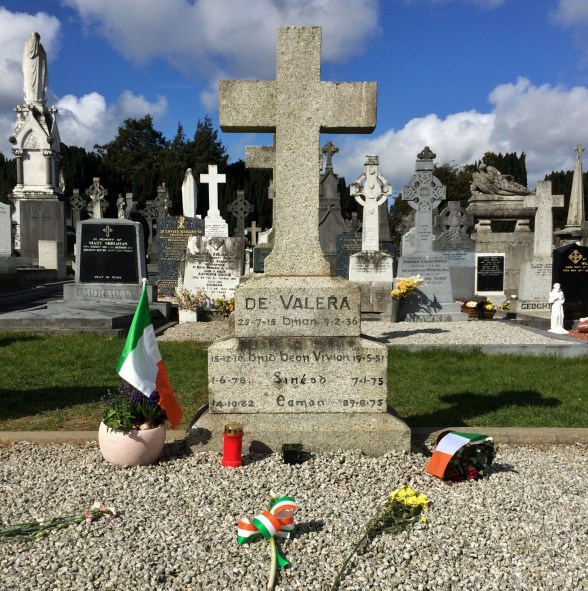
Love him or hate him, Eamon De Valera was perhaps the most influential man in Irish History, despite the fact that he was born in the United States. He helped create the political machine of modern Ireland and his influence is still being felt (and untangled) today, forty-one years after his death.

Continue reading

Ballymurphy

Forty-five years ago today the Parachute Regimen of the British Army was sent to Belfast to take part in Operation Demetrius, the fancy codename the government used for internment. They were to detain and arrest anyone who they thought was either involved in or supporting the Provisional IRA, but sending the Paras in to do this was rather like setting off a grenade to stop a fist fight. Over the next few days in the Ballymurphy area alone, eleven civilians were killed. Many who were killed were just trying to get away from the trouble and some were shot while helping others.

Continue reading