Free Anna Harvey

I haven’t written much about my month-long journey through Ireland culminating with the Centenary because to be frank, I am left speechless by most of it. I have no words to convey how much it changed me and how blessed I was to connect with so many amazing people. Many of the greatest moments of my life happened on this trip, including being one of the Constance Markievicz 1916 Societies standard bearers near the forefront of the centenary parade(s). I still can’t believe that happened and I owe the honor to a couple of incredible women named Anna Harvey and Emma Radford.

Continue reading

Nothing Compares 2 U

Sinead O’Connor is a polarizing artist. She imploded her own rising career by tearing up a picture of the pope in 1992 and has never been able to reclaim it entirely. She is known for being a bit crazy, somewhat suicidal, and incredibly volatile. She involves herself in meaningless Twitter feuds, and makes wild accusations. She rewrote the Irish National Anthem, and has written numerous incendiary letters to the Irish government. Most recently she is collecting lawsuits after accusing Arsenio Hall of being Prince’s drug dealer. She’s kooky and cantankerous, and I still love her. She’s also missing. Continue reading

No Surrender

April 29th looms ever closer and the Centenary celebration truly comes to a close…at least until May when the executed leaders will be remembered a hundred years after they were killed. The surrender was originally offered on behalf of the revolution by Elizabeth O’Farrell, but the English would not accept it from a woman. She returned with Patrick Pearse and stood at his side when he offered it himself to “prevent the further slaughter of the civilian population and in the hope of saving our followers, now hopelessly surrounded and outnumbered”. Some argue that it was no surrender at all, but rather a pause to prevent the loss of innocent life because the leaders knew the fight for Irish freedom would continue, with or without them. Others couldn’t bear the thought of standing down for anything, even if their leaders were asking them to. The end to the Easter Rising is a fact, but were the rebels defeated?

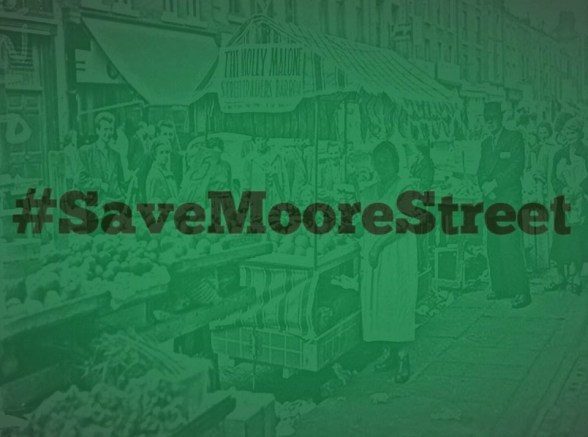
That’s a question I’ve been studying for a long, long time and my answer is still yes and no. It’s also for a different post, because this one is about what you can do in Dublin on April 29th to commemorate the close of the battle and to lend your support to those who are still fighting to save one of the most important areas of the city.

Continue reading

Mother of the Revolution

In honor of Margaret Pearse who died 84 years ago today I thought I’d share the bit I wrote about her in my book, Petticoats, Patriots, and Partition. Many women suffered incredible loss during Ireland’s revolutionary period, but Margaret had a special kind of pain, losing both of her only sons. We are days away from their commemoration times and remembrances, so I thought Margaret should have hers too.

Continue reading

Taking this show on the road…

I can’t believe it’s almost time to leave. I’ve been waiting for so many years and now it is all coming so quickly. Next week begins my Irish holiday/research trip and I have made the choice to spend the month without my laptop. I’ll still be connected of course, but with less writer-friendly tools, so there will likely be a lot of photos and updates, but less of the wordy and lengthy histories. If you miss those, feel free to pick up a copy of Petticoats, Patriots, and Partition in your favorite bookstore or Amazon market. It is certainly one part of what has made this trip possible.

Continue reading

Doctor Sophie Bryant

Sophie Bryant was born on this day in 1850, into a time when women did not receive much education or have too many professional options. She was lucky enough to be largely home-schooled by her father who was a math professor at the University of London, and by private governesses that he hired. She became fluent in many languages and fell in love with math and science. She was an exceptionally strong student.

Continue reading

No, Nay, Never; Cumann na mBan rejects treaty

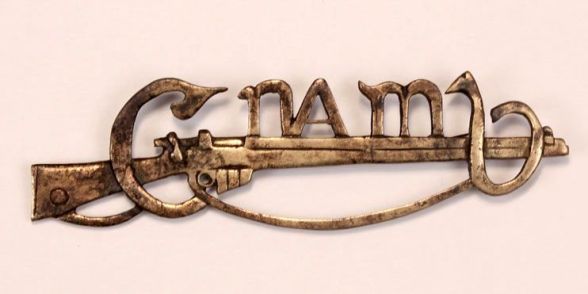
The ladies of Cumann na mBan have always had very strong opinions about the state of Ireland and its politics. Since its inception, the majority of CnamB members have fought for a united Ireland. During the lead up to the Easter Rising of 1916, these women supported the Republican cause in many different ways. They raised funds for the uprising, trained in first aid in order to help wounded Volunteers, smuggled various weapons and explosives throughout Ireland, spread important news, and many learned to shoot and fight themselves. They became a force to be reckoned with.

In the aftermath of the Rising, CnamB was flooded with new members and big ideas. They were prominent in the Dáil Éireann, the Republican legislature set up to counter England’s rule. Many of the widows of the leaders of the Rising were some of the loudest voices and strongest supporters of a free Ireland, and almost all were members of the female Republican organization. Eamon De Valera called them the “most unmanageable revolutionaries.” Many others accused the organization of making decisions based on vengeance and emotion without thought or consequence, especially when they voted against the Anglo-Irish Treaty ninety-four years ago today.

Continue reading

The Countess; Petticoats, Patriots, and Partition

I write a lot about Constance Markievicz, just like anyone else who writes Irish history should. However, she was not the only woman involved in the planning or the execution of the Easter Rising in 1916…and many others never get the credit they are due. That’s not to say that she doesn’t deserve a bit of her own though. After all, one of her more famous quotes is highlighted proudly on my business cards, and she does have her own few pages in my book. Today in honor of her birthday, I give you some of her story from Petticoats, Patriots, and Partition – the book that has stolen most of my time for the last six months or so. Happy birthday Countess.

Continue reading

Changed Utterly, the death of W.B.Yeats

licensed for reuse through Creative Commons

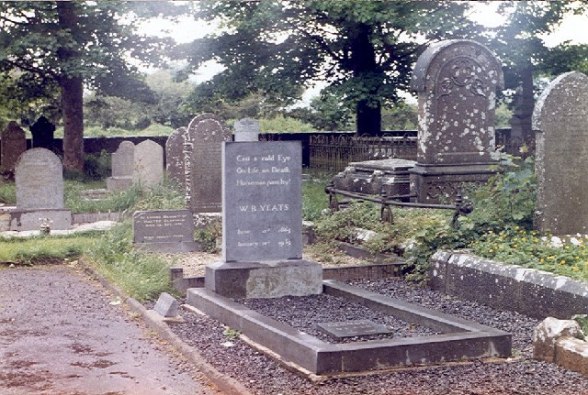
On this day in 1939, poet and patriot William Butler Yeats said farewell to the world from the south of France. Yeats spent many of his winters in France and in Italy due to life-long health issues but he always left his heart in Ireland, even after death. He told his wife George to bury him quietly in the hills above Monaco but “to dig me up and plant me in Sligo” a year later when he thought everyone would have forgotten about him. That idea is laughable given that he is still revered and remembered today.

Continue reading

Dr. Ada English

Dr. Ada English was a strong woman, a fervent Nationalist, a prominent member of Cumann na mBan, and one of the first female psychiatrists in Ireland. Like her peer Dr. Kathleen Lynn, Dr. English devoted her spare time to politics and to healing and aiding the Irish Volunteers who were fighting for a free Ireland. Her story is not as well known as Dr Lynn’s however, since Ada was not in Dublin during the Easter Rising. Many political women of Ireland’s revolutionary periods have slowly vanished throughout the years, and Dr. Ada English has not been an exception to that unfortunate trend, though she should be.

Continue reading