Sinéad Ní Fhlannagáin, also known as Jane or Jennie Flannigan, and finally as Sinéad De Valera, was born in Ballbriggan on this day in 1878…I think. There are some conflicting accounts of her actual birth date – but it’s absolutely safe to say that somewhere between June 1st and June 3rd, she was born. While she grew, she developed a keen love of the Irish language – so much so that as a young adult, she joined the Gaelic League and began to teach classes. She also joined Inghinidhe na hÉireann (Daughters of Ireland) but aside from membership in those organizations and a fondness for Irish, Sinéad was not overly political herself. This is probably a good thing in the long run, since she married one of the most politically charged men that Ireland has ever known just a few years later.
Continue reading
Category Archives: Politics
A little humor today
First, well done Ireland. You have done what no other country has been able to do and truly showed that all love is equal – by popular vote. Now I know some are still incredibly unhappy with that, but the majority of voters have truly given the rest of the world a little more hope.
Here in America, the “land of the free” (asshole quotes intended), we have no such track record. In fact, some states have written the exact opposite sentiments into their laws – which is utterly heartbreaking – and we give a lot of media attention to our worst, rather than our best. A good example of that is the Westboro Baptist Church, a truly horrifying organization that loves to grab the attention of the press. We eat up their hate-filled propaganda like it’s a bag of McDonald’s french fries which is equally disgusting. I try not to pay attention to them or anyone like them at all.
However, today the headline made me laugh out loud and giggle with glee, so as much as I don’t like to spread their filth, this was just too funny to pass up. The hateful group decided they were going to take up their signs and protest Ireland, due to the referendum results, but apparently no one decided to make sure they got the flags right before printing all of their detestable signs. So according to them, God hates Ireland, but their misprinted signs hate the Ivory Coast….because they got the flags mixed up.
They tried to save face when it was pointed out to them on Twitter, by saying “Well, now that you mention it, God hates the Ivory Coast too” (for some reason they’re sure to invent) but the joke’s on them this time. Their spectacular failure to spread their hatred accurately is worth the fifteen minutes of glee that it gives to the rest of us who believe that all love is equal and that the WBC should be dismantled.
So congratulations again Ireland – for saying no to hate, and for allowing the haters to make bigger fools of themselves than ever before. Well done!
The Foreign Fighters of 1916
Now that some of the Women of 1916 have been highlighted, it’s time to move on to another group that has been largely left out of the history books when it comes to The Easter Rising. Many brave rebels are celebrated throughout the world every year at this time…but what is ignored by most is that the fighters were not exclusively Irish. There were more than a hundred foreign soldiers who assisted in the Rising and while some were 2nd or 3rd generation Irish there were others who had no Irish blood whatsoever. They came from all over Europe and the rest of the world to join forces against the English and were some of the fiercest warriors in the conflict.
Cumann na mBan is born
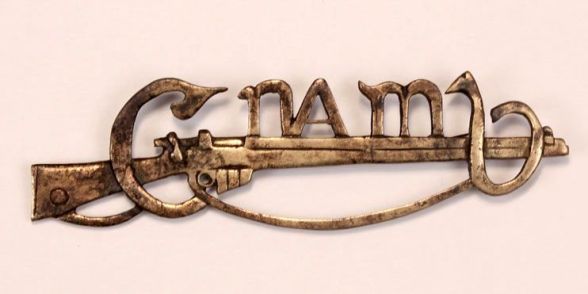
On Thursday, April 2nd, 1914, about one hundred women strolled into Wynn’s hotel in Dublin at four o’clock in the afternoon for the first of Cumann na mBan’s many meetings. The Irish Women’s Council had a lot to discuss but the one thing almost all the ladies present had in common was a devotion to Ireland and a desire to serve it.
Arthur Griffith’s Birthday
Today in 1872, Arthur Griffith was born in Dublin. He was passionate about Irish history, which drove him to become a member of the Gaelic League where he rubbed shoulders with other Irish activists and cultural leaders. He was a bit of an anomaly. His devotion to the Gaelic League led to Griffith joining the Irish Republican Brotherhood where he was surrounded by many ideological opposites. He was inspired by Charles Parnell and wrote for many radical papers while he was growing up, but he was also ultra-conservative and widely reported to be an anti-Semite. While his IRB friends were planning a complete revolution, he was more in favor of a dual monarchy system, a sort of co-partnership with England. He was against any form of communism or socialism and was largely anti-union, but was in a room talking policies with James Connolly—the driving force behind Irish socialism at the time—on many occasions.
Continue reading
Mary Macswiney
“A rebel is one who opposes lawfully constituted authority and that I have never done.” So said one of the most devoted Republican women in Irish history, Mary MacSwiney. I’m sure she believed in that statement with all of her heart—as she did a free Ireland—but it’s guaranteed the English did not feel the same way. To them, Mary MacSwiney was the one of the worst and biggest female rebels, not only in Cork but in all of Ireland.
The Paisley Adams Power Sharing Promise

On this day, March 26th, in 2007, a historic meeting was made in the North of Ireland. Ian Paisley, an avid Protestant firebrand known for his “Never” phrases sat down with the other side of his coin, Gerry Adams, who led (and leads) Sinn Féin. The two men hammered out an agreement at Stormont that promised to form a power-sharing partnership by May 8th of that year. For the first time, the ideological opposites were able to come together and reach an agreement that was mostly fair for most of their constituents . Both Former Taoiseach Bertie Ahern and Former British prime minister Tony Blair hail this first meeting and agreement as “a reconciliatory and transforming moment in British-Irish history.”
A FREE online History course from Trinity College

So if you’re wondering why I’ve been a little quieter over the last week or so, it is due to the wonders of technology!! I have enrolled in an Irish history class given by Trinity College in Dublin…and it’s both free and online. Don’t get me wrong, I’d much rather attend in person – but I can’t seem to find anyone who wants to give me a free place to stay and a free education in Ireland yet (imagine that!) so this will have to do.
We are only in the second week of the course and you can still join in, if you feel like making up a week or two. I added the class late and have been playing catch up as well. It’s not really credited anywhere, but you can get a souvenir certificate at the end of the course and did I mention that it’s FREE?!? Even if you don’t learn much that you didn’t already know, it’s worth the non-existent pennies or euros.
Join me in my education adventures and give this a shot. (Also, if you are a bazillionaire and are feeling like a generous benefactor, you can always send me to Ireland for a real degree. You never know unless you ask, right? Are you listening universe?)
Haunted and hunted
The New Yorker has just published a surprisingly in-depth article on Jean McConville and Irish history in the North – just in time to take advantage of the 15 minutes that most Americans devote annually to Ireland around St. Patrick’s Day. It’s brilliant timing and the article is very well done, even if it does rehash a lot of old information and it is certainly another strike at Gerry Adams and his past. It is clear yet again that this case will continue to haunt those who may be involved in it. No matter what side of the spectrum politically that you may fall on, this case was undeniably brutal. A single mother of ten, Jean McConville, was dragged out of her home at Divis Flats in front of her children, and wasn’t seen again until her body was discovered decades later. She is one of the “Disappeared” – people who were murdered by the Irish Republican Army whose bodies were never supposed to be discovered. Her story is the albatross around Gerry Adams’ neck and one that will never disappear again.
Continue reading
They’re Coming to America

So you want to move to America? Whatever for?! Unless you are in a “third world” country, chances are your health care is better, your education is better, your work schedule is better, and people are probably kinder where you already are. Considering the weakness of our dollar, our union-busting corporations that are considered people, the current political climate, our abhorrent race and gender issues, and our militarized police force, I would encourage you to think again before coming to the “Land of the Free.” However, since a lot of people are still interested in moving here, I thought I’d go over some of the most common ways to accomplish it and throw my observations into the mix. We are hard on our immigrants—legal or not—and there are several things to consider. Here are some of them, wrapped up in the most frequent ways to get into good ol ‘Merica. Keep in mind, this isn’t even about the path to citizenship. These are just things I’ve witnessed while watching people try to obtain semi-permanent residence and entrance into our work force. Citizenship is even more difficult.
Continue reading
 Choosing the Green
You must be logged in to post a comment.