On this day inn 1946 Ireland lost a powerful voice when Ms. Hanna Sheehy Skeffington passed away. She was one of the country’s most independent and fierce women who always fought for equal rights, for peace, and for Ireland, even when those beliefs cost her dearly. Hanna was indomitable and as she reminded her son before her death, she was an unrepentant pagan. Continue reading
Category Archives: Women
Doctor Sophie Bryant
Sophie Bryant was born on this day in 1850, into a time when women did not receive much education or have too many professional options. She was lucky enough to be largely home-schooled by her father who was a math professor at the University of London, and by private governesses that he hired. She became fluent in many languages and fell in love with math and science. She was an exceptionally strong student.
No, Nay, Never; Cumann na mBan rejects treaty
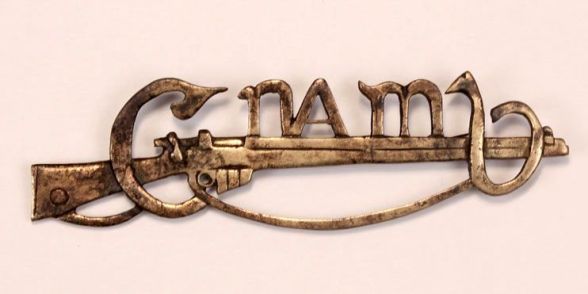
The ladies of Cumann na mBan have always had very strong opinions about the state of Ireland and its politics. Since its inception, the majority of CnamB members have fought for a united Ireland. During the lead up to the Easter Rising of 1916, these women supported the Republican cause in many different ways. They raised funds for the uprising, trained in first aid in order to help wounded Volunteers, smuggled various weapons and explosives throughout Ireland, spread important news, and many learned to shoot and fight themselves. They became a force to be reckoned with.
In the aftermath of the Rising, CnamB was flooded with new members and big ideas. They were prominent in the Dáil Éireann, the Republican legislature set up to counter England’s rule. Many of the widows of the leaders of the Rising were some of the loudest voices and strongest supporters of a free Ireland, and almost all were members of the female Republican organization. Eamon De Valera called them the “most unmanageable revolutionaries.” Many others accused the organization of making decisions based on vengeance and emotion without thought or consequence, especially when they voted against the Anglo-Irish Treaty ninety-four years ago today.
The Countess; Petticoats, Patriots, and Partition

I write a lot about Constance Markievicz, just like anyone else who writes Irish history should. However, she was not the only woman involved in the planning or the execution of the Easter Rising in 1916…and many others never get the credit they are due. That’s not to say that she doesn’t deserve a bit of her own though. After all, one of her more famous quotes is highlighted proudly on my business cards, and she does have her own few pages in my book. Today in honor of her birthday, I give you some of her story from Petticoats, Patriots, and Partition – the book that has stolen most of my time for the last six months or so. Happy birthday Countess.
Dr. Ada English

Dr. Ada English was a strong woman, a fervent Nationalist, a prominent member of Cumann na mBan, and one of the first female psychiatrists in Ireland. Like her peer Dr. Kathleen Lynn, Dr. English devoted her spare time to politics and to healing and aiding the Irish Volunteers who were fighting for a free Ireland. Her story is not as well known as Dr Lynn’s however, since Ada was not in Dublin during the Easter Rising. Many political women of Ireland’s revolutionary periods have slowly vanished throughout the years, and Dr. Ada English has not been an exception to that unfortunate trend, though she should be.
Helena Molony
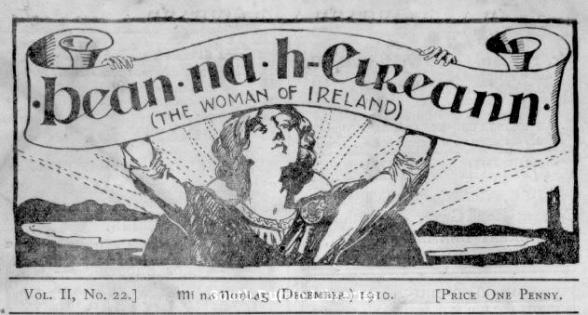
Today in honor of Ms. Helena Molony’s birthday, I give you the bit I wrote about her in my new book; Petticoats, Patriots, and Partition. She was a pretty awesome lady, and one of many that I celebrate in the first section of the book. I hope it tempts your curiosity about the rest of them too. If it does, the book is available worldwide through Amazon and nationally through Barnes and Noble, other bookstores, Amazon, and Blurb. Enjoy!!
Shameless Self-Promotion
It’s so very close to being finished and I just can’t keep it to myself anymore. I hope you’ll forgive the teasing since it is not available yet, but by December 1st, it will be.
It’s written. It exists. It’s a collection of short histories, and mini-biographies – many that started as blog posts here. In fact, there are only a few that I’ve held back for the book only, but in this form the entries are expanded, edited, and written slightly differently. It’s taken forever and I’m super excited about it – or I would be if I could just stop editing. But now there’s a single, real-life, (albeit marked up) copy in the world and the rest are so very close.
Now you know the title. And my real name for that matter. Hopefully some of you will love this book – and will be OK with me promoting you in it too. I can’t believe it. Coming so very, very soon!
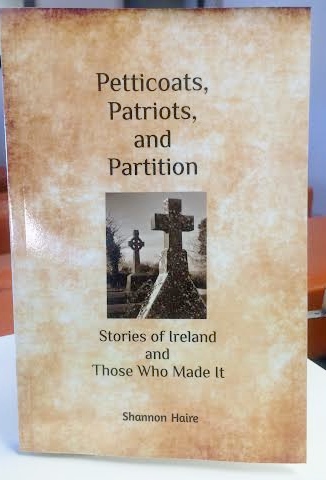
#holycrapIwroteabook
Lawyers, Guns, and Collusion
Lawyers are a group of people in an occupation that everyone loves to hate. Endless jokes use them as the punchline, there’s an eternal stream of songs and stories about how evil they are, and it seems that no matter which area of law they practice, they’re always hated by someone. It takes a thick skin, an obsessive attention to detail, endless patience, and a lot of manipulation to succeed in the field. In the North of Ireland, the law not only takes over their lives, but sometimes it ends them. It is not a job for the weak.
Rosemary Nelson lived her life trying to make the world a better place for everyone. She lived in a hotbed of Sectarianism during the Troubles but she represented people on both sides of the religious divide in small matters for years and went to bat for those that other people would ignore. She fought on behalf of the Garvaghy Road residents during the long Drumcree conflict in nearby Portadown, which thrust her firmly into politics and ruined any rapport she had with the Royal Ulster Constabulary (the RUC). That relationship only got worse when she decided to represent Colin Duffy, a man accused of killing their officers. That case would change her life and it ultimately took it as well. In the North, there have been many cases where certain factions of the population are unable to separate the lawyer from the criminal, and the assumption is that they’re one and the same. Even before she got Duffy released on a successful appeal, she was getting death threats from officers and Loyalist paramilitaries alike, just for representing him. There were twenty serious and documented death threats over a two year period, and two of them allegedly came directly from police officers. She dutifully reported each one, but was consistently refused protection by the police and the government, even after the United Nations’ Special Rapporteur stated on television that he felt her life was in danger. He recommended that the British government take action. They chose not to. She eventually testified about the threats before a committee of the United States Congress that was investigating human rights in the North of Ireland. It seems everyone was concerned about Nelson, except the very people whose job it was to take care of her.
The British government, MI5, and the RUC did not investigate any of these threats, nor did they ever give her protection. In case you feel like they didn’t do anything, rest assured that they did – they put Rosemary herself under surveillance for criminal activity. Between 1994-1998 security reports about her life increased until her home was bugged. She was seen as a criminal, rather than an attorney; and a threat, rather than a victim.
Rosemary Nelson was killed when a bomb planted under her car exploded on March 15th, 1999. The Red Hand Defenders, a Loyalist paramilitary group that was mostly made up of members of the LVF and the UDA, took credit for her assassination. Many of the members of the Red Hand Defenders were also RUC officers and British Army soldiers – people who belonged to the same organizations that had ignored her complaints for years, even while they were watching her every move. Strangely though, they didn’t have much in their records to investigate when it came to her death, despite all the surveillance – at least nothing they were willing to share with anyone else. There were a few inquiries into her murder and the final reports stated that all three agencies (the Government, MI5, and the RUC) had failed to protect her and had helped “legitimize” her as a target in the eyes of Loyalist paramilitaries. It also stated that these agencies and their employees had publicly threatened her and that their intelligence information had been “leaked”, making it easier for the murderers to get to her. It noted that numerous requests and warrants for surveillance footage or reports had been ignored completely. The inquiry couldn’t prove definitively that anyone in these departments had directly been involved in her death, but it certainly couldn’t prove otherwise either and their report clearly stated that investigators could not rule out the possibility that officers or soldiers might have aided the murderers.
Nelson was awarded the Train Foundation’s Civil Courage Prize after her death – an award that honors “extraordinary heroes of conscience.” Her humanitarian status was celebrated and mourned world-wide in the aftermath of her murder – and while some Loyalists still see her as a symbol of hate, those who she spent her life trying to help remember her as an incredible and determined woman, who wanted justice for everyone whether they were young, old, Catholic, or Protestant. Today would be her birthday and I humbly suggest doing something wonderful in her honor. Help someone in whatever way you can, large or small, friend or stranger. I’m sure she’d want to be remembered in that way, rather than for the horrific way she was targeted, abandoned, and killed.
Romper Room Murder

For many people a romper room is a play room full of games and toys or a television show that they grew up watching. It evokes a carefree and silly time in childhood that is full of play, puppets, and joy. For others, particularly in the North of Ireland during the Troubles, a romper room is a place of absolute horror, torture, and death – a room that is akin to a slaughterhouse or a snuff film set. These romper rooms were usually derelict homes or businesses where drinking, dancing, torture, and killing could occur without much fear of discovery or interference. One of the more brutal murders of that era took place in a UDA-controlled romper room in the Sandy Row area of Belfast, 41 years ago today. The victim’s name was Ann Ogilby and her killers were all female members of the UDA (Ulster Defence Association). It wasn’t really a political killing even though the murderous women involved were loyalist paramilitaries – it was more of a jealous feud that ended in Ann’s horrific torture and savage beating death. The story was so repulsive and put such a spotlight on the women’s group that it resulted in the total dissolution of their unit.
Crashing into the History Books

On May 21st, 1932, Amelia Earhart became the first woman to fly a plane over the Atlantic ocean by herself. She ended up crashing in a field near Derry, rather than landing safely in France as she had intended, but she earned her title nonetheless and became an important symbol and inspiration to women everywhere. Continue reading
 Choosing the Green
You must be logged in to post a comment.