Bloody Sunday

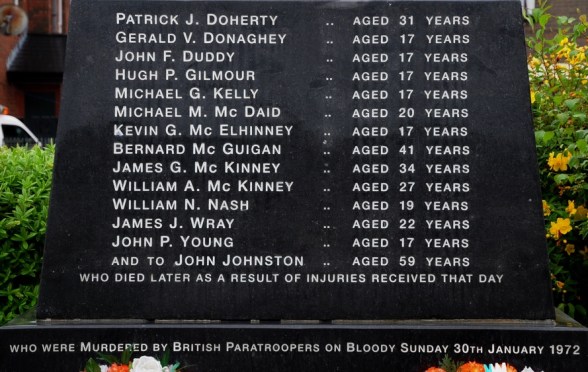
You can’t really be an Irish historian without studying at least a little bit about Bloody Sunday. Many have devoted their whole lives to what happened on that day, forty-five years ago. Many books have been written, movies and documentaries have been filmed and the controversy surrounding the massacre that occurred in Derry is still going strong. The families that were torn apart that fateful Sunday still relive it every day and they all have questions that still need answers. Until the day they finally get justice, I think it is their voices that need to be heard, not mine.

Continue reading

Giuseppe Conlon

There are many questionable convictions and murky instances of enhanced interrogation techniques throughout British and Irish history. Few are better known than those of the Guildford Four and the Maguire Seven. Many members of these groups have written books and papers regarding their long imprisonment for crimes they never committed and the Hollywood film “In the Name of the Father” was based on their plight. Today marks the death of that innocent and determined father, Giuseppe Conlon.

Continue reading

International day of peace

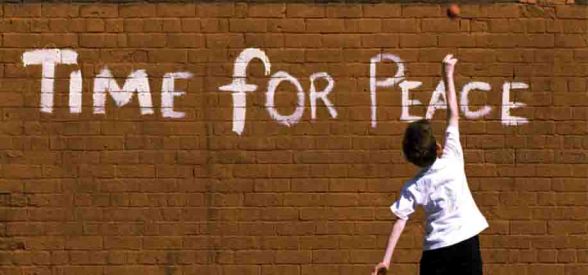
Peace. It’s an elusive concept to many countries, tribes, and populations. The idea that there will ever be a time without war is a dream. It is one that everyone claims to hope for but in reality, hundreds of thousands of politicians, economists, religious leaders, generals, neighbors, soldiers, and contractors work against the concept every day. A world without war is a type of idealism that can sum up the beliefs of bleeding heart liberals, traumatized veterans, moderate conservatives, and true libertarians alike…but it has no place in this world that we live in today, outside of philosophy and imagination. As Robert Heinlein said, “You can have peace. Or you can have freedom. Don’t ever count on having both at once.

Continue reading

John Donaldson, the Baron of Lymington

Who will you believe, the police or the suspects?” Justice John Donaldson is not the first judge to undermine defense lawyers with a question like that but he made this biased statement and others while he was presiding over the trial of Paul Hill, Paddy Armstrong, Carole Richardson, and Gerry Conlon – a group of Irish suspects who were also known as the Guildford Four. The highly publicized case was covered widely and all of the judge’s snide remarks and opinions were too. This pointed question for the jury was the last nail in the coffin for the Guildford Four. When their guilty verdicts came back, Donaldson wished that he could hang the suspects and went on the record saying so during sentencing. The bully judge imposed the longest sentence in the history of English law (at the time) against Paul Hill saying, “Your crime is such that life must mean life, and if the death penalty had not been abolished, you would have been executed.”  The other members of the Guildford Four didn’t fare much better when the sentencing came down and in the subsequent case where many of their friends and family members were accused of bomb making (known as the Maguire Seven) similarly harsh and opinionated sentences were handed down. Donaldson had no pity for one suspect’s serious illness and another being only fourteen years of age. He just handed out lengthy sentences and cruel comments to everyone. He never backtracked from his dubious remarks even after he was heavily criticized for them. In fact, the only times he was silent during this entire ordeal were when the IRA claimed responsibility for the bombs years later, when it was proven that the police had suppressed evidence and lied throughout the trials, and when those he had so gravely threatened were declared innocent fifteen and sixteen years later, respectively. Continue reading

Ballymurphy

Forty-five years ago today the Parachute Regimen of the British Army was sent to Belfast to take part in Operation Demetrius, the fancy codename the government used for internment. They were to detain and arrest anyone who they thought was either involved in or supporting the Provisional IRA, but sending the Paras in to do this was rather like setting off a grenade to stop a fist fight. Over the next few days in the Ballymurphy area alone, eleven civilians were killed. Many who were killed were just trying to get away from the trouble and some were shot while helping others.

Continue reading

The Lady of Bachelors Walk

On this day 102 years ago, a large shipment of arms landed in Howth, destined for the Irish Volunteers. Many of these guns were used two years later during the Easter Rising of 1916 and without them, the Rising may never have happened at all. When the Asgard came to shore it was met by the Fianna Éireann and other Volunteers who were quick to unload the weapons and begin carting them off. They hoped to avoid the attention of the police, but their mission did not pass unnoticed. The authorities who were watching did not engage the large crowd but they did call for backup. As the Volunteers left the area they were met by the King’s Own Scottish Borderers, a regiment of the British Army. A tussle ensued but in the end, the soldiers were only able to confiscate a mere nineteen of the nine hundred guns brought into Ireland that day.

News spread quickly of the successful smuggling operation and the military’s failure to seize most of the weapons so by the time the Borderers were marching back into Dublin, crowds had already gathered to celebrate and to mock them. They antagonized the soldiers, taunting them and throwing rubbish and fruit at the column (which magically became stones in the official reports). They shouted insults and openly laughed at the troops and their failed mission. Soldiers and police officers never tolerate this kind of behavior for long (as they continue to prove to this day) and by the time they marched onto Bachelors Walk they had had enough of the hostile crowd. The soldiers turned to face the people and seconds later shots were fired directly into the busy street, hitting those who had been following them and innocent civilians alike. They followed the volley of bullets with a bayonet charge. The collective lack of self control from the army resulted in four casualties and nearly forty others were injured.

Continue reading

Tradition

Tradition is a word that is thrown about a lot. It’s used as justification for both good and bad deeds of the past and it’s a word that is often trotted out by hate groups throughout the world in an attempt to excuse their continuing and horrifying behavior. The KKK uses it as a recruiting tool. The Orange Order uses it as a weapon for blackmail and destruction. Other groups use it as well. Politicians use it to garner votes. Parents use it to pressure their children. But tradition is an outdated ideal that doesn’t exist anymore on many, many levels and it’s time to let some of it go.

Continue reading

Gerry Conlon R.I.P.

Gerry Conlon may be the single most influential person when it comes to who got me into studying Irish politics. The Guildford Four case was riveting for me and it showed just how cruel and scared absolutely everyone was in the heart of the conflict known colloquially as the Troubles. His case was a close second to the Easter Rising of 1916 in my favorite stories of tragic Irish triumph.

On June 21st, 2014 at 4AM California time, I found out that Gerry Conlon had passed away and I actually shed a tear. This marked the first time I  cried over a celebrity passing away since Johnny Cash, and I am pretty sure that it only happened those two times. I was heartbroken and I almost got up then to write about it but I wasn’t awake enough  to articulate the utter sadness of this news.

For those that may not know his story, early in 1975, Gerry Conlon and three other young adults were arrested in connection to the IRA bombing of the Guildford Pub. Despite having nothing to do with the IRA or the bombings, they were convicted and sentenced to life in prison…thankfully, since if they’d been sentenced to death, they all would have been dead before their convictions were quashed. Before they were eventually released, another seven innocent people were convicted of aiding them in this incident – including many of Conlon’s family members and his father, Giuseppe Conlon. Guiseppe never strayed from proclaiming his innocence and he remained hopeful that the miscarriage of justice would be overturned, but Gerry did not. Gerry did not have the fortitude of belief of his father.

Guiseppe Conlon died in prison an innocent man. Years and years later, his son – who found the fighter in himself shortly after the tragic death of his dad, eventually walked out of the courthouse through the front door over fifteen years later when his conviction was quashed, proving to the world that the Guildford Four and the Maguire Seven had been wrongly convicted. The blockbuster movie “In the Name of the Father” was based on these real life events and is an amazing film. If you haven’t seen it, go find it now. Seriously. It took over fifteen years for the police to admit they had made mistakes and purposefully suppressed evidence in order to convict these men and women…none of whom fit any profile or had any paramilitary or political ties.

I was sixteen when they released Gerry and I remember seeing the footage of him leaving the courthouse. It was one of my first forays into Irish politics – and it was a story that led to another, to another, and to another. More than twenty-five years later, I can point to Gerry Conlon as one of the reasons that I fell in love with Irish history. His story had a profound effect on my psyche. Unfortunately his story does not have the Hollywood ending that he so deserved. He struggled with depression, suicide, and addiction since the day he was finally released – and really, who wouldn’t? I cannot find fault in the need to try to erase what has happened to you and your family in whatever way you can. Still, Conlon made it to sixty years of age and was a published author and an activist in other cases that he felt were rigged or unfair. He died on this day in 2014 in Belfast and even now I am still a little teary as I write those words. I wish I had met him – it actually was a thing I had hoped to do someday – just to tell him what a profound impact his story had on shaping who I am and what my interests are. Sixty is too young for many but for Gerry Conlon it was a pretty amazing feat, given that he spent over 15 of them wrongly convicted in the harshest prisons.

His family says it better than anyone else could. In a statement issued through his lawyer Gareth Peirce, they said: “He brought life, love, intelligence, wit and strength to our family through its darkest hours. He helped us to survive what we were not meant to survive. We thank him for his life and we thank all his many friends for their love.”

Rest in Peace Mr. Conlon. Your story and your fight will forever be inspiring and triumphant. I am sorry you lived it and I am thankful for the impact it had on me.  I hope you see your father again.