Merry Mabon

Autumnal Equinox. Second Harvest. Mea’n Fo’mhair. Mabon. Whatever you call it, this day marks the changing of the seasons and it celebrates equality and planetary harmony on the earth. The Northern and Southern hemisphere rarely get the same thing at the same time. There are only two days that they see eye to eye when it comes to light and darkness, and Mabon is one of those days. During the Autumnal Equinox both hemispheres get exactly the same amount of light—and the same amount of darkness—due to the tilt of the Earth and the position of the sun. The seasons may still be reversed, but the lengths of the day and the night are exactly the same and that balance only happens one other time throughout the year. The harmony may not have anything to do with mankind at all, but man has celebrated it for centuries.

Continue reading

St. Disbode

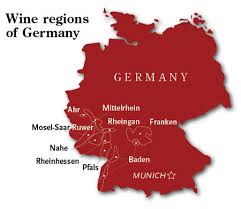
I usually stay away from religious holidays in general, but today is too good to pass up. Today is the feast day of St. Disbode – a 7th century Irish missionary. He was a bit of a hermit when he was not spreading his faith, but he traveled on a mission to Germany to convert the population. Legend has it that while in Germany, wine suddenly began flowing from his pilgrim’s staff and this convinced the Germans not necessarily to convert, but to create a thriving wine industry.

That’s a better reason than many for turning someone into a saint. Eat, drink, and be merry today – especially if you can find yourself some German wine…and if you’re a fan of Hildegard Von Bingen, throw some of her music in there too. She wrote a vita in his honor.

Cheers!!

The Power of Names

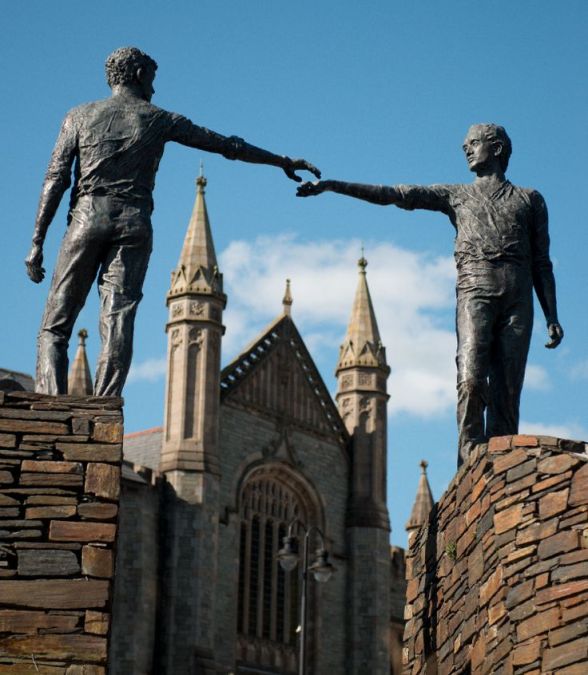
“Londonderry or Derry?,” asked a friend of mine when he was off to the North of Ireland. It’s an age old question and I found myself a little stuck when it came to answering. “That depends” seemed to be the safest bet at the time. However, the next time either of us visit, the question may no longer be an issue since last week Derry city and the Strabane District Council voted in favor of formally losing the London prefix.
Continue reading

The ___________ 12th

It’s a fill in the blank title, predominantly because almost any adjective in the world could be used to describe the 12th of July in Ireland, depending on where you come from. That said, my own fill in the blank words would include Ridiculous, Divisive, Uncontrolled, and Tragic, just to start with. There are plenty more but I think those are my choices to sum up a whole lot of inflamed feelings, a huge cultural problem, and the profound lack of leadership witnessed all over the North of Ireland and beyond for the last few days.

Continue reading

No Irish, No Catholics

While we’re on the subject of racism, sectarianism, and discrimination, here’s another tale of Anti-Irish (and Anti-Catholic) riots…not in Belfast but from right here in the United States. Back in 1844, the Protestant extremists were called Nativists, despite the fact that they were descended from immigrants and were not natives in any way. Ignoring that truth entirely, they felt that they were the established rulers of the area and were not pleased with the influx of Irish coming into the States. They began a large scale propaganda war promoting discrimination against the Irish and set out to spread their sectarian platform against Catholicism. By the time the Nativists in Philadelphia were done venting their anger, there had been riots for months, a lot of Catholic churches and businesses had been torched, over 200 people had fled their homes, and fifteen people were dead. Over fifty more people were injured by the end of the fight.
Continue reading

The Celtic origin of Ground Hog Day

Imbolc, also called Oimealg by the Druids, is the festival of the lactating sheep. Yes, you heard that right. It is derived from the Gaelic word oimelc meaning ewes milk. At this time of the year, many herd animals have either given birth for the first time of the year or they are just about to. It’s the first breath of Spring and it marks the center point of the dark half of the year. It is the festival of the Maiden and from February 1st to March 21st, it is her season to prepare for growth and renewal. On Feb. 1st, Brighid’s snake emerges from the womb of the Earth Mother to test the weather (Ground Hog Day anyone?) and in many places the first flowers begin to pierce the grounds of winter and start to bloom.  Brighid’s Crosses are made and exchanged as symbols of protection and prosperity in the coming year.BCHome hearth fires are put out and re-lit, and candles are lit and placed in each room of the house to honor the re-birth of the Sun. It is a festival of fire and renewal and one of the first celebrations of Spring.
Continue reading

Fatima, Lourdes or just plain Pagan?

There’s a war on in Ireland that doesn’t have a thing to do with water, language, Sectarian violence, or the long history of the Troubles. While all those other battles dominate the press, there is one that slips through the cracks, silently waging on throughout the years and it begs the question, whose rock is it anyway?
Continue reading

July 12th Parades

Everyone likes a parade. I get it. They’re all pomp and circumstance – people showing off their heritage, their music, their flags. There are parades worldwide for what seems like every single little excuse that anyone can find. Some are big, some are small, some are downright silly, and some threaten a fragile balance.

The marching season in the North of Ireland falls into the last category. July 12th is a day that roughly half of the population celebrates the victory of William of Orange (a Dutch King, by the way) over the English King James II. It’s a huge holiday which is steeped in irony, when you think about it. This is a bunch of people who violently insist on being considered British that take to the streets to celebrate a Dutch victory over their own historical ruler. Label that one for storage in the “Things that make you go hmmmm” file.

The truth is, they are really celebrating the defeat of Catholicism. James II was a Catholic and when the Dutch king defeated him, Protestants were granted great wealth and positions of power. It opened the door for instant change – one that Protestants in the area have enjoyed for centuries.
Continue reading