Stop the Executions

After the Easter Rising of 1916, Dublin was a shell of a city. The force used by the English to put down the uprising had reduced a large portion of the city to rubble and ash, and the citizens were starting to show their anger. During the actual battle, many were frustrated with the fighters on both sides who were keeping them from their jobs, their paychecks, and their daily lives, but when their very livelihood and their homes were threatened by the indiscriminate shelling, even those who were not political, raised their voices against the onslaught.

Continue reading

No Surrender

April 29th looms ever closer and the Centenary celebration truly comes to a close…at least until May when the executed leaders will be remembered a hundred years after they were killed. The surrender was originally offered on behalf of the revolution by Elizabeth O’Farrell, but the English would not accept it from a woman. She returned with Patrick Pearse and stood at his side when he offered it himself to “prevent the further slaughter of the civilian population and in the hope of saving our followers, now hopelessly surrounded and outnumbered”. Some argue that it was no surrender at all, but rather a pause to prevent the loss of innocent life because the leaders knew the fight for Irish freedom would continue, with or without them. Others couldn’t bear the thought of standing down for anything, even if their leaders were asking them to. The end to the Easter Rising is a fact, but were the rebels defeated?

That’s a question I’ve been studying for a long, long time and my answer is still yes and no. It’s also for a different post, because this one is about what you can do in Dublin on April 29th to commemorate the close of the battle and to lend your support to those who are still fighting to save one of the most important areas of the city.

Continue reading

Hell No, We Won’t Go

In 1918 it was nearly impossible to get the Catholic church, politicians, working class citizens, labor unions, suffragettes, Unionists, and Irish Nationalists to join together for anything. Ireland was still reeling and recovering from the Easter Rising of 1916, which most of these groups were still arguing over (as they are still doing today), but there was one proposal that unified them all – the Home Rule/Conscription law. Continue reading

An Unrepentant Pagan

On this day inn 1946 Ireland lost a powerful voice when Ms. Hanna Sheehy Skeffington passed away.  She was one of the country’s most independent and fierce women who always fought for equal rights, for peace, and for Ireland, even when those beliefs cost her dearly. Hanna was indomitable and as she reminded her son before her death, she was an unrepentant pagan. Continue reading

The 1916 Societies Parade

Yesterday’s plan was to observe and walk behind the 1916 Societies’ Easter Commemoration parade, being a proper journalist and chronicling the march. Instead, upon arrival at the GPO, my traveling companion and I were handed the Cumann na mBan flag to hold while the two ladies it belonged to got to know us and socialized with other parade organizers. When the flag was taken up to join the others of the parade, the women invited us to join them in carrying the Constance Markievicz banner, and we were given pride of place near the very front of the march. It was an amazing experience and beyond my wildest imagination of what yesterday could be.

Continue reading

Roddy Connolly

Roderick James Connolly took following in his father’s footsteps quite literally. He was born on this day in 1901 and was the only son of Lillie and James Connolly. James was a devout socialist, a revolutionary leader, and one of the men executed for leading Ireland’s Easter Rising in 1916. “Roddy” as he was known, was only fifteen when his father was killed which affected him for the rest of his life. Roderick was driven by the same devotion to socialism that his father had believed in and later in life he went into journalism and politics, just like his dad had before him.

Continue reading

No, Nay, Never; Cumann na mBan rejects treaty

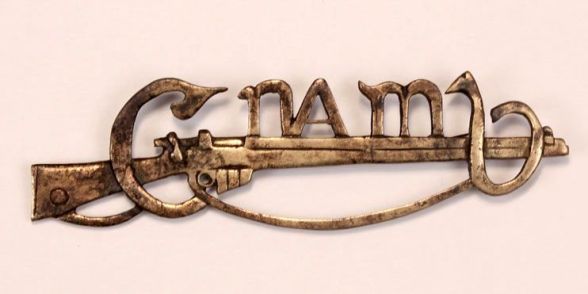
The ladies of Cumann na mBan have always had very strong opinions about the state of Ireland and its politics. Since its inception, the majority of CnamB members have fought for a united Ireland. During the lead up to the Easter Rising of 1916, these women supported the Republican cause in many different ways. They raised funds for the uprising, trained in first aid in order to help wounded Volunteers, smuggled various weapons and explosives throughout Ireland, spread important news, and many learned to shoot and fight themselves. They became a force to be reckoned with.

In the aftermath of the Rising, CnamB was flooded with new members and big ideas. They were prominent in the Dáil Éireann, the Republican legislature set up to counter England’s rule. Many of the widows of the leaders of the Rising were some of the loudest voices and strongest supporters of a free Ireland, and almost all were members of the female Republican organization. Eamon De Valera called them the “most unmanageable revolutionaries.” Many others accused the organization of making decisions based on vengeance and emotion without thought or consequence, especially when they voted against the Anglo-Irish Treaty ninety-four years ago today.

Continue reading

Moore Street Wars

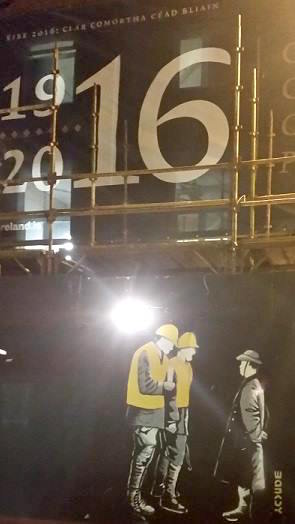
I’m returning to my favorite cause lately again for one more time (this week). Last night the “Banksy” mural appeared – and while it is obviously not Banksy, it is pretty great.

banksy

Well, it’s pretty great except for one thing. As one astute observer on Facebook said, “Just another time Elizabeth O’Farrell was edited out of the picture.” This artist didn’t even add her shoes. Still, the flash of color and the twist on the old surrender picture is still an awesome one.

Continue reading

Let’s remember them all

This little tidbit comes to you from Moore Street. The lyrics of this song kind of sum up my goals with this blog too.

Hope you enjoy this lovely woman’s song, and please, remember them all. Also, don’t forget to keep an eye out on what is happening on Moore Street, and join any protest to protect it that you can.

Save Moore Street (again)

I seem to have written a piece about Moore Street in Dublin every four to six months or so, since my last visit there. As the (de)construction looms ever closer, it has happened a bit more frequently. The protection of Moore Street is one of my favorite Irish causes, and I spend a good deal of time reading through mind-numbing transcripts and watching videos and news from afar as the government tries to weasel a new mall or hotel into what should be a sacred and protected space.

Continue reading