Humphreys Strikes Again – Call to action

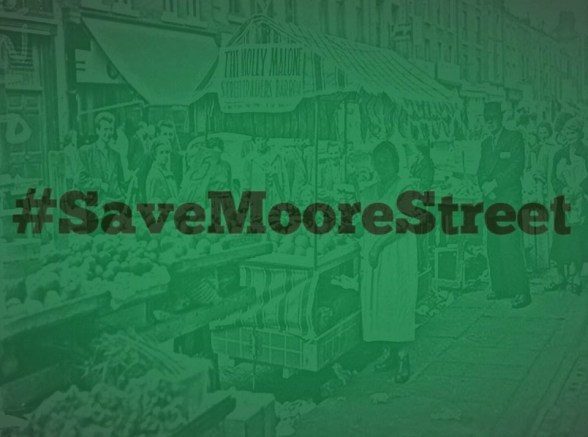
It’s appalling that Heather Humphreys continues to be in charge of Ireland’s arts, language and heritage. Her failure to protect any of these things has been going on for far too long. She’s a disgrace to the position and her ongoing quest to redevelop and erase the historical importance of Moore Street proves this time and time again.

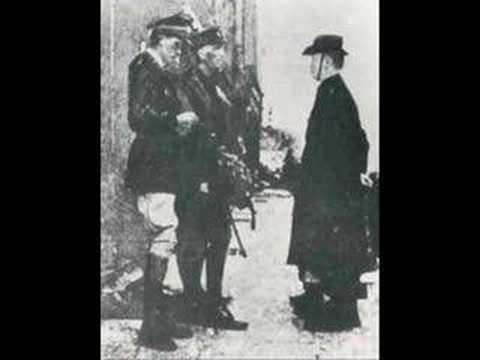
Humphreys always favors new business over history and obviously believes that Ireland’s heritage is less important than modern development. She has refused to protect Ireland’s history on numerous occasions, letting go of historical properties and landmark sites repeatedly but this new blunder may take the cake. She is refusing to purchase Patrick Pearse’s last surrender letter. This handwritten message was sent to the volunteers in the Four Courts garrison and it indicated they should stand down. It signaled the end of the Easter Rising and came from the man who was the figurehead of it but apparently this is not important enough for Heather Humphreys. Nevermind that this letter is vitally important to Ireland’s history. Nevermind that someone else in some other country may lose or destroy it after purchase. Nevermind that it should be preserved and placed with the other two in the National Museum immediately. She cares not about those things. She thinks the cost is too high for a single letter, while any historian or lover of Ireland would argue that it’s priceless. The thought of her not fighting for this letter mere months after the centenary celebration of the Rising makes me sick to my stomach.
Continue reading

Irish Women’s Franchise League

Ireland has always had more than its fair share of feisty women. By 1908 there were already numerous Suffragist groups in Ireland, full of women who wanted equality, the ability to vote, and more freedoms. Many of these groups focused on petitions, publicity, and spreading their message through polite channels and discourse, and they attracted many prominent socialites who used their influence to further the cause. This was not good enough for Hanna Sheehy Skeffington, her husband Francis, and their radical friends. 108 years ago today, they founded the Irish Women’s Franchise League, a group dedicated to equal rights that used agitation and action to spread their message.

Continue reading

Josie McGowan

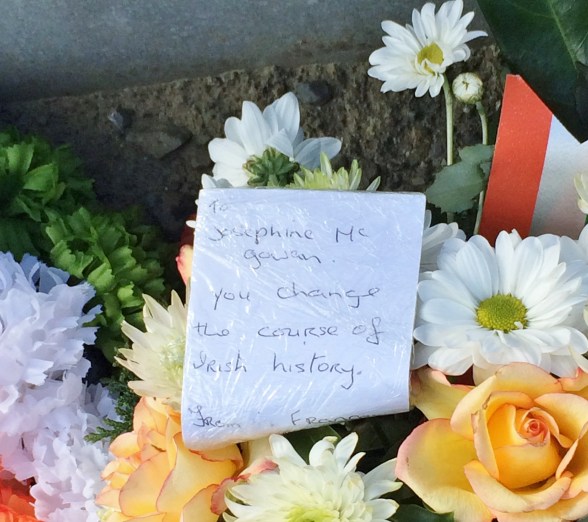
Josephine McGowan was one of the many women who participated in Ireland’s struggle for freedom. She was a member of the Inghinidhe na hEireann branch of Cumann na mBan and was stationed at the Marrowbone Lane garrison during the 1916 Easter Rising. She was one of twenty-five women who reported for duty and according to one witness statement, Marrowbone seemed to have more women than men at the beginning of the fight. Some of the women vanished throughout the week but Josephine stayed until the very end.

Continue reading

The death of De Valera

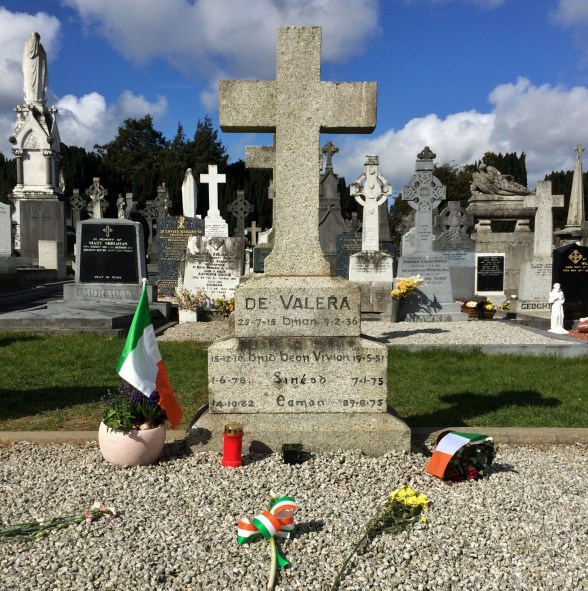
Love him or hate him, Eamon De Valera was perhaps the most influential man in Irish History, despite the fact that he was born in the United States. He helped create the political machine of modern Ireland and his influence is still being felt (and untangled) today, forty-one years after his death.

Continue reading

Honoring Roger Casement

One hundred years ago today, Roger Casement was executed at Pentonville Prison in London. In record time, Casement had gone from being a world-renowned humanitarian and a Knight in high standing to a treasonous pervert who was shunned by many of those he once called friends. He was hanged on August 3rd, 1916, for his failed attempt to bring German support and weaponry to Ireland for the Easter Rising and for other “crimes” he committed in his pursuit for Irish freedom. 

Casement’s knightly betrayal embarrassed the English government and they were not content to simply kill him.They stripped him of his knighthood and thoroughly destroyed his reputation before making him face the noose. He was the only man associated with the Rising who was killed in this fashion and the only one who died on foreign soil. This was an added insult to someone who had devoted many years of his life to Ireland and its fight for independence.

Continue reading

Call to Action

No matter where you are in Ireland, Dublin is not usually more than a few hours away. Yes, if you don’t have a car (and who can with those insurance rates?) it can be a hassle to get to, but nearly every region has some form of direct transportation in and out of Dublin. That’s important because I’m about to suggest that you take advantage of those routes and hightail it over to the city this weekend.

Continue reading

Remembering Elizabeth O’Farrell

On this day in Irish history one of the bravest Irish women  bid her last farewell to her beloved Ireland. Elizabeth O’Farrell passed away on June 25th, 1957, forty-one years after completing a dangerous mission that many thought would kill her. In 1916, Ms. O’Farrell wore a red cross and carried a white flag through raging battle zones to offer the surrender of the leaders of the Easter Rising. As she left the makeshift rebel headquarters in Moore Street her friend Sheila fell into hysterics, sure that Elizabeth would be killed on this mission.

Continue reading

Moore Street, take 20

I never get to quit talking about Moore Street. Hopefully one day that will change, but so far this has not been the case. These days backroom deals and crooked politicians are commonplace and a world-wide problem but one of the most egregious examples of that type of thing is the continuing battle over Moore Street in Dublin.

Continue reading

Free Anna Harvey

I haven’t written much about my month-long journey through Ireland culminating with the Centenary because to be frank, I am left speechless by most of it. I have no words to convey how much it changed me and how blessed I was to connect with so many amazing people. Many of the greatest moments of my life happened on this trip, including being one of the Constance Markievicz 1916 Societies standard bearers near the forefront of the centenary parade(s). I still can’t believe that happened and I owe the honor to a couple of incredible women named Anna Harvey and Emma Radford.

Continue reading

Arrest the Shinners

The English government could never really figure out how to deal with Sinn Fein or its increasing popularity after the Easter Rising of 1916. They blamed the insurrection on the “Shinners” even though the burgeoning political party had little to do with the battle and they were surprised when much of the Irish population flocked to the organization after the government executed all the leaders of the Rising. They tried to downplay Sinn Fein’s popularity and remove its influence on many occasions, but most of the time whatever they tried had the opposite result. The same was true when the government decided to arrest nearly every leading ‘Shinner’ in Ireland ninety-eight years ago today.

Continue reading