Today Bobby Sands would have turned 62 had he lived beyond his hunger strike. Since he did not and I happen to be in Belfast, I decided to visit him (and others) in Milltown Cemetery, bringing flowers that were long overdue.

Today Bobby Sands would have turned 62 had he lived beyond his hunger strike. Since he did not and I happen to be in Belfast, I decided to visit him (and others) in Milltown Cemetery, bringing flowers that were long overdue.
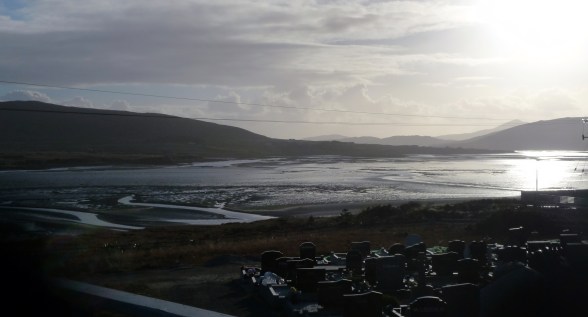
I can’t believe it’s almost time to leave. I’ve been waiting for so many years and now it is all coming so quickly. Next week begins my Irish holiday/research trip and I have made the choice to spend the month without my laptop. I’ll still be connected of course, but with less writer-friendly tools, so there will likely be a lot of photos and updates, but less of the wordy and lengthy histories. If you miss those, feel free to pick up a copy of Petticoats, Patriots, and Partition in your favorite bookstore or Amazon market. It is certainly one part of what has made this trip possible.
Sophie Bryant was born on this day in 1850, into a time when women did not receive much education or have too many professional options. She was lucky enough to be largely home-schooled by her father who was a math professor at the University of London, and by private governesses that he hired. She became fluent in many languages and fell in love with math and science. She was an exceptionally strong student.
Roderick James Connolly took following in his father’s footsteps quite literally. He was born on this day in 1901 and was the only son of Lillie and James Connolly. James was a devout socialist, a revolutionary leader, and one of the men executed for leading Ireland’s Easter Rising in 1916. “Roddy” as he was known, was only fifteen when his father was killed which affected him for the rest of his life. Roderick was driven by the same devotion to socialism that his father had believed in and later in life he went into journalism and politics, just like his dad had before him.
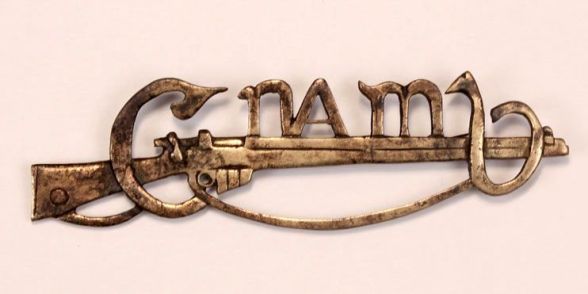
The ladies of Cumann na mBan have always had very strong opinions about the state of Ireland and its politics. Since its inception, the majority of CnamB members have fought for a united Ireland. During the lead up to the Easter Rising of 1916, these women supported the Republican cause in many different ways. They raised funds for the uprising, trained in first aid in order to help wounded Volunteers, smuggled various weapons and explosives throughout Ireland, spread important news, and many learned to shoot and fight themselves. They became a force to be reckoned with.
In the aftermath of the Rising, CnamB was flooded with new members and big ideas. They were prominent in the Dáil Éireann, the Republican legislature set up to counter England’s rule. Many of the widows of the leaders of the Rising were some of the loudest voices and strongest supporters of a free Ireland, and almost all were members of the female Republican organization. Eamon De Valera called them the “most unmanageable revolutionaries.” Many others accused the organization of making decisions based on vengeance and emotion without thought or consequence, especially when they voted against the Anglo-Irish Treaty ninety-four years ago today.

I write a lot about Constance Markievicz, just like anyone else who writes Irish history should. However, she was not the only woman involved in the planning or the execution of the Easter Rising in 1916…and many others never get the credit they are due. That’s not to say that she doesn’t deserve a bit of her own though. After all, one of her more famous quotes is highlighted proudly on my business cards, and she does have her own few pages in my book. Today in honor of her birthday, I give you some of her story from Petticoats, Patriots, and Partition – the book that has stolen most of my time for the last six months or so. Happy birthday Countess.

I’m returning to my favorite cause lately again for one more time (this week). Last night the “Banksy” mural appeared – and while it is obviously not Banksy, it is pretty great.
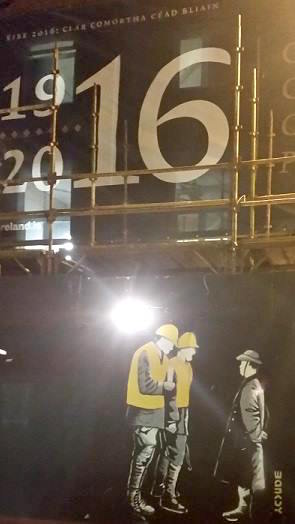
Well, it’s pretty great except for one thing. As one astute observer on Facebook said, “Just another time Elizabeth O’Farrell was edited out of the picture.” This artist didn’t even add her shoes. Still, the flash of color and the twist on the old surrender picture is still an awesome one.
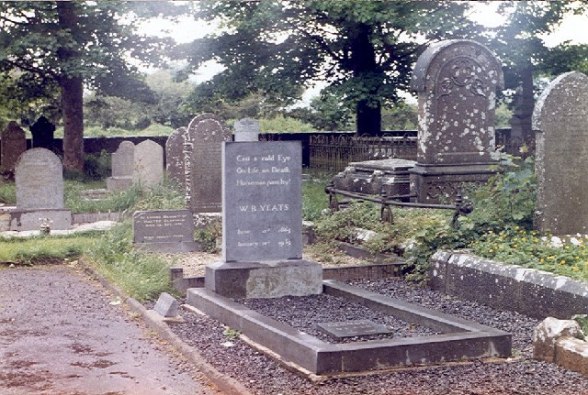
On this day in 1939, poet and patriot William Butler Yeats said farewell to the world from the south of France. Yeats spent many of his winters in France and in Italy due to life-long health issues but he always left his heart in Ireland, even after death. He told his wife George to bury him quietly in the hills above Monaco but “to dig me up and plant me in Sligo” a year later when he thought everyone would have forgotten about him. That idea is laughable given that he is still revered and remembered today.

Dr. Ada English was a strong woman, a fervent Nationalist, a prominent member of Cumann na mBan, and one of the first female psychiatrists in Ireland. Like her peer Dr. Kathleen Lynn, Dr. English devoted her spare time to politics and to healing and aiding the Irish Volunteers who were fighting for a free Ireland. Her story is not as well known as Dr Lynn’s however, since Ada was not in Dublin during the Easter Rising. Many political women of Ireland’s revolutionary periods have slowly vanished throughout the years, and Dr. Ada English has not been an exception to that unfortunate trend, though she should be.
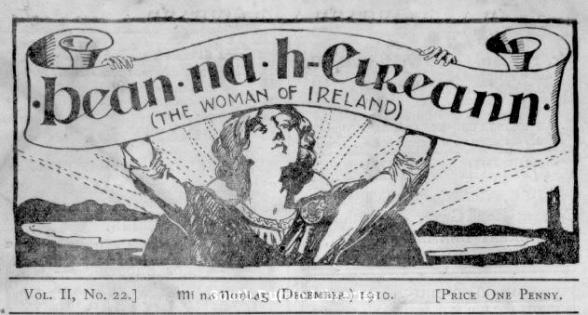
Today in honor of Ms. Helena Molony’s birthday, I give you the bit I wrote about her in my new book; Petticoats, Patriots, and Partition. She was a pretty awesome lady, and one of many that I celebrate in the first section of the book. I hope it tempts your curiosity about the rest of them too. If it does, the book is available worldwide through Amazon and nationally through Barnes and Noble, other bookstores, Amazon, and Blurb. Enjoy!!
 Choosing the Green
You must be logged in to post a comment.