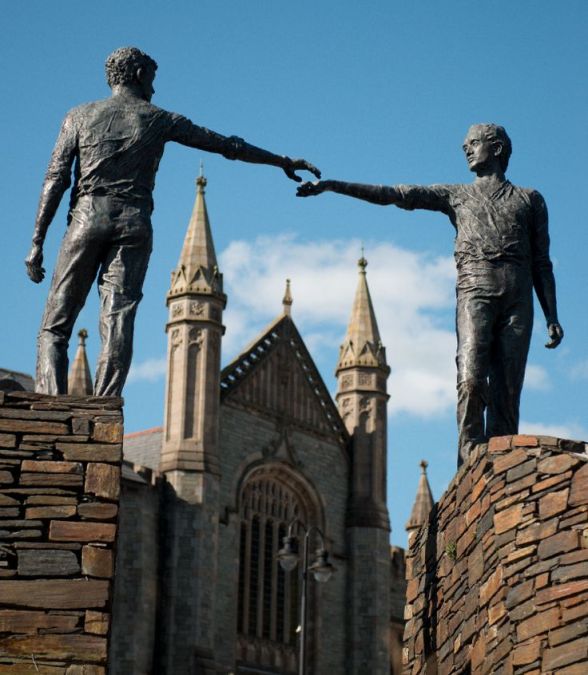
The Mighty Kathleen Lynn

Kathleen Lynn was an anomaly among women at the turn of the century in Ireland. She was extremely well educated, which was very rare for females at the time, and she was a doctor – not a nurse – which was an incredibly unusual profession for a woman of that era. She faced discrimination and difficulty in the field for many years due to her gender and it made her a strong suffragist and a very tough woman.

Continue reading

St. Disbode

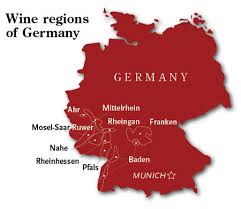
I usually stay away from religious holidays in general, but today is too good to pass up. Today is the feast day of St. Disbode – a 7th century Irish missionary. He was a bit of a hermit when he was not spreading his faith, but he traveled on a mission to Germany to convert the population. Legend has it that while in Germany, wine suddenly began flowing from his pilgrim’s staff and this convinced the Germans not necessarily to convert, but to create a thriving wine industry.

That’s a better reason than many for turning someone into a saint. Eat, drink, and be merry today – especially if you can find yourself some German wine…and if you’re a fan of Hildegard Von Bingen, throw some of her music in there too. She wrote a vita in his honor.

Cheers!!

The Idealism of Roger Casement

Congo Casement. Comma Casement. Sir Casement. These names and more applied to Roger Casement, over the course of his life. He was born on this day in 1864, and by the time he was executed, he had gone from being a world-renowned humanitarian, a British Consul, and a favored knight to a social pariah, an arms dealer, and a dastardly rebel. If the road to hell is paved with good intentions, there are many – and Roger Casement traveled more than a few.

Roger Casement was born outside of Dublin and had a strict, Protestant father. When he was three, his mother secretly had him baptized as a Catholic and by the age of thirteen, both of his parents were dead. He and his brother were sent to relatives in the North, County Antrim, and he considered that his home, even though he spent much of his life away from it.

Casement left Ireland at sixteen to find work. He took a job at a shipping company, and spent a great deal of time in Africa. He learned more than one language there and he began trying to improve the treatment and the communication between the native population and the foreign traders. He then went to work for the English Government, first by clerking in the Foreign Office and then as an appointed British consul. He was tasked with reporting about any human rights violations that he was witnessing first hand. He traveled all over Africa talking to residents and viewing destroyed villages before writing a blistering account of imperialism and its impact on the native population. It was controversial and rejected outright by the traders, his former boss included, but it provided other humanitarian groups with enough information to mount an international campaign against King Leopold of Belgium, the man who claimed to rule the area. The campaign was effective and eventually led to the king relinquishing his hold on the area. It was one instance where his idealism worked out.

When he returned to England, he continued his humanitarian efforts by founding the Anti-Slavery Society.After that, he was sent back to Africa to make sure that improvements had been made, and he was disheartened to discover that the horrific abuse continued. He continued to chronicle the plight of the natives and was eventually knighted for his work and his activism on their behalf.

During a break from Africa,  he visited Ireland and joined the Gaelic League. He idealistically tried to learn Irish, but despite a gift for languages, he never got a grasp on it. He met with leaders to petition them for their support in Africa, but Ireland had its own problems and the meetings weren’t fruitful. However, in the process he developed an infatuation with Sinn Fein and their commitment to a Free Ireland. As his fascination with the idea grew, he retired from his position in the English government and devoted himself full time to the cause of Irish Freedom. He co-founded the Irish Volunteers and used his formidable writing skills to help pen their manifesto. He then traveled to America to raise funds among the exiled Irish. He was naive and he imagined himself a sort of ambassador for Irish Nationalism. He did not realize that the Irish Republican Brotherhood had already quietly taken over the Volunteers and were excluding him from their plans. He was also too wrapped up in his travels to notice that his activities were no longer as covert as he thought. The IRB were watching him to make sure he stayed out of the way, and the English government was keeping tabs on his travels and his contacts as well.

Despite the prying eyes, he donned a disguise and traveled to Germany in order to secure funds and arms for Irish freedom fighters. He spun it as a mutually beneficial agreement between countries, trying to convince the Germans that if they supplied arms to Ireland, the Irish would divert England’s attention away from them and their war. The request was not as well-received as he hoped, but he secured a promise from German authorities that said, “The Imperial Government formally declares that under no circumstances would Germany invade Ireland with a view to its conquest or the overthrow of any native institutions in that country. Should the fortune of this Great War, that was not of Germany’s seeking, ever bring in its course German troops to the shores of Ireland, they would land there not as an army of invaders to pillage and destroy but as the forces of a Government that is inspired by goodwill towards a country and people for whom Germany desires only national prosperity and national freedom“.

He spent the rest of his time there trying to raise an Irish Brigade out of the prisoners of war that Germany held. He had been sure that many Irish soldiers would jump at the chance to fight for Ireland, but he was sadly mistaken. After months of pitching the idea, he finally admitted defeat and accepted the much smaller arms deal that the Germans offered. It didn’t include any support beyond the weapons and was nowhere close to the agreement he had been hoping for.  Meanwhile, he learned of the planned uprising and he hoped to get them to cancel it, because of the inadequate aid from Germany. Because he had been kept in the dark the entire time, he had no way of knowing that it would go ahead with or without the weapons…and with or without him.

Casement made it to Ireland in a submarine, but the arms that came by boat did not. They were intercepted by the English, who immediately arrested Roger for treason, sabotage, and espionage. He missed the Rising altogether and heard of it while languishing in the Tower of London. If he thought that his life of service would keep him from prison, he was wrong. He was stripped of his knighthood and left to his own devices – neither the English or the Irish would help him and no rescue attempts were made. His important friends were vocal but only until the English shared his “Black diaries” publicly. They allegedly chronicled his homosexual adventures throughout the world. They made him look more like a predatory sex tourist than an idealistic humanitarian and they destroyed any hopes for support or leniency. Homosexuality was nearly enough to get someone killed already in that day and age, and when they added a charge of treason to it, well – it was only a matter of time before death came calling. He was hanged on August 3rd, 1916 – making him the only man connected to the Rising who was executed in that fashion, and the only one who was killed on foreign soil. His remains were repatriated to Ireland fifty years after he was killed, but they were not allowed to be brought North, so he lies in Glasnevin Cemetery in Dublin….not too far from where his life began.

There are a lot of what ifs to his tale. What if the arms had landed? What if he had been involved in the planning of the Rising? What if he had been able to bring reinforcements that were culled from the P.O.W.s in Germany? What if the diaries were fiction? There are many who still believe that they were fabricated, or at least exaggerated by the English in order to allow his execution. What if homosexuality had not been such a grave charge at that time? If his powerful friends and activists had been supportive throughout the trial and imprisonment, maybe he would have lived.

Roger Casement would have been one of the most important men in Irish history, regardless of his sexual orientation, if any one of his idealistic plans had come to fruition. He still has a large place in it, despite the fact that they didn’t. His goals were always intertwined with helping people achieve a better life and teaching them to fight the over-reaching powers that be. He was an idealist and was always rooting for the underdog – even when he was one. His short life was full of naivete and the best intentions – and if anyone had truly trusted and followed him, Irish history may be very different today. Even with the stain of the diaries hanging over him, his story has persevered and as we all move toward a more open society, maybe some day he will be remembered on equal footing with the rest of the leaders of that time.
Apologies and news

I apologize dear readers, it has been some time since I’ve posted here. It is not for lack of will – I get an immense amount of joy from this blog, but life has gotten in the way for a minute. Or rather, death has.

I’ve been hit with a double dose of tragedy over the last couple of weeks and it has taken a toll on my brain and my free time. I promise to return to my regularly scheduled program as soon as I’m able to stop and think for a minute. There’s a post or five brewing in my head I promise – and I look forward to getting them out soon.

In the meantime, I will tease you with a little news – there’s a book coming. It’s a silly little thing that I’m self-publishing but it brings me a lot of joy. It’s a trade paperback with about 150 pages and is full of some expanded and favorite posts, quirky facts, Irish travel gems, and more. It features a lot of women and some of the lesser known players in Irish History and has a wonderful title too – but it’s going to be about a month before I can get it finished and released. I just wanted you to know that I haven’t been completely idle in these trying times.

More history posts and current tidbits soon I promise.

Squeeze your loved ones a lot and keep them close.

The Power of Names

“Londonderry or Derry?,” asked a friend of mine when he was off to the North of Ireland. It’s an age old question and I found myself a little stuck when it came to answering. “That depends” seemed to be the safest bet at the time. However, the next time either of us visit, the question may no longer be an issue since last week Derry city and the Strabane District Council voted in favor of formally losing the London prefix.
Continue reading

No Irish, No Catholics

While we’re on the subject of racism, sectarianism, and discrimination, here’s another tale of Anti-Irish (and Anti-Catholic) riots…not in Belfast but from right here in the United States. Back in 1844, the Protestant extremists were called Nativists, despite the fact that they were descended from immigrants and were not natives in any way. Ignoring that truth entirely, they felt that they were the established rulers of the area and were not pleased with the influx of Irish coming into the States. They began a large scale propaganda war promoting discrimination against the Irish and set out to spread their sectarian platform against Catholicism. By the time the Nativists in Philadelphia were done venting their anger, there had been riots for months, a lot of Catholic churches and businesses had been torched, over 200 people had fled their homes, and fifteen people were dead. Over fifty more people were injured by the end of the fight.
Continue reading

Love Will Tear Us Apart

Charles Parnell was the ultimate star of Irish politics in his day. His meteoric rise might have been enough to give Ireland the Home Rule it had longed for. He might have been the man to change the course of Irish history long before the armed militias and secret societies of later years ever had a chance to grow or rise up. He might have done all this and more—or not—but we will never know because his passion for Ireland came second to one other – and that one other was a married woman named Katharine O’Shea.

The two met originally because Katharine’s husband Willie had decided to enter the political arena. Like any smart and supportive wife, Katharine thought to further advance her husband’s career by befriending the most powerful politician at the time and that was Charles Parnell. This plan immediately backfired when the attraction between the two of them grew after their first encounter. Within a matter of months the two were carrying on a passionate and overwhelming affair, to the peril of all else.

It is highly improbable that Willie O’Shea did not know of the affair, given that Katharine had three children with Parnell. He turned a blind eye to his wandering wife for the sake of his political career and all of the Parnell children were given the last name of O’Shea, despite their bloodlines. He used Parnell for his own career advancement and lived comfortably on his wife’s money, staying silent about the affair for years. He held his tongue until it would utterly destroy everything Parnell had been working for. Then and only then did Willie open his mouth, publicly and scandalously.

It was Christmas Eve in 1889 that Willie filed for divorce, and it was motivated by greed since Katharine had just received a large inheritance. She tried to silence him with a large settlement but he would not be satisfied and he continued to petition for divorce. He dubiously claimed that he had known nothing of the near decade-long affair and he named Parnell as a co-respondent in the proceedings, knowing that it would destroy both his wife and the politician. Support for the Home Rule that was Parnell’s dream fell along with him and burned out in scandal. He was accused of bribing Willie in order to sleep with his wife. The Irish Parliamentary Party split down the middle and the only thing they agreed upon was that it was all Katharine’s fault. She was accused of being a manipulative Englishwoman who had designed the affair to take down Parnell. She was called a whore and was told that she was responsible for the defeat of Home Rule. The Irish press took to calling her Kitty – a slang term for a stupid, young, or childish woman and a more subtle, occasional title for prostitutes, or certain parts of the female body. It was an open insult to her and one that stung the lovers deeply.

Parnell fought back, and tried to keep his career from totally imploding. He defended them both and sought to calm the scandal by proving once and for all that their love was real. They were married on this day in 1891 but in spite of his hopes for understanding and respectability, the wedding only made things worse. The press categorically refused to call Katharine by her married name of Mrs. Parnell and they continued to hurl abuse at her, selling paper after paper denouncing the couple. Parnell’s attempts to save them both only put another nail in the coffin and although he tried to resume his work after the wedding, he quickly discovered that the Ireland he had fought for had irrevocably turned against him and the love of his life.

Katharine, or Katie, (but never Kitty,) as she was known to friends and family, was the perfect scapegoat and her notoriety as the woman who harpooned the best chance of Home Rule for Ireland still permeates today, even though many historians feel like Parnell would never have achieved it anyway. She was a woman of scandal, even though her true love had made an honest woman out of her, so to speak. Their marriage only lasted four months before Charles Parnell passed away – and it was fraught with stress and insults all the way through. At least they had the years of joy beforehand, otherwise Katharine Parnell may have lost her mind completely. As it was, she had the first of many breakdowns soon after her husband died but she went on to publish a few books and she lived for another thirty years. Just not in Ireland.

The Saville Report

It was an investigation that took twelve years and over £200m to complete. The Bloody Sunday inquiry, as it was originally called, produced over ten volumes of analysis and led to a comprehensive and glaring report by Lord Saville that was released five years ago today. It caused shockwaves throughout the North of Ireland and it forced the Prime Minister to make a formal and public apology for the actions of the British Army in Derry on one fateful Sunday in 1972.

Continue reading

The Perfect Heist – Gough Barracks 1954

A little over 60 years ago, the Irish Republican Army (IRA) managed one of the cleanest military heists in history. It took about six months to plan, along with an IRA volunteer who actually enlisted in the British Army, and a whole lot of luck, but the raid was incredibly successful and they pulled it off without firing a shot or spilling a single drop of blood. Continue reading

No, Nay, Never – A Coronation Tale

On this day in 1953, theatre owners and cinema houses all across Dublin unanimously decided against showing the Queen of England’s coronation film. It was not illegal to show it – in fact, there were at least a few places other than the theatres that quietly held secret viewing parties, but the mainstream movie houses were more concerned with staying in business and staying upright than they were with viewing or celebrating Queen Elizabeth’s pomp.

Continue reading