Margaret Skinnider was a woman like no other, and I take every opportunity that I can to write about her. She is one of my biggest heroes – not just because she was a warrior and an intellectual but also because she was humble and quick. Without her contributions, many aspects of the Easter Rising may never have come to fruition but because she was not born in Ireland and she was a woman, it has been very hard to find anyone who gives her the full recognition she deserves in the history of the Rising.
Tag Archives: Irish Women
64 Women

The number of women arrested and questioned in 1916 for their roles in the Easter Rising up until today, 99 years ago, was 64. The paper published their names a week later on the 29th of May, and many believed this number to be the total number of women involved. They could not have been more wrong.
In all, over 200 women are known to have been involved in the Dublin Uprising. More than half are not included on this list – and many more have been lost in time – leaving some to believe that even the higher estimates are lower than they should be. Since many of the documented women are often ignored anyway, we may never have an accurate number altogether but at least there are a few pieces of hard evidence of their involvement, including this tiny clipped article.
In the years leading up to the Centenary celebration, many books and documentaries have made a decent effort to include and acknowledge the female fighters of 1916. I hope they will continue to highlight the women’s fight both for Ireland and for the recognition they deserve in the aftermath. Cheers ladies.
Happy Birthday to Me!
This blog, Choosing the Green – Roghnú Glas is officially one year old today. My, how the time flies…
When I began this little project, the intention was to have a little place to put all of my Irish heroes, stories, news and photos in one place—and that is exactly what I’ve done—but I did not expect, support from other larger blogs, a Facebook page or any readers at all, for that matter. I just needed a proverbial tree to carve my love into and I didn’t really expect it to grow like it has over the last year. I am humbled by your interest, your comments and your support and I thank you from the bottom of my heart.
The Cost of the Rising
As my commemoration of the 1916 Easter Rising closes out for the year, I feel that it is important to acknowledge that this conflict, like any other, had a downside. Many Irish people suffered unimaginable pain and loss because of the death and destruction that rained down on Dublin during that fateful week. There’s no real way to discern how many lives were touched by the dark side of revolution nor is it possible to gauge how long that devastation lasts. We can look at statistics and see numbers of injuries, buildings lost, and fatalities – but they do not tell us how many left Dublin or Ireland altogether because of those things, or how many families are still touched by the loss, pain, or injuries of their ancestors.
What we do know is that over 425 people died in the rising (not including the executions of the leaders) and 38 of them were children. Another thousand more were injured. More than half off these injuries and deaths were innocent bystanders and civilians. 179 buildings were damaged beyond repair or utterly razed. One hundred thousand people – roughly a third of the entire population – were given assistance in the aftermath of the conflict.
The Countess in New York

She stepped off the boat to a throng of admirers and reporters. The Countess was a romantic heroine that had captured hearts and minds across the world and America was no exception. When Constance Markievicz arrived with Kathleen Barry at the Cunard pier in New York City on this day in 1922, a massive crowd greeted her with adoration and cheers.
Approximately 50 journalists and photographers had already boarded the ladies’ boat, the Aquitania, when it was stopped at the quarantine station. The Countess captivated every one of them and their glowing reports spread out all over the nation. They described everything in the greatest detail about her clothing and style and marveled that such a small woman could have done so much in the cause for Irish Freedom. They ate her stories up completely, as did her audiences whenever she spoke.
Cumann na mBan is born
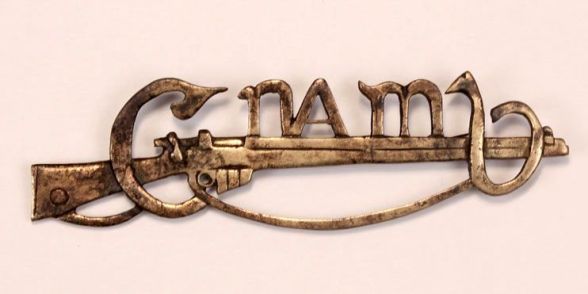
On Thursday, April 2nd, 1914, about one hundred women strolled into Wynn’s hotel in Dublin at four o’clock in the afternoon for the first of Cumann na mBan’s many meetings. The Irish Women’s Council had a lot to discuss but the one thing almost all the ladies present had in common was a devotion to Ireland and a desire to serve it.
Mary Macswiney
“A rebel is one who opposes lawfully constituted authority and that I have never done.” So said one of the most devoted Republican women in Irish history, Mary MacSwiney. I’m sure she believed in that statement with all of her heart—as she did a free Ireland—but it’s guaranteed the English did not feel the same way. To them, Mary MacSwiney was the one of the worst and biggest female rebels, not only in Cork but in all of Ireland.
Margaret Pearse, mother of Ireland
It must be agonizing for a parent to outlive their child. It goes against the natural order of the universe and has to be absolutely devastating. For many, it usually involves anger and hopelessness. Margaret Pearse knew that suffering better than most, for she didn’t lose one son, but two—at once—both executed at the hands of the British for their roles in the Easter Rising of 1916. Despite this, she steadfastly refused to give in to despair and she spent the rest of her life fighting for the free Ireland that her sons had died for.
Continue reading
The Wilde Lady Jane
Jane Francesca Elgee did a lot of things in her life. She rebelled against her Protestant, Unionist family and became a prolific poet and Nationalist writer. She stood up in court, outing herself as the criminal during a Sedition case to protect the people and the paper she worked for. She spoke at least five languages and translated in each. She threw weekly salons and was known as the most gracious host in all of Dublin. She was a devoted Suffragist and fought for equal rights for women. But what she is best known for is not her prose or her politics. She is best known for being the mother of her children—one in particular—whose works far surpassed those of his mother in a very short time. Indeed, Jane Francesca Elgee will forever be known as Lady Jane Wilde, the woman who gave birth to her son, Oscar.
The Queen of the Spider Dance
Her name was Lola and she was a showgirl….except that her name wasn’t Lola and her show wasn’t any good. Her real name was Marie Dolores Eliza Rosanna Gilbert—which was quite the mouthful for a stage name—so Lola Montez it became. She invented the role of a mysterious Spanish entertainer and played it for much of her life but everything about her persona was a lie. She was actually Irish, born in Grange, County Sligo, and by the time she passed away on this day in 1861, she had lived a full, dangerous, and notorious life.
Continue reading
 Choosing the Green
You must be logged in to post a comment.