When Máirín Cregan was born on this day in 1891, her mother made a very important decision. She insisted that her daughter would grow up learning history and the Irish language. As a young adult, this eventually led Máirín right into the Gaelic League where she developed a sort of nationalist fervor. She was also quite a talented vocalist so she ended up moving to Dublin to study at the Leinster School of Music. When she arrived in the city in 1914, she socialized with the Ryan family, a strong Nationalist clan. Máirín was quickly rubbing shoulders with some of the most prominent Nationalists in Dublin including Min Ryan and her fiance, Seán Mac Diarmada, who was one of the future leaders of the Easter Rising.
Category Archives: 1916
Josie McGowan
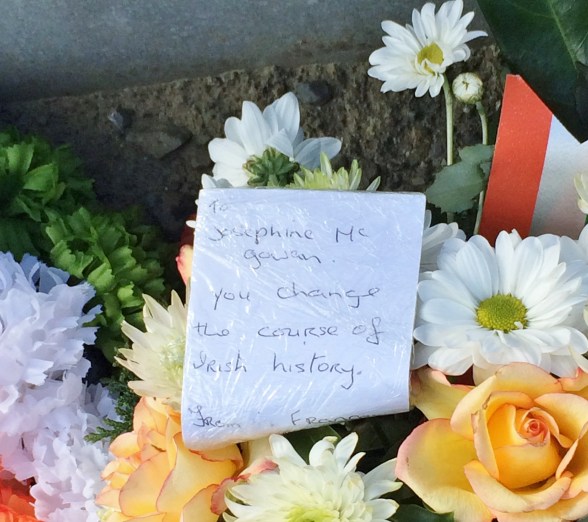
Josephine McGowan was one of the many women who participated in Ireland’s struggle for freedom. She was a member of the Inghinidhe na hEireann branch of Cumann na mBan and was stationed at the Marrowbone Lane garrison during the 1916 Easter Rising. She was one of twenty-five women who reported for duty and according to one witness statement, Marrowbone seemed to have more women than men at the beginning of the fight. Some of the women vanished throughout the week but Josephine stayed until the very end.
Sidney Czira
There was more than one amazing Gifford girl. Grace has been immortalized in the annals of Irish History and song, but her sisters were just as political, in fact more so, than the tragic bride of 1916. Sidney was one of the first Gifford sisters to get involved in politics, even though she did it quietly and under the assumed name of John Brennan. In a world where women weren’t listened to, Sidney made her voice and her opinions heard.
The death of De Valera
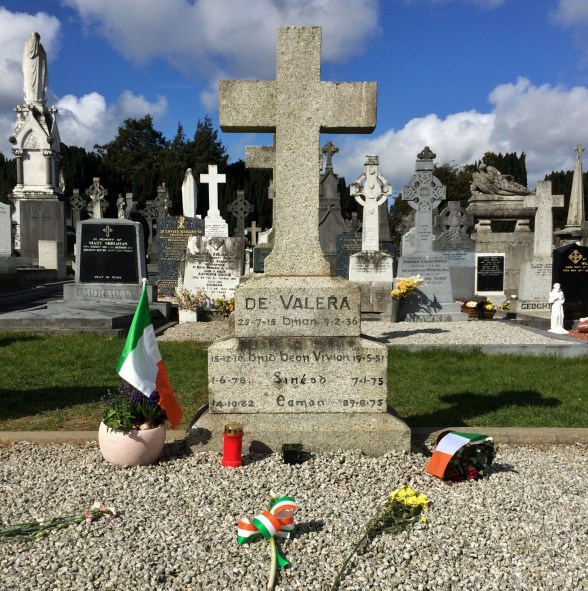
Love him or hate him, Eamon De Valera was perhaps the most influential man in Irish History, despite the fact that he was born in the United States. He helped create the political machine of modern Ireland and his influence is still being felt (and untangled) today, forty-one years after his death.
Honoring Roger Casement

One hundred years ago today, Roger Casement was executed at Pentonville Prison in London. In record time, Casement had gone from being a world-renowned humanitarian and a Knight in high standing to a treasonous pervert who was shunned by many of those he once called friends. He was hanged on August 3rd, 1916, for his failed attempt to bring German support and weaponry to Ireland for the Easter Rising and for other “crimes” he committed in his pursuit for Irish freedom.
Casement’s knightly betrayal embarrassed the English government and they were not content to simply kill him.They stripped him of his knighthood and thoroughly destroyed his reputation before making him face the noose. He was the only man associated with the Rising who was killed in this fashion and the only one who died on foreign soil. This was an added insult to someone who had devoted many years of his life to Ireland and its fight for independence.
Call to Action

No matter where you are in Ireland, Dublin is not usually more than a few hours away. Yes, if you don’t have a car (and who can with those insurance rates?) it can be a hassle to get to, but nearly every region has some form of direct transportation in and out of Dublin. That’s important because I’m about to suggest that you take advantage of those routes and hightail it over to the city this weekend.
Remembering Elizabeth O’Farrell
On this day in Irish history one of the bravest Irish women bid her last farewell to her beloved Ireland. Elizabeth O’Farrell passed away on June 25th, 1957, forty-one years after completing a dangerous mission that many thought would kill her. In 1916, Ms. O’Farrell wore a red cross and carried a white flag through raging battle zones to offer the surrender of the leaders of the Easter Rising. As she left the makeshift rebel headquarters in Moore Street her friend Sheila fell into hysterics, sure that Elizabeth would be killed on this mission.
Moore Street, take 20
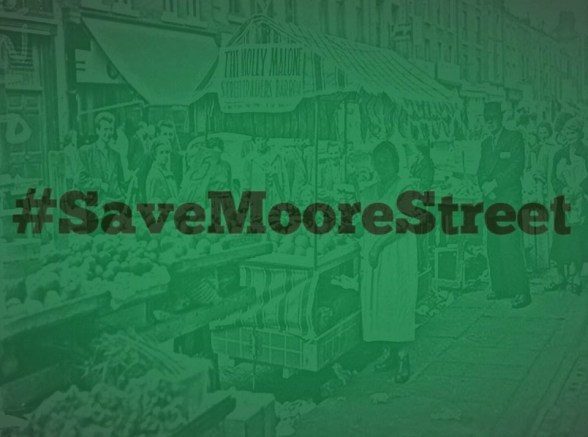
I never get to quit talking about Moore Street. Hopefully one day that will change, but so far this has not been the case. These days backroom deals and crooked politicians are commonplace and a world-wide problem but one of the most egregious examples of that type of thing is the continuing battle over Moore Street in Dublin.
Free Anna Harvey

I haven’t written much about my month-long journey through Ireland culminating with the Centenary because to be frank, I am left speechless by most of it. I have no words to convey how much it changed me and how blessed I was to connect with so many amazing people. Many of the greatest moments of my life happened on this trip, including being one of the Constance Markievicz 1916 Societies standard bearers near the forefront of the centenary parade(s). I still can’t believe that happened and I owe the honor to a couple of incredible women named Anna Harvey and Emma Radford.
Arrest the Shinners
The English government could never really figure out how to deal with Sinn Fein or its increasing popularity after the Easter Rising of 1916. They blamed the insurrection on the “Shinners” even though the burgeoning political party had little to do with the battle and they were surprised when much of the Irish population flocked to the organization after the government executed all the leaders of the Rising. They tried to downplay Sinn Fein’s popularity and remove its influence on many occasions, but most of the time whatever they tried had the opposite result. The same was true when the government decided to arrest nearly every leading ‘Shinner’ in Ireland ninety-eight years ago today.
 Choosing the Green
You must be logged in to post a comment.