Well, you learn something new every day. Yesterday I attended a Bernie Sanders rally in Oakland, CA which was the very last place I thought I’d learn a new tidbit of Irish history but I was mistaken. One of the speakers had just returned from the North of Ireland. He butchered the pronunciation of Sinn Fein but he told the crowd that Bernie Sanders was one of the only politicians in the United States (and the world) who had taken the time to write an angry message directly to Margaret Thatcher in 1981.
Tag Archives: America
The Idealism of Roger Casement

Congo Casement. Comma Casement. Sir Casement. These names and more applied to Roger Casement, over the course of his life. He was born on this day in 1864, and by the time he was executed, he had gone from being a world-renowned humanitarian, a British Consul, and a favored knight to a social pariah, an arms dealer, and a dastardly rebel. If the road to hell is paved with good intentions, there are many – and Roger Casement traveled more than a few.
Roger Casement was born outside of Dublin and had a strict, Protestant father. When he was three, his mother secretly had him baptized as a Catholic and by the age of thirteen, both of his parents were dead. He and his brother were sent to relatives in the North, County Antrim, and he considered that his home, even though he spent much of his life away from it.
Casement left Ireland at sixteen to find work. He took a job at a shipping company, and spent a great deal of time in Africa. He learned more than one language there and he began trying to improve the treatment and the communication between the native population and the foreign traders. He then went to work for the English Government, first by clerking in the Foreign Office and then as an appointed British consul. He was tasked with reporting about any human rights violations that he was witnessing first hand. He traveled all over Africa talking to residents and viewing destroyed villages before writing a blistering account of imperialism and its impact on the native population. It was controversial and rejected outright by the traders, his former boss included, but it provided other humanitarian groups with enough information to mount an international campaign against King Leopold of Belgium, the man who claimed to rule the area. The campaign was effective and eventually led to the king relinquishing his hold on the area. It was one instance where his idealism worked out.
When he returned to England, he continued his humanitarian efforts by founding the Anti-Slavery Society.After that, he was sent back to Africa to make sure that improvements had been made, and he was disheartened to discover that the horrific abuse continued. He continued to chronicle the plight of the natives and was eventually knighted for his work and his activism on their behalf.
During a break from Africa, he visited Ireland and joined the Gaelic League. He idealistically tried to learn Irish, but despite a gift for languages, he never got a grasp on it. He met with leaders to petition them for their support in Africa, but Ireland had its own problems and the meetings weren’t fruitful. However, in the process he developed an infatuation with Sinn Fein and their commitment to a Free Ireland. As his fascination with the idea grew, he retired from his position in the English government and devoted himself full time to the cause of Irish Freedom. He co-founded the Irish Volunteers and used his formidable writing skills to help pen their manifesto. He then traveled to America to raise funds among the exiled Irish. He was naive and he imagined himself a sort of ambassador for Irish Nationalism. He did not realize that the Irish Republican Brotherhood had already quietly taken over the Volunteers and were excluding him from their plans. He was also too wrapped up in his travels to notice that his activities were no longer as covert as he thought. The IRB were watching him to make sure he stayed out of the way, and the English government was keeping tabs on his travels and his contacts as well.
Despite the prying eyes, he donned a disguise and traveled to Germany in order to secure funds and arms for Irish freedom fighters. He spun it as a mutually beneficial agreement between countries, trying to convince the Germans that if they supplied arms to Ireland, the Irish would divert England’s attention away from them and their war. The request was not as well-received as he hoped, but he secured a promise from German authorities that said, “The Imperial Government formally declares that under no circumstances would Germany invade Ireland with a view to its conquest or the overthrow of any native institutions in that country. Should the fortune of this Great War, that was not of Germany’s seeking, ever bring in its course German troops to the shores of Ireland, they would land there not as an army of invaders to pillage and destroy but as the forces of a Government that is inspired by goodwill towards a country and people for whom Germany desires only national prosperity and national freedom“.
He spent the rest of his time there trying to raise an Irish Brigade out of the prisoners of war that Germany held. He had been sure that many Irish soldiers would jump at the chance to fight for Ireland, but he was sadly mistaken. After months of pitching the idea, he finally admitted defeat and accepted the much smaller arms deal that the Germans offered. It didn’t include any support beyond the weapons and was nowhere close to the agreement he had been hoping for. Meanwhile, he learned of the planned uprising and he hoped to get them to cancel it, because of the inadequate aid from Germany. Because he had been kept in the dark the entire time, he had no way of knowing that it would go ahead with or without the weapons…and with or without him.
Casement made it to Ireland in a submarine, but the arms that came by boat did not. They were intercepted by the English, who immediately arrested Roger for treason, sabotage, and espionage. He missed the Rising altogether and heard of it while languishing in the Tower of London. If he thought that his life of service would keep him from prison, he was wrong. He was stripped of his knighthood and left to his own devices – neither the English or the Irish would help him and no rescue attempts were made. His important friends were vocal but only until the English shared his “Black diaries” publicly. They allegedly chronicled his homosexual adventures throughout the world. They made him look more like a predatory sex tourist than an idealistic humanitarian and they destroyed any hopes for support or leniency. Homosexuality was nearly enough to get someone killed already in that day and age, and when they added a charge of treason to it, well – it was only a matter of time before death came calling. He was hanged on August 3rd, 1916 – making him the only man connected to the Rising who was executed in that fashion, and the only one who was killed on foreign soil. His remains were repatriated to Ireland fifty years after he was killed, but they were not allowed to be brought North, so he lies in Glasnevin Cemetery in Dublin….not too far from where his life began.
There are a lot of what ifs to his tale. What if the arms had landed? What if he had been involved in the planning of the Rising? What if he had been able to bring reinforcements that were culled from the P.O.W.s in Germany? What if the diaries were fiction? There are many who still believe that they were fabricated, or at least exaggerated by the English in order to allow his execution. What if homosexuality had not been such a grave charge at that time? If his powerful friends and activists had been supportive throughout the trial and imprisonment, maybe he would have lived.
Roger Casement would have been one of the most important men in Irish history, regardless of his sexual orientation, if any one of his idealistic plans had come to fruition. He still has a large place in it, despite the fact that they didn’t. His goals were always intertwined with helping people achieve a better life and teaching them to fight the over-reaching powers that be. He was an idealist and was always rooting for the underdog – even when he was one. His short life was full of naivete and the best intentions – and if anyone had truly trusted and followed him, Irish history may be very different today. Even with the stain of the diaries hanging over him, his story has persevered and as we all move toward a more open society, maybe some day he will be remembered on equal footing with the rest of the leaders of that time.
No Irish, No Catholics

While we’re on the subject of racism, sectarianism, and discrimination, here’s another tale of Anti-Irish (and Anti-Catholic) riots…not in Belfast but from right here in the United States. Back in 1844, the Protestant extremists were called Nativists, despite the fact that they were descended from immigrants and were not natives in any way. Ignoring that truth entirely, they felt that they were the established rulers of the area and were not pleased with the influx of Irish coming into the States. They began a large scale propaganda war promoting discrimination against the Irish and set out to spread their sectarian platform against Catholicism. By the time the Nativists in Philadelphia were done venting their anger, there had been riots for months, a lot of Catholic churches and businesses had been torched, over 200 people had fled their homes, and fifteen people were dead. Over fifty more people were injured by the end of the fight.
Continue reading
Heritage of Hate
It’s rare that American news coincides so neatly with news in Ireland. It’s a real treat to write about it when it does unless it is a story full of bigotry and grandstanding which unfortunately, is true today. Often times whenever a group is called out for their bullying traditions or symbols of hatred, their response is always the same. They claim that the behavior isn’t racist or sectarian, that instead it is tradition and heritage – as if the concepts are mutually exclusive. Guess what? It IS tradition and heritage and it IS racist, sectarian and vile. The time has come to accept that and leave horrible traditions behind.
Continue reading
Berkeley
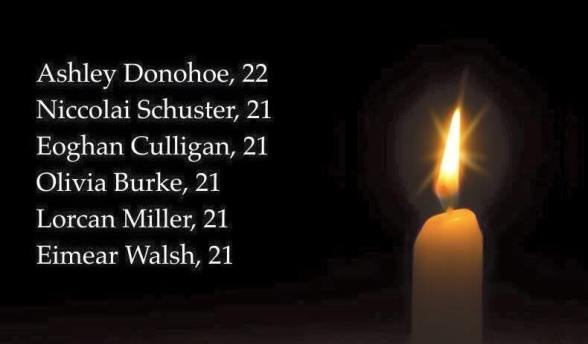
It’s rare that I get to post anything that is located close to me in this blog. Being so far away from what I usually write about means that while I’ve visited most of the places I feature, they are quite far away by the time I get to write about them. This one is close to home in many ways, and I am saddened to write about it at all. You see, I live very close to Berkeley, California, and I worked there for years so the recent tragedy there is very close to my heart.
A small Turf Fire Burning…
The jet lag has kicked in and I’m having some exhaustion-related come down from my travels, but before I crash, here are just a few more shots of the amazing and poignant Irish Hunger Memorial in New York City. More photos and tales to come soon as soon as I catch up on my sleep.






It really did feel like Ireland there for a minute…
New York’s little piece of Ireland
In the heart of Southern Manhattan on the bank of the Hudson, a mystical Irish cottage rises out of the ground. It is surrounded by tall buildings and heavy traffic and seems out of place but it is irresistible and it beckons you inside. When you do enter, be prepared – your heart may break due to both the despair and the longing.
Continue reading
The Countess in New York

She stepped off the boat to a throng of admirers and reporters. The Countess was a romantic heroine that had captured hearts and minds across the world and America was no exception. When Constance Markievicz arrived with Kathleen Barry at the Cunard pier in New York City on this day in 1922, a massive crowd greeted her with adoration and cheers.
Approximately 50 journalists and photographers had already boarded the ladies’ boat, the Aquitania, when it was stopped at the quarantine station. The Countess captivated every one of them and their glowing reports spread out all over the nation. They described everything in the greatest detail about her clothing and style and marveled that such a small woman could have done so much in the cause for Irish Freedom. They ate her stories up completely, as did her audiences whenever she spoke.
They’re Coming to America

So you want to move to America? Whatever for?! Unless you are in a “third world” country, chances are your health care is better, your education is better, your work schedule is better, and people are probably kinder where you already are. Considering the weakness of our dollar, our union-busting corporations that are considered people, the current political climate, our abhorrent race and gender issues, and our militarized police force, I would encourage you to think again before coming to the “Land of the Free.” However, since a lot of people are still interested in moving here, I thought I’d go over some of the most common ways to accomplish it and throw my observations into the mix. We are hard on our immigrants—legal or not—and there are several things to consider. Here are some of them, wrapped up in the most frequent ways to get into good ol ‘Merica. Keep in mind, this isn’t even about the path to citizenship. These are just things I’ve witnessed while watching people try to obtain semi-permanent residence and entrance into our work force. Citizenship is even more difficult.
Continue reading
Hands up
There’s been a post brewing for some weeks in my head. It wasn’t even going in this blog because it doesn’t have a thing to do with Ireland, really. See I live in Oakland, California – which has been a hotbed of protests and riots for the last few weeks, all circling around killer cops and America’s lack of will to persecute them. My neighborhood has been full of buzzing helicopters, burning trash bins, broken windows, snarled traffic, bully police officers, and anger—a whole lot of anger. Throughout all of this, Ireland has been pretty far from my head, since I see this as an American failure.
However, I am wrong in that. Racism is a problem everywhere. The North of Ireland has dealt with all of the things I listed above as and still does occasionally, as do many other places all over the world. When this picture came up on my radar I realized that there are people all over the world who are looking at this country with the same anger and incredulous horror that I am. When the people in Derry posted this picture, my eyes welled up and I knew this post would go everywhere I could put it – even here. Still, this post really isn’t about Ireland. It’s about America and humanity.

You see, America has serious problems. We have insidious race and gender issues that creep into every situation, every day. I could go on and on about the intolerance and cruelty that we as a nation inflict on other countries and ourselves but I won’t because it is a list that would stretch for miles and all of them boil down to one maddening thing. We don’t want to change or improve, ever.
Bigotry, dehumanizing others, and racial profiling should have ended when our Civil War did, but it hasn’t. Hell, the Civil War still hasn’t ended in some places and minds and rather than trying to fix that, we ignore it. It’s the dirty secret in the corner of many American’s closets…and we shunt it aside or roll our eyes at the ignorance but we don’t really fight it. When someone points out valid instances of racially motivated killings, crimes, or ignorance, someone else is always there with a counter-statistic to either justify the action or to distract from the real issues. (See Fox News’ heavily circulated ‘black on black’ crime statistics that they roll out whenever any sane person tries to speak about white cops killing unarmed men.) White Privilege has become a buzz phrase that pisses people off and makes them defensive, rather than one that gets them to look at their world differently but it is a very, very real thing that most don’t even want to admit exists.
I have been guilty of it too. I try to think of the world’s population as human, rather than label anyone by their race, gender or preference. I bristled the first night of the protests in Oakland at all the signs that said “Black lives matter” because in my opinion ALL lives do and singling out one race is just part of the same division that is used to separate us all. While that is true, I was wrong and naive to be upset. Racism is so prevalent in every single way that my life really does matter more in the eyes of this country simply because I am white. I’ve come to realize that my happy little label-free human party is dismissive because it takes all of the heritage, culture, and legacy of each tribe and throws it all right out of the window. It asks every person to ignore their struggles, their history, and their essence to band together and pretend that the discrimination and persecution isn’t still prevalent. It’s a willful blindness to the continuing ugliness of bigotry that trickles into economics, psychology, location, politics, and every other aspect of human life. It is a great idea that has served me well in becoming as colorblind and accepting as I am, but it is just as naive as the 4 year old child I used to be. These last few weeks, it has become pretty apparent that it is unfair to ask anyone to join me in my happy little mental state of a gender-free, colorblind human utopia.
Why? Because I don’t know what it’s like to be pulled over every time I get into my car. I don’t know what it’s like to suffer injustice my whole life just because of the color of my skin or the faith I adhere to. I don’t know what it’s like to have my bag searched every time I step outside, just because I am walking down the street. I don’t know what it’s like to look at the flag of my country and feel like it has abandoned me and has been used as a symbol of my oppression for centuries. And I certainly don’t have to be too worried about being arrested, beaten, or shot by the police every time I leave the house.
Other people do. Other people have been subjected to that and worse every single day. It happens in the North. It happens in far too many places in the world. I see it happen in my neighborhood all the time. My experience is so very far from theirs. Can I ask Michael Brown’s parents or Eric Garner’s wife to embrace my idealistic brand of humanity? Could Oscar Grant’s mother or Trayvon Martin’s family ever forgive the brutal deaths of their sons or the societal failures that led to their murders? Can Marissa Alexander stay warm in her prison cell knowing that there’s a hippyish woman in California who has an ideal world of acceptance in her brain that she wants the world to live by? No. These are the popular American cases, but there are thousands that simply don’t make the headlines. Stories of abuse, brutality, and murder that are based on skin color, racial bias, and sectarian divides happen all the time. Lying authorities, bogus stops, and planted evidence happen every day throughout the world. We vilify and demonize the victims in order to accept these atrocities when we should be criminalizing the behavior of the aggressors, especially when they are the police who should be held to a higher standard.
Our American symbol of justice is a blindfolded woman who is balancing scales and holding a sword. It was meant to be a very powerful and inspirational depiction of a system that was meant to fight injustice and that did not see skin color, gender or creed. Instead it has never been more clear that the scales have fallen from their uneven weight and justice truly is blind to how skewed and corrupt of an institution it has become. That truth is that our country is just as bad as it ever was when it comes to racial relations, bigotry, and hatred. Our justice system is unjust, our police forces are corrupt and aggressive, and our society as a whole is not interested in changing.
There is a palpable anger in the air here in Oakland. The atmosphere is charged and the people are all on high alert like I’ve never seen before. We are coming up on another week of protest, vandalism, and frustration, with no end in sight. I worry about homes and small businesses. I worry about the 2000 police in riot gear that were deployed a week ago to deal with a march that only had 200 people in it, who chopped a peaceful march into small groups that got angry and smashed windows. Aggressive policing causes aggression. The march had been peaceful before their tactics and they continue to employ them every single night, guaranteeing that the anger of the protestors continues to escalate. Uneven odds and heavy-handed infiltration like that are bound to only fuel the (literal) fires of frustration. Their military tactics and aggression are exactly what leads to death every day – and society’s silent approval of them is why America is in the state that it is.
We are a racist country. We are a doomed one if things don’t change. I worry that things are going to get a lot worse before they get better. I worry that my neighbor’s children will grow up in a world that destroys them, if they grow up at all. Most of all, I fear that the constant death and brutal injustice will happen so frequently that it will crush us all under its weight. That our feet will tire and our indignant hands up in the air will become a shrug of the shoulders. That the anger will fizzle out and that nothing will change – leaving everyone defeated and dejected. That we’ll become so polarized and angry that we start fighting each other instead of the real enemy—a non-empathetic society that allows these things to keep happening to all of our perils. These thoughts are relentless as the verdicts (or lack of them) continue to pour in.
Marching through the streets of Oakland in the middle of the night doesn’t really help. I know that. It helps my head. It teaches me about my own privilege. It shows me that the Black and Latino communities have actually come out too and that the protestors aren’t just white kids making a mess. It brings me a small relief from the overwhelming heartache that these last few weeks have wrought. It’d be better to be sitting on the steps of the courthouse when it is open, or to be stopping suburban commuter traffic during rush hour but until that happens, I’ll settle for writing to every politician I can, petitioning our Department of Justice to take over investigations, facing down the bully police and taking to the streets because business as usual must stop. It will take us all—no matter what color, gender, or creed—to make that happen.
I have been angry at my country and remiss in thinking that it is an American problem. This societal failure is not just an American issue. Sectarian and bigoted speech is world-wide and all too common. The North of Ireland has had more than its far share, as have far too many other places in the world. Knowing that the people around Free Derry Corner—a place born of protest that has had just as many problems with militarized police and bigotry—are still capable of sympathizing on this is touching and inspiring. It reminds me that others in the world are watching us, and that helps me to keep hoping that someday my happy little world of label-free humanity can exist. The hippie in me needs to believe that it’s possible… but the realist knows that it simply can’t happen soon enough. We should all be better than this by now. Society needs to be truly integrated and empathy, acceptance, and equality should be the first things the children of the world are taught. Until that happens, we are spreading our own doom and encouraging the broken systems to keep on chugging. For me, here and now, business as usual is not an option. This stops today.
 Choosing the Green
You must be logged in to post a comment.