We’re all mad here

On this day in 1757, “St. Patrick’s Hospital for Imbeciles,” Ireland’s first mental hospital, was opened in Dublin. The name has changed throughout the years to the simpler St. Patrick’s Hospital – but when it opened it was a hospital designed to house the insane and afflicted. It was the final gift that Jonathan Swift (of Gulliver’s Travels fame) bestowed upon the world, and it was created at his request with money left for it in his will.
Continue reading

The Mighty Kathleen Lynn

Kathleen Lynn was an anomaly among women at the turn of the century in Ireland. She was extremely well educated, which was very rare for females at the time, and she was a doctor – not a nurse – which was an incredibly unusual profession for a woman of that era. She faced discrimination and difficulty in the field for many years due to her gender and it made her a strong suffragist and a very tough woman.

Continue reading

No, Nay, Never – A Coronation Tale

On this day in 1953, theatre owners and cinema houses all across Dublin unanimously decided against showing the Queen of England’s coronation film. It was not illegal to show it – in fact, there were at least a few places other than the theatres that quietly held secret viewing parties, but the mainstream movie houses were more concerned with staying in business and staying upright than they were with viewing or celebrating Queen Elizabeth’s pomp.

Continue reading

Margaret Skinnider

Margaret Skinnider was a woman like no other, and I take every opportunity that I can to write about her. She is one of my biggest heroes – not just because she was a warrior and an intellectual but also because she was humble and quick. Without her contributions, many aspects of the Easter Rising may never have come to fruition but because she was not born in Ireland and she was a woman, it has been very hard to find anyone who gives her the full recognition she deserves in the history of the Rising.

Continue reading

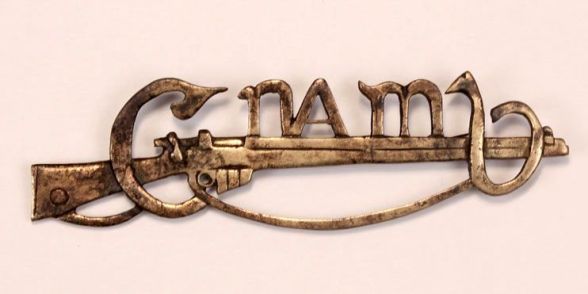
Cumann na mBan is born

On Thursday, April 2nd, 1914, about one hundred women strolled into Wynn’s hotel in Dublin at four o’clock in the afternoon for the first of Cumann na mBan’s many meetings. The Irish Women’s Council had a lot to discuss but the one thing almost all the ladies present had in common was a devotion to Ireland and a desire to serve it.

Continue reading

Love, Marriage, and Immigration

A few months ago, I shared a love story.  My dear friend Jody found the man of her dreams through the magic of technology. Unfortunately for the two of them, Kevin was half a world away in Raheny on the outskirts of Dublin and Jody was here in California. Trips between the United States and Ireland can get pretty expensive relatively quickly. At some point in the future Kevin might have moved away from Raheny but he did not want to come to America at all. That was never in the plan. However, even the best laid plans change and he did end up coming here for Jody. At first, everyone on both sides of the puddle worried a bit but there was no need. Kevin is delightful and Jody has never been happier. I was thrilled for them when they got married a few months after his arrival at San Francisco City Hall and it has been my privilege to watch them grow into an amazing couple.

Continue reading

2016 take 4

Oh Sinn Fein…

You are making the centenary pretty hard on those of us who live over the puddle and can’t spend 8 weeks in Ireland.

Continue reading

Jennie Wyse Power

It’s rare that a woman can juggle an immense amount of political power, a restaurant of her own and a family of four children. But Jennie Wyse Power did all this and more, at a time when most women weren’t even getting an education. She was an Irish superwoman and an unapologetic suffragist who passed away on this day in 1941.

Continue reading

Remembering Agnes O’Farrelly

Agnes O’Farrelly was a mighty woman in the realm of aademia during a time when that was highly unusual. She was a suffragette committed to improving the role of women in society and a staunch supporter of the Irish language. She has the important distinction of being the first woman to publish multiple novels in Irish. She was not a native speaker and did not learn it until she went to university – in fact, she was the reason that language lessons were revived there. Eoin MacNeill was her mentor in the language and eventually he sent her to the Gaeltacht area in the Aran Islands to further her education in Irish.  Though she did not speak it from birth, this trip only reinforced her love for it. Eventually, she became a professor in Modern Irish and she continued speaking, teaching, and writing it for the rest of her life.

Ms. O’Farrelly presided over the inaugural meeting of Cumann Na mBan in Dublin, however she did not stay involved for long. While she was in favor of an independent Ireland and a supporter of Irish Nationalism, she felt that the women’s organization should be dedicated to arming and supporting the men of the Irish Volunteers, rather than joining the fight directly. It may seem like a peculiar stance for someone who wanted equal rights for women but she also believed in peace. As Cumann Na mBan became more militant in their own right, she withdrew from her leadership role and returned to academia – still fighting for women and an independent Ireland in her own ways, such as reviving the language and history, becoming an influential member of the Gaelic League and convincing other women to join her.

In 1916, she used her powerful gift of the written word and her scholarly position in an attempt to save her good friend Roger Casement from execution. She started a petition and sent a lot of correspondence but in the end, she was unable to persuade the authorities to spare his life. In 1922, she was part of a group of women who tried to convince the IRA leadership to avoid the upcoming civil war. That too, failed. Despite these setbacks, Agnes O’Farrelly remained influential in Dublin for many years and continued to be one of the most prominent female activists of the time.

Her devotion to the Irish language, to education, and to peace left little room in her life for romantic attachments. She remained an independent woman her whole life and never married. She died on this day, Nov. 5th, in 1951 and was buried in Deans Grange Cemetery. Her funeral was attended by many former colleagues, students, political activists, authors, rebels and the Taoiseach himself. She is remembered for being one of the most profound advocates for the Irish language in recent memory and has been credited for being one of the reasons that the number of women in academia swelled greatly at the time and ever since.

Moore Street Vote

Finally, the Dublin City Council decided to actually vote on the Moore Street dilemma. They have been putting it off as the contention grew to palpable levels and more and more people got involved in the process. At issue was an opaque “Land Swap” which was an idea that involved a lot of special interests, veiled corruption and back room deals – but in the end, the deal was finally defeated yesterday.

Continue reading