Reading headlines from Ireland over the last few weeks was strange because I could have sworn I’d read them before…and I have. Hunger Strike commemorations, anger over parades, riot police protecting interlopers over residents, arson fires at community centers, the birth of new political parties, and spies in the IRA have dominated the media of late. The anger, frustration, and general sense of “what the fxck” that came with it all was a bit stronger in the last couple of weeks than it has been in much of the last few decades. The pictures, headlines, and videos gave me a sense of foreboding and a lingering confusion which kind of felt like I was having a bad flashback. Unfortunately, that was not the case.
Category Archives: Northern Ireland
International day of peace
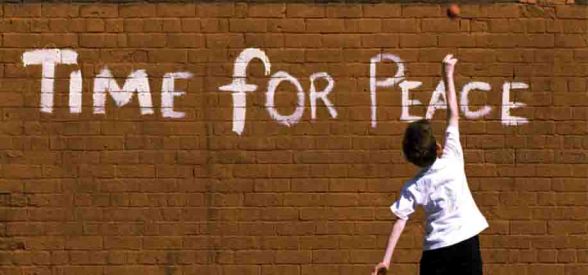
Peace. It’s an elusive concept to many countries, tribes, and populations. The idea that there will ever be a time without war is a dream. It is one that everyone claims to hope for but in reality, hundreds of thousands of politicians, economists, religious leaders, generals, neighbors, soldiers, and contractors work against the concept every day. A world without war is a type of idealism that can sum up the beliefs of bleeding heart liberals, traumatized veterans, moderate conservatives, and true libertarians alike…but it has no place in this world that we live in today, outside of philosophy and imagination. As Robert Heinlein said, “You can have peace. Or you can have freedom. Don’t ever count on having both at once.”
The Death of Innocence
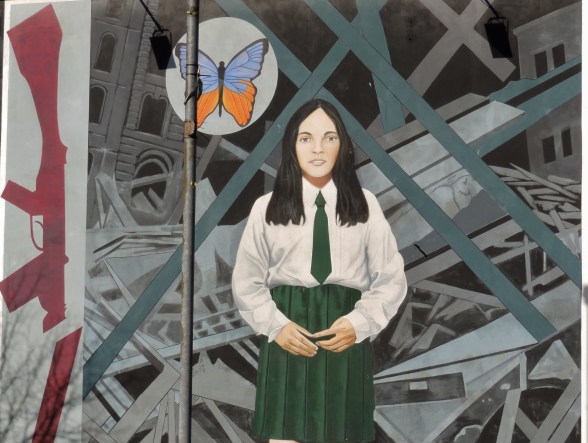
Annette McGavigan was only eleven years old when the Troubles erupted in the North of Ireland. Her home was in Derry, one of the major flashpoints of the Troubles and a stronghold of the Provisional Irish Republican Army. She and the other children of the area witnessed more conflict than any child should within those first few years. She would have seen the British Army rolling into her city, bringing CS gas, rubber bullets, violence and protest with them. Riot after riot broke out and civil rights marches, anti-internment protests, and anti-police incidents were frequent and violent. These things probably became rather commonplace over the next few years for Annette and the other children who were growing up in areas like Creggan, Little Diamond, and the Bogside.
On Sept. 6th, 1971, when Annette was only fourteen, Catholic schools were closed in Derry. Teachers were taking part in a week-long anti-internment program. This left the schoolchildren with free time. Some joined the protests and riots and others stayed in. Once a small riot had ended on the edge of the Bogside, Annette and her friends went out to collect the leftovers of the violence. Children regularly gathered rubber bullets, gas canisters and more after each riot in Derry and this day off from school gave Annette the perfect opportunity to hunt for these dangerous souvenirs. As the young girl in a school uniform picked up an empty cartridge, a shot rang out. She likely never knew what hit her.
Ballymurphy

Forty-five years ago today the Parachute Regimen of the British Army was sent to Belfast to take part in Operation Demetrius, the fancy codename the government used for internment. They were to detain and arrest anyone who they thought was either involved in or supporting the Provisional IRA, but sending the Paras in to do this was rather like setting off a grenade to stop a fist fight. Over the next few days in the Ballymurphy area alone, eleven civilians were killed. Many who were killed were just trying to get away from the trouble and some were shot while helping others.
Honoring Roger Casement

One hundred years ago today, Roger Casement was executed at Pentonville Prison in London. In record time, Casement had gone from being a world-renowned humanitarian and a Knight in high standing to a treasonous pervert who was shunned by many of those he once called friends. He was hanged on August 3rd, 1916, for his failed attempt to bring German support and weaponry to Ireland for the Easter Rising and for other “crimes” he committed in his pursuit for Irish freedom.
Casement’s knightly betrayal embarrassed the English government and they were not content to simply kill him.They stripped him of his knighthood and thoroughly destroyed his reputation before making him face the noose. He was the only man associated with the Rising who was killed in this fashion and the only one who died on foreign soil. This was an added insult to someone who had devoted many years of his life to Ireland and its fight for independence.
Tradition
Tradition is a word that is thrown about a lot. It’s used as justification for both good and bad deeds of the past and it’s a word that is often trotted out by hate groups throughout the world in an attempt to excuse their continuing and horrifying behavior. The KKK uses it as a recruiting tool. The Orange Order uses it as a weapon for blackmail and destruction. Other groups use it as well. Politicians use it to garner votes. Parents use it to pressure their children. But tradition is an outdated ideal that doesn’t exist anymore on many, many levels and it’s time to let some of it go.
Living Voices
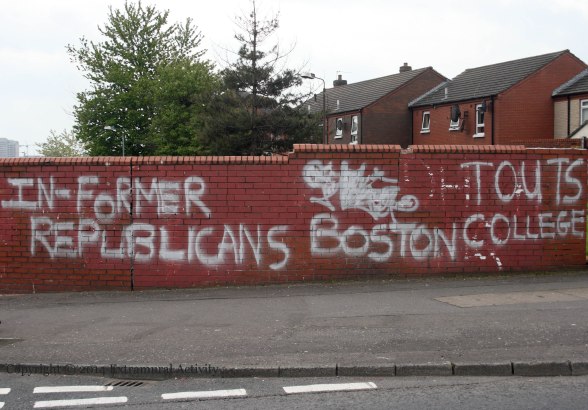
Voices from the Grave is the topic of the day, or rather another result of its existence is. The bestselling book made headlines when it was published and not just because it was a gripping, page turner. It made headlines because almost as soon as it was published, it sparked off terrible controversy, a multitude of investigations, and court battles that continue to this day. In fact, now there’s a whole new chapter.
Back Home In Derry

I arrived in Derry during a downpour, even though the sun was still peeking through the gathering storm clouds. By the end of the trip, I felt like the weather was a perfect metaphor for the city itself. Derry is rare. It is dark, but light pierces through it. It is grey but full of color. It is gathering and ready, but still and waiting. It is tragic and beautiful. Derry is a very special place.
(London) Derry

My trip to Derry can’t be put into one post. There’s just too much to the city to compress it into one little tale and it is too special to me. It started when I bought a ticket to ‘Derry’ and the bus driver said he didn’t know where that was, but that he’d be happy to drive me to ‘Londonderry.’ This city is a complicated place, full of pride and controversy. Unlike it’s neighbors in the north, it has no towering, man-made “peace” walls, but it remains segregated and even its name is still hotly contested, as I learned that day. Its Loyalist population feels like its culture is under attack and being stripped away, just as they do in other parts of the region. This post is about their side of the river Foyle, in the town that many of them still call Londonderry.
Memories of Belfast
My body is rebelling against being thrown back into the States and I caught a vicious cold on the flight back from Ireland. This cold, on top of the jet lag, culture shock, and come down after such a mind-blowing holiday has left me quite speechless. I have a lot of catching up to do for sure and a lot of processing to do as well.
 Choosing the Green
You must be logged in to post a comment.