Dear America
I know that our country is in trouble and that many of you are exhausted and super angry about how things are going down. I know how many problems we have and that everything from jobs to race relations have stalled in the last few years. It leaves many of us divided, frustrated, and looking for new possibilities and directions. I know our system is broken and skewed, and I know that if you have made up your mind, I won’t change it by anything I write, do, or say. That is not the point of this post. This one is for those who are willing to read with empathy and reason. Those who understand that I’m not another voice telling you what to do, but one that is begging you to listen….to everyone.
Irish Women’s Franchise League
Ireland has always had more than its fair share of feisty women. By 1908 there were already numerous Suffragist groups in Ireland, full of women who wanted equality, the ability to vote, and more freedoms. Many of these groups focused on petitions, publicity, and spreading their message through polite channels and discourse, and they attracted many prominent socialites who used their influence to further the cause. This was not good enough for Hanna Sheehy Skeffington, her husband Francis, and their radical friends. 108 years ago today, they founded the Irish Women’s Franchise League, a group dedicated to equal rights that used agitation and action to spread their message.
The struggle for equality

Women have been fighting for equality and recognition for centuries. In Irish history, women have always been seen as supporting cast members, fundraisers, nurses, etc. and safely put in the appropriate roles for their gender, whether they could do more or not. This has been the case for years and years and only now is that idea starting to be debunked by historians…but the historians devoting themselves to elevating the roles of women are mostly female. Myself included. Continue reading
The Party’s Over
Reading headlines from Ireland over the last few weeks was strange because I could have sworn I’d read them before…and I have. Hunger Strike commemorations, anger over parades, riot police protecting interlopers over residents, arson fires at community centers, the birth of new political parties, and spies in the IRA have dominated the media of late. The anger, frustration, and general sense of “what the fxck” that came with it all was a bit stronger in the last couple of weeks than it has been in much of the last few decades. The pictures, headlines, and videos gave me a sense of foreboding and a lingering confusion which kind of felt like I was having a bad flashback. Unfortunately, that was not the case.
Josie McGowan
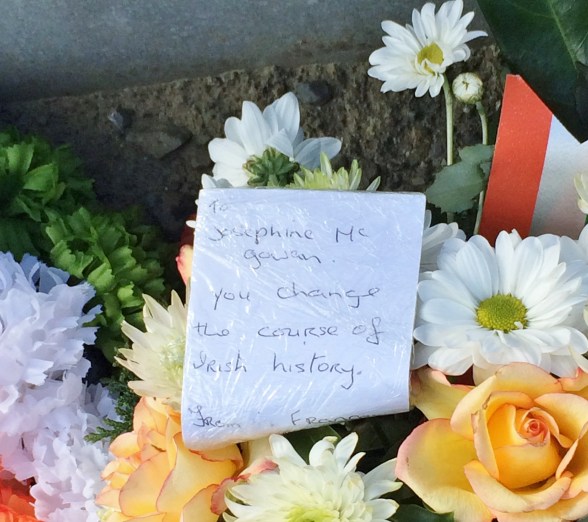
Josephine McGowan was one of the many women who participated in Ireland’s struggle for freedom. She was a member of the Inghinidhe na hEireann branch of Cumann na mBan and was stationed at the Marrowbone Lane garrison during the 1916 Easter Rising. She was one of twenty-five women who reported for duty and according to one witness statement, Marrowbone seemed to have more women than men at the beginning of the fight. Some of the women vanished throughout the week but Josephine stayed until the very end.
San Francisco’s temporary Gaeltacht
Learning Irish is a struggle for me. I’ve tried many programs, and dutifully play with my Irish Rosetta Stone weekly but it is somewhat joyless and difficult without another Irish speaker to practice with. So when the advertisement for the 18th annual Irish Immersion weekend at the United Irish Cultural Center in San Francisco, California came across my radar, I planned on trying to find a way to attend.
This was not my first attempt but the Immersion’s price tag is a bit steep so I’ve never made it before….and probably wouldn’t have made it this time either except that my registration fee was a birthday gift from a dear friend I always go to Ireland with. Kathleen’s theory is that one of us needs to learn Irish in preparation for the inevitable day that we move to Ireland – and I thought I was pretty up to the task. I felt pretty confident about what I already knew when I walked in but I quickly learned that it is one thing to know some phrases or a lot of vocabulary and another altogether to be able to carry on a coherent conversation. I was even more intimidated when I realized that some of ár múinteoirí were prominent and well-known Irish speakers in Ireland, who bring the language to life every day.
International day of peace
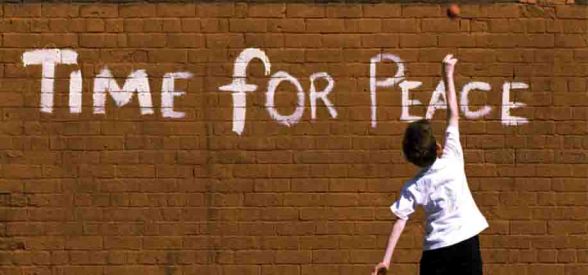
Peace. It’s an elusive concept to many countries, tribes, and populations. The idea that there will ever be a time without war is a dream. It is one that everyone claims to hope for but in reality, hundreds of thousands of politicians, economists, religious leaders, generals, neighbors, soldiers, and contractors work against the concept every day. A world without war is a type of idealism that can sum up the beliefs of bleeding heart liberals, traumatized veterans, moderate conservatives, and true libertarians alike…but it has no place in this world that we live in today, outside of philosophy and imagination. As Robert Heinlein said, “You can have peace. Or you can have freedom. Don’t ever count on having both at once.”
Sidney Czira
There was more than one amazing Gifford girl. Grace has been immortalized in the annals of Irish History and song, but her sisters were just as political, in fact more so, than the tragic bride of 1916. Sidney was one of the first Gifford sisters to get involved in politics, even though she did it quietly and under the assumed name of John Brennan. In a world where women weren’t listened to, Sidney made her voice and her opinions heard.
The Death of Innocence
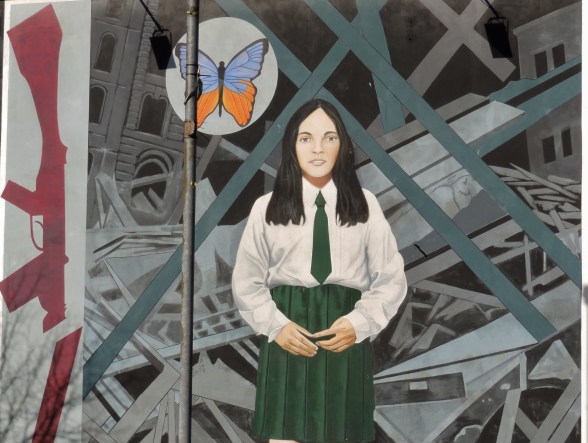
Annette McGavigan was only eleven years old when the Troubles erupted in the North of Ireland. Her home was in Derry, one of the major flashpoints of the Troubles and a stronghold of the Provisional Irish Republican Army. She and the other children of the area witnessed more conflict than any child should within those first few years. She would have seen the British Army rolling into her city, bringing CS gas, rubber bullets, violence and protest with them. Riot after riot broke out and civil rights marches, anti-internment protests, and anti-police incidents were frequent and violent. These things probably became rather commonplace over the next few years for Annette and the other children who were growing up in areas like Creggan, Little Diamond, and the Bogside.
On Sept. 6th, 1971, when Annette was only fourteen, Catholic schools were closed in Derry. Teachers were taking part in a week-long anti-internment program. This left the schoolchildren with free time. Some joined the protests and riots and others stayed in. Once a small riot had ended on the edge of the Bogside, Annette and her friends went out to collect the leftovers of the violence. Children regularly gathered rubber bullets, gas canisters and more after each riot in Derry and this day off from school gave Annette the perfect opportunity to hunt for these dangerous souvenirs. As the young girl in a school uniform picked up an empty cartridge, a shot rang out. She likely never knew what hit her.
 Choosing the Green
You must be logged in to post a comment.