It must be agonizing for a parent to outlive their child. It goes against the natural order of the universe and has to be absolutely devastating. For many, it usually involves anger and hopelessness. Margaret Pearse knew that suffering better than most, for she didn’t lose one son, but two—at once—both executed at the hands of the British for their roles in the Easter Rising of 1916. Despite this, she steadfastly refused to give in to despair and she spent the rest of her life fighting for the free Ireland that her sons had died for.
Continue reading
Introducing Whiskey Wednesdays….
Over on the Facebook site, Wednesdays are all about whisk(e)y. It began with this wonderful article and has taken on a life of its own.
Join me for a fun mix of facts, infusions, recipes, and history to celebrate the Water of Life in all its forms. Head over to Choosing the Green on Wednesdays for your digital cocktails and mouthwatering recipes….
2016 take 4
Oh Sinn Fein…
You are making the centenary pretty hard on those of us who live over the puddle and can’t spend 8 weeks in Ireland.
Top ten Favorite Facts about Constance de Markievicz
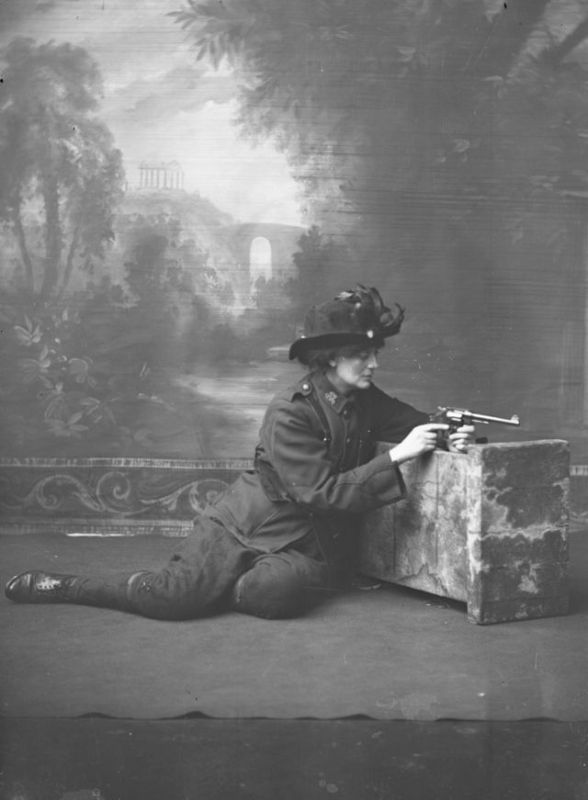
On this date in 1868, one of Irish history’s most famous women was born…in London. Constance Gore-Booth was an aristocratic socialite who fell in love with Irish politics and went on to be one of the most beloved and recognized names in Nationalist history. She fought for women’s rights in Ireland and was a devoted Republican fighter who would have been executed for her role in the Easter Rising, had she not been a woman. Her most famous advice to women was to “Dress suitably in short skirts and strong boots, leave your jewels in the bank and buy a revolver.” In honor of her birthday today, here are my top ten favorite facts you may or may not already know about her life.
The Wilde Lady Jane
Jane Francesca Elgee did a lot of things in her life. She rebelled against her Protestant, Unionist family and became a prolific poet and Nationalist writer. She stood up in court, outing herself as the criminal during a Sedition case to protect the people and the paper she worked for. She spoke at least five languages and translated in each. She threw weekly salons and was known as the most gracious host in all of Dublin. She was a devoted Suffragist and fought for equal rights for women. But what she is best known for is not her prose or her politics. She is best known for being the mother of her children—one in particular—whose works far surpassed those of his mother in a very short time. Indeed, Jane Francesca Elgee will forever be known as Lady Jane Wilde, the woman who gave birth to her son, Oscar.
The Celtic origin of Ground Hog Day
Imbolc, also called Oimealg by the Druids, is the festival of the lactating sheep. Yes, you heard that right. It is derived from the Gaelic word oimelc meaning ewes milk. At this time of the year, many herd animals have either given birth for the first time of the year or they are just about to. It’s the first breath of Spring and it marks the center point of the dark half of the year. It is the festival of the Maiden and from February 1st to March 21st, it is her season to prepare for growth and renewal. On Feb. 1st, Brighid’s snake emerges from the womb of the Earth Mother to test the weather (Ground Hog Day anyone?) and in many places the first flowers begin to pierce the grounds of winter and start to bloom. Brighid’s Crosses are made and exchanged as symbols of protection and prosperity in the coming year. Home hearth fires are put out and re-lit, and candles are lit and placed in each room of the house to honor the re-birth of the Sun. It is a festival of fire and renewal and one of the first celebrations of Spring.
Continue reading
Collision
Brilliant writer, Great rider, and extended family. Whiskeypants got the short end of the stick. Please click on the fundraiser link and help if you can…

Hello, Gentle Reader. Been a while since I blogged, and odds are you know why, but I’m gonna tell the story like you don’t, so you will just have to sit and listen with the rest of the kids.
On January 19th (that’s the day after my birthday, for those of you playing the Whiskeypants! Home Game™), I decided that I wanted a sandwich from Berkeley Bowl, where the sandwiches are sufficiently delicious that I was willing to brave one of the mid-level circles of Hell to get one. I picked up a few other things, hopped back on Clyde, my beloved motorcycle, and moseyed back home. I was enjoying the sunshine and the clear roads, taking it slowly because I hadn’t been out in a bit and wanted to enjoy it.
If you you have never ridden a motorcycle, you might not realize how hyperaware bikers tend to be of their surroundings. That’s not…
View original post 608 more words
Mairead Maguire
And now for a modern day Irish woman. Mairead Maguire was born in Belfast, 71 years ago today. Her entry into the world of political protest did not come without a price. A family tragedy in 1976 fueled her desire to bring change to her war torn community. Her nephews and niece were hit by a car when the driver (a (P)IRA paramilitary) lost control of it after being shot by the authorities. Betty Williams, a witness to the accident, capitalized on the tragedy using it to gather women in the community to march in protest of the ongoing violence and paramilitary activity in their neighborhoods. Mairead joined her. It was a surprising success and “Women for Peace” was spontaneously born. The second march that went to the graves of the children took place only a few days later and it included over 10,000 women—both Catholic and Protestant—an unusual feat in such a polarized place and time. It was attacked by the paramilitaries which only brought the women more press and support for the next march and the movement continued to grow. Mairead and Betty changed the name of their group to the gender-neutral “Peace People” and they continued to parade for peace between Republican and Loyalist factions.
A Son is Born
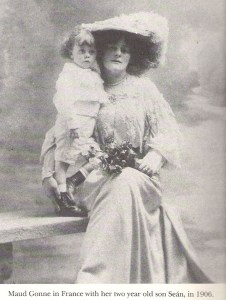
On this day, January 26th, in 1904, Sean MacBride was born to Maud Gonne and John MacBride in France. He went on to follow in his parents’ Irish Republican footsteps becoming a soldier, politician and the Chief of Staff of the IRA, fulfilling their wishes to have an important and capable son. They agreed on almost nothing else, but they did want their son to believe in and work toward a free Ireland just like they had for most of their lives.
Sean was the apple of his mother’s eye and today would be his 111th birthday, which is hard to imagine when you see this picture, taken when he was 2.
 Breithlá Sona
Happy Burn’s Night
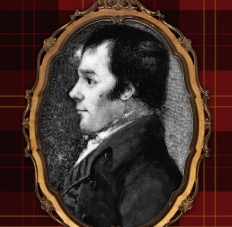
Raise a dram or two of your favorite Scotch and throw some pipes on for a few this evening in honor of Mr. Robert Burns. It’s Burns night – and even if you think you don’t know who he is, I guarantee you’ve drunkenly slurred out his poetry on at least one New Year’s Eve in your life. (Here’s a hint: Among many other things, he also wrote Auld Lang Syne)
On Burns Night, the poetry should flow freely, the pipes should play loudly, and there should be at least one Ode to a Haggis. You can blame the Scotch for that. If you can find a Burns Supper where you are, I recommend going at least once.
In lieu of a Burns Supper, get to know some of his poetry. It is one of Scotland’s greatest exports. Here’s another quick verse of another great poem of his that I love to bits:
“Had we never lov’d sae kindly,
Had we never lov’d sae blindly,
Never met — or never parted —
we had ne’er been broken-hearted”
Happy Burns Night!
 Choosing the Green
You must be logged in to post a comment.