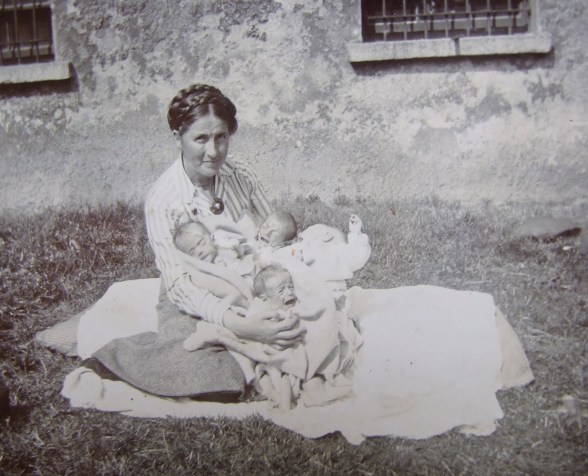
Helena Molony

Today in honor of Ms. Helena Molony’s birthday, I give you the bit I wrote about her in my new book; Petticoats, Patriots, and Partition.  She was a pretty awesome lady, and one of many that I celebrate in the first section of the book. I hope it tempts your curiosity about the rest of them too. If it does, the book is available worldwide through Amazon and nationally through Barnes and Noble, other bookstores, Amazon, and Blurb. Enjoy!!

Continue reading

Save Moore Street (again)

I seem to have written a piece about Moore Street in Dublin every four to six months or so, since my last visit there. As the (de)construction looms ever closer, it has happened a bit more frequently. The protection of Moore Street is one of my favorite Irish causes, and I spend a good deal of time reading through mind-numbing transcripts and watching videos and news from afar as the government tries to weasel a new mall or hotel into what should be a sacred and protected space.

Continue reading

We’re all mad here

On this day in 1757, “St. Patrick’s Hospital for Imbeciles,” Ireland’s first mental hospital, was opened in Dublin. The name has changed throughout the years to the simpler St. Patrick’s Hospital – but when it opened it was a hospital designed to house the insane and afflicted. It was the final gift that Jonathan Swift (of Gulliver’s Travels fame) bestowed upon the world, and it was created at his request with money left for it in his will.
Continue reading

The Mighty Kathleen Lynn

Kathleen Lynn was an anomaly among women at the turn of the century in Ireland. She was extremely well educated, which was very rare for females at the time, and she was a doctor – not a nurse – which was an incredibly unusual profession for a woman of that era. She faced discrimination and difficulty in the field for many years due to her gender and it made her a strong suffragist and a very tough woman.

Continue reading

Lawyers, Guns, and Collusion

Lawyers are a group of people in an occupation that everyone loves to hate. Endless jokes use them as the punchline, there’s an eternal stream of songs and stories about how evil they are, and it seems that no matter which area of law they practice, they’re always hated by someone. It takes a thick skin, an obsessive attention to detail, endless patience, and a lot of manipulation to succeed in the field. In the North of Ireland, the law not only takes over their lives, but sometimes it ends them. It is not a job for the weak.

Rosemary Nelson lived her life trying to make the world a better place for everyone. She lived in a hotbed of Sectarianism during the Troubles but she represented people on both sides of the religious divide in small matters for years and went to bat for those that other people would ignore. She fought on behalf of the Garvaghy Road residents during the long Drumcree conflict in nearby Portadown, which thrust her firmly into politics and ruined any rapport she had with the Royal Ulster Constabulary (the RUC). That relationship only got worse when she decided to represent Colin Duffy, a man accused of killing their officers. That case would change her life and it ultimately took it as well. In the North, there have been many cases where certain factions of the population are unable to separate the lawyer from the criminal, and the assumption is that they’re one and the same. Even before she got Duffy released on a successful appeal, she was getting death threats from officers and Loyalist paramilitaries alike, just for representing him. There were twenty serious and documented death threats over a two year period, and two of them allegedly came directly from police officers. She dutifully reported each one, but was consistently refused protection by the police and the government, even after the United Nations’ Special Rapporteur stated on television that he felt her life was in danger. He recommended that the British government take action. They chose not to. She eventually testified about the threats before a committee of the United States Congress that was investigating human rights in the North of Ireland. It seems everyone was concerned about Nelson, except the very people whose job it was to take care of her.

The British government, MI5, and the RUC did not investigate any of these threats, nor did they ever give her protection. In case you feel like they didn’t do anything, rest assured that they did – they put Rosemary herself under surveillance for criminal activity. Between 1994-1998 security reports about her life increased until her home was bugged. She was seen as a criminal, rather than an attorney; and a threat, rather than a victim.

Rosemary Nelson was killed when a bomb planted under her car exploded on March 15th, 1999. The Red Hand Defenders, a Loyalist paramilitary group that was mostly made up of members of the LVF and the UDA, took credit for her assassination. Many of the members of the Red Hand Defenders were also RUC officers and British Army soldiers – people who belonged to the same organizations that had ignored her complaints for years, even while they were watching her every move. Strangely though, they didn’t have much in their records to investigate when it came to her death, despite all the surveillance – at least nothing they were willing to share with anyone else. There were a few inquiries into her murder and the final reports stated that all three agencies (the Government, MI5, and the RUC) had failed to protect her and had helped “legitimize” her as a target in the eyes of Loyalist paramilitaries. It also stated that these agencies and their employees had publicly threatened her and that their intelligence information had been “leaked”, making it easier for the murderers to get to her. It noted that numerous requests and warrants for surveillance footage or reports had been ignored completely. The inquiry couldn’t prove definitively that anyone in these departments had directly been involved in her death, but it certainly couldn’t prove otherwise either and their report clearly stated that investigators could not rule out the possibility that officers or soldiers might have aided the murderers.

Nelson was awarded the Train Foundation’s Civil Courage Prize after her death – an award that honors “extraordinary heroes of conscience.” Her humanitarian status was celebrated and mourned world-wide in the aftermath of her murder – and while some Loyalists still see her as a symbol of hate, those who she spent her life trying to help remember her as an incredible and determined woman, who wanted justice for everyone whether they were young, old, Catholic, or Protestant. Today would be her birthday and I humbly suggest doing something wonderful in her honor. Help someone in whatever way you can, large or small, friend or stranger. I’m sure she’d want to be remembered in that way, rather than for the horrific way she was targeted, abandoned, and killed.

The Idealism of Roger Casement

Congo Casement. Comma Casement. Sir Casement. These names and more applied to Roger Casement, over the course of his life. He was born on this day in 1864, and by the time he was executed, he had gone from being a world-renowned humanitarian, a British Consul, and a favored knight to a social pariah, an arms dealer, and a dastardly rebel. If the road to hell is paved with good intentions, there are many – and Roger Casement traveled more than a few.

Roger Casement was born outside of Dublin and had a strict, Protestant father. When he was three, his mother secretly had him baptized as a Catholic and by the age of thirteen, both of his parents were dead. He and his brother were sent to relatives in the North, County Antrim, and he considered that his home, even though he spent much of his life away from it.

Casement left Ireland at sixteen to find work. He took a job at a shipping company, and spent a great deal of time in Africa. He learned more than one language there and he began trying to improve the treatment and the communication between the native population and the foreign traders. He then went to work for the English Government, first by clerking in the Foreign Office and then as an appointed British consul. He was tasked with reporting about any human rights violations that he was witnessing first hand. He traveled all over Africa talking to residents and viewing destroyed villages before writing a blistering account of imperialism and its impact on the native population. It was controversial and rejected outright by the traders, his former boss included, but it provided other humanitarian groups with enough information to mount an international campaign against King Leopold of Belgium, the man who claimed to rule the area. The campaign was effective and eventually led to the king relinquishing his hold on the area. It was one instance where his idealism worked out.

When he returned to England, he continued his humanitarian efforts by founding the Anti-Slavery Society.After that, he was sent back to Africa to make sure that improvements had been made, and he was disheartened to discover that the horrific abuse continued. He continued to chronicle the plight of the natives and was eventually knighted for his work and his activism on their behalf.

During a break from Africa,  he visited Ireland and joined the Gaelic League. He idealistically tried to learn Irish, but despite a gift for languages, he never got a grasp on it. He met with leaders to petition them for their support in Africa, but Ireland had its own problems and the meetings weren’t fruitful. However, in the process he developed an infatuation with Sinn Fein and their commitment to a Free Ireland. As his fascination with the idea grew, he retired from his position in the English government and devoted himself full time to the cause of Irish Freedom. He co-founded the Irish Volunteers and used his formidable writing skills to help pen their manifesto. He then traveled to America to raise funds among the exiled Irish. He was naive and he imagined himself a sort of ambassador for Irish Nationalism. He did not realize that the Irish Republican Brotherhood had already quietly taken over the Volunteers and were excluding him from their plans. He was also too wrapped up in his travels to notice that his activities were no longer as covert as he thought. The IRB were watching him to make sure he stayed out of the way, and the English government was keeping tabs on his travels and his contacts as well.

Despite the prying eyes, he donned a disguise and traveled to Germany in order to secure funds and arms for Irish freedom fighters. He spun it as a mutually beneficial agreement between countries, trying to convince the Germans that if they supplied arms to Ireland, the Irish would divert England’s attention away from them and their war. The request was not as well-received as he hoped, but he secured a promise from German authorities that said, “The Imperial Government formally declares that under no circumstances would Germany invade Ireland with a view to its conquest or the overthrow of any native institutions in that country. Should the fortune of this Great War, that was not of Germany’s seeking, ever bring in its course German troops to the shores of Ireland, they would land there not as an army of invaders to pillage and destroy but as the forces of a Government that is inspired by goodwill towards a country and people for whom Germany desires only national prosperity and national freedom“.

He spent the rest of his time there trying to raise an Irish Brigade out of the prisoners of war that Germany held. He had been sure that many Irish soldiers would jump at the chance to fight for Ireland, but he was sadly mistaken. After months of pitching the idea, he finally admitted defeat and accepted the much smaller arms deal that the Germans offered. It didn’t include any support beyond the weapons and was nowhere close to the agreement he had been hoping for.  Meanwhile, he learned of the planned uprising and he hoped to get them to cancel it, because of the inadequate aid from Germany. Because he had been kept in the dark the entire time, he had no way of knowing that it would go ahead with or without the weapons…and with or without him.

Casement made it to Ireland in a submarine, but the arms that came by boat did not. They were intercepted by the English, who immediately arrested Roger for treason, sabotage, and espionage. He missed the Rising altogether and heard of it while languishing in the Tower of London. If he thought that his life of service would keep him from prison, he was wrong. He was stripped of his knighthood and left to his own devices – neither the English or the Irish would help him and no rescue attempts were made. His important friends were vocal but only until the English shared his “Black diaries” publicly. They allegedly chronicled his homosexual adventures throughout the world. They made him look more like a predatory sex tourist than an idealistic humanitarian and they destroyed any hopes for support or leniency. Homosexuality was nearly enough to get someone killed already in that day and age, and when they added a charge of treason to it, well – it was only a matter of time before death came calling. He was hanged on August 3rd, 1916 – making him the only man connected to the Rising who was executed in that fashion, and the only one who was killed on foreign soil. His remains were repatriated to Ireland fifty years after he was killed, but they were not allowed to be brought North, so he lies in Glasnevin Cemetery in Dublin….not too far from where his life began.

There are a lot of what ifs to his tale. What if the arms had landed? What if he had been involved in the planning of the Rising? What if he had been able to bring reinforcements that were culled from the P.O.W.s in Germany? What if the diaries were fiction? There are many who still believe that they were fabricated, or at least exaggerated by the English in order to allow his execution. What if homosexuality had not been such a grave charge at that time? If his powerful friends and activists had been supportive throughout the trial and imprisonment, maybe he would have lived.

Roger Casement would have been one of the most important men in Irish history, regardless of his sexual orientation, if any one of his idealistic plans had come to fruition. He still has a large place in it, despite the fact that they didn’t. His goals were always intertwined with helping people achieve a better life and teaching them to fight the over-reaching powers that be. He was an idealist and was always rooting for the underdog – even when he was one. His short life was full of naivete and the best intentions – and if anyone had truly trusted and followed him, Irish history may be very different today. Even with the stain of the diaries hanging over him, his story has persevered and as we all move toward a more open society, maybe some day he will be remembered on equal footing with the rest of the leaders of that time.
The Saville Report

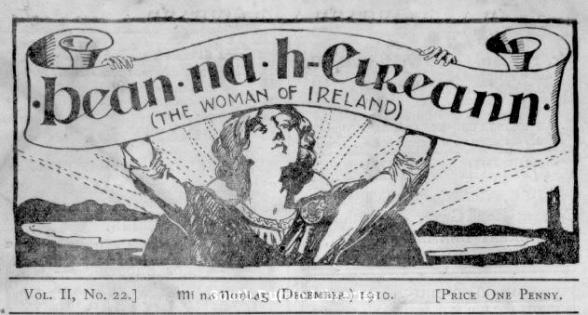
It was an investigation that took twelve years and over £200m to complete. The Bloody Sunday inquiry, as it was originally called, produced over ten volumes of analysis and led to a comprehensive and glaring report by Lord Saville that was released five years ago today. It caused shockwaves throughout the North of Ireland and it forced the Prime Minister to make a formal and public apology for the actions of the British Army in Derry on one fateful Sunday in 1972.

Continue reading

Mairead Maguire

And now for a modern day Irish woman.  Mairead Maguire was born in Belfast, 71 years ago today. Her entry into the world of political protest did not come without a price. A family tragedy in 1976 fueled her desire to bring change to her war torn community. Her nephews and niece were hit by a car when the driver (a (P)IRA paramilitary) lost control of it after being shot by the authorities. Betty Williams, a witness to the accident, capitalized on the tragedy using it to gather women in the community to march in protest of the ongoing violence and paramilitary activity in their neighborhoods. Mairead joined her. It was a surprising success and “Women for Peace” was spontaneously born. The second march that went to the graves of the children took place only a few days later and it included over 10,000 women—both Catholic and Protestant—an unusual feat in such a polarized place and time. It was attacked by the paramilitaries which only brought the women more press and support for the next march and the movement continued to grow. Mairead and Betty changed the name of their group to the gender-neutral “Peace People” and they continued to parade for peace between Republican and Loyalist factions.

Continue reading

Jennie Wyse Power

It’s rare that a woman can juggle an immense amount of political power, a restaurant of her own and a family of four children. But Jennie Wyse Power did all this and more, at a time when most women weren’t even getting an education. She was an Irish superwoman and an unapologetic suffragist who passed away on this day in 1941.

Continue reading

Souvenirs

One year ago today I returned to the U.S. from a trip to Ireland. When we went there, we had no itinerary, no lodging lined up, and no plan at all. We had our luggage and a rental car and we just went wherever whimsy sent us…and that was mostly the west, Dublin, and the coast. It was a scary and amazing way to travel and we found many things we would have missed if we had scheduled things or tried to plan. Because it was December, I had a heavy coat. I also had a simple raincoat, with down lining and a hood. It came in very handy on the top of the Cliffs of Moher and when we decided to go to Achill in winter. (Here’s a tip: nothing is open in winter on Achill. Seriously.)

Here in the US, I don’t really use a heavy raincoat because I live in Oakland, CA. While it is not entirely the sunshine state, most of the time I can get away with a regular coat and an umbrella. I kept the raincoat as a reminder of my trip and whenever I saw it hanging in the closet it made me smile with nostalgia and long for another visit.

Continue reading