Berkeley

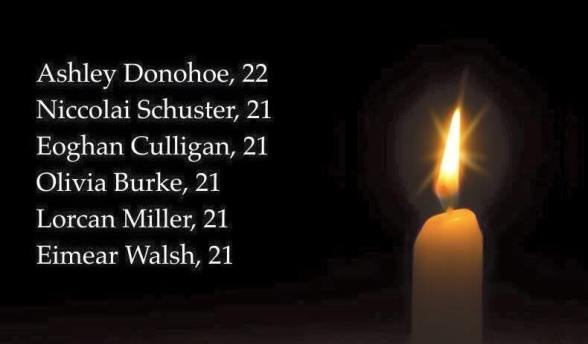
It’s rare that I get to post anything that is located close to me in this blog. Being so far away from what I usually write about means that while I’ve visited most of the places I feature, they are quite far away by the time I get to write about them. This one is close to home in many ways, and I am saddened to write about it at all. You see, I live very close to Berkeley, California, and I worked there for years so the recent tragedy there is very close to my heart.

Continue reading

The Big Irish Fair

When the universe decided to plant The Big Irish Fair right in the middle of my birthday weekend, it was giving me a gift. The festival may not have the most original name on the planet, but it certainly seems like there’s truth in their advertising. There are 15 different stages for music – everything from Traditional Irish seisiúns and Bagpipe Battles to more modern Irish rock bands, including one of my favorites – the Young Dubliners.

Continue reading

Happy Birthday to Me!

This blog, Choosing the Green – Roghnú Glas is officially one year old today. My, how the time flies…

When I began this little project, the intention was to have a little place to put all of my Irish heroes, stories, news and photos in one place—and that is exactly what I’ve done—but I did not expect, support from other larger blogs, a Facebook page or any readers at all, for that matter. I just needed a proverbial tree to carve my love into and I didn’t really expect it to grow like it has over the last year. I am humbled by your interest, your  comments and your support and I thank you from the bottom of my heart.

Continue reading

The Foreign Fighters of 1916

Now that some of the Women of 1916 have been highlighted, it’s time to move on to another group that has been largely  left out of the history books when it comes to The Easter Rising. Many brave rebels are celebrated throughout the world every year at this time…but what is ignored by most is that the fighters were not exclusively Irish. There were more than a hundred foreign soldiers who assisted in the Rising and while some were 2nd or 3rd generation Irish there were others who had no Irish blood whatsoever. They came from all over Europe and the rest of the world to join forces against the English and were some of the fiercest warriors in the conflict.

Continue reading

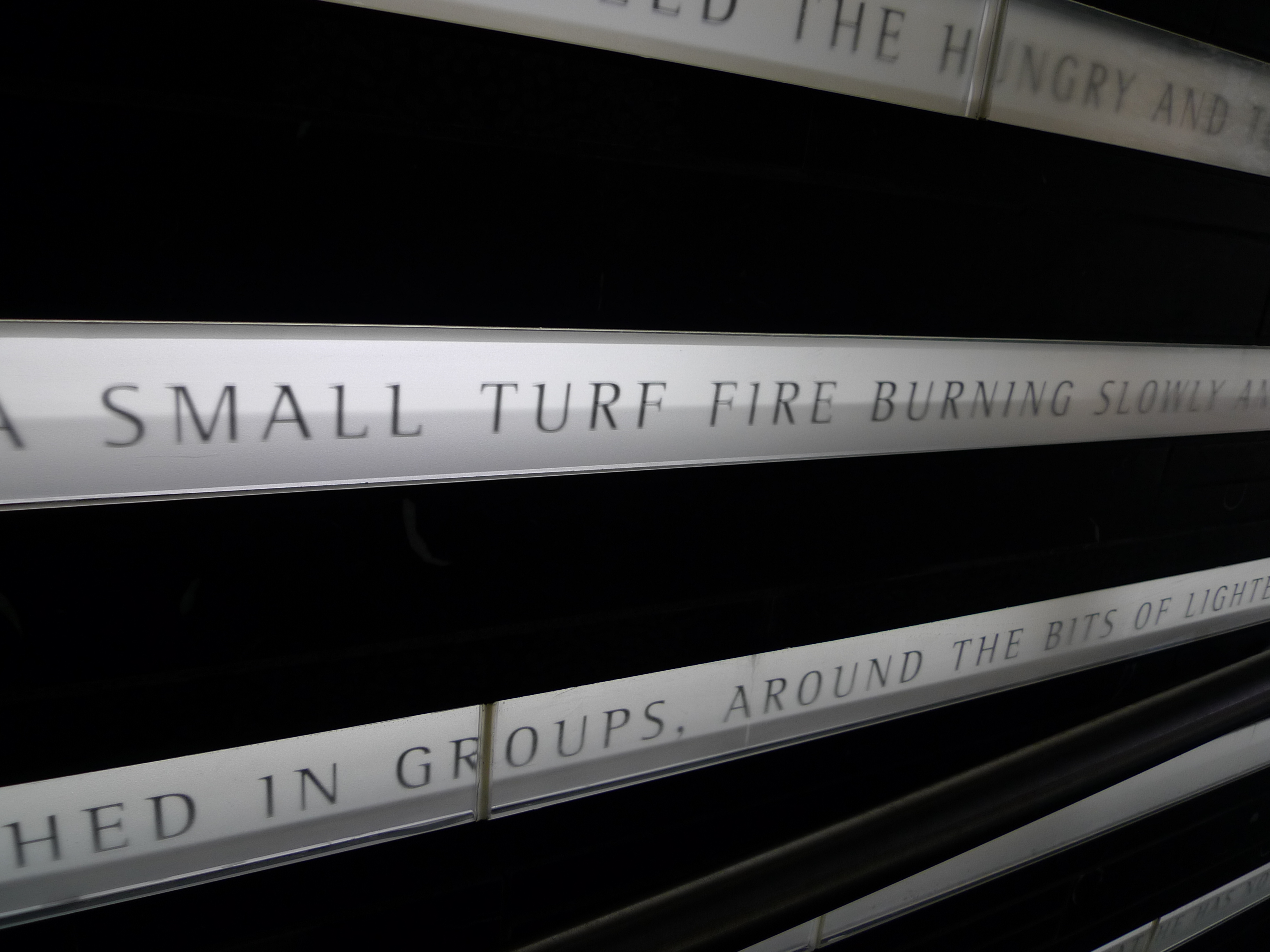
A small Turf Fire Burning…

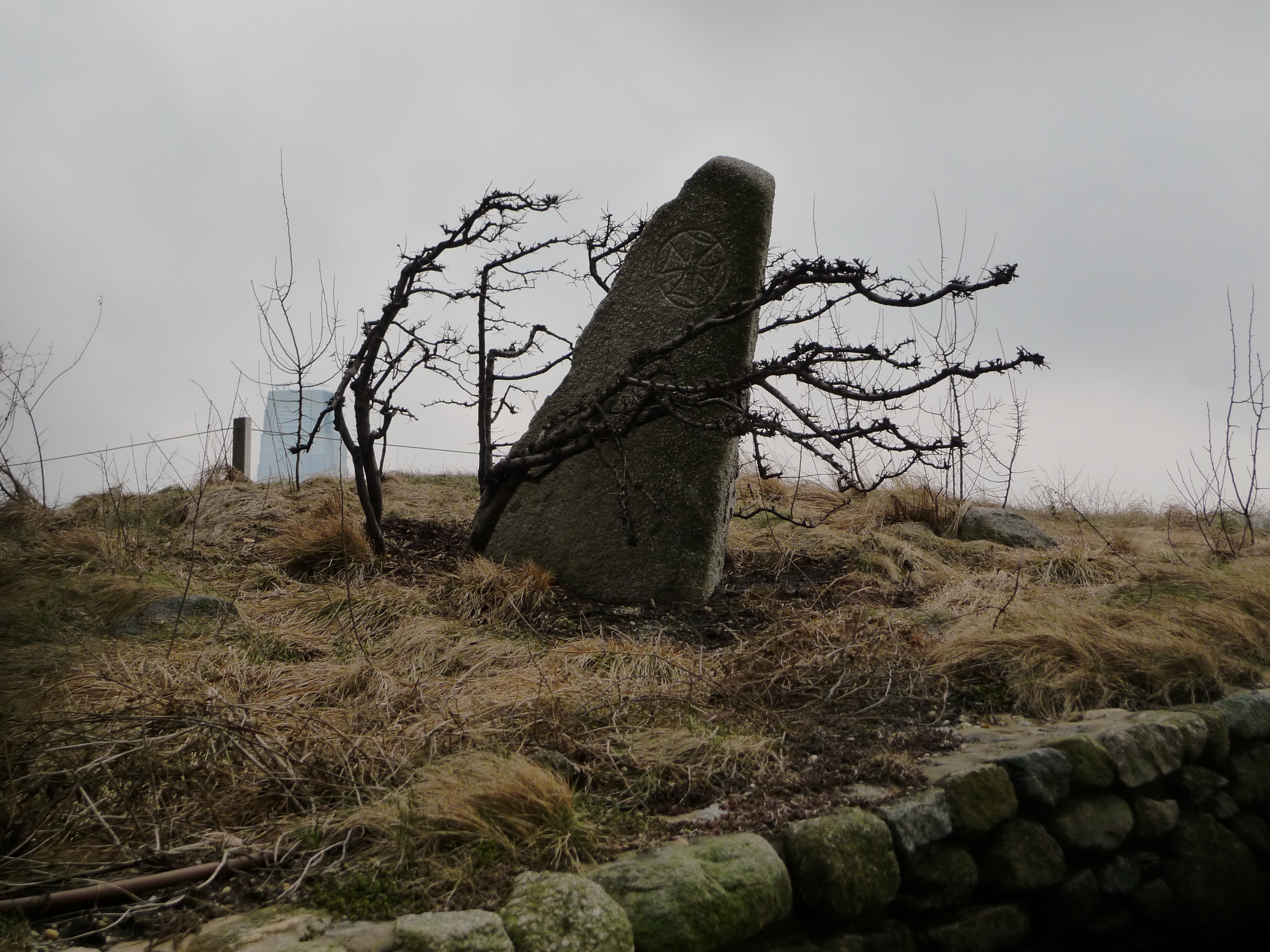
The jet lag has kicked in and I’m having some exhaustion-related come down from my travels, but before I crash, here are just a few more shots of the amazing and poignant Irish Hunger Memorial in New York City. More photos and tales to come soon as soon as I catch up on my sleep.


P1090077 P1090084 P1090085 P1090090 P1090095 P1090097 P1090100 P1090105 P1090119

It really did feel like Ireland there for a minute…

The Countess in New York

She stepped off the boat to a throng of admirers and reporters. The Countess was a romantic heroine that had captured hearts and minds across the world and America was no exception. When Constance Markievicz arrived with Kathleen Barry at the Cunard pier in New York City on this day in 1922, a massive crowd greeted her with adoration and cheers.

Approximately 50 journalists and photographers had already boarded the ladies’ boat, the Aquitania, when it was stopped at the quarantine station. The Countess captivated every one of them and their glowing reports spread out all over the nation. They described everything in the greatest detail about her clothing and style and marveled that such a small woman could have done so much in the cause for Irish Freedom. They ate her stories up completely, as did her audiences whenever she spoke.

Continue reading

Bring Back the Snakes!!

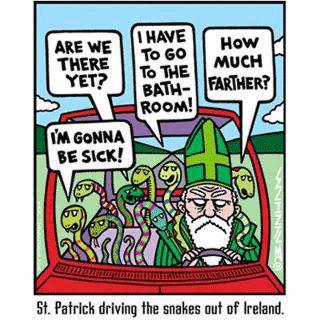
St. Patrick’s Day. Every year people celebrate this day by punishing their livers and making poor wardrobe choices, with stereotypical and sometimes truly awful T-Shirts. The fake accents yelling out over loud music get worse and worse as the pints keep coming and if you’re lucky, you may get a little Irish parade or traditional music in there somewhere too. It is not the solemn celebration one would associate with a Saint, but rather one that is decidedly sacrilegious in the eyes of the church. And you know what? I absolutely support it, (with the exception of the racist and stereotypical garb and the fake accents,) because anything that removes the original intent of this holiday is just fine by me. After all, this is not a celebration that has anything at all to do with snakes, but rather it is one that celebrates the defeat of free thinkers and ancient traditions. St. Patrick (who was NOT Irish, by the way) has the dubious claim to fame of driving all the snakes out of Ireland…but science has confirmed that there were no snakes at the time. Of course, Christianity uses the metaphor of snakes to talk about evil temptations and the devil himself….and following that metaphor, Patrick driving the snakes from Ireland means he drove out what he considered to be the wickedness – he conquered Pagan Ireland.

Continue reading

Gratitude

Today marks over 100 posts in this wee little dream of a blog. It gives me great pleasure and I’m so happy to keep being inspired enough by my travels and my love of history to keep churning these entries out. I’m also humbled and grateful for those who read them, and who by doing so, keep me on my toes and learning. This blog has grown from a mere place for all my ramblings to a constant cycle of learning, reading, writing, and sharing and I can’t ever seem to find flowery enough words of appreciation for it.

Continue reading

I do other things too…(shameless self-promotion)

One of my other passions aside from all things Irish is jewelry making. I usually make larger, more dramatic pieces but this delicate gem is inspired by the Irish wedding I am lucky enough to attend tomorrow. It’s too bad the bride said she didn’t need jewelry. Garnets and sterling silver are always such a lovely combination.

Garnet Celt

Continue reading

July 2nd belongs to The Irish Brigade

Today I give you a story of the Irish in America during the Civil War. Throughout American history the Irish have always had a connection to discrimination – first being discriminated against  (No Catholics, No Irish) and then gaining a generalized reputation for discriminating against others. Part of this stems from their own persecution that developed into a deep distrust of anyone outside of their own communities. Some of it is just the age old misconceptions of the Irish in general – that they’re all devoted to shenanigans, violence and little else.

If you buy into those generalizations, you may assume that the Irish Brigade fought for the Confederacy in the Civil War. Thankfully, you’d be totally wrong. They were a highly effective tool for the North, though many were conflicted and unsure of their allegiance. The Union promised them more freedoms and rights, even if they had to fight for them – but many also worried that emancipation would involve more people who would challenge them in their struggles to find even the lowliest of jobs. But in the end, the Fighting Irish committed to the North and when they did, the North gained a company of men that were brilliant fighters who seemingly would never give up.

The Irish Brigade was nearly decimated more than once but they continued to fight even when they lost more than half their numbers. In the battle of Fredericksburg, their numbers fell from 1600 to a measly 256. It was during that battle that General Robert E. Lee allegedly referred to the Irish company as the “Fighting 69th”. They bled through some of the biggest battles of the Civil War and were disillusioned, tired, and only about 500 strong on July 2nd, in 1863, when they fought in the battle of Gettysburg.

As they prayed near Cemetery Hill before they went into battle, the soldiers knew that they were grossly outnumbered and likely to die. They made their stand in a place that would henceforth be known as the Wheatfield, where they were part of an attack designed to stall the Confederate forces that were advancing. The Brigade initially forced them back, fighting dirty with all they had – hands, knives, bayonets, clubs, and muskets. It was such a fierce melee that one of their opponents was quoted as saying that it was “the hottest and sternest struggle of the war.” Ultimately, after losing over one third of their already skeletal numbers they were pushed back, but their ferocity had slowed the South enough that the Union line held until reinforcements arrived.

In the end, during the entire Civil War, only 2 other Union brigades lost more people than the Irish. There is a beautiful statue of a Celtic cross with a mourning Irish Wolfhound that’s been raised on the battlefield in Gettysburg to commemorate their sacrifice. Gettysburg is hallowed ground to many but near the cross you can almost hear the battle cry of the Brigade – Fág an Bealach, which means Clear the Way. And the nickname that General Lee had given the unit, has stuck around for more than a century, living on even now. The Wolfe Tones wrote a song about them that the Dropkick Murphys have resurrected and covered. Also, since 1907, the Fighting 69th has been a unit in the National Guard Of New York. They have fought in both World Wars and served with distinction in almost every conflict to this day.

  Gentlemen, thank you for your service.
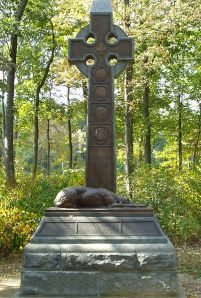
 

In Memorium, Irish Brigade
In Memorium, Irish Brigade