Crashing into the History Books

On May 21st, 1932, Amelia Earhart became the first woman to fly a plane over the Atlantic ocean by herself. She ended up crashing in a field near Derry, rather than landing safely in France as she had intended, but she earned her title nonetheless and became an important symbol and inspiration to women everywhere. Continue reading

The Women of 1916

It is estimated that at least 200 women were involved in the Easter Rising of 1916, many more than previously thought. Their roles varied as widely as the women themselves – and ranged from the traditional fundraisers, cooks, and nurses, to the more unexpected roles of sharpshooters, spies, smugglers, and experts on explosives.  A decent effort has been made over the last few years to give them credit for the part they played in the fight for Irish freedom, but sadly, they are still largely absent from many of the narratives.

Worse still is when a historian refers to the women as “great supporters” or “brilliant fundraisers” or “backbones”. These statements are true, but they still have an air of dismissal even amidst the recognition. They still show women in supportive or secondary roles and ignore the fact that many of them saw themselves as rebels, fighters, and soldiers in their own right – regardless of whether or not there were any men around. Until more historians can acknowledge that, many of the women who continuously risked their lives during Easter Week and in the years that followed, will not get the respect and honor that they are due.

Continue reading

The Countess in New York

She stepped off the boat to a throng of admirers and reporters. The Countess was a romantic heroine that had captured hearts and minds across the world and America was no exception. When Constance Markievicz arrived with Kathleen Barry at the Cunard pier in New York City on this day in 1922, a massive crowd greeted her with adoration and cheers.

Approximately 50 journalists and photographers had already boarded the ladies’ boat, the Aquitania, when it was stopped at the quarantine station. The Countess captivated every one of them and their glowing reports spread out all over the nation. They described everything in the greatest detail about her clothing and style and marveled that such a small woman could have done so much in the cause for Irish Freedom. They ate her stories up completely, as did her audiences whenever she spoke.

Continue reading

Cumann na mBan is born

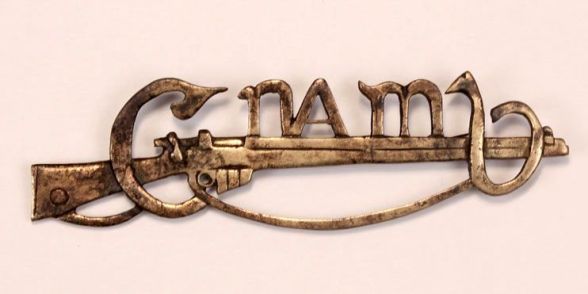
On Thursday, April 2nd, 1914, about one hundred women strolled into Wynn’s hotel in Dublin at four o’clock in the afternoon for the first of Cumann na mBan’s many meetings. The Irish Women’s Council had a lot to discuss but the one thing almost all the ladies present had in common was a devotion to Ireland and a desire to serve it.

Continue reading

Mary Macswiney

A rebel is one who opposes lawfully constituted authority and that I have never done.” So said one of the most devoted Republican women in Irish history, Mary MacSwiney. I’m sure she believed in that statement with all of her heart—as she did a free Ireland—but it’s guaranteed the English did not feel the same way. To them, Mary MacSwiney was the one of the worst and biggest female rebels, not only in Cork but in all of Ireland.

Continue reading

Margaret Pearse, mother of Ireland

It must be agonizing for a parent to outlive their child. It goes against the natural order of the universe and has to be absolutely devastating. For many, it usually involves anger and hopelessness. Margaret Pearse knew that suffering better than most, for she didn’t lose one son, but two—at once—both executed at the hands of the British for their roles in the Easter Rising of 1916. Despite this, she steadfastly refused to give in to despair and she spent the rest of her life fighting for the free Ireland that her sons had died for.
Continue reading

Top ten Favorite Facts about Constance de Markievicz

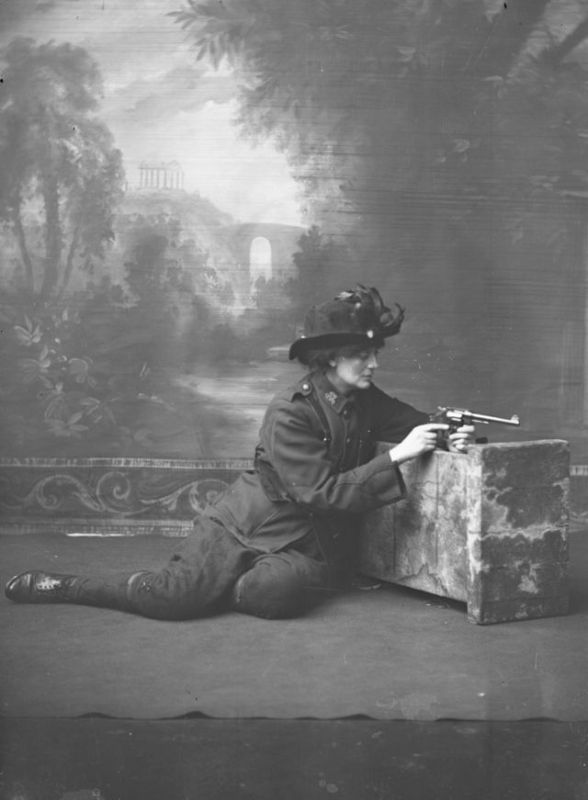
On this date in 1868, one of Irish history’s most famous women was born…in London. Constance Gore-Booth was an aristocratic socialite who fell in love with Irish politics and went on to be one of the most beloved and recognized names in Nationalist history. She fought for women’s rights in Ireland and was a devoted Republican fighter who would have been executed for her role in the Easter Rising, had she not been a woman. Her most famous advice to women was to “Dress suitably in short skirts and strong boots, leave your jewels in the bank and buy a revolver.” In honor of her birthday today, here are my top ten favorite facts you may or may not already know about her life.

Continue reading

The Wilde Lady Jane

Jane Francesca Elgee did a lot of things in her life. She rebelled against her Protestant, Unionist family and became a prolific poet and Nationalist writer. She stood up in court, outing herself as the criminal during a Sedition case to protect the people and the paper she worked for. She spoke at least five languages and translated in each. She threw weekly salons and was known as the most gracious host in all of Dublin. She was a devoted Suffragist and fought for equal rights for women. But what she is best known for is not her prose or her politics. She is best known for being the mother of her children—one in particular—whose works far surpassed those of his mother in a very short time. Indeed, Jane Francesca Elgee will forever be known as Lady Jane Wilde, the woman who gave birth to her son, Oscar.

Continue reading

Jennie Wyse Power

It’s rare that a woman can juggle an immense amount of political power, a restaurant of her own and a family of four children. But Jennie Wyse Power did all this and more, at a time when most women weren’t even getting an education. She was an Irish superwoman and an unapologetic suffragist who passed away on this day in 1941.

Continue reading

The great Maud Gonne

Edith Maud Gonne has been hailed as one of the greatest activists and fighters of her time. Her beauty has been recorded and immortalized by one of Ireland’s greatest poets. History has compared her to Joan of Arc and she’s one of the best known women in the books, in no small part due to her own inflated memoirs and creative storytelling. She is largely considered to be an Irish hero—which is a great feat for a woman—particularly one who wasn’t Irish born and who grew up as a member of a wealthy, loyal, British family. So was she a true revolutionary, or a fraud in it for the fame and her own idea of who she wanted to be? Either way, she did enough to leave her mark on Irish history and one thing is undisputed – Maud Gonne chose the green and was most certainly not born to it.

Continue reading