The First Two Witches in Ireland

Dame Alice Kyteler was a very powerful woman in Kilkenny, Ireland, but that power came at a hefty price. She had many friends, but she also had many bitter enemies. She disappeared around this time in 1324, after being on the wrong end of the first witch trial in Ireland.
Continue reading

Henry Phelan

On October 28th in 1922, a shot rang out through the small village of Mullinahone, in County Tipperary. That shot, and the resulting death it caused, is widely considered to be the first assassination of Ireland’s bitter Civil War – but even now, very little is known about the killing, the victim, or the perpetrators.
Continue reading

It’s my birthday!

My blogs have had a birthday! I almost missed the notification – but I turn two today…or one of them does. It is hard to believe, considering I didn’t even know I had two years of material in me. This one isn’t quite two yet, but since it is more regular, I’m celebrating it anyway. Earlier this year,  I posted my ten favorite Irish posts from my first year of writing. Now I’m publishing a book, looking forward to spending a month in Ireland come March, and already forging ahead. I hope you’ll all join me on these adventures.

Continue reading

We’re all mad here

On this day in 1757, “St. Patrick’s Hospital for Imbeciles,” Ireland’s first mental hospital, was opened in Dublin. The name has changed throughout the years to the simpler St. Patrick’s Hospital – but when it opened it was a hospital designed to house the insane and afflicted. It was the final gift that Jonathan Swift (of Gulliver’s Travels fame) bestowed upon the world, and it was created at his request with money left for it in his will.
Continue reading

Berkeley

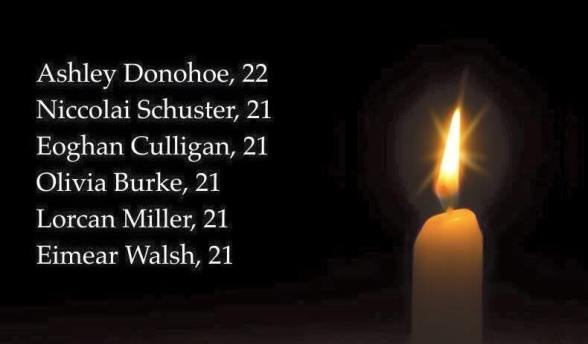
It’s rare that I get to post anything that is located close to me in this blog. Being so far away from what I usually write about means that while I’ve visited most of the places I feature, they are quite far away by the time I get to write about them. This one is close to home in many ways, and I am saddened to write about it at all. You see, I live very close to Berkeley, California, and I worked there for years so the recent tragedy there is very close to my heart.

Continue reading

A little humor today

First, well done Ireland. You have done what no other country has been able to do and truly showed that all love is equal – by popular vote. Now I know some are still incredibly unhappy with that, but the majority of voters have truly given the rest of the world a little more hope.

Here in America, the “land of the free” (asshole quotes intended), we have no such track record. In fact, some states have written the exact opposite sentiments into their laws – which is utterly heartbreaking – and we give a lot of media attention to our worst, rather than our best. A good example of that is the Westboro Baptist Church, a truly horrifying organization that loves to grab the attention of the press. We eat up their hate-filled propaganda like it’s a bag of McDonald’s french fries which is equally disgusting. I try not to pay attention to them or anyone like them at all.

However, today the headline made me laugh out loud and giggle with glee, so as much as I don’t like to spread their filth, this was just too funny to pass up. The hateful group decided they were going to take up their signs and protest Ireland, due to the referendum results, but apparently no one decided to make sure they got the flags right before printing all of their detestable signs. So according to them, God hates Ireland, but their misprinted signs hate the Ivory Coast….because they got the flags mixed up.

They tried to save face when it was pointed out to them on Twitter, by saying “Well, now that you mention it, God hates the Ivory Coast too” (for some reason they’re sure to invent) but the joke’s on them this time. Their spectacular failure to spread their hatred accurately is worth the fifteen minutes of glee that it gives to the rest of us who believe that all love is equal and that the WBC should be dismantled.

So congratulations again Ireland – for saying no to hate, and for allowing the haters to make bigger fools of themselves than ever before. Well done!
The executions begin

On this day, 99 years ago, the fateful decision to execute the leaders of the 1916 Easter Rising in Ireland came to fruition. The men were taken from their cells and killed for their role in the uprising during Easter week. The signatories of the new Irish Proclamation had anticipated their deaths since before the Rising began – and while it’s probably not accurate to say they longed for them, they did know that their executions would galvanize many people in Ireland.

The executions began on May 3rd and the last was three months later. By August 3rd when Roger Casement was hanged outside of Ireland’s borders, 16 men had been executed for their roles in the uprising.

he signatories were shot in the yard at Kilmainham Gaol in Dublin. Today a cross marks the spot where they were killed and ironically, the Gaol now houses a museum dedicated to many Irish Nationalists and Republicans who were once killed or jailed there. It is a booming tourist destination.

Kilmainhamexecution3

The Foreign Fighters of 1916

Now that some of the Women of 1916 have been highlighted, it’s time to move on to another group that has been largely  left out of the history books when it comes to The Easter Rising. Many brave rebels are celebrated throughout the world every year at this time…but what is ignored by most is that the fighters were not exclusively Irish. There were more than a hundred foreign soldiers who assisted in the Rising and while some were 2nd or 3rd generation Irish there were others who had no Irish blood whatsoever. They came from all over Europe and the rest of the world to join forces against the English and were some of the fiercest warriors in the conflict.

Continue reading

Cumann na mBan is born

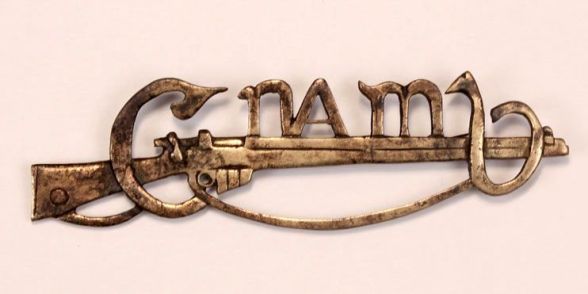
On Thursday, April 2nd, 1914, about one hundred women strolled into Wynn’s hotel in Dublin at four o’clock in the afternoon for the first of Cumann na mBan’s many meetings. The Irish Women’s Council had a lot to discuss but the one thing almost all the ladies present had in common was a devotion to Ireland and a desire to serve it.

Continue reading

The Celtic origin of Ground Hog Day

Imbolc, also called Oimealg by the Druids, is the festival of the lactating sheep. Yes, you heard that right. It is derived from the Gaelic word oimelc meaning ewes milk. At this time of the year, many herd animals have either given birth for the first time of the year or they are just about to. It’s the first breath of Spring and it marks the center point of the dark half of the year. It is the festival of the Maiden and from February 1st to March 21st, it is her season to prepare for growth and renewal. On Feb. 1st, Brighid’s snake emerges from the womb of the Earth Mother to test the weather (Ground Hog Day anyone?) and in many places the first flowers begin to pierce the grounds of winter and start to bloom.  Brighid’s Crosses are made and exchanged as symbols of protection and prosperity in the coming year.BCHome hearth fires are put out and re-lit, and candles are lit and placed in each room of the house to honor the re-birth of the Sun. It is a festival of fire and renewal and one of the first celebrations of Spring.
Continue reading