The Mighty Kathleen Lynn

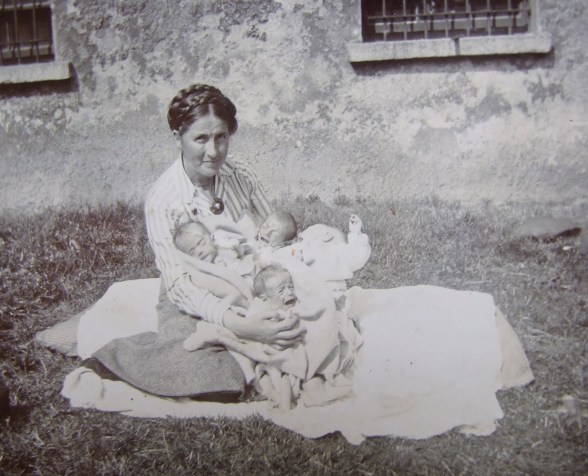
Kathleen Lynn was an anomaly among women at the turn of the century in Ireland. She was extremely well educated, which was very rare for females at the time, and she was a doctor – not a nurse – which was an incredibly unusual profession for a woman of that era. She faced discrimination and difficulty in the field for many years due to her gender and it made her a strong suffragist and a very tough woman.

Continue reading

The Power of Names

“Londonderry or Derry?,” asked a friend of mine when he was off to the North of Ireland. It’s an age old question and I found myself a little stuck when it came to answering. “That depends” seemed to be the safest bet at the time. However, the next time either of us visit, the question may no longer be an issue since last week Derry city and the Strabane District Council voted in favor of formally losing the London prefix.
Continue reading

Arthur Griffith’s Birthday

Today in 1872, Arthur Griffith was born in Dublin. He was passionate about Irish history, which drove him to become a member of the Gaelic League where he rubbed shoulders with other Irish activists and cultural leaders. He was a bit of an anomaly. His devotion to the Gaelic League led to Griffith joining the Irish Republican Brotherhood where he was surrounded by many ideological opposites. He was inspired by Charles Parnell and wrote for many radical papers while he was growing up, but he was also ultra-conservative and widely reported to be an anti-Semite. While his IRB friends were planning a complete revolution, he was more in favor of a dual monarchy system, a sort of co-partnership with England. He was against any form of communism or socialism and was largely anti-union, but was in a room talking policies with James Connolly—the driving force behind Irish socialism at the time—on many occasions.
Continue reading

Mary Macswiney

A rebel is one who opposes lawfully constituted authority and that I have never done.” So said one of the most devoted Republican women in Irish history, Mary MacSwiney. I’m sure she believed in that statement with all of her heart—as she did a free Ireland—but it’s guaranteed the English did not feel the same way. To them, Mary MacSwiney was the one of the worst and biggest female rebels, not only in Cork but in all of Ireland.

Continue reading

The Paisley Adams Power Sharing Promise

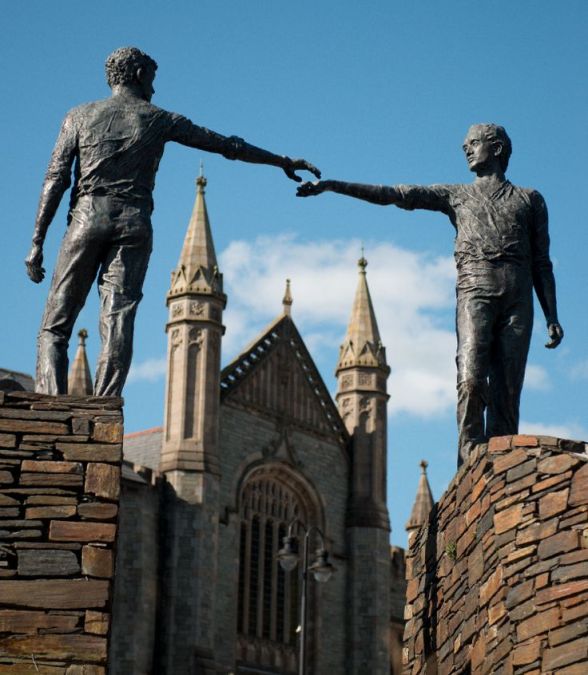
On this day, March 26th, in 2007, a historic meeting was made in the North of Ireland.  Ian Paisley, an avid Protestant firebrand known for his “Never” phrases sat down with the other side of his coin, Gerry Adams, who led (and leads) Sinn Féin. The two men hammered out an agreement at Stormont that promised to form a power-sharing partnership by May 8th of that year. For the first time, the ideological opposites were able to come together and reach an agreement that was mostly fair for most of their constituents . Both Former Taoiseach Bertie Ahern and Former British prime minister Tony Blair hail this  first meeting and agreement as “a reconciliatory and transforming moment in British-Irish history.”

Continue reading

Haunted and hunted

The New Yorker has just published a surprisingly in-depth article on Jean McConville and Irish history in the North – just in time to take advantage of the 15 minutes that most Americans devote annually to Ireland around St. Patrick’s Day. It’s brilliant timing and the article is very well done, even if it does rehash a lot of old information and it is certainly another strike at Gerry Adams and his past. It is clear yet again that this case will continue to haunt those who may be involved in it. No matter what side of the spectrum politically that you may fall on, this case was undeniably brutal. A single mother of ten, Jean McConville, was dragged out of her home at Divis Flats in front of her children, and wasn’t seen again until her body was discovered decades later. She is one of the “Disappeared” – people who were murdered by the Irish Republican Army whose bodies were never supposed to be discovered. Her story is the albatross around Gerry Adams’ neck and one that will never disappear again.
Continue reading

2016 take 4

Oh Sinn Fein…

You are making the centenary pretty hard on those of us who live over the puddle and can’t spend 8 weeks in Ireland.

Continue reading

Jennie Wyse Power

It’s rare that a woman can juggle an immense amount of political power, a restaurant of her own and a family of four children. But Jennie Wyse Power did all this and more, at a time when most women weren’t even getting an education. She was an Irish superwoman and an unapologetic suffragist who passed away on this day in 1941.

Continue reading

2016 take 3

now here’s a proper ad for the 2016 centenary. At least this one has the actual thing that is supposed to be celebrated in it.

Remembering Máire Drumm

And now for a different Máire.  Máire Drumm was born into a staunchly Republican family. She was lucky enough to have had a mother who was active in the War for Independence and the Irish Civil War, so the concept of strong women who could fight and lead was instilled in her from birth. Perhaps it was also the reason she knew she could grow up to be a commander in Cumann Na mBan and the Vice President of Sinn Fein.  She settled in Belfast in 1942 and began fighting on behalf of Republican prisoners, which she did for many years to come. It was in this role that she met Jimmy Drumm, a Republican prisoner who would later become her husband.

Continue reading