Honoring Roger Casement

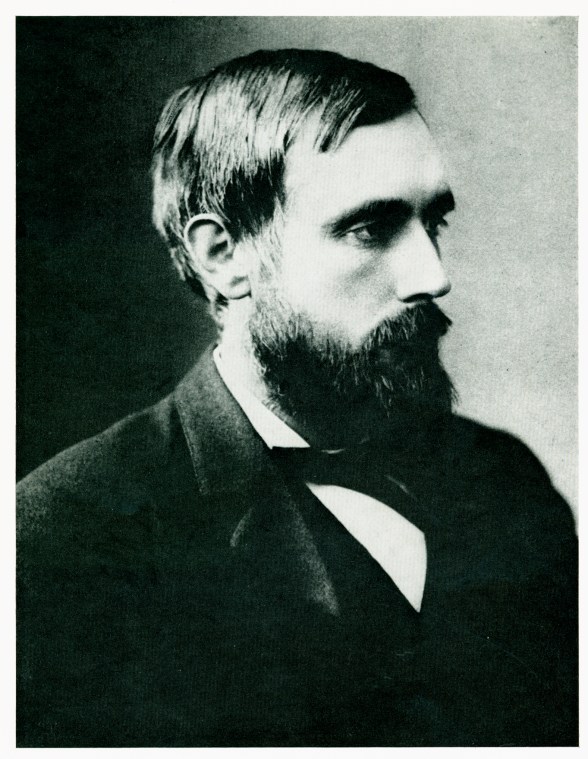
One hundred years ago today, Roger Casement was executed at Pentonville Prison in London. In record time, Casement had gone from being a world-renowned humanitarian and a Knight in high standing to a treasonous pervert who was shunned by many of those he once called friends. He was hanged on August 3rd, 1916, for his failed attempt to bring German support and weaponry to Ireland for the Easter Rising and for other “crimes” he committed in his pursuit for Irish freedom. 

Casement’s knightly betrayal embarrassed the English government and they were not content to simply kill him.They stripped him of his knighthood and thoroughly destroyed his reputation before making him face the noose. He was the only man associated with the Rising who was killed in this fashion and the only one who died on foreign soil. This was an added insult to someone who had devoted many years of his life to Ireland and its fight for independence.

Continue reading

The Lady of Bachelors Walk

On this day 102 years ago, a large shipment of arms landed in Howth, destined for the Irish Volunteers. Many of these guns were used two years later during the Easter Rising of 1916 and without them, the Rising may never have happened at all. When the Asgard came to shore it was met by the Fianna Éireann and other Volunteers who were quick to unload the weapons and begin carting them off. They hoped to avoid the attention of the police, but their mission did not pass unnoticed. The authorities who were watching did not engage the large crowd but they did call for backup. As the Volunteers left the area they were met by the King’s Own Scottish Borderers, a regiment of the British Army. A tussle ensued but in the end, the soldiers were only able to confiscate a mere nineteen of the nine hundred guns brought into Ireland that day.

News spread quickly of the successful smuggling operation and the military’s failure to seize most of the weapons so by the time the Borderers were marching back into Dublin, crowds had already gathered to celebrate and to mock them. They antagonized the soldiers, taunting them and throwing rubbish and fruit at the column (which magically became stones in the official reports). They shouted insults and openly laughed at the troops and their failed mission. Soldiers and police officers never tolerate this kind of behavior for long (as they continue to prove to this day) and by the time they marched onto Bachelors Walk they had had enough of the hostile crowd. The soldiers turned to face the people and seconds later shots were fired directly into the busy street, hitting those who had been following them and innocent civilians alike. They followed the volley of bullets with a bayonet charge. The collective lack of self control from the army resulted in four casualties and nearly forty others were injured.

Continue reading

Call to Action

No matter where you are in Ireland, Dublin is not usually more than a few hours away. Yes, if you don’t have a car (and who can with those insurance rates?) it can be a hassle to get to, but nearly every region has some form of direct transportation in and out of Dublin. That’s important because I’m about to suggest that you take advantage of those routes and hightail it over to the city this weekend.

Continue reading

Veronica Guerin is born

On July 5th,  1958 a true fighter was born in Artane, Dublin. Veronica “Ronnie” Guerin was one of four children and she was a strong girl from the moment she was born. She excelled in school and played many sports, competing and working with the best athletes. She played for the Women’s National basketball team, and the Women’s National Football league. Her competitive nature and strength gave her the drive she had as an adult to succeed in whatever profession she chose.

Continue reading

Remembering Elizabeth O’Farrell

On this day in Irish history one of the bravest Irish women  bid her last farewell to her beloved Ireland. Elizabeth O’Farrell passed away on June 25th, 1957, forty-one years after completing a dangerous mission that many thought would kill her. In 1916, Ms. O’Farrell wore a red cross and carried a white flag through raging battle zones to offer the surrender of the leaders of the Easter Rising. As she left the makeshift rebel headquarters in Moore Street her friend Sheila fell into hysterics, sure that Elizabeth would be killed on this mission.

Continue reading

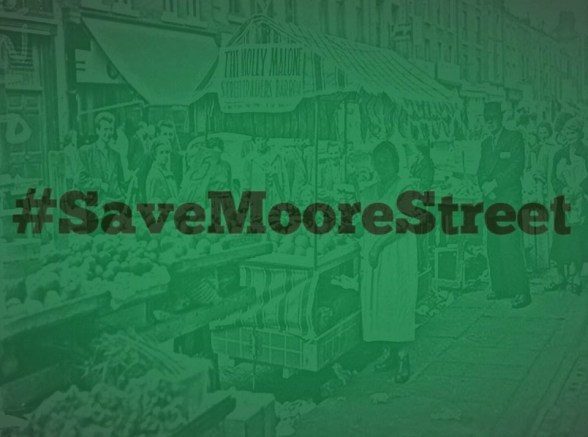
Moore Street, take 20

I never get to quit talking about Moore Street. Hopefully one day that will change, but so far this has not been the case. These days backroom deals and crooked politicians are commonplace and a world-wide problem but one of the most egregious examples of that type of thing is the continuing battle over Moore Street in Dublin.

Continue reading

Arrest the Shinners

The English government could never really figure out how to deal with Sinn Fein or its increasing popularity after the Easter Rising of 1916. They blamed the insurrection on the “Shinners” even though the burgeoning political party had little to do with the battle and they were surprised when much of the Irish population flocked to the organization after the government executed all the leaders of the Rising. They tried to downplay Sinn Fein’s popularity and remove its influence on many occasions, but most of the time whatever they tried had the opposite result. The same was true when the government decided to arrest nearly every leading ‘Shinner’ in Ireland ninety-eight years ago today.

Continue reading

Stop the Executions

After the Easter Rising of 1916, Dublin was a shell of a city. The force used by the English to put down the uprising had reduced a large portion of the city to rubble and ash, and the citizens were starting to show their anger. During the actual battle, many were frustrated with the fighters on both sides who were keeping them from their jobs, their paychecks, and their daily lives, but when their very livelihood and their homes were threatened by the indiscriminate shelling, even those who were not political, raised their voices against the onslaught.

Continue reading

The Executions Continue

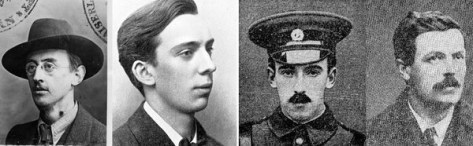
On May 4th, 1916, the executions of the leaders of the Easter Rising continued. Joseph Mary Plunkett, William (Willie) Pearse, Edward (Ned) Daly, and Michael O’Hanrahan were shot in the yard at Kilmainham Gaol in the early hours of the morning.

5416 Continue reading

Tragic Anniversaries

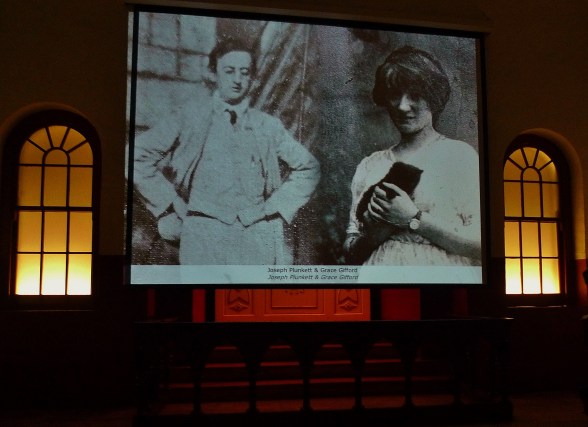
On May 3rd, 1916, Grace Gifford walked into a jewelry store in Dublin. Her eyes were red and she had obviously been crying. She bought her own ring and left with it in hand. Grace was on her way to Kilmainham Gaol to marry Joseph Plunkett, the love of her life. She knew that her family didn’t approve and that she’d be a widow just a few hours after the wedding but she chose to marry him anyway. The executions of the leaders of the Easter Rising had begun that same day. Patrick Pearse, Tom Clarke, and Thomas MacDonagh were executed for their roles in the Easter Rising and her beloved would soon join them.

Continue reading