 On this day in 1948, Ireland said goodbye to one of its fierce and famous daughters. Elizabeth “Lily” O’Brennan was a famous writer and one of three revolutionary sisters in the O’Brennan clan. She was a true believer in the cause of Irish freedom and she fought for it even when it cost her her own.
Category Archives: War of independence
Skinnider’s Near Death Experience

Margaret Skinnider described the Easter Rising like this. “Every shot we fired was a declaration to the world that Ireland, a small country but large in our hearts, was demanding her independence.” Her words might not have had the same certainty and grand bravado if she had been writing while the bullets were flying…but then again, I am quoting Margaret Skinnider so maybe they would have. That utter devotion to Ireland nearly did her in on this day in 1916.
Máirín Cregan
When Máirín Cregan was born on this day in 1891, her mother made a very important decision. She insisted that her daughter would grow up learning history and the Irish language. As a young adult, this eventually led Máirín right into the Gaelic League where she developed a sort of nationalist fervor. She was also quite a talented vocalist so she ended up moving to Dublin to study at the Leinster School of Music. When she arrived in the city in 1914, she socialized with the Ryan family, a strong Nationalist clan. Máirín was quickly rubbing shoulders with some of the most prominent Nationalists in Dublin including Min Ryan and her fiance, Seán Mac Diarmada, who was one of the future leaders of the Easter Rising.
Dorothy Macardle, historian and propagandrix
On this day in 1958, Ireland lost a powerful (albeit slanted) voice. Dorothy Macardle was best known for her book “The Irish Republic” which was commissioned by her idol and friend Eamon De Valera. Her blind faith in his political party and leadership is apparent throughout her history book but so are the echoes of a rebel suffragist and her whispers of dissatisfaction when it came to women’s rights. Dorothy Macardle may have been a vocal member of Dev’s faithful flock, but that’s not to say she was entirely happy with all of his policies.
Hell No, We Won’t Go

In 1918 it was nearly impossible to get the Catholic church, politicians, working class citizens, labor unions, suffragettes, Unionists, and Irish Nationalists to join together for anything. Ireland was still reeling and recovering from the Easter Rising of 1916, which most of these groups were still arguing over (as they are still doing today), but there was one proposal that unified them all – the Home Rule/Conscription law. Continue reading
No, Nay, Never; Cumann na mBan rejects treaty
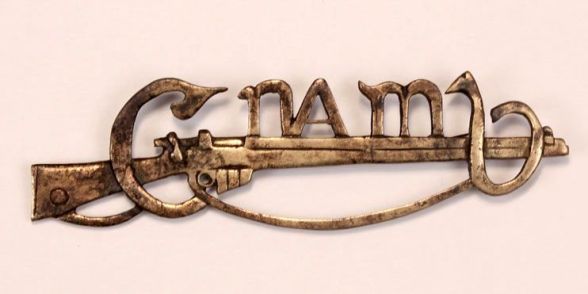
The ladies of Cumann na mBan have always had very strong opinions about the state of Ireland and its politics. Since its inception, the majority of CnamB members have fought for a united Ireland. During the lead up to the Easter Rising of 1916, these women supported the Republican cause in many different ways. They raised funds for the uprising, trained in first aid in order to help wounded Volunteers, smuggled various weapons and explosives throughout Ireland, spread important news, and many learned to shoot and fight themselves. They became a force to be reckoned with.
In the aftermath of the Rising, CnamB was flooded with new members and big ideas. They were prominent in the Dáil Éireann, the Republican legislature set up to counter England’s rule. Many of the widows of the leaders of the Rising were some of the loudest voices and strongest supporters of a free Ireland, and almost all were members of the female Republican organization. Eamon De Valera called them the “most unmanageable revolutionaries.” Many others accused the organization of making decisions based on vengeance and emotion without thought or consequence, especially when they voted against the Anglo-Irish Treaty ninety-four years ago today.
Dr. Ada English

Dr. Ada English was a strong woman, a fervent Nationalist, a prominent member of Cumann na mBan, and one of the first female psychiatrists in Ireland. Like her peer Dr. Kathleen Lynn, Dr. English devoted her spare time to politics and to healing and aiding the Irish Volunteers who were fighting for a free Ireland. Her story is not as well known as Dr Lynn’s however, since Ada was not in Dublin during the Easter Rising. Many political women of Ireland’s revolutionary periods have slowly vanished throughout the years, and Dr. Ada English has not been an exception to that unfortunate trend, though she should be.
Sweet Revenge, the burning of Cork
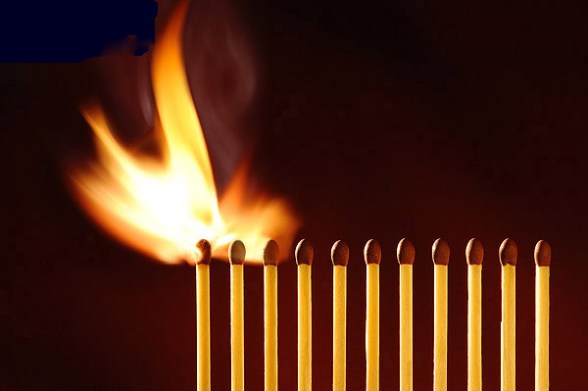
Whoever first said that revenge is best served cold did not live in Ireland in 1920. In Cork city, revenge was a burning hot firestorm and it left many homes, businesses, and lives in its disastrous wake.
Jennie Wyse Power
It’s rare that a woman can juggle an immense amount of political power, a restaurant of her own and a family of four children. But Jennie Wyse Power did all this and more, at a time when most women weren’t even getting an education. She was an Irish superwoman and an unapologetic suffragist who passed away on this day in 1941.


You must be logged in to post a comment.