The Death of Innocence

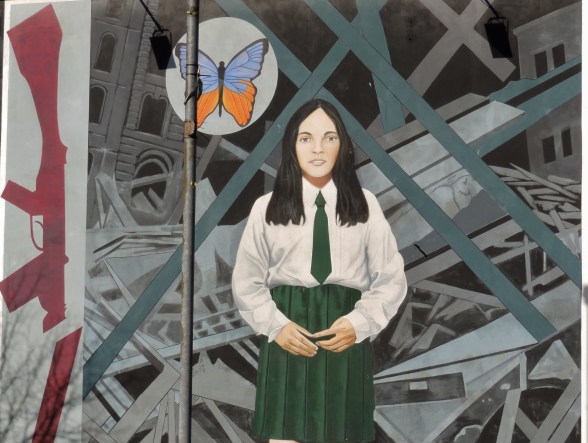
Annette McGavigan was only eleven years old when the Troubles erupted in the North of Ireland. Her home was in Derry, one of the major flashpoints of the Troubles and a stronghold of the Provisional Irish Republican Army. She and the other children of the area witnessed more conflict than any child should within those first few years. She would have seen the British Army rolling into her city, bringing CS gas, rubber bullets, violence and protest with them. Riot after riot broke out and civil rights marches, anti-internment protests, and anti-police incidents were frequent and violent. These things probably became rather commonplace over the next few years for Annette and the other children who were growing up in areas like Creggan, Little Diamond, and the Bogside.

On Sept. 6th, 1971, when Annette was only fourteen, Catholic schools were closed in Derry. Teachers were taking part in a week-long anti-internment program. This left the schoolchildren with free time. Some joined the protests and riots and others stayed in. Once a small riot had ended on the edge of the Bogside, Annette and her friends went out to collect the leftovers of the violence. Children regularly gathered rubber bullets, gas canisters and more after each riot in Derry and this day off from school gave Annette the perfect opportunity to hunt for these dangerous souvenirs. As the young girl in a school uniform picked up an empty cartridge, a shot rang out. She likely never knew what hit her.
Continue reading

John Donaldson, the Baron of Lymington

Who will you believe, the police or the suspects?” Justice John Donaldson is not the first judge to undermine defense lawyers with a question like that but he made this biased statement and others while he was presiding over the trial of Paul Hill, Paddy Armstrong, Carole Richardson, and Gerry Conlon – a group of Irish suspects who were also known as the Guildford Four. The highly publicized case was covered widely and all of the judge’s snide remarks and opinions were too. This pointed question for the jury was the last nail in the coffin for the Guildford Four. When their guilty verdicts came back, Donaldson wished that he could hang the suspects and went on the record saying so during sentencing. The bully judge imposed the longest sentence in the history of English law (at the time) against Paul Hill saying, “Your crime is such that life must mean life, and if the death penalty had not been abolished, you would have been executed.”  The other members of the Guildford Four didn’t fare much better when the sentencing came down and in the subsequent case where many of their friends and family members were accused of bomb making (known as the Maguire Seven) similarly harsh and opinionated sentences were handed down. Donaldson had no pity for one suspect’s serious illness and another being only fourteen years of age. He just handed out lengthy sentences and cruel comments to everyone. He never backtracked from his dubious remarks even after he was heavily criticized for them. In fact, the only times he was silent during this entire ordeal were when the IRA claimed responsibility for the bombs years later, when it was proven that the police had suppressed evidence and lied throughout the trials, and when those he had so gravely threatened were declared innocent fifteen and sixteen years later, respectively. Continue reading

The death of De Valera

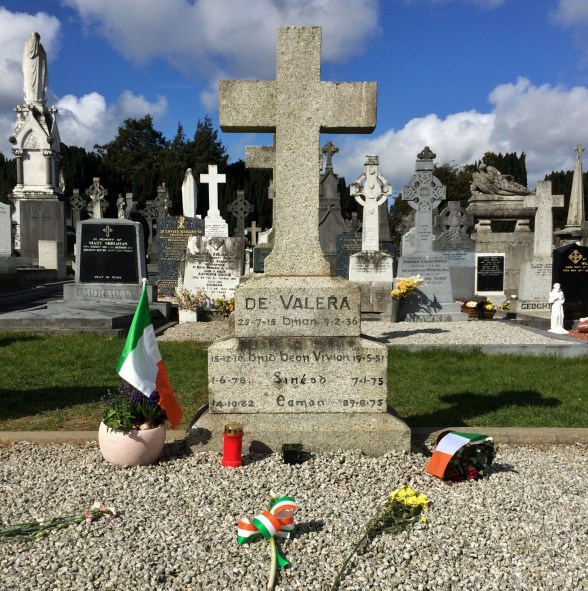
Love him or hate him, Eamon De Valera was perhaps the most influential man in Irish History, despite the fact that he was born in the United States. He helped create the political machine of modern Ireland and his influence is still being felt (and untangled) today, forty-one years after his death.

Continue reading

the Round Up

The news out of Ireland this week has been insane – so much so that I haven’t even been able to decide which story to write about or how to keep up. There’s so much going on, and it kind of makes me want to put the entire region on a time out, just so I can catch up. In case you missed some, here are just a few of the things that have been interesting me, in the last seven days alone.

Continue reading

Ballymurphy

Forty-five years ago today the Parachute Regimen of the British Army was sent to Belfast to take part in Operation Demetrius, the fancy codename the government used for internment. They were to detain and arrest anyone who they thought was either involved in or supporting the Provisional IRA, but sending the Paras in to do this was rather like setting off a grenade to stop a fist fight. Over the next few days in the Ballymurphy area alone, eleven civilians were killed. Many who were killed were just trying to get away from the trouble and some were shot while helping others.

Continue reading

Irish Against Trump

This has been a banner week for the Trump campaign, if by banner you mean “holy crap, look at all the new levels of unimaginable disrespect and unbridled hate.” The guy insulted a Gold Star family because of their faith and then accepted a Purple Heart from another veteran with a flippant comment before sticking it in his pocket. He threw a baby out of his rally. A video of racist, horrible things that his supporters say and shout at his rallies was just released and rumor has it that his campaign staff is near suicidal. In my opinion, this implosion couldn’t happen to a better man. When the Irish and the Irish Americans started jumping into the fray, I jumped for joy and pretty much haven’t stopped laughing since.

Continue reading

Honoring Roger Casement

One hundred years ago today, Roger Casement was executed at Pentonville Prison in London. In record time, Casement had gone from being a world-renowned humanitarian and a Knight in high standing to a treasonous pervert who was shunned by many of those he once called friends. He was hanged on August 3rd, 1916, for his failed attempt to bring German support and weaponry to Ireland for the Easter Rising and for other “crimes” he committed in his pursuit for Irish freedom. 

Casement’s knightly betrayal embarrassed the English government and they were not content to simply kill him.They stripped him of his knighthood and thoroughly destroyed his reputation before making him face the noose. He was the only man associated with the Rising who was killed in this fashion and the only one who died on foreign soil. This was an added insult to someone who had devoted many years of his life to Ireland and its fight for independence.

Continue reading

The Lady of Bachelors Walk

On this day 102 years ago, a large shipment of arms landed in Howth, destined for the Irish Volunteers. Many of these guns were used two years later during the Easter Rising of 1916 and without them, the Rising may never have happened at all. When the Asgard came to shore it was met by the Fianna Éireann and other Volunteers who were quick to unload the weapons and begin carting them off. They hoped to avoid the attention of the police, but their mission did not pass unnoticed. The authorities who were watching did not engage the large crowd but they did call for backup. As the Volunteers left the area they were met by the King’s Own Scottish Borderers, a regiment of the British Army. A tussle ensued but in the end, the soldiers were only able to confiscate a mere nineteen of the nine hundred guns brought into Ireland that day.

News spread quickly of the successful smuggling operation and the military’s failure to seize most of the weapons so by the time the Borderers were marching back into Dublin, crowds had already gathered to celebrate and to mock them. They antagonized the soldiers, taunting them and throwing rubbish and fruit at the column (which magically became stones in the official reports). They shouted insults and openly laughed at the troops and their failed mission. Soldiers and police officers never tolerate this kind of behavior for long (as they continue to prove to this day) and by the time they marched onto Bachelors Walk they had had enough of the hostile crowd. The soldiers turned to face the people and seconds later shots were fired directly into the busy street, hitting those who had been following them and innocent civilians alike. They followed the volley of bullets with a bayonet charge. The collective lack of self control from the army resulted in four casualties and nearly forty others were injured.

Continue reading

Tradition

Tradition is a word that is thrown about a lot. It’s used as justification for both good and bad deeds of the past and it’s a word that is often trotted out by hate groups throughout the world in an attempt to excuse their continuing and horrifying behavior. The KKK uses it as a recruiting tool. The Orange Order uses it as a weapon for blackmail and destruction. Other groups use it as well. Politicians use it to garner votes. Parents use it to pressure their children. But tradition is an outdated ideal that doesn’t exist anymore on many, many levels and it’s time to let some of it go.

Continue reading

Call to Action

No matter where you are in Ireland, Dublin is not usually more than a few hours away. Yes, if you don’t have a car (and who can with those insurance rates?) it can be a hassle to get to, but nearly every region has some form of direct transportation in and out of Dublin. That’s important because I’m about to suggest that you take advantage of those routes and hightail it over to the city this weekend.

Continue reading