Operation Motorman

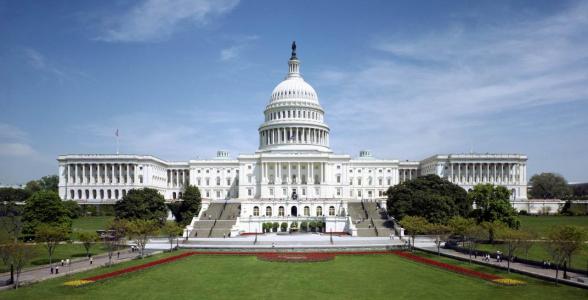
Operation Motorman was the code name given to a mission carried out by the British Army in the North of Ireland on July 31st, 1972. The goal was to forcibly reassert control over the Nationalist and Republican areas where they were not welcome with a particular focus in the cities of Derry and Belfast. In these cities, nearly impenetrable barricades had been erected in many neighborhoods barring any soldiers from entering or policing the communities. When the Provisional Irish Republican Army detonated more than twenty bombs in Belfast on July 21st of that year, the English government decided that the “No-go” areas in these towns would no longer be tolerated and Operation Motorman was born.

Continue reading

Sorcha MacMahon is Born

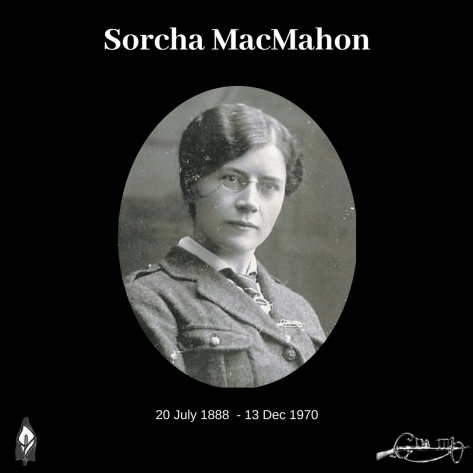
Sorcha MacMahon was born on this day in 1888 and was one of seven children. Unlike many who had to learn the Irish Language later in life through private instruction or the Gaelic League, Sorcha was raised speaking it. Irish was the family’s first and preferred language and she was more than fluent in it at an early age. When she finished school, she left the family home in Monaghan and headed for Dublin where she began working as a bookkeeper. She also worked for the central branch of Cumann na mBan, a women’s organization dedicated to Irish independence. She was the group’s secretary and she was trained in nursing and first aid – skills that she passed on to many of the other women. Many said that she was one of the most efficient and devoted members of the group.

Sorcha MacMahon

Her dedication to Irish independence led Sorcha straight into the Easter Rising of 1916 and when it was over, she took a position that had her working directly with Michael Collins for years. For more about this brave woman, please CLICK HERE.

The twelfth

Well, I almost made it. I almost made it through the season without posting another one of the pieces I write every single year about the sectarianism and the hatred that fuels the flames of bonfires throughout the north of Ireland annually. I guess I was hoping that it was all going to be fine this year, despite knowing it wouldn’t be. I suppose I thought if I didn’t talk about it, then it wouldn’t make me so angry. It doesn’t work like that though. In fact it might be more infuriating to watch it go all down without commenting  – especially when it looks like this marching season buildup has been increasingly worse than those in recent memory.

Continue reading

The Wedding that tore Ireland apart

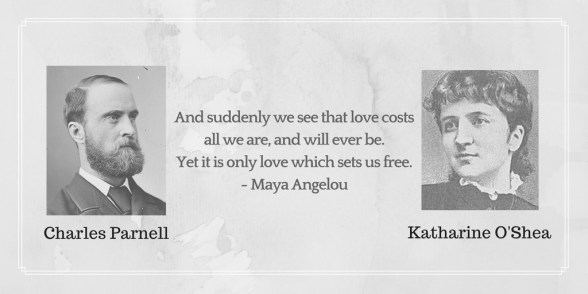
Charles Parnell and Katharine O’Shea had a love that was so strong it survived even when it destroyed both of their lives. It was able to withstand scandal, headlines, and pressure from the population, the politicians, and the church. Their affair was “the worst kept secret in London” and it torpedoed Ireland’s best chance for Home Rule. Nevertheless, they chose each other and were married on this day in 1891.

Continue reading

Suffer the Children

I can’t seem to focus on my regular, historical content these days and I apologize for the sporadic nature of the last couple of months. My state of mind can be summed up in a brilliantly tragic tweet by a certain Tim Grierson who says: “Being angry all the time is exhausting and corrosive. Not being angry all the time feels morally irresponsible.” He’s right – this is life in America (and other places too I’m sure) these days. But before I attempt to return to my regularly scheduled Irish history program, I have to publicly lose my mind for a minute so that my little corner of international readers understands one very important thing. Americans are not OK.

Continue reading

Goodbye chef

He was brash and tenacious. He was often obnoxious and nearly always a drunk. He was a brilliant writer, but in his words he was “more importantly, a reader.” He was a cocky, yet humble adventurer who was opinionated but always seemed ready to be wrong or surprised. Anthony Bourdain was not Irish but he had a gift of gab and a way with words that put him on par with many of the great Irish writers that he was inspired by. He was touched by Ireland on his first trip there and on his last he wrote “Heaven looks like this” in the guestbook at the Gravedigger pub.

Continue reading

Lie Lie Lie

It still amazes me when people ask me why I like being in Ireland so much – and why I pretty much never go anywhere else. Aside from all my regular and well documented answers, here’s another one. It’s hard to maintain a sense of humor when you live under the cheeto-dusted tangerine and his psycho policies every day – so finding something like this that makes you belly-laugh is important.

Without further ado, coming to you live from Killarney….


Thanks for the laugh – and the new theme song!

Fantasy Island

Everyone has that place in their head. One place that they’ve fallen in love with whether or not they’ve ever been there. One place that serves as a goal or a dream and becomes a fantasy location where everything would suddenly be perfect. Many never reach that imagined place or if they do, they quickly find that the perceived nirvana in their head doesn’t match the reality in any way. We often romanticize or fantasize about other places because after all, the grass is always greener on the other side.

Continue reading

Patsy O’Hara

Patsy O’Hara was a survivor. He grew up in Derry during some of the city’s most violent years and he was hit by a soldier’s bullet at the tender age of fourteen. He lived through that ordeal and became a fighter devoted to freeing Ireland from English rule. Patsy had a keen sense of what he thought was right and a huge streak of Irish Republicanism. This combination led him straight into the Irish National Liberation Army (INLA), a militant Irish Republican group that was dedicated to forcing the English out of Ireland by any means necessary. It also eventually led him into the H-Blocks of Long Kesh Prison where he died on this day in 1981 while on hunger strike.

Continue reading

The Choice

On May 25th, 2018, Ireland will have the chance to repeal the Eighth Amendment of its constitution in a referendum. This amendment was adopted in 1983 and it asserted that a fetus had the same rights as the woman who carried it. It’s no surprise that this law came into existance, since Ireland was still pretty synonymous with the Catholic faith when the Amendment was passed and while it allowed for pregnancy termination if the life of the mother was shown to be at risk, it made proving that exception more difficult. It also didn’t allow for the mental health of the mother – only the physical. The Eighth strengthened penalties for seeking an abortion both in Ireland and abroad and it ensured that community groups and organizations could not legally help women who wished to explore those options. It took decades of hard work to rectify the latter circumstances but abortion in Ireland was and is still illegal.

This is not to say that women (and girls) don’t get abortions. Recent statistics estimate that more than 150,000 Irish women have had abortions since the eighties. About a dozen have them every day – either by traveling to the U.K. where abortion is legal, by using the outlawed Plan B pill, or getting an illegal (and sometimes unsafe) abortion in Ireland itself.  These women risk a prison sentence of up to fourteen years if they are caught having an abortion on the island, but they do it anyway and that is really the only point that should matter in the upcoming referendum on whether the Eighth should be repealed or not.

Continue reading