Well, you learn something new every day. Yesterday I attended a Bernie Sanders rally in Oakland, CA which was the very last place I thought I’d learn a new tidbit of Irish history but I was mistaken. One of the speakers had just returned from the North of Ireland. He butchered the pronunciation of Sinn Fein but he told the crowd that Bernie Sanders was one of the only politicians in the United States (and the world) who had taken the time to write an angry message directly to Margaret Thatcher in 1981.
Category Archives: Uncategorized
Arrest the Shinners
The English government could never really figure out how to deal with Sinn Fein or its increasing popularity after the Easter Rising of 1916. They blamed the insurrection on the “Shinners” even though the burgeoning political party had little to do with the battle and they were surprised when much of the Irish population flocked to the organization after the government executed all the leaders of the Rising. They tried to downplay Sinn Fein’s popularity and remove its influence on many occasions, but most of the time whatever they tried had the opposite result. The same was true when the government decided to arrest nearly every leading ‘Shinner’ in Ireland ninety-eight years ago today.
Nothing Compares 2 U

Sinead O’Connor is a polarizing artist. She imploded her own rising career by tearing up a picture of the pope in 1992 and has never been able to reclaim it entirely. She is known for being a bit crazy, somewhat suicidal, and incredibly volatile. She involves herself in meaningless Twitter feuds, and makes wild accusations. She rewrote the Irish National Anthem, and has written numerous incendiary letters to the Irish government. Most recently she is collecting lawsuits after accusing Arsenio Hall of being Prince’s drug dealer. She’s kooky and cantankerous, and I still love her. She’s also missing. Continue reading
Stop the Executions
After the Easter Rising of 1916, Dublin was a shell of a city. The force used by the English to put down the uprising had reduced a large portion of the city to rubble and ash, and the citizens were starting to show their anger. During the actual battle, many were frustrated with the fighters on both sides who were keeping them from their jobs, their paychecks, and their daily lives, but when their very livelihood and their homes were threatened by the indiscriminate shelling, even those who were not political, raised their voices against the onslaught.
The Executions Continue

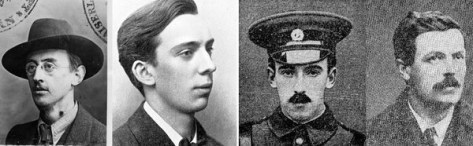
On May 4th, 1916, the executions of the leaders of the Easter Rising continued. Joseph Mary Plunkett, William (Willie) Pearse, Edward (Ned) Daly, and Michael O’Hanrahan were shot in the yard at Kilmainham Gaol in the early hours of the morning.
Tragic Anniversaries
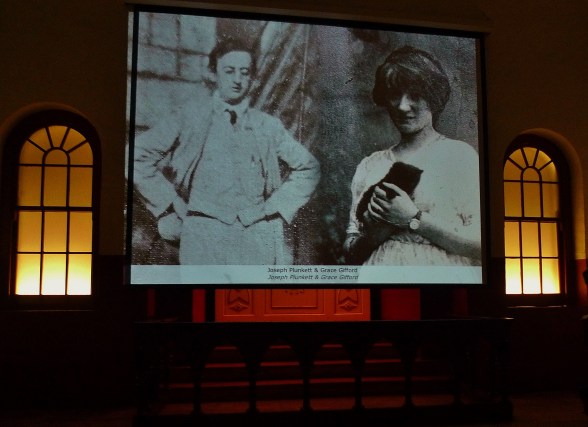
On May 3rd, 1916, Grace Gifford walked into a jewelry store in Dublin. Her eyes were red and she had obviously been crying. She bought her own ring and left with it in hand. Grace was on her way to Kilmainham Gaol to marry Joseph Plunkett, the love of her life. She knew that her family didn’t approve and that she’d be a widow just a few hours after the wedding but she chose to marry him anyway. The executions of the leaders of the Easter Rising had begun that same day. Patrick Pearse, Tom Clarke, and Thomas MacDonagh were executed for their roles in the Easter Rising and her beloved would soon join them.


Living Voices
Voices from the Grave is the topic of the day, or rather another result of its existence is. The bestselling book made headlines when it was published and not just because it was a gripping, page turner. It made headlines because almost as soon as it was published, it sparked off terrible controversy, a multitude of investigations, and court battles that continue to this day. In fact, now there’s a whole new chapter.
April 29, 2016
Don’t forget to look at their feet, and remember that Pearse chose a woman to stand at his side when the Easter Rising came to a close 100 years ago today
No Surrender
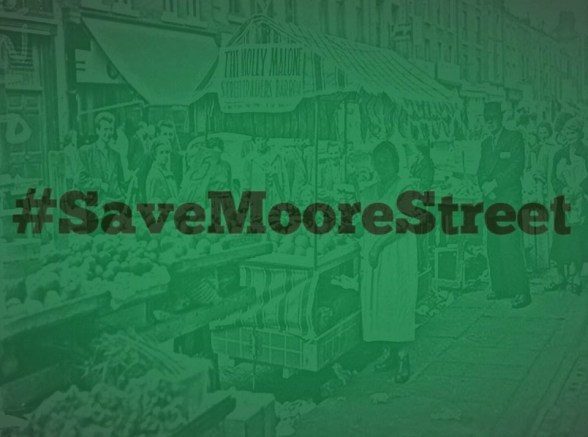
April 29th looms ever closer and the Centenary celebration truly comes to a close…at least until May when the executed leaders will be remembered a hundred years after they were killed. The surrender was originally offered on behalf of the revolution by Elizabeth O’Farrell, but the English would not accept it from a woman. She returned with Patrick Pearse and stood at his side when he offered it himself to “prevent the further slaughter of the civilian population and in the hope of saving our followers, now hopelessly surrounded and outnumbered”. Some argue that it was no surrender at all, but rather a pause to prevent the loss of innocent life because the leaders knew the fight for Irish freedom would continue, with or without them. Others couldn’t bear the thought of standing down for anything, even if their leaders were asking them to. The end to the Easter Rising is a fact, but were the rebels defeated?
That’s a question I’ve been studying for a long, long time and my answer is still yes and no. It’s also for a different post, because this one is about what you can do in Dublin on April 29th to commemorate the close of the battle and to lend your support to those who are still fighting to save one of the most important areas of the city.
Mother of the Revolution
In honor of Margaret Pearse who died 84 years ago today I thought I’d share the bit I wrote about her in my book, Petticoats, Patriots, and Partition. Many women suffered incredible loss during Ireland’s revolutionary period, but Margaret had a special kind of pain, losing both of her only sons. We are days away from their commemoration times and remembrances, so I thought Margaret should have hers too.


You must be logged in to post a comment.