On this day in 1854, a young baby by the name of Oscar Fingel O’Flahertie Wills Wilde was born in Dublin. Given the length of the name it is no wonder why it was eventually shortened to the simple (and now famous) Oscar Wilde.
Oscar Wilde is born

On this day in 1854, a young baby by the name of Oscar Fingel O’Flahertie Wills Wilde was born in Dublin. Given the length of the name it is no wonder why it was eventually shortened to the simple (and now famous) Oscar Wilde.

Living in California has its pros and cons. The weather is great but the strong Irish communities here don’t get as much love as they do in New York or Boston. It’s rare that the West Coast gets concerts, political visits, or films out of Ireland but that’s not to say that we don’t seek them out. We do have fairs, film festivals, and other events throughout the year but to see current news and films, we often have to trick the location sensors in our internet browsers so we can scour the internet for hours on end until we find an article, a link, or a video. That determination is how I’ve been lucky enough to see many fine Irish films, despite their lack of distribution in the states. This list now includes “No Stone Unturned,” a riveting and super important documentary by Alex Gibney about the brutal, “unsolved” murders of six people in a Loughinisland, County Down pub during the 1994 World Cup.

In the civil rights arena, America gets a lot of the press and always has. Many of the worst atrocities and biggest conflicts in the movement happened in the United States, and they continue to happen to this day. Hollywood has made plenty of movies chronicling the American fight for civil rights, including one about the fateful march from Selma in 1965 that raised awareness and inspired equality all over the world, especially in the north of Ireland where another civil rights movement was being born.
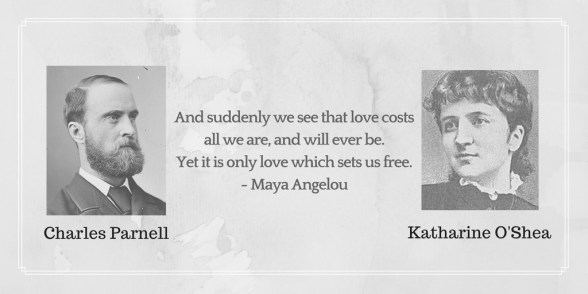
Charles Parnell and Katharine O’Shea had a love that was so strong it survived even when it destroyed both of their lives. It was able to withstand scandal, headlines, and pressure from the population, the politicians, and the church. Their affair was “the worst kept secret in London” and it torpedoed Ireland’s best chance for Home Rule. Nevertheless, they chose each other and were married on this day in 1891.

Patsy O’Hara was a survivor. He grew up in Derry during some of the city’s most violent years and he was hit by a soldier’s bullet at the tender age of fourteen. He lived through that ordeal and became a fighter devoted to freeing Ireland from English rule. Patsy had a keen sense of what he thought was right and a huge streak of Irish Republicanism. This combination led him straight into the Irish National Liberation Army (INLA), a militant Irish Republican group that was dedicated to forcing the English out of Ireland by any means necessary. It also eventually led him into the H-Blocks of Long Kesh Prison where he died on this day in 1981 while on hunger strike.

On this day in 1916, Ireland’s Easter Rising began. All throughout Dublin men and women made their way to strategic outposts in the city with the hope that they could take them and last long enough for Ireland to be declared an independent nation. They were intent on overthrowing the English control of their homeland and went out with only that purpose in mind. Most other people had no idea of what was to come and they got up in the morning and headed to work as usual, unaware of how different their city was about to be.
Mary O’Dwyer (née Breen) was not a typical Irish Republican woman. She did not have the support of a politically powerful family, in fact they actively discouraged her from joining any political group. She defied them, her parish priest, and others when she began canvassing in County Tipperary for Sinn Fein at age sixteen. Two years later, Mary joined (and eventually commanded) her local branch of Cumann na mBan.
Ireland is steeped in mythology and tales of faeries but these fae have nothing in common with the adorable little Disney-created pixies that flit across the movie screen. Irish faeries have a dark side and many folks still attempt to appease them to this day. You can still find bowls of milk outside certain homes on certain days and many locals who stay away from nearby hills, caves, and mounds. They warn wayward travelers to do the same. Some have iron in their doorways or other superstitious markings to protect against dark creatures of a different world. In the past these beliefs were even more prevalent and tales of changelings and other mischievous things in the night were simply a part of life. These stories also became part of a highly publicized murder after a young woman named Bridget Cleary was burned to death by her husband, her father, and others, on this day in 1895.
Stephen O’Donohoe was a poor law clerk in Dublin. He was a family man with four children who struggled to get ahead but only barely managed to scrape by. Like many, he blamed the English rule in Ireland for his woes. He was one of thousands of men who joined the Fenian Brotherhood, a group dedicated to overthrowing the government and getting the English out of his country.
Thomas Farrell was from Williamstown and was a confectioner by trade. He joined the Fenian Brotherhood as well, and while it’s not clear if these two men knew each other, what is certain is that they are now tied together for all of eternity.
Many of Ireland’s great Fenians scattered to the wind to avoid prison when their various uprisings failed. More than few of them ended up on America’s shores and promptly set about creating organizations that furthered the Irish cause within the United States. One of those powerful men was John O’Mahony, the founding member of the Fenian Brotherhood in America.
 Choosing the Green
You must be logged in to post a comment.