The Occupied Museum of Free Derry

The newly revamped Museum of Free Derry has been mired in controversy since before its doors reopened. At issue is an exhibit that includes the names of all the people who were killed in the area during the Troubles. This seems harmless except that the names of British soldiers and police officers are also there, right alongside many innocent victims who were killed by those very same squads. The decision to include those names may seem reasonable from a purely educational viewpoint but the Museum underestimated the emotional response from locals who lost friends and family members during the conflict. For some of them, the inclusion of these government contingents is an affront to the memories of their loved ones and a blatant disregard for their own feelings and their continuing fight for answers and justice. 

Continue reading

The Harp Bar Bombing

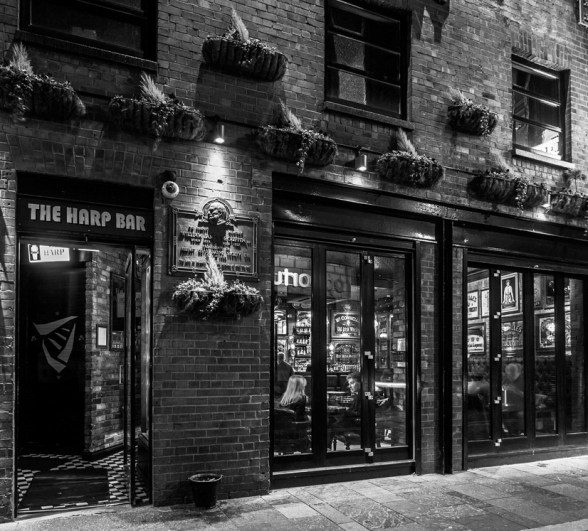
On this day in 1975, John ‘Sean’ Doherty and Denis McAuley were murdered by a bomb that was thrown into the Harp Bar in Belfast. Given the giant explosions of the time period, it was a relatively small attack but it resulted in two deaths and multiple injuries. It was also the second attack on the centrally-located Harp in only ten days.

Continue reading

Indomitable Mo

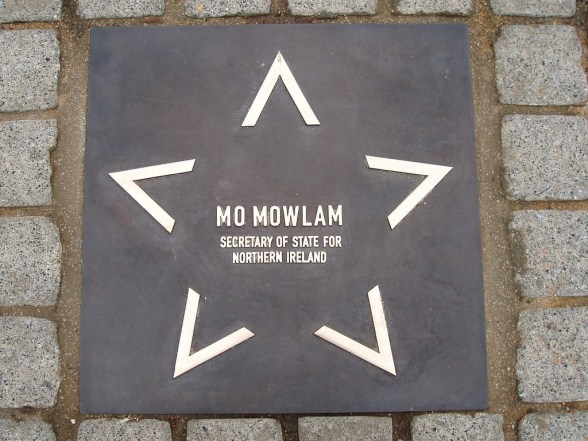
There are a lot of strong, inspiring women throughout Irish history and one of my main goals when I started this project was to honor a lot of them. Sometimes that leads to highlighting women who aren’t Irish at all but who had a profound effect on Ireland whether they loved it, hated it, or were forced to endure it. I believe all of those descriptors and emotions applied at one time or another when it came to the indomitable Marjorie “Mo” Mowlam.

Continue reading

Patrick Rooney

Patrick Rooney was a good kid. It was 1969 and he had just moved into Divis Flats on the Falls Road in Belfast with the rest of his family. I say kid because he was only nine years old when his life came to an abrupt end forty-eight years ago today. On that fateful night, Patrick became the first child victim in the long struggle that came to be known as Ireland’s Troubles.

Continue reading

Throw away the key

A tasty tidbit of appalling news came across my radar this week that has appeared to be somewhat ignored by many. It turns out that residents living in nine different tower blocks in Belfast had no expectation of privacy in their own homes and they didn’t know it. They were never informed that the police force of Northern Ireland (the PSNI) had been given keys to every single one of their flats and could ostensibly enter them whenever they liked. The Housing Executive was quick to say they’d handed over master keys to the PSNI so that they could be used for health or safety emergencies but they only revealed that agreement after some of the residents at the New Lodge Flats accidentally found out about the breach of privacy. The executive most likely would have never mentioned the keys and the police to any of their tenants if not for this accidental slip of the tongue.

Continue reading

The Proud Rebel

On this day in 1916, Sir Roger Casement, an English Knight and Irish patriot was hanged for treason against the crown. He was executed in an English jail, despite his demand to be tried in Ireland, the land of his birth and his heart.

Continue reading

Flames of Fear

The North of Ireland is a complicated place – especially in July. Every year makeshift towers of debris, old tires, and wooden pallets reach higher and higher into the sky. They are decorated with sectarian slogans, political effigies, Irish flags (or Ivory Coast ones, since some can’t tell the difference between the two), and serious threats against Catholics, opposing politicians, Irish men and women, minorities, and the gay community. These dangerous displays are what they call culture this time of year and they are a horrifying example of the division that continues to exist in the North.

Continue reading

Dublin and Monaghan Bombings

On this day in 1974, Dublin City Center was devastated by three large bombs that went off without warning in the span of about 90 seconds. They exploded in the middle of rush hour during a public transportation strike which had left more people in the area than usual. Injuries and casualties were astronomical. When a similar bomb exploded without warning in the city of Monaghan ninety minutes later, the incident became the worst and largest loss of life in Ireland’s more recent troubled history. The explosions injured nearly three hundred people and killed thirty-three civilians in all and decades later, despite multiple investigations, reports, and a mountain of evidence, no one has ever been charged or prosecuted for these attacks.

Continue reading

The Iron Lady dies

On this day in 2013 Margaret Thatcher died. I can’t very well write about Irish history without acknowledging her passage, so there it is. I always try to write passionate and fair pieces and I choose my subjects with that in mind which is why I will skip anything more about her at this time. Perhaps there will come a day when I can actually write about her without getting angry, biased, and opinionated, but today is not that day so I’ll let these photos I’ve snapped throughout the North of Ireland speak for me. They’re worth at least a thousand words anyway.

“Our revenge will be the laughter of our children” – Bobby Sands


The complicated legacy of Martin McGuinness

Humans are animals. It’s not something we like to admit, but it is true. Our animalistic instincts come out when we are hurting and angry, when we need to protect ourselves or our loved ones, or when we are desperate and afraid. Over time we learn to control them, not letting that dark side rear its ugly head just because our toy was taken away at the playground and if we’re lucky that animal fades into the background of our minds, never needing to come out.

When James Martin Pacelli McGuinness was growing up in Derry a lot was wrong in his world. The boy who would come to be known as Martin was partially named after a pope in a society that was violently sectarian and discriminatory against Catholic communities like his. He saw things most of us thankfully never will. War raged in the streets as he grew up. He witnessed friends being mowed down by soldiers without consequence. He saw authorities break the law over and over without punishment. That animal inside him grew and raged, like many others in the region and Martin found his way into the Irish Republican Army at a relatively young age. He stayed for a heavily disputed amount of time. Let’s just call it many years.

Continue reading