Back Home In Derry

I arrived in Derry during a downpour, even though the sun was still peeking through the gathering storm clouds. By the end of the trip, I felt like the weather was a perfect metaphor for the city itself. Derry is rare. It is dark, but light pierces through it. It is grey but full of color. It is gathering and ready, but still and waiting. It is tragic and beautiful. Derry is a very special place.

Continue reading

Memories of Belfast

My body is rebelling against being thrown back into the States and I caught a vicious cold on the flight back from Ireland. This cold, on top of the jet lag, culture shock, and come down after such a mind-blowing holiday has left me quite speechless. I have a lot of catching up to do for sure and a lot of processing to do as well.

Continue reading

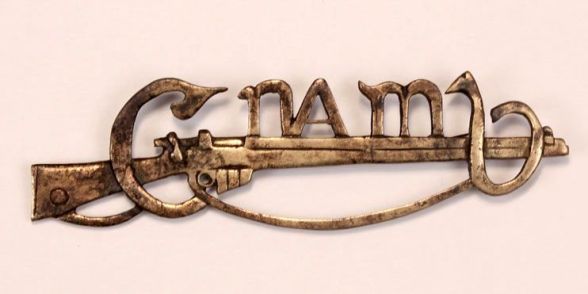
No, Nay, Never; Cumann na mBan rejects treaty

The ladies of Cumann na mBan have always had very strong opinions about the state of Ireland and its politics. Since its inception, the majority of CnamB members have fought for a united Ireland. During the lead up to the Easter Rising of 1916, these women supported the Republican cause in many different ways. They raised funds for the uprising, trained in first aid in order to help wounded Volunteers, smuggled various weapons and explosives throughout Ireland, spread important news, and many learned to shoot and fight themselves. They became a force to be reckoned with.

In the aftermath of the Rising, CnamB was flooded with new members and big ideas. They were prominent in the Dáil Éireann, the Republican legislature set up to counter England’s rule. Many of the widows of the leaders of the Rising were some of the loudest voices and strongest supporters of a free Ireland, and almost all were members of the female Republican organization. Eamon De Valera called them the “most unmanageable revolutionaries.” Many others accused the organization of making decisions based on vengeance and emotion without thought or consequence, especially when they voted against the Anglo-Irish Treaty ninety-four years ago today.

Continue reading

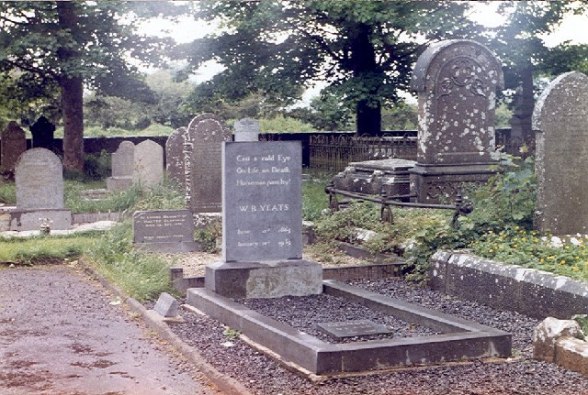
Changed Utterly, the death of W.B.Yeats

licensed for reuse through Creative Commons

On this day in 1939, poet and patriot William Butler Yeats said farewell to the world from the south of France. Yeats spent many of his winters in France and in Italy due to life-long health issues but he always left his heart in Ireland, even after death. He told his wife George to bury him quietly in the hills above Monaco but “to dig me up and plant me in Sligo” a year later when he thought everyone would have forgotten about him. That idea is laughable given that he is still revered and remembered today.

Continue reading

A Constitution is Born

On December 29, 1937, a new Ireland emerged, under a new Constitution. Eamon De Valera drafted a new Constitution that came into its own on this day seventy-eight years ago and the island was known thereafter as Eire or Ireland, as it remains to this day.

Continue reading

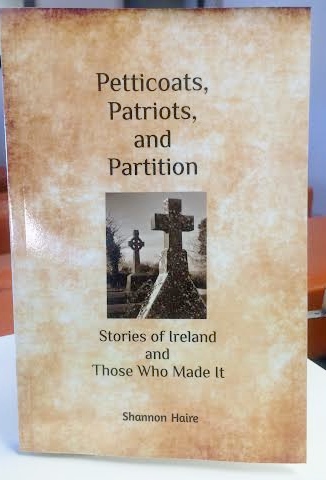
Petticoats, Patriots, and Partition paperback edition

There’s a lot to learn with this whole writing and publishing a book thing. One thing to learn is that if you set a book up to  be sold through Ingram, it disappears until Ingram gets around to distributing it. For me, that meant the paperback edition of my book was out of commission, which is a surprising and disappointing discovery.

However, I found a work around, so it is back. (Whew) If you’d like your own you can now find it here. The other links that have been posted before, and those in the Celtic Thoughts interview yesterday will only get you to the hardback edition, which is nice but more expensive.

In a few weeks, you’ll be able to order the paperback from any bookstore, anywhere – which is super neat. In the meantime though, the place to get it is the link above.

It won’t make it by Christmas anymore, but it would be a great book to start 2016 with.


Petticoats, Patriots, and Partition (take 1)

#nowyouknowmyname

So I probably just did the scariest thing I have ever done ever. I published a book. One that people can buy, and that has my name on it. It’s terrifying and wonderful and I kind of feel like an impostor.

Continue reading

Shameless Self-Promotion

It’s so very close to being finished and I just can’t keep it to myself anymore. I hope you’ll forgive the teasing since it is not available yet, but by December 1st, it will be.

It’s written. It exists. It’s a collection of short histories, and mini-biographies – many that started as blog posts here. In fact, there are only a few that I’ve held back for the book only, but in this form the entries are expanded, edited, and written slightly differently. It’s taken forever and I’m super excited about it – or I would be if I could just stop editing. But now there’s a single, real-life, (albeit marked up) copy in the world and the rest are so very close.

Now you know the title. And my real name for that matter. Hopefully some of you will love this book – and will be OK with me promoting you in it too. I can’t believe it. Coming so very,  very soon!

#nowyouknowmyname

#holycrapIwroteabook

Elizabeth O’Farrell

On this day in 1885, a very brave and unusual woman was born in Ireland. Elizabeth O’Farrell grew up to be a revolutionary in many ways. She had a long term relationship with another woman when that was unheard of, dangerous, and severely frowned upon. She was a great suffragist who championed equality and respect for women during an era when many women couldn’t even get an education at all. She saved many lives but put her own at risk over and over again during the Easter Rising of 1916 – and she rarely gets the credit she deserves for all of her courageous acts. Even now her shoes get more attention than the woman who wore them.
Continue reading

The First Two Witches in Ireland

Dame Alice Kyteler was a very powerful woman in Kilkenny, Ireland, but that power came at a hefty price. She had many friends, but she also had many bitter enemies. She disappeared around this time in 1324, after being on the wrong end of the first witch trial in Ireland.
Continue reading