Sheelagh Murnaghan

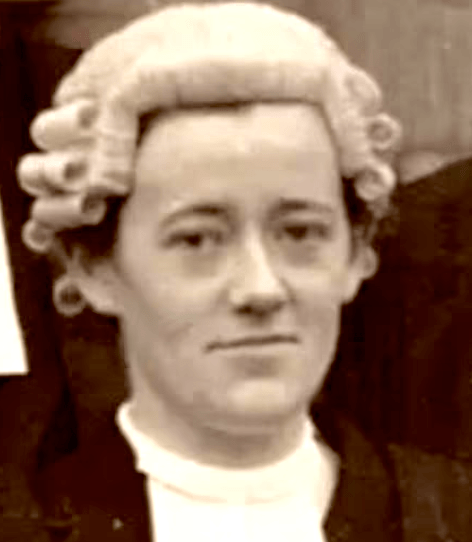
On this day in 1993, the North of Ireland lost a formidable voice. Sheellagh Murnaghan was a tenacious woman who was dedicated to equality in a world that didn’t have much of it. She never let that stop her though and she championed that fight for decades, despite suffering defeats time and time again. Guess it was the hockey player in her that never let her back away from a good fight.

Sheelagh Murnaghan was born in Dublin, but she went to school in Omagh and then studied law at Queen’s University in Belfast. While studying to become a lawyer, she also found the time to join and captain the National Irish Women’s Hockey team. She gave up the sport when she became the region’s first female lawyer and was accepted to the Northern Ireland Bar in 1948. Murnaghan then went into politics. She was one of the first women in Stormont and was the only liberal voice in the chamber at that time. Sheelagh was considered eccentric – she liked cigars and often brought her dog to work. She was a woman, a Catholic, and a liberal in a misogynistic, Sectarian, and conservative climate and she was ferociously dedicated to human rights. Murnaghan introduced legislation to abolish the death penalty and attempted to pass a Northern Bill of Rights at least four times. She also stood for Traveller’s rights, criminalizing discrimination in the workplace, and equal compensation for all, regardless of sex, creed, or political belief. Sheelagh was met with opposition (and probable ridicule) every time she attempted to introduce anything but she did not let that stop her. I’m certain she would have continued her quest if she had been successful in winning another seat once the university’s were abolished in 1969. She stood for election twice more in two different areas, but she lost both times.

Murnaghan was no longer a member of parliament but she still championed equality every day. She sat on several committees, including the Industrial Relations Tribunal, the Belfast Settlement Committee, and the Equal Opportunities Commission. She chaired a tribunal that heard the region’s very first sexual harassment case and her law practice specialized in harassment cases and gender equality from that point on. Murnaghan was not born in the North of Ireland, but it is clear that she devoted her entire career to making it a fairer, more balanced place while others were actively trying to prevent these things. She was absolutely opposed to the violence that erupted in the region and was openly vocal about it, which led to potential peril when her house was bombed by Loyalist paramilitaries in 1970. Luckily, she was not injured or intimidated by this attack and she continued to fight for peace and justice for another twenty-three years.

Sheelagh Murnaghan died on this day in 1993. She did not live to see the North finally adopt many of her ideas, nor did she see the end of the more active conflict in the region, but today, many recognize her as one of the first torchbearers of change and equality in the area. It’s a fitting legacy for a woman who devoted her life to making the world a better place.

The Mighty Margaret Skinnider

When you listen to or read accounts (including my own) of Margaret Skinnider’s life it’s immediately clear that she was a fighter and a warrior. She was brave and devoted to Irish freedom. She was gravely wounded in the Easter Rising but somehow survived her injuries to continue fighting for Ireland, for recognition and pensions for women, and for Irish workers for the next five decades or so. Her fierceness has inspired many and we’ve all rushed to applaud Skinnider’s fighting spirit, using it to highlight and recognize the important (and often atypical) roles that Irish women played throughout history.

It’s pretty common knowledge that Margaret Skinnider was a teacher, a revolutionary, a union boss, a devoted suffragist, a deadly sniper, a commanding officer, an explosives expert, a smuggler and so much more. We’re used to seeing her as a dedicated, cross-dressing, sharp shooting freedom fighter so it might be a little jarring to hear one of her best friends say that Skinnider was love and kindness incarnate and that she was gentle. Sure she was a soldier who spent most of her life fighting for one cause or another but she was also full of empathy and love, kindness and compassion – and many of the historical narratives (including my own) overlook those aspects of Skinnider’s life.

This is part of a bigger problem. In our rush to make sure that women are counted among the heroes of history, we often highlight only the fiercest and more traditionally “male” aspects of them. We tell tales of how they outsmarted others and how they aggressively fought for something and proved themselves worthy of remembrance and praise. We often ignore their traditionally “feminine” sides in favor of a glorious and heroic tale. The famous photo of Margaret dressed as a boy with a cigarette dangling out of her mouth is a perfect example of that. We remind people that that she was a female sniper and one of only two women who wore a soldier’s uniform during the Easter Rising, and we set her apart from the hundreds of other women who were there in their Easter skirts and dresses. There were many other brave women on active duty and they each brought their own fighting spirit and individual set of skills…some of them even saved Skinnider’s life after she’d been shot multiple times. These women are just as worthy of remembrance whether we know their names and stories yet or not, even if they had more traditional roles. Margaret’s exciting and unusual tale has become more popular in recent years but in telling it we’ve done her a disservice. We’ve all celebrated her deeds but most of us ignored the other aspects of her life. It’s less common knowledge that Skinnider was as gentle, loyal and loving as she was aggressive. She lived a long life full of love, music and long lasting friendships. Her favorite song about Ireland was a somewhat sappy love song called The Jackets Green. She was a lesbian in a committed and life long relationship in an era when that was not only frowned upon, but illegal. Mary McAuliffe’s newish book about Margaret Skinnider uncovers that love story and much more. It is an overdue biography that focuses on Skinnider’s life as a whole, rather than highlighting one or two of her legendary acts. It gives our inspiring hero her entire life back, long after she passed away.

Which brings us to the point, dear readers. On this day in 1971, the mighty Margaret Skinnider threw off this mortal coil. She is buried in the Republican 1916 plot at Glasnevin Cemetery, where she rests next to many of her dearest friends and comrades. To remember her today, why not listen to this interview with Mary McAuliffe where she talks about some of the lesser known aspects of Skinnider’s life or you can listen to Margaret tell her own story of Easter week right here. If you’re like me and you still haven’t been able to break up with the written word, you can find Skinnider’s own 1917 propaganda masterpiece, Doing My Bit For Ireland in various places on the web and in bookstores throughout Ireland. While you’re at it keep an eye out for Margaret Skinnider by Mary McAuliffe as well.

Arms Around Moore Street

There have been various groups rallying around Moore Street in Dublin for the last few decades – and some have dedicated a good portion of their weekends and lives to protecting the area from wanton destruction. This weekend (and every other for that matter) you have a chance to stand with them, both literally and symbolically.

Continue reading

Massacre at Ballymurphy

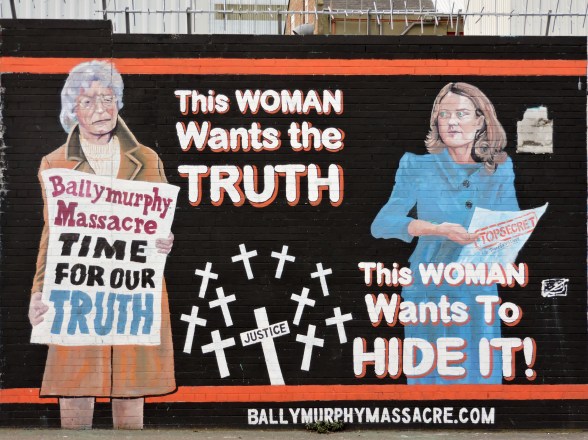
While I’m on the subject of documentaries and links, here’s another one for those who live outside of Ireland or cannot access current news specials from outside the region. “The Massacre at Ballymurphy,” is a shortened version of “The Ballymurphy Precendent,” a new documentary by Callum Macrea. It has been causing quite a stir online since its debut on Channel Four last weekend and has sent massive waves throughout the North of Ireland and beyond.

Continue reading

Civil Rights

In the civil rights arena, America gets a lot of the press and always has. Many of the worst atrocities and biggest conflicts in the movement happened in the United States, and they continue to happen to this day. Hollywood has made plenty of movies chronicling the American fight for civil rights, including one about the fateful march from Selma in 1965 that raised awareness and inspired equality all over the world, especially in the north of Ireland where another civil rights movement was being born.

Continue reading

Suffer the Children

I can’t seem to focus on my regular, historical content these days and I apologize for the sporadic nature of the last couple of months. My state of mind can be summed up in a brilliantly tragic tweet by a certain Tim Grierson who says: “Being angry all the time is exhausting and corrosive. Not being angry all the time feels morally irresponsible.” He’s right – this is life in America (and other places too I’m sure) these days. But before I attempt to return to my regularly scheduled Irish history program, I have to publicly lose my mind for a minute so that my little corner of international readers understands one very important thing. Americans are not OK.

Continue reading

Fantasy Island

Everyone has that place in their head. One place that they’ve fallen in love with whether or not they’ve ever been there. One place that serves as a goal or a dream and becomes a fantasy location where everything would suddenly be perfect. Many never reach that imagined place or if they do, they quickly find that the perceived nirvana in their head doesn’t match the reality in any way. We often romanticize or fantasize about other places because after all, the grass is always greener on the other side.

Continue reading

The Choice

On May 25th, 2018, Ireland will have the chance to repeal the Eighth Amendment of its constitution in a referendum. This amendment was adopted in 1983 and it asserted that a fetus had the same rights as the woman who carried it. It’s no surprise that this law came into existance, since Ireland was still pretty synonymous with the Catholic faith when the Amendment was passed and while it allowed for pregnancy termination if the life of the mother was shown to be at risk, it made proving that exception more difficult. It also didn’t allow for the mental health of the mother – only the physical. The Eighth strengthened penalties for seeking an abortion both in Ireland and abroad and it ensured that community groups and organizations could not legally help women who wished to explore those options. It took decades of hard work to rectify the latter circumstances but abortion in Ireland was and is still illegal.

This is not to say that women (and girls) don’t get abortions. Recent statistics estimate that more than 150,000 Irish women have had abortions since the eighties. About a dozen have them every day – either by traveling to the U.K. where abortion is legal, by using the outlawed Plan B pill, or getting an illegal (and sometimes unsafe) abortion in Ireland itself.  These women risk a prison sentence of up to fourteen years if they are caught having an abortion on the island, but they do it anyway and that is really the only point that should matter in the upcoming referendum on whether the Eighth should be repealed or not.

Continue reading

Bobby Sands Elected

On this day in 1981, Bobby Sands was elected to Parliament. His candidacy was a risky maneuver, given that he was in prison and on hunger strike at the time and while his win ended up being a masterful propaganda tool, it did not save his life.

Continue reading

International Women’s Day 2018

As a realistic and somewhat pessimistic woman I tend to stay away from international days of anything. One day of focus is not enough to change anything or even learn much of any given subject. That said, as a woman in the male-dominated world of history and a citizen in a country that is regressing horribly I feel like not mentioning International Women’s Day would be a terrible mistake.

Continue reading