Helena Molony is born

On this day in 1883, Helena Molony was born in Dublin. She was orphaned when she was young and didn’t have the happiest of childhoods but this made her strong-willed and a survivor. She dreamt of a better life and soon that dream came to include a free Ireland. When she was older, she looked back at that time saying,  “I was a young girl dreaming about Ireland when I saw and heard Maud Gonne speaking by the Custom House in Dublin one August evening in 1903 . . . She electrified me and filled me with some of her own spirit.”

Whether it was Maud Gonne’s spirit that energized Helena or not, one thing is certain – she was immediately and completely devoted to Ireland. She and Maud became fast friends and together they were prominent members of both of Ireland’s Nationalist groups for women, Inghinidhe na hÉireann and Cumann na mBan. Helena founded the first political newspaper specifically for women in 1908 and she started a movement aimed at keeping girls away from English soldiers. She was heavily involved in nearly every suffrage or labor campaign and was assigned to the City Hall garrison during the Easter Rising of 1916. When the authorities came to interview her after she was arrested for her role in the uprising, they found her with torn and bleeding hands and the lock halfway off the door. Similarly, while Molony was imprisoned in Kilmainham Gaol her captors discovered that she was trying to dig her way through the massive stone walls with a rusty spoon. She was indomitable and unapologetic.

These traits carried over into every aspect of her life. Helena fought again in the War of Independence, ferrying messages for Micheal Collins and Liam Mellows and was fiercely opposed to the Anglo-Irish Treaty that partitioned Ireland. She was active in the resulting civil war on the Republican side. She remained loyal to her friends, even when her reputation and political career suffered for it. Molony was unwilling to compromise in nearly every way, including her personal life. She was linked romantically to both males and females in a time when that was considered not only a sin, but illegal- and she refused to be labeled or cornered. All of these things cost her and eventually, Helena was forced out of politics and public life.

Even then, Helena maintained strong friendships, often depending on friends for shelter and care. When she died after a long and full life, she was buried next to many of them in the Republican plot at Glasnevin Cemetery, where she is remembered to this day.

Helena

Addendum: For more about Helena please click here. If you’re looking for even more or other fierce women like her, why don’t you grab a copy of my book? “Petticoats, Patriots, and Partition” is available world-wide in bookstores, on Blurb, and all Amazon markets. (Sorry, it’s been awhile since I indulged in some shameless self-promotion.)


Rosaleen Sands

Almost four years ago I wrote one of my first articles here in this wee blog. It was about the death of John Sands, Bobby Sands’ father. Today I am sad to report that his wife and Bobby’s mother Rosaleen has also passed away.

Gerry Adams had this to say about her this morning. “The dignity and strength she displayed was a testament to her character and her belief in standing up for what was right and just, even if that meant great suffering for herself, Bobby’s father John and their family. In many ways she epitomized what all the mothers of the hunger strikers endured and her sacrifice will never be forgotten.”

Bobby Sands wrote a little poem called Dear Mum. I figured today is the perfect day to highlight it.

Dear Mum by Bobby Sands

Dear Mum, I know you’re always there
To help and guide me with all your care,
You nursed and fed me and made me strong
To face the world and all its wrong.

What can I write to you this day
For a line or two would never pay
For care and time you gave to me
Through long hard years unceasingly.

How you found strength I do not know
How you managed I’ll never know,
Struggling and striving without a break
Always there and never late.

You prayed for me and loved me more
How could I ask for anymore
And reared me up to be like you
But I haven’t a heart as kind as you.

A guide to me in times of plight
A princess like a star so bright
For life would never have been the same
If I hadn’t of learned what small things came.

So forgive me Mum just a little more
For not loving you so much before,
For life and love you gave to me
I give my thanks for eternity.


For more on this breaking story, please click here.

Ar dheis Dé go raibh a hanam. I hope this beaming face greeted her along her way. DSCN1135


Danny Doherty and William Fleming

Danny Doherty and William Fleming grew up in Derry. They were from Republican families and each had relatives that were imprisoned at one time or another for their political ideals and paramilitary activities. They followed in their families’ footsteps and each joined Na Fianna Éireann at a young age, before funneling into the Derry Brigade as soon as they were able.

Each man knew what the cost might be. They knew their membership in the IRA could land them in prison or in the grave but they felt it was worth the risk. Danny Doherty was a veteran with six years of active service in the Derry Brigade but Willie Fleming was younger and greener with only two years under his belt when the two men were killed (or overkilled) in a hail of gunfire on this day in 1984.

Continue reading

Bridget Brede Connolly

Bridget “Brede” Connolly was one of the many women who took part in Ireland’s Easter Rising of 1916. She navigated through the streets of Dublin ferrying communications between James Connolly in the General Post Office and Ned Daly, in Church Street. Brede didn’t have that far to go as the crow flies but she had to make it through some of the fiercest fighting of the insurrection to deliver these messages and she did it time and time again.

Continue reading

The Gate to Hell

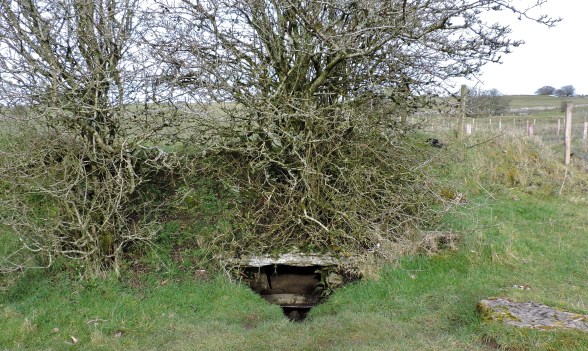
Ireland has a complicated relationship with religion. Many of its troubles in the last few hundred years are ultimately based in religious conflict and the church has ruled much of the island for centuries. But it wasn’t always so and some of its most-visited and well-known landmarks predate the Christian takeover of the island. Everywhere you go you can see signs of the old ways peeking through the hedges if you are looking for them. Many good Catholics will cross themselves or roll their eyes when they talk about the faeries but they also leave bowls of milk outside to appease them. You’ll still find iron in many doorways, though perhaps the reason it was placed there has been forgotten. As Samhain (more commonly known as Halloween) approaches, seasonal offerings left in fields, forts, tombs, and shrines increase all over Ireland. This time of year may not be the sanest time to go to the gateway to hell, but it certainly is the most appropriate one if you want to meet The Morríghan and her dark minions on one of the only nights they can escape the underworld.

Continue reading

The death of Sheena Fagan Campbell

Sheena Fagan Campbell was an activist, a law student, and a rising star in the Sinn Fein hierarchy. She was a single mother in Belfast who was determined to provide for her young child and at the time of her murder, she was engaged to be married. Sheena stayed on the legal, political side of the Troubles and was not a member of the Irish Republican Army but she did know many who were. The young law students’ growing popularity in Republican circles brought her to the attention of the police, the British Army and the Ulster Volunteer Force (UVF), a deadly Loyalist paramilitary group. The UVF insisted that Campbell was a member of the IRA and on this day in 1992, they executed her very publicly in a hotel bar in Belfast.

Continue reading

John Devoy

On this day in 1928, a great Irish warrior passed away. John Devoy lived a long life that was devoted to Irish freedom. For him, despite the many years he was in exile, Ireland was always home and its freedom was the only cause worth fighting for.

Continue reading

The Rising’s Last Child

Ireland’s Easter Rising took place over 100 years ago, so one could be forgiven for assuming that all those who lived through it are now long gone. Interestingly enough that assumption is wrong. Father Joseph Mallin was only two when his father was executed by the English for being one of the leaders of the insurrection. Today he is 104, and as of this writing he is not only still alive, but he is also still fighting to set the records straight about his father.

Continue reading

Exhibit Down

The Museum of Free Derry has temporarily removed its most controversial exhibit and Linda Nash and Helen Deery have brought their around-the-clock protest inside the museum to a close. All parties will meet again next week with a mediator to negotiate how to proceed when it comes to the exhibit that was created to remember the victims of the Troubles from Derry.

Continue reading

The Occupied Museum of Free Derry

The newly revamped Museum of Free Derry has been mired in controversy since before its doors reopened. At issue is an exhibit that includes the names of all the people who were killed in the area during the Troubles. This seems harmless except that the names of British soldiers and police officers are also there, right alongside many innocent victims who were killed by those very same squads. The decision to include those names may seem reasonable from a purely educational viewpoint but the Museum underestimated the emotional response from locals who lost friends and family members during the conflict. For some of them, the inclusion of these government contingents is an affront to the memories of their loved ones and a blatant disregard for their own feelings and their continuing fight for answers and justice. 

Continue reading